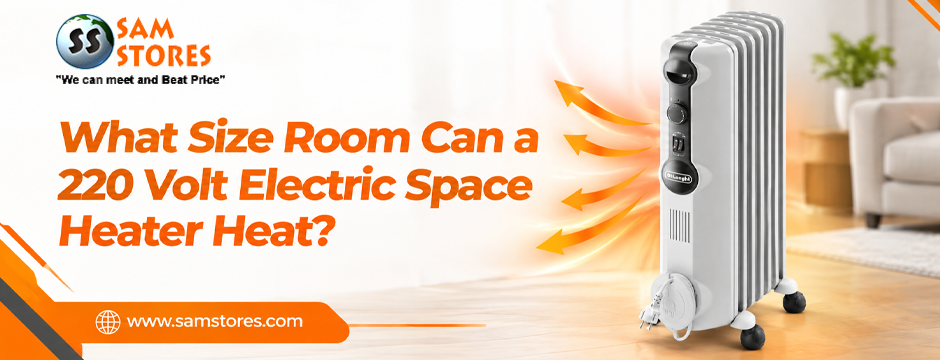
What Size Room Can a 220 Volt Electric Space Heater Heat?

Choosing a space heater is easy until you start comparing voltage, wattage, room size, heating technology, and installation requirements. One question usually comes up first: how much space can the heater actually warm?

If you are considering 220 volt electric space heaters, the answer depends on more than voltage alone. A 220 volt heater can deliver substantial heating power, but the right model for a small bedroom may be completely different from the one needed for a garage, workshop, patio, or large living area.

The good news is that you can get a fairly reliable estimate by looking at the heater’s wattage, the room’s square footage, insulation, ceiling height, climate, and how much heat the space loses.

For shoppers at Sam Stores, understanding these factors before buying can make it much easier to choose a heater that matches the space rather than simply choosing the highest-powered model available.

How Much Space Can a 220 Volt Electric Space Heater Heat?

There is no single room-size rating that applies to every 220 volt heater.

Voltage tells you about the electrical supply the appliance is designed to use. It does not, by itself, tell you how large an area the heater can warm. Wattage is more important when estimating heating capacity.

As a general starting point, electric resistance heating is often estimated at roughly 10 watts per square foot for a reasonably insulated space. Colder climates, poorly insulated rooms, high ceilings, exterior walls, large windows, and frequent door openings can increase the amount of heating power required.

For example:

Heater WattageApproximate Area*
1,500 wattsUp to about 150 sq. ft.
2,000 wattsUp to about 200 sq. ft.
2,500 wattsUp to about 250 sq. ft.
3,000 wattsUp to about 300 sq. ft.
4,000 wattsUp to about 400 sq. ft.
5,000 wattsUp to about 500 sq. ft.

*These are general estimates, not guaranteed coverage ratings. Actual performance varies considerably depending on insulation, outdoor temperature, ceiling height, room layout, and heater design.

A heater operating in a well-insulated 300-square-foot room may feel very different from the same heater being used in a drafty 300-square-foot garage.

Why 220 Volts Does Not Automatically Mean More Heating

It is easy to assume that a 220 volt heater must heat a larger room than a 120 volt model. That is not necessarily true.

The key measurement is wattage.

A 2,000-watt heater is still producing approximately 2,000 watts of electrical heating output whether it operates on a suitable 120 volt or 240 volt electrical system. The voltage and amperage requirements change, but the wattage is what gives you a better indication of the heater’s heating capacity.

This is one reason 220 volt electric space heaters are popular for applications where higher electrical loads are needed. A higher-voltage circuit can support substantial wattage without requiring the same amperage that a lower-voltage circuit would need for equivalent power.

That can make higher-voltage heaters useful for larger rooms, workshops, garages, and other spaces where supplemental heating is required.

Room Size Is Only Part of the Calculation

Two rooms with identical square footage can require very different amounts of heating.

Consider a 400-square-foot finished room with insulated walls, double-pane windows, and a relatively low ceiling. Now compare it with a 400-square-foot detached garage with a concrete floor, uninsulated walls, a large garage door, and regular air leakage.

Both spaces measure 400 square feet.

The garage will generally need considerably more heating power to reach and maintain a comfortable temperature.

Here are some of the factors worth considering before selecting a heater.

Insulation

Insulation helps keep heated air inside the room. A well-insulated space generally requires less heating power than a poorly insulated one.

If you are heating an older building, workshop, shed, or garage, take the insulation level seriously when choosing a heater.

Ceiling Height

Most basic room-size calculations assume a standard ceiling height.

A room with a 12-foot ceiling contains significantly more air than a room with an 8-foot ceiling covering the same floor area. That extra volume can affect how quickly the space warms and how much heating capacity you need.

Windows and Doors

Large windows can contribute to heat loss, particularly if they are older or poorly sealed. Exterior doors can have a similar effect.

A frequently opened garage door is an even bigger consideration.

Outdoor Temperature

A heater may perform perfectly well in mild winter conditions but struggle to maintain the same temperature when outdoor temperatures drop sharply.

If you live in a particularly cold climate, consider the lowest temperatures you expect during the heating season rather than choosing a heater based on an average winter day.

What About a 220 Volt Electric Shop Heater?

A 220 volt electric shop heater is designed for spaces where more substantial heating output may be required.

Workshops and garages often have higher ceilings, larger doors, unfinished walls, and more air movement than residential rooms. These conditions can make heating challenging.

For example, someone working in a 500-square-foot insulated workshop may need a very different heating solution from someone trying to heat a 500-square-foot detached garage with an uninsulated metal exterior.

Before buying, check the heater’s recommended coverage area and wattage. Also make sure the electrical circuit is properly suited to the appliance.

If the heater requires a dedicated circuit, installation should be handled by a qualified electrician rather than attempting to modify household wiring yourself.

Can 220 Volt Heaters Work in Large Rooms?

Yes, but “large room” needs to be defined carefully.

A 220 volt heater can be an effective source of supplemental heat in a large living room, workshop, garage, office, or other space when its wattage is appropriate for the area.

For very large spaces, however, one heater may not always distribute warmth evenly.

Room shape matters. A long, narrow room can develop colder areas at the far end, while an open-plan space can have different temperature zones.

In some situations, two appropriately sized heaters may provide more even heating than one very powerful unit. The right setup depends on the space, electrical requirements, heater design, and manufacturer’s recommendations.

Where Should You Install a 220 Volt Heater?

Placement can make a noticeable difference.

A heater installed in an appropriate location can distribute warmth more effectively, while poor placement may leave some areas cold.

For permanent installations, a 220 volt wall mount heater can be a practical choice when floor space is limited. Mounting the unit on a wall keeps the floor clear and can make sense in rooms where people regularly move around.
How The Braun 220 Volt Hair Dryer Redefines Everyday Glamour_

For smaller spaces such as kitchens, bathrooms, or areas beneath cabinets, a 220 volt toe kick heater can provide another space-saving option, depending on the application and manufacturer’s specifications.

Always follow the installation clearances and safety instructions supplied with the specific heater.

What About Baseboard Heaters 220 Volts?

Electric baseboard heating is another option worth considering when you want a more permanent heating solution.

Baseboard heaters 220 volts can provide steady heat along the perimeter of a room. They are often considered for bedrooms, offices, living areas, and other spaces where a permanently installed heating system is preferred.

The advantage is not simply the voltage. The length and wattage of the baseboard heater, room size, insulation, window placement, and thermostat control all influence performance.

Baseboard heating can also work well when you want a quiet heating solution without the fan noise associated with some portable or fan-forced heaters.

Could a 220 Volt Heater Be Used Outdoors?

Outdoor heating is a different situation.

A 220 volt patio heater may be designed to provide targeted warmth in an outdoor seating area, but outdoor heaters should not be judged by the same room-size calculations used for enclosed spaces.

There is no enclosed room holding the heated air. Wind can carry warmth away quickly, so outdoor heaters are generally intended to create a comfortable zone around people rather than raise the temperature of an entire patio.

When comparing outdoor models, pay attention to the manufacturer’s intended application, mounting requirements, weather protection, heating range, and safety instructions.

What About 240 Volt Portable Heaters?

You may also come across 240 volt portable heaters while shopping for higher-powered electric heating equipment.

In everyday product discussions, 220 volt and 240 volt terminology can sometimes be used interchangeably, but you should not assume that every appliance is compatible with every electrical connection.

Always check the heater’s actual electrical specifications, plug configuration, circuit requirements, and installation instructions before purchasing.

If you are replacing an existing heater, matching the electrical requirements of the new appliance with the existing circuit is especially important.

How to Choose the Right Heater for Your Room

Instead of starting with voltage, start with the room.

Measure the length and width to calculate the floor area.

Room size = length × width

For example, a room measuring 20 feet by 20 feet has:

20 × 20 = 400 square feet

Then consider:

  • Is the room well insulated?
  • How high is the ceiling?
  • How many windows does it have?
  • Are the windows well sealed?
  • Is the room above a heated or unheated space?
  • How cold does the area become during winter?
  • Are doors opened frequently?
  • Is the heater intended as primary or supplemental heating?
  • Does the room have an existing electrical circuit capable of supporting the heater?

These details will help you narrow down the appropriate wattage.

Do Not Buy More Power Than Your Electrical System Can Handle

A common mistake is to focus entirely on heating capacity and overlook the electrical side.

A high-wattage 220 volt heater can require a dedicated electrical circuit. The plug, wiring, breaker, and outlet all need to be appropriate for the appliance.

Never use an adapter or extension cord simply to make an incompatible connection work.

Before purchasing a high-powered heater, review the manufacturer’s electrical requirements. If you are unsure whether your existing electrical system can support the appliance, speak with a licensed electrician.

This is particularly important for workshops, garages, older homes, and commercial spaces.

Should You Choose a Portable or Permanent Heater?

The answer depends on how you use the space.

A portable heater may make sense when you need flexibility and want to move the heating source between areas. A wall-mounted or permanently installed heater can be more suitable when one room consistently needs heating.

Think about your daily routine.

If you work in a garage only for a few hours at a time, portable heating may be convenient. If you need consistent heat in a home office every day, a permanent installation could make more sense.

There is no universal winner. The better choice is the one that matches how the space is actually used.

Shop for the Right 220 Volt Heater at Sam Stores

Finding the right heater is not simply a matter of choosing the largest wattage or the highest voltage.

The best starting point is the room itself. Measure the space, consider insulation and ceiling height, think about heat loss, and then compare heater wattage and installation requirements.

Whether you are heating a bedroom, workshop, garage, office, or another space, 220 volt electric space heaters can offer a practical way to add substantial electric heating capacity when the product and electrical system are properly matched.

At Sam Stores, shoppers can compare heating equipment based on the type of space they need to heat, the required electrical setup, and the features that matter for everyday use.

Take the time to check the specifications before ordering. A few minutes spent measuring your room and reviewing the heater’s requirements can help you choose equipment that delivers the right amount of warmth without paying for capacity you do not actually need.

FAQs

1. What size room can a 220 volt electric space heater heat? 

It depends on wattage, insulation, ceiling height, outdoor temperature, and heat loss. As a general estimate, 10 watts per square foot is often used for reasonably insulated spaces.

2. Does 220 volts mean a heater can heat a larger room? 

Not necessarily. Voltage alone does not determine heating capacity. Wattage is a more useful measurement when estimating how much space an electric heater can warm.

3. Can a 220 volt electric heater heat a garage? 

Yes. A suitable 220 volt heater can provide effective supplemental or primary heating in a garage, provided its wattage and coverage rating match the space and the electrical circuit is properly rated.

4. Are 220 volt electric space heaters suitable for large rooms? 

They can be, particularly when higher wattage is required. Large or poorly insulated spaces may need more than one heater or a heating system specifically designed for the area.

5. Can I use an extension cord with a 220 volt electric space heater? 

You should not assume an extension cord is safe. High-wattage heaters can place significant demands on electrical circuits. Follow the manufacturer’s instructions and consult a qualified electrician when necessary.

Why Should You Consider A Slide-Out Chassis Air Conditioner for Your Home?

Summer can change how you experience your home. A bedroom that feels comfortable in the morning can become uncomfortable by afternoon, especially when outside temperatures climb. Choosing the right cooling system therefore involves more than checking the BTU rating. Installation style, maintenance access, room size, electrical requirements, and long-term convenience all deserve attention. A 220 volt 10000 BTU air conditioner can be an excellent option for homeowners who need dependable cooling without completely changing their home’s appearance.

So, when paired with a slide-out chassis design, it can also offer practical advantages that traditional window units may not provide. Sam Stores helps homeowners explore these choices with a focus on finding equipment suited to their actual spaces.

What Is A Slide-Out Chassis Air Conditioner?

A slide-out chassis air conditioner has a removable chassis that slides out from its outer cabinet. The design allows the unit to be installed through a wall or within a suitable sleeve, depending on the model.

That configuration creates a different experience from a standard window air conditioner.

Instead of placing the entire appliance inside the window opening, the cabinet can remain installed while the internal chassis can be accessed when necessary. This can make maintenance and servicing more convenient.

For homeowners planning a more permanent cooling solution, that distinction can become important.

A properly selected 220 volt 10000 BTU air conditioner with a slide-out chassis can combine substantial cooling capacity with an installation approach that works well for certain rooms and property layouts.

Why Is A Slide-Out Chassis Worth Considering?

The biggest appeal is flexibility. A traditional window unit occupies a window opening. This can affect natural light, views, ventilation, and how the room feels.

A through-wall installation can provide a more integrated appearance while keeping windows available for their intended purpose.

The slide-out chassis adds another practical advantage.

Because the internal unit can be removed from the sleeve, technicians can potentially access important components more conveniently during servicing. That can make routine maintenance less disruptive than working with an appliance that remains fixed in a difficult position.

For homeowners who prefer permanent installations, this design deserves serious consideration.

How Does It Compare with A Through-the-Wall Installation?

A 220 volt through-the-wall air conditioner can be appealing when you want to preserve window space. However, installation needs careful planning because the wall opening must accommodate the equipment correctly.

The wall itself also needs to be suitable for the installation. Before purchasing, homeowners should consider the wall structure, available space, drainage requirements, electrical supply, and manufacturer’s installation specifications.

A slide-out chassis model can be particularly useful because the sleeve remains in position while the chassis can be accessed separately. This can make the system feel more like a dedicated part of the room rather than a temporary appliance placed into a window.

However, not every model is interchangeable. Always confirm whether the selected air conditioner is specifically designed for the intended installation method.

Is 10,000 BTU Enough for Your Room?

BTU capacity matters because an air conditioner needs to remove enough heat for the space it serves.

  • A 220 volt 10000 BTU air conditioner may be suitable for many medium-sized rooms, but the correct capacity depends on more than floor area.
  • Ceiling height, sunlight exposure, insulation, occupancy, appliances, and room layout can all influence cooling requirements.
  • A room with large sun-facing windows may gain considerably more heat than a shaded room of the same size.
  • Similarly, a living area with several occupants and heat-producing electronics can require more cooling capacity.

Choosing the largest available unit is not automatically the answer. An appropriately sized system can provide more balanced operation and comfortable temperature control. So, check the manufacturer’s recommended room size and installation requirements before making your final choice.

What about Other 220 Volt Air Conditioner Options?

Homeowners often compare several configurations before choosing a cooling system.

For example, 220 volt room air conditioners can provide dedicated cooling for spaces that need independent temperature control. A bedroom, home office, living room, or guest room may have different cooling requirements from the rest of the house.

Dedicated units can allow occupants to cool the spaces they actually use instead of cooling an entire property. That can be useful when household routines vary. Someone working from home during the day may need a comfortable office, while bedrooms may become the priority later in the evening.

The right configuration depends on your property, electrical capacity, room requirements, and preferred installation style.

Could A Slide-Out Chassis Improve Maintenance Access?

Air conditioners need maintenance.

Filters collect dust. Coils can become dirty. A slide-out chassis can allow the internal unit to be pulled from the sleeve when service is required. This does not eliminate maintenance needs, but it can make certain servicing tasks more practical.

Homeowners should still follow the manufacturer’s cleaning and maintenance recommendations. Filters should be checked regularly, while more complex servicing should be handled by appropriately qualified professionals.

Keeping the equipment clean and properly maintained can also support efficient operation throughout the cooling season.

Why Electrical Requirements Deserve Attention?

Voltage is another important consideration. A 220 volt 10000 BTU air conditioner is not simply a larger version of a lower-voltage appliance. Electrical requirements need to match the home’s available supply and the manufacturer’s specifications.

Before installation, confirm the required voltage, amperage, plug configuration, and circuit requirements. Never assume that an existing outlet is automatically suitable.

Electrical work should be completed according to applicable requirements and by a qualified professional when necessary.

This is particularly important for higher-capacity air conditioning equipment. Getting the electrical side right from the beginning can help avoid installation problems and support reliable operation.

What about Portable Air Conditioners?

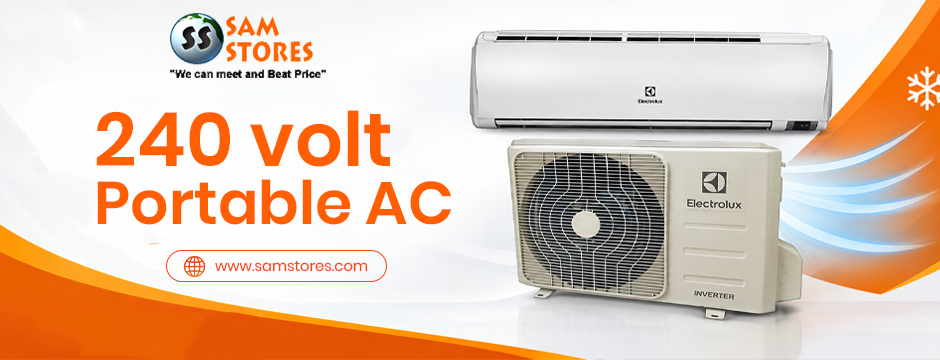
Portable models offer a different approach. A 240 volt portable AC can provide flexibility for situations where permanent installation is not practical. You can potentially move the appliance between suitable spaces, depending on the model and installation requirements.

How The Braun 220 Volt Hair Dryer Redefines Everyday Glamour_

That convenience comes with trade-offs. Portable units occupy floor space and require appropriate exhaust arrangements. Their mobility can be useful, but they may not provide the same integrated appearance as a through-wall system.

Homeowners should therefore consider how frequently they expect to move the equipment.

Could A Heat-and-Air Unit Offer More Year-Round Value?

Cooling is often the first concern during summer, but homeowners may also want equipment that provides heating during colder months. A 220 volt heat and air window unit can provide both functions in a suitable installation.

This can make a single appliance useful across different seasons. However, homeowners should compare heating capacity, energy requirements, room size recommendations, and operating features before deciding.

A heating-and-cooling model may be particularly useful in rooms that need temperature control throughout the year. The key is to consider your complete comfort requirements rather than purchasing equipment based solely on summer temperatures.

Choosing The Right Configuration Matters

Air conditioning is not simply about making a room colder. The equipment needs to fit the property, the electrical system, the room, and your lifestyle.

A slide-out chassis can be an appealing choice when you want permanent installation with practical access for servicing. It can also preserve valuable window space when installed through an appropriate wall.

For homeowners comparing different configurations, understanding these differences can make the purchasing process much easier. Sam Stores can be part of that decision-making process by helping customers explore equipment options based on their specific requirements.

Final Thoughts

A 220 volt 10000 BTU air conditioner with a slide-out chassis can offer an appealing combination of dependable cooling, permanent installation, and practical maintenance access. It may be particularly useful when homeowners want to preserve window space while creating a more integrated cooling setup.

Before buying, consider room size, electrical requirements, wall structure, maintenance access, and whether you need heating as well as cooling. The right system should fit your home rather than force your home to adapt around it.

With careful planning and the right equipment, cooling can become a comfortable, reliable part of your home’s everyday environment.

FAQs

1. What is a slide-out chassis air conditioner?

It features a removable internal chassis that can slide out from its cabinet, simplifying certain installation and maintenance requirements.

2. Is a 220 volt 10000 BTU air conditioner suitable for every room?

Not necessarily; room size, insulation, sunlight, ceiling height, and heat sources should all be considered before choosing capacity.

3. Can a slide-out chassis air conditioner be installed through a wall?

Yes, compatible models of 220 volt 10000 BTU air conditioners can be designed for through-wall installation, provided the sleeve and installation requirements are suitable.

4. Is a slide-out chassis better than a window air conditioner?

It can be preferable when preserving window space and having convenient service access are important priorities.

5. What should I check before installing a 220 volt air conditioner?

Confirm the electrical requirements, room capacity, installation dimensions, wall suitability, drainage needs, and manufacturer specifications.

Double Door Vs Single Door Refrigerator: Which One Fits Your Home Better?

Buying a refrigerator sounds straightforward until you actually start comparing models. Suddenly, capacity, layout, electricity consumption, freezer space, family size, and kitchen dimensions all become important. Choosing between a single-door model and a double-door refrigerator can therefore take more thought than expected.

If you are considering a 220 volt refrigerator, you also need to understand whether its electrical specifications suit your home. Sam Stores helps buyers explore practical appliance choices without getting lost in unnecessary technical details. The right refrigerator is not simply the biggest or most expensive model. It should match your household’s food habits, available space, budget, and everyday routine.

Single Door Or Double Door: What Is The Actual Difference?

The most obvious difference is the refrigerator’s internal arrangement.

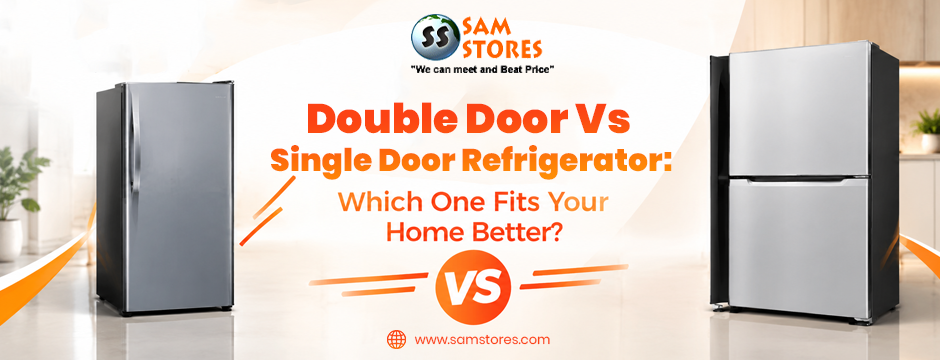
A single-door refrigerator generally combines the refrigerator compartment and freezer within one main cabinet. Depending on the model, the freezer section may occupy a smaller compartment at the top.

A double-door refrigerator separates the freezer and fresh-food compartments into dedicated sections. This usually provides greater capacity and makes it easier to organise different types of food.

That sounds simple. However, the practical difference becomes clearer when you think about how your household actually uses the 220 volt refrigerator.

A person living alone may rarely need a large freezer. A family that stores frozen foods, prepares meals in advance, or shops weekly may appreciate significantly more freezer capacity. The better choice therefore depends on usage rather than appearance alone.

When Does A Single-Door Refrigerator Make More Sense?

Single-door refrigerators remain popular because they offer a straightforward combination of refrigeration and freezing in one compact unit. They can be particularly suitable for smaller households, apartments, rental properties, offices, and kitchens where floor space is limited.

Their simpler design can also make them appealing to buyers who do not need extensive storage.

Think about a couple that shops for fresh food several times each week. They may not need a large freezer compartment or extensive shelves. A compact refrigerator can provide exactly what they need without occupying unnecessary kitchen space.

Another advantage is accessibility. Because the refrigerator and freezer are positioned within the same overall unit, the layout can feel familiar and easy to manage.

However, smaller capacity can become a limitation for larger families. If you frequently store large containers, multiple vegetables, beverages, leftovers, or frozen products, a single-door refrigerator may begin feeling crowded.

Why Are Double Door Refrigerators Popular with Families?

A double-door refrigerator is designed around separation. The refrigerator compartment provides dedicated fresh-food storage, while the freezer receives its own space.

This can make organisation easier. You can keep frequently used vegetables, dairy products, beverages, and leftovers in the refrigerator section without constantly rearranging the freezer.

For larger households, that additional space can be valuable. Imagine preparing meals for five people during a busy week. You might need several containers of prepared food, fresh produce, sauces, beverages, and frozen ingredients. A larger refrigerator makes that routine easier to manage.

Double-door models can also provide greater flexibility for households that purchase groceries in larger quantities. Instead of squeezing everything into limited compartments, you can arrange foods according to how often they are used.

Does Voltage Matter When Choosing A Refrigerator?

Yes, electrical specifications deserve attention before purchasing any refrigerator.

Many household appliances are designed for specific voltage and frequency requirements. A buyer should always check the manufacturer’s specifications and ensure the appliance is appropriate for the electrical supply where it will be installed.

You may come across descriptions such as refrigerator 220 volts 50 hz while comparing appliances. The “220 volts” describes the nominal voltage requirement, while “50 Hz” refers to the frequency of the alternating electrical supply.

You may also encounter products described as a 240 volt refrigerator. These labels should not be interpreted solely by comparing numbers. Actual compatibility depends on the appliance’s stated operating range and the electrical standards of your location.

Always check the manufacturer’s specifications before connecting an appliance.

Is A 220 Volt Refrigerator Suitable for Your Home?

For buyers specifically searching for a 220 volt refrigerator, checking the appliance label is an important first step.

Look for the rated voltage and frequency information supplied by the manufacturer. Some appliances may specify an operating range rather than one exact voltage. This distinction matters because household electrical supplies can vary within accepted operating limits.

You should also consider installation conditions. A refrigerator needs a suitable electrical outlet, adequate ventilation, and enough clearance around the appliance. Placing a large refrigerator in a tightly enclosed space can affect airflow and potentially influence its operation.

Electrical compatibility and physical suitability should therefore be considered together. The refrigerator may have excellent features, but it still needs to work safely and appropriately within your home environment.

How Much Space Do You Actually Need?

Capacity is one of the biggest differences between single-door and double-door refrigerators. But bigger is not automatically better.

  • Start by considering how many people live in your household.
  • Then think about shopping habits.
  • Also measure the available kitchen space before purchasing.
  • Check the width, height, and depth available for the appliance. Remember to consider door movement as well.

A refrigerator may physically fit into a space but still be difficult to use if its doors cannot open properly.

What about Freezer Space?

Freezer requirements often separate single-door buyers from double-door buyers. A small freezer may be perfectly adequate if you primarily consume fresh food.

However, regular frozen-food users may quickly appreciate additional freezer capacity. Double-door models can provide a more dedicated freezer compartment, allowing frozen products to remain organised separately from fresh groceries.

Energy Consumption Should Be Part of The Decision

Refrigerators operate continuously, so energy efficiency deserves attention. Instead of focusing only on purchase price, consider how the appliance may affect ongoing electricity consumption.

Look for the manufacturer’s energy information and compare models within the same category. However, remember that energy consumption depends on several factors. Usage patterns, ambient temperature, door-opening frequency, temperature settings, maintenance, and appliance condition can all influence real-world performance.

A well-organised refrigerator can also make everyday use easier. When frequently used items are placed where they are easy to find, you may spend less time searching with the door open.

Small habits can therefore complement an efficient appliance.

Could A 240 Volt Fridge Be The Right Choice?

You may encounter the term 240 volt fridge while browsing different refrigerator options. Again, the important consideration is not simply whether the number says 220 or 240. Check the manufacturer’s specified voltage range and frequency requirements.

How The Braun 220 Volt Hair Dryer Redefines Everyday Glamour_

An appliance designed to operate across an appropriate voltage range may accommodate the electrical supply for which it was manufactured. If you are uncertain, consult the product documentation or a qualified electrical professional before installation.

Avoid assuming that two refrigerators are interchangeable simply because their voltage labels appear similar. Electrical compatibility should always be confirmed from reliable product specifications.

What Should You Consider before Buying?

Before choosing between the two designs, ask yourself a few practical questions.

  • How many people will use the refrigerator?
  • How frequently do you shop?
  • How much frozen food do you normally keep?
  • How much kitchen space is available?
  • What voltage and frequency does the appliance require?
  • Do you need additional storage for beverages or prepared meals?
  • What energy information does the manufacturer provide?

Your answers will narrow the options quickly.

A single-door model may be enough for a compact household, while a double-door model can provide greater flexibility for families with heavier storage needs.

Choose The Refrigerator That Fits Your Routine

The choice between single-door and double-door refrigerators ultimately comes down to how you live and store food. A 220 volt refrigerator can be a practical option when its specifications match your home’s electrical supply and your storage requirements.

Single-door models suit buyers seeking simplicity and compact storage, while double-door refrigerators often provide greater capacity and freezer organisation. Before purchasing, compare dimensions, capacity, energy information, internal layout, and electrical specifications carefully.

The best refrigerator available at Sam Stores is the one that quietly fits your kitchen, your habits, and your everyday needs.

FAQs

1. Is a single-door refrigerator better for a small family?

A single-door refrigerator can suit smaller households with moderate fresh-food and freezer storage requirements.

2. Why choose a double-door refrigerator?

A double-door 220 volt refrigerator generally offers more storage, dedicated freezer space, and better organisation for larger households.

3. What does 220 volts 50 Hz mean for a refrigerator?

It indicates the appliance’s nominal electrical voltage and alternating-current frequency requirements.

4. Is a 220 volts refrigerator suitable for every home?

Not necessarily; always check the manufacturer’s specified voltage and frequency range against your home’s electrical supply.

5. Should I choose refrigerator size based only on family size?

No. Shopping frequency, cooking habits, freezer usage, kitchen space, and food-storage preferences also influence the ideal capacity.

Bosch 220 Volts Circular Saw: How to Choose The Right Saw for Demanding Cutting Jobs?

A clean cut can make all the difference when you are working on a construction, renovation, carpentry, or DIY project. The right saw gives you better control, consistent results, and confidence during demanding jobs. That is why choosing a Bosch 220 Volts circular saw can be a practical decision for users who value dependable cutting performance.

However, buying a power tool should involve more than looking at the brand name. Blade compatibility, motor performance, cutting depth, handling, safety features, and the type of material you regularly cut all deserve attention.

Sam Stores helps tool buyers explore authentic and practical options for professional and everyday applications. With the right information, choosing a circular saw becomes considerably easier.

Why Does A Circular Saw Matter for Your Cutting Work?

A circular saw is designed for making fast, controlled cuts through materials such as timber, boards, and other suitable construction materials. Unlike a handsaw, it combines a rotating blade with powered operation.

That means you can complete repetitive cuts with considerably less physical effort. For contractors, carpenters, installers, and serious DIY users, this can make a noticeable difference during longer projects.

However, speed should never come at the expense of control. A good circular saw should feel balanced in your hands and allow you to maintain a consistent cutting line. The tool should also match the material and cutting requirements of your project.

This is why understanding the saw’s specifications matters before purchasing.

What Should You Look for in A Circular Saw?

Start by considering the work you expect the tool to perform regularly. If you mainly cut timber for home improvement projects, your requirements may differ from those of a contractor working continuously on construction sites.

Pay attention to several practical factors.

  • Motor Performance: A suitable motor should provide enough power for your typical workload.
  • Cutting Depth: This determines how deeply the blade can cut at different angles.
  • Blade Size: Blade diameter influences the type and capacity of cutting applications.
  • Ergonomics: Comfortable handling becomes increasingly important during extended use.
  • Adjustment Mechanisms: Easy depth and bevel adjustments can make repeated cuts more convenient.
  • Safety Features: Guards, switches, and controlled operation should always receive attention.

A Bosch 220 Volts circular saw can be considered within this wider evaluation rather than chosen solely because of its brand.

Why 220 Volts Can Be Relevant to Your Workshop?

Voltage compatibility is an important consideration when purchasing electrical power tools. Before buying any tool, users should confirm that its electrical specifications are appropriate for their intended working environment.

A tool designed for the correct electrical supply can provide straightforward operation without requiring unnecessary adaptations.

For workshops where compatible 220-volt equipment is already being used, maintaining consistency can also make equipment selection simpler. This is especially relevant when building a collection of Bosch 220 Volts power tools for different applications.

A consistent tool range can make it easier to organise equipment around the requirements of a workshop or job site.

Cutting Accuracy Depends on More Than Motor Power

Power attracts attention because it sounds impressive. Yet professional-looking cuts depend on several factors working together. Your cutting technique matters. The blade matters. The material matters. The workpiece must also be supported properly. A powerful saw cannot compensate for an unstable workpiece or an unsuitable blade.

  • Before starting a cut, secure the material and establish the cutting line clearly.
  • Allow the blade to reach appropriate operating speed before beginning the cut.
  • Then guide the tool steadily rather than forcing it through the material.

This approach can help produce cleaner results while reducing unnecessary strain on both the user and the tool.

How Does A Circular Saw Fit into A Larger Tool Collection?

Most professionals do not rely on one power tool for every task. A circular saw handles certain cutting jobs particularly well, while other tools are better suited to grinding, drilling, fastening, or specialised applications.

For example, a Bosch 220 Volts angle grinder can be useful for suitable grinding, cutting, and surface preparation applications.

How The Braun 220 Volt Hair Dryer Redefines Everyday Glamour_

A hammer drill serves another purpose. A Bosch 220 Volts hammer drill can be considered when drilling into suitable masonry and other demanding materials requires a tool with an appropriate hammering function.

The important point is understanding that these tools complement each other. You do not need one tool to perform every job. Instead, a carefully selected collection allows each machine to handle the work it was designed for.

When Is A Circular Saw Better Than A Hand Saw?

Hand saws still have their place. They can be convenient for small jobs, occasional cuts, and situations where powered equipment is unnecessary.

However, repetitive cutting can become tiring. A powered circular saw can significantly reduce the physical effort involved in repeated cuts. It can also help maintain consistent cutting speed across multiple pieces of material. For larger projects, this efficiency can become particularly valuable.

Imagine preparing dozens of timber pieces for a construction project. Hence. making every cut manually would consume considerable time and physical energy. A suitable circular saw can streamline the process while allowing the operator to concentrate on accuracy and consistency.

Safety Should Always Come before Speed

Circular saws contain rapidly rotating blades, so safe operation should never be treated as an optional consideration.

  • Read the manufacturer’s instructions before operating the tool.
  • Use appropriate protective equipment and keep your hands away from the blade path.
  • Make sure the workpiece is properly supported.
  • Check that the blade and guard are correctly installed before starting work.
  • Never rush a cut simply because you are trying to finish quickly.
  • Keep the working area clear and avoid distractions.

It is also important to disconnect the tool from its power source before performing maintenance or changing components, following the manufacturer’s instructions. Good tool performance begins with responsible operation.

Why Does Buying from A Reliable Online Platform Matter?

The product itself is only one part of a successful purchase. A reliable supplier can help you understand specifications, compatibility, and available options before you commit.

This becomes especially useful when you are building a professional toolkit and need several tools for different applications. At Sam Stores, buyers can explore power tool options with their specific requirements in mind.

Rather than selecting equipment based purely on appearance, consider the work the tool needs to perform. That approach can help you avoid buying equipment that is either underpowered for your requirements or unnecessarily advanced for occasional use.

What Makes A Circular Saw A Practical Investment?

A good power tool should solve a real problem. For circular saw users, that problem is often the need to make repeated, controlled cuts efficiently. The right tool can save physical effort and reduce the time required for repetitive work. It can also become a dependable part of a broader workshop setup.

A Bosch 220 Volts circular saw may therefore be worth considering when your projects demand powered cutting performance and your electrical setup is compatible. The final choice should still be based on your application, material, cutting requirements, handling preferences, and safety considerations.

Final Thoughts

Choosing a circular saw becomes easier when you focus on the work rather than simply the product name. A Bosch 220 Volts circular saw can be a practical option for compatible workshops and job sites requiring efficient, controlled cutting.

Consider motor performance, cutting depth, blade compatibility, ergonomics, safety, and your expected workload before purchasing. Sam Stores can be part of that buying journey by helping users explore suitable power tool options for different applications.

So, when the tool matches the job, good preparation and responsible operation can turn demanding cutting work into a more efficient and manageable process.

FAQs

1. What is a circular saw mainly used for?

A circular saw is primarily used for making fast, controlled cuts through suitable materials such as timber and construction boards.

2. How do I choose the right circular saw?

Consider the materials, cutting depth, blade size, workload, ergonomics, electrical requirements, and safety features relevant to your projects.

3. Are Bosch 220-volt tools suitable for every workshop?

Bosch 220 Volts circular saws are generally suitable only when their electrical specifications match the power supply as well as the operating environment where they will be used.

4. Can one power tool handle every construction task?

No. Circular saws, angle grinders, and hammer drills are designed for different applications and complement one another in a wider toolkit.

5. How can I maintain a circular saw?

Keep it clean, inspect components regularly, use compatible blades, follow manufacturer maintenance guidance, and store it in suitable conditions.

220 Volts Electric Cooking: Choosing The Right Appliances for A Smarter Kitchen

A modern kitchen does not need to be complicated to be efficient. The right appliances can make everyday cooking faster, cleaner, and considerably more convenient.

For many households, 220 volts electric cooking offers a practical way to power essential kitchen appliances while maintaining a familiar cooking routine. From blending ingredients to preparing breakfast, frying meals, and grinding coffee, electric appliances can take much of the effort out of repetitive tasks.

But with so many options available, choosing the right appliances can feel overwhelming.

Should you buy a hand blender first? Would an electric fry pan be more useful? Is an omelette maker worth adding to your countertop?

At Sam Stores, we understand that buying electronics is easier when you know what each appliance can genuinely contribute to your kitchen. So, let’s explore the essentials and see how they can fit into everyday cooking.

What Makes 220-Volt Kitchen Appliances Practical?

Before choosing individual appliances, it helps to understand what voltage means in everyday use.

Voltage refers to the electrical potential supplied to an appliance. Appliances designed for 220-volt systems are intended to operate with compatible electrical supplies.

That makes checking voltage an important step before buying any electrical kitchen product.

The right appliance should match your home’s electrical system and comply with applicable safety requirements. Using an incompatible appliance can create performance problems and potential safety risks.

Therefore, don’t choose an appliance based only on its appearance or features. Check its voltage specification first. Once compatibility is established, you can start considering the features that actually matter for your cooking habits.

220 Volts Hand Blenders for Everyday Preparation

Hand blenders are among the more versatile kitchen appliances. They are compact, relatively easy to store, and useful for numerous preparation tasks. A suitable 220 volts hand blender model can help with blending soups, sauces, dips, smoothies, and other ingredients, depending on its design and attachments.

Their biggest advantage is convenience. You don’t necessarily need to transfer ingredients into a separate countertop blender. Instead, you can often blend directly inside a suitable bowl, jug, or cooking pot.

So, when choosing one, look at the motor performance, speed settings, included attachments, grip design, cleaning requirements, and overall build quality. If you frequently prepare small batches, a hand blender can become one of those appliances you wonder how you managed without.

220 Volts Omelette Maker for Easier Breakfasts

Breakfast should not require a complicated production line. An omelette maker can simplify one of the most popular breakfast options while helping create consistent results. A 220 volts omelette maker can be particularly convenient for people who want quick preparation without constantly monitoring a frying pan.

Depending on the model, features may include non-stick cooking surfaces, indicator lights, compact designs, and easy-clean surfaces. However, convenience should not replace good cooking habits. Always follow the manufacturer’s instructions regarding preheating, food quantities, cleaning, and safe handling.

For busy mornings, though, a dedicated omelette maker can make breakfast preparation feel much less demanding.

Electric Fry Pans Bring Flexibility beyond The Stovetop

Imagine preparing dinner while your main stovetop is already occupied. An electric fry pan can provide another cooking surface. 220 volts electric fry pans can be useful for frying, sautéing, simmering, and other cooking tasks, depending on their temperature range and construction. They can also offer more flexibility when preparing meals for several people.

When comparing models, consider the pan’s cooking surface, temperature control, capacity, handles, lid design, and ease of cleaning.

A larger pan isn’t automatically better. If you typically cook for one or two people, a compact option may be easier to store and handle. For larger households, additional cooking capacity can be more valuable. Think about your kitchen before thinking about the specifications.

Don’t Forget The Coffee Grinder

For coffee enthusiasts, grinding beans immediately before brewing can become part of the daily ritual. The aroma alone can make an ordinary morning feel different.

A suitable 220 volts coffee grinder model can help you grind beans at home rather than relying entirely on pre-ground coffee. Different brewing methods can require different grind sizes. Therefore, look for a grinder that offers appropriate adjustment options if you regularly switch between brewing styles.

Also consider capacity, grinding mechanism, cleaning requirements, noise, and ease of operation. You don’t necessarily need the most complicated grinder. The right choice depends on how often you drink coffee and how much control you want over the preparation process.

How The Braun 220 Volt Hair Dryer Redefines Everyday Glamour_

Now imagine your morning. You wake up and prepare coffee. Freshly ground beans go into your preferred brewing setup.

  • Next comes breakfast. An omelette maker handles the main cooking while you prepare other ingredients.
  • Later, you make soup for lunch. A hand blender turns cooked vegetables into a smooth consistency.

By evening, an electric fry pan gives you another convenient cooking surface for dinner. None of these appliances needs to completely transform your kitchen. Together, however, they can create a more efficient workflow.

This is where 220 volts electric cooking becomes more than simply an electrical specification. It becomes part of a practical kitchen ecosystem where different appliances handle specific tasks.

Safety Should Always Come Before Convenience

Electrical kitchen appliances combine electricity, heat, moisture, and food. That combination requires sensible handling.

  • Always follow the manufacturer’s instructions and safety recommendations.
  • Check the voltage rating before connecting an appliance.
  • Keep electrical components away from water unless the product is specifically designed for such exposure.
  • Avoid using damaged cords or plugs.
  • Unplug appliances when required during cleaning or maintenance.
  • Also, give heated appliances enough ventilation and place them on suitable surfaces.

These habits may sound basic. They are still worth following every time. A convenient kitchen appliance is only useful when it is operated safely and correctly.

Quality Matters More Than A Long Feature List

Online shopping makes it easy to compare specifications. You might see one appliance offering several speed settings, another promising multiple attachments, and another featuring a digital display.

More features can be useful, but they should not distract you from fundamental qualities. Look at construction, controls, ease of cleaning, warranty information, product instructions, and suitability for your needs.

Think about long-term usability.

Would you rather have an appliance with ten rarely used features or one with three functions you use every week?

For most kitchens, practical design wins.

Choose Appliances That Work Together

A good kitchen appliance collection should feel coordinated. The objective isn’t necessarily to buy products from the same category. Instead, choose appliances that solve different problems.

Before adding another appliance to your basket, ask yourself one question:

What specific cooking problem will this solve?

If you have a clear answer, the appliance is more likely to earn its place.

Shopping Online Requires A Little Extra Attention

When buying electronics online, product descriptions deserve careful reading. Check the voltage, dimensions, capacity, included accessories, power requirements, materials, warranty information, and manufacturer’s instructions where available.

Product images can help you understand the design. Specifications tell you whether the appliance suits your kitchen. Customer reviews may provide additional context about everyday use, although individual experiences can vary. Don’t overlook delivery considerations either. Larger appliances may require more careful handling, while smaller appliances are generally easier to store and transport.

Taking a few extra minutes to check these details can prevent disappointing purchases. For safe buying options, you may consider purchasing from Sam Stores.

Final Thoughts

A practical kitchen is built around habits. The right appliances can reduce preparation time, simplify repetitive tasks, and make cooking more enjoyable. However, choosing them requires more thought than simply selecting the most attractive model.

So, when exploring 220 volts electric cooking, always begin with electrical compatibility and safety. Then consider your cooking routine, available space, appliance features, cleaning requirements, and long-term usefulness.

So, whether you are comparing hand blenders, omelette makers, electric fry pans, or coffee grinders, choose products that solve genuine everyday problems.

Sam Stores can be part of that journey by helping shoppers explore practical electronics for modern kitchens. Because the smartest kitchen isn’t necessarily packed with appliances. It’s equipped with the ones you actually use.

FAQs

1. What does 220 volts mean for kitchen appliances?

It refers to the electrical voltage an appliance is designed to operate with. Always check compatibility with your home’s electrical supply before use.

2. Are hand blenders useful for everyday cooking?

Yes. They can be convenient for preparing soups, sauces, smoothies, dips, and other blended foods, depending on the model.

3. What should I consider when buying an electric fry pan?

Consider cooking capacity, temperature controls, cooking surface, lid design, handles, storage requirements, and cleaning convenience.

4. Is an omelette maker worth buying?

It can be useful if you regularly prepare omelettes and want a convenient appliance designed specifically for quick breakfast preparation.

5. Why should I check voltage before buying kitchen electronics?

Voltage compatibility, such as for a 220 volts electric cooking appliance, helps ensure an appliance is suitable for your electrical supply. Using incompatible electrical equipment can create safety and performance concerns.

Choosing The Right 240-Volt AC Unit for Comfortable, Efficient Home Cooling

It usually starts with a simple problem. Summer arrives, the temperature climbs, and your existing air conditioner struggles to keep the room comfortable. You turn the thermostat down, wait, and hope for the best. Sometimes, though, the problem isn’t the temperature setting. Your air conditioner simply isn’t suited to the space.

That’s when choosing the right 240-volt AC unit can make a noticeable difference.

A higher-voltage air conditioning system can be a practical option for larger rooms, homes with demanding cooling requirements, and those that need dependable performance. However, buying one isn’t simply about choosing the biggest model available. Capacity, installation, electrical requirements, room size, energy use, and heating options all deserve consideration.

At Sam Stores, we understand that shopping for home appliances should feel straightforward. You want to know what you’re buying, why it suits your space, and what to expect once it’s installed.

So, before you make your decision, let’s look at what actually matters.

Why Voltage Matters When Choosing An Air Conditioner?

Voltage is one of those specifications most people notice but don’t always understand.

An air conditioner designed for a higher electrical voltage isn’t automatically more powerful than every lower-voltage model. Instead, voltage is part of the electrical system the appliance is designed to operate with.

A 240-volt system can be suitable for larger-capacity appliances that require substantial electrical power. Many homes already have 240-volt circuits for appliances such as electric ranges, dryers, and other high-demand equipment.

However, this doesn’t mean you should simply purchase a unit and plug it into an existing outlet.

Air conditioning installation can involve dedicated circuits, appropriate wiring, breakers, and professional installation. Always check the manufacturer’s electrical requirements and consult a qualified electrician when necessary.
Start With the Room, Not The Air Conditioner

Here’s where many shoppers make their first mistake.

They see a powerful air conditioner and assume bigger must be better.

It isn’t that simple.

The right cooling capacity depends on the room’s size and several other factors. Ceiling height, insulation, windows, sunlight exposure, occupancy, and local climate can all influence cooling requirements.

A unit that is too small may run continuously without adequately cooling the room. A unit that is too large may cool the space quickly but cycle on and off frequently, which can affect comfort and efficiency.

The goal is to find the right match. Before shopping, measure the room and consider how it is used. A bedroom, living room, garage, workshop, and open-plan area may all have very different cooling requirements.

When A 240 Volt AC Unit Makes Sense

A 240-volt AC unit can be an excellent option when you’re looking for substantial cooling performance and your home’s electrical setup supports the required installation. These systems can be particularly useful for larger spaces where compact room air conditioners may not provide enough capacity.

Think about a spacious living room that receives strong afternoon sunlight. Perhaps the room connects to another area, or it has high ceilings that allow warm air to accumulate.

In such situations, having an appropriately sized air conditioner can make the difference between constantly chasing the temperature and actually enjoying the room. However, capacity should always be matched to the space rather than selected purely because the voltage specification sounds more powerful.

Through-the-Wall Air Conditioners: A Practical Alternative

Not every home has the layout or budget for a central air conditioning system. That’s one reason wall-installed air conditioners remain popular.

A 220 volt through-the-wall air conditioner can provide dedicated cooling without requiring a traditional window installation. These systems are installed into a wall opening, creating a more permanent appearance than many window units.

They can work particularly well in rooms where window-mounted installation isn’t practical.

There is also an aesthetic advantage. Because the unit sits within the wall, it can leave the window unobstructed. This can be useful in rooms where natural light and window access are important.

Before installation, however, check wall dimensions, sleeve requirements, electrical specifications, and manufacturer instructions.

How The Braun 220 Volt Hair Dryer Redefines Everyday Glamour_

Air conditioning doesn’t have to be useful only during summer. If you live somewhere with changing seasons, a unit capable of both cooling and heating can provide additional value throughout the year.

A 220 volt wall air conditioner heater combines cooling and heating functions in one appliance. Instead of purchasing separate equipment for different seasons, homeowners can use the same system to manage indoor temperatures throughout the year.

This can be particularly attractive for bedrooms, guest rooms, additions, apartments, workshops, and other spaces that need independent temperature control.

Before purchasing, check the heating method and the temperature range specified by the manufacturer. Not every heating-capable air conditioner is designed for the same outdoor conditions.

Think about Energy Efficiency Too

Running an air conditioner for hours every day can have a noticeable effect on household energy consumption. That’s why efficiency deserves attention before you buy.

Look at the manufacturer’s energy ratings and operating specifications rather than choosing solely by purchase price. A slightly more efficient appliance may cost more initially but potentially deliver better long-term value depending on usage and local electricity rates.

Also consider how you use the room.

Closing blinds during peak sunlight, improving insulation, sealing air leaks, and keeping doors closed while cooling can reduce the workload placed on the air conditioner. The most efficient appliance still has to work harder when the room constantly gains heat from outside.

Features Worth Considering

Modern air conditioners can include a wide range of convenience features. Depending on your priorities, useful options may include:

  • Adjustable temperature controls
  • Multiple fan speeds
  • Programmable timers
  • Remote controls
  • Digital displays
  • Washable filters
  • Energy-saving modes
  • Cooling and heating modes
  • Automatic temperature control

You don’t necessarily need every feature. Instead, focus on the functions you’ll actually use.

For example, a programmable timer can be valuable if you want the room cooled before bedtime. A remote control can make everyday adjustments easier. Washable filters of a 240-volt AC unit can simplify routine maintenance.

The best feature list is the one that makes your daily routine easier.

Maintenance Keeps Performance on Track

Even the best air conditioner needs regular care. Filters can collect dust over time, reducing airflow and making the system work harder. Exterior components can also accumulate dirt and debris depending on the installation environment.

Follow the manufacturer’s maintenance recommendations.

Clean or replace filters as instructed. Keep airflow paths clear and inspect the unit periodically for unusual noises, leaks, or changes in performance. If an air conditioner suddenly takes much longer to cool the room, don’t automatically turn the thermostat lower.

The problem could be a dirty filter, blocked airflow, installation issue, or another technical problem. Early attention can prevent small problems from becoming expensive repairs.

A little preparation makes online appliance shopping much less stressful.

A Simple Checklist Before You Buy

Before ordering your next air conditioner, take a moment to check these points:

  • Measure The room: Know the approximate space you need to cool.
  • Check Voltage: Confirm that the appliance matches your home’s electrical requirements.
  • Review Capacity: Choose cooling performance based on the room rather than appearance.
  • Check Installation: Understand whether professional electrical or wall installation is required.
  • Consider Heating: A heating function may provide additional year-round value.
  • Compare Efficiency: Look at energy ratings and expected usage.
  • Think about Noise: This matters particularly for bedrooms and workspaces.
  • Review Maintenance: Understand filter cleaning and routine care requirements.

This simple checklist can prevent many common purchasing mistakes.

Final Thoughts

Finding the right 240-volt AC unit isn’t about buying the biggest or most expensive appliance you can find. It’s about finding a system that matches your room, electrical setup, comfort expectations, and everyday routine.

Whether you’re considering a through-the-wall installation, a cooling-only model, or a unit that provides heating as well, take time to compare specifications before making your decision.

At Sam Stores, we believe better appliance shopping starts with better information. Once you understand your room, electrical requirements, installation needs, and desired features, choosing the right system becomes much easier.

The best air conditioner isn’t simply the one that makes a room cold. It’s the one that makes your home feel comfortable when you need it most.

FAQs

1. What is a 240-volt AC unit?

A 240-volt AC unit is an air conditioner designed to operate on a 240-volt electrical supply. The appropriate model depends on the home’s electrical system and the manufacturer’s requirements.

2. Is a 240-volt air conditioner suitable for a large room?

It can be suitable for larger spaces, depending on the unit’s cooling capacity. Room size, insulation, windows, ceiling height, and climate should also be considered.

3. What is a 220-volt through-the-wall air conditioner?

A 220-volt through-the-wall air conditioner is designed for permanent wall installation rather than conventional window mounting. It can provide an efficient solution where window installation isn’t suitable.

4. Can a wall air conditioner also provide heating?

Yes, some models combine cooling and heating functionality. A 220-volt wall air conditioner heater can provide temperature control across multiple seasons.

5. Do I need professional installation for a 240-volt AC unit?

Professional installation may be required, particularly when dedicated electrical circuits or wall modifications are involved. Always follow the manufacturer’s installation requirements and local electrical codes.

Hybrid Cooling System And Triple Clean Features in A Modern 240-Volt Refrigerator

A family purchases a new refrigerator, expecting it to keep food cold simply. A few months later, they begin noticing inconsistent cooling, vegetables losing freshness too quickly, and unpleasant odours lingering despite regular cleaning. Sound familiar?

Modern consumers expect much more from refrigeration technology today. A refrigerator is no longer just a cooling appliance sitting quietly in the kitchen. It has become a critical part of food preservation, hygiene management, and energy efficiency.

This shift explains the growing interest in premium refrigeration technologies found in a 240 volt refrigerator, particularly advanced innovations like Hybrid Cooling Systems and Triple Clean Systems. These technologies are designed not only to keep food fresh longer but also to create a cleaner and healthier storage environment.

At Sam Stores, customers increasingly look beyond storage capacity and exterior design. They want smarter refrigeration technology that actively improves everyday living rather than simply preserving food.

Let us explore why these features are becoming important considerations for modern buyers.

The Evolution of Refrigerators: From Cooling Boxes to Intelligent Food Preservation

Traditional refrigerators focused on a simple objective: maintaining a low temperature.

However, temperature alone does not guarantee freshness.

Food quality is affected by several factors, including humidity control, airflow consistency, bacterial growth, odour contamination, and temperature fluctuations. Older refrigeration systems often struggled to balance these variables effectively.

As a result, fruits dried out faster, leafy vegetables wilted quickly, and certain foods absorbed odours from neighbouring compartments.

Modern refrigeration technologies have been developed specifically to address these long-standing problems.

Among these innovations, Hybrid Cooling Systems and Triple Clean Systems stand out as some of the most practical improvements for everyday households.

What Is A Hybrid Cooling System?

Imagine storing fresh berries, leafy greens, dairy products, cooked meals, and beverages inside the same refrigerator. Each item requires slightly different storage conditions to maintain freshness.

Traditional cooling systems use a single airflow mechanism that distributes cold air throughout the appliance. While effective for cooling, this method often creates uneven humidity levels and temperature inconsistencies.

Hybrid Cooling Systems solve this issue by combining multiple cooling technologies to regulate both temperature and moisture more precisely.

Instead of simply blowing cold air throughout the refrigerator, these systems intelligently balance cooling performance according to food requirements.

The result is a storage environment that helps food maintain its texture, flavour, and nutritional value for longer periods.

How Does Hybrid Cooling Improve Everyday Food Storage?

The benefits become noticeable surprisingly quickly. Vegetables remain crisp for additional days rather than becoming soft and dehydrated. Dairy products maintain consistency. Fresh produce retains moisture without becoming soggy.

The system also reduces temperature fluctuations that commonly occur when refrigerator doors are opened repeatedly throughout the day.

For busy families, this means fewer spoiled groceries and less food waste. For many buyers considering a premium 240 volt refrigerator, extended food preservation has become one of the strongest selling points.

In many households, reducing food waste alone can justify investing in advanced refrigeration technology.

Better Humidity Management Means Better Freshness

Humidity control is often overlooked during appliance shopping. However, moisture balance directly impacts food quality. Too much moisture encourages bacterial growth and condensation. Too little moisture dries out vegetables and fruits quickly.

Hybrid Cooling Systems create a more stable environment by maintaining ideal humidity levels across different storage zones.

This controlled environment helps preserve:

  • Leafy vegetables
  • Fruits and berries
  • Cheese and dairy products
  • Fresh meat and seafood
  • Prepared meals

The difference becomes particularly noticeable in households that shop weekly rather than daily.

What Is The Triple Clean System?

While cooling technology protects food freshness, hygiene remains equally important. Many homeowners have experienced mysterious refrigerator odours that seem impossible to remove completely.

These smells often result from airborne bacteria, moisture accumulation, and food particle contamination. The Triple Clean System addresses this issue through a multi-layered purification approach designed to maintain cleaner air inside the refrigerator.

Instead of simply masking odours, the technology actively works to reduce contaminants that affect food quality and freshness.

The Three Layers of Protection

Although manufacturers implement the technology differently, Triple Clean Systems generally focus on three primary areas.

  • First, advanced air filtration helps reduce airborne particles and odours circulating through the refrigerator.
  • Second, antibacterial technologies help limit microbial growth inside storage compartments.
  • Third, deodorization systems work continuously to maintain a fresher environment and prevent flavour transfer between foods.

Imagine storing fish, desserts, fresh herbs, and leftovers together without worrying about cross-contamination of aromas. That is the practical advantage these systems provide.

Why Families Appreciate Triple Clean Technology?

A refrigerator is opened dozens of times each day. Every opening introduces warm air, moisture, and external contaminants into the appliance. Over time, these conditions create an ideal environment for bacteria and unpleasant odours.

Triple Clean Systems actively help maintain internal hygiene between manual cleanings. This becomes particularly valuable for families storing baby food, dairy products, fresh produce, and ready-to-eat meals. Consumers shopping for a premium 240 volt refrigerator increasingly prioritize hygiene technologies alongside cooling performance and energy efficiency.

International Voltage Compatibility Matters Too

Many customers shopping through Sam Stores are international buyers, expatriates, or homeowners importing appliances for specific voltage requirements.

This makes voltage compatibility a critical consideration. A 220 volt refrigerator may appear similar to other models but offers compatibility advantages depending on regional electrical standards.

Likewise, customers operating in international environments often search specifically for a refrigerator 220 volts 50 Hz to ensure seamless integration with local electrical infrastructure.

Selecting the correct voltage specification protects appliance performance and prevents unnecessary electrical complications after installation.

How The Braun 220 Volt Hair Dryer Redefines Everyday Glamour_

Who Benefits Most from Hybrid Cooling And Triple Clean Systems?

Although nearly every household benefits from these technologies, some users experience greater advantages.

  • Large families storing diverse food items appreciate improved freshness management.
  • Health-conscious households benefit from enhanced hygiene and food preservation.
  • Frequent entertainers enjoy better odour management when storing a variety of dishes simultaneously.
  • Professionals with busy schedules appreciate reduced food spoilage and fewer grocery trips.

Simply put, these technologies support modern lifestyles where convenience and efficiency matter more than ever.

How to Evaluate Refrigerators beyond Capacity & Price?

Many buyers compare refrigerators using only storage capacity, dimensions, and pricing. While these factors remain important, technology features often deliver greater long-term value.

So, when evaluating premium models, consider:

  • Cooling consistency
  • Humidity management
  • Internal air purification
  • Odour control
  • Food preservation performance
  • Energy efficiency
  • Voltage compatibility

A refrigerator that protects food quality for longer often provides greater value than one offering slightly more storage space.

Why Are Sam Stores Customers Paying More Attention to Advanced Refrigeration Features?

Consumer expectations continue to evolve. People no longer view refrigerators as simple appliances. They see them as investments that influence convenience, health, and food management.

At Sam Stores, shoppers increasingly ask detailed questions about freshness technology rather than focusing solely on aesthetics or pricing. This trend reflects a broader shift toward smarter home appliances designed to improve everyday experiences.

Hybrid Cooling Systems and Triple Clean Systems represent exactly this kind of innovation.

End Note

Modern refrigeration has evolved far beyond basic cooling. Technologies such as Hybrid Cooling Systems and Triple Clean Systems are transforming how households preserve food, manage hygiene, and reduce waste.

For consumers investing in a premium 240 volt refrigerator, these features provide meaningful advantages that become noticeable in daily life rather than only on specification sheets. So, whether the priority is freshness, cleanliness, convenience, or long-term value, advanced refrigeration technology continues to redefine expectations for modern kitchens.

As buyers become more informed, features that once seemed luxurious are quickly becoming essential components of smarter refrigeration decisions.

FAQs

1. What is a Hybrid Cooling System in a refrigerator?

A Hybrid Cooling System uses multiple cooling technologies to maintain stable temperatures and humidity levels, helping food stay fresh longer.

2. What does the Triple Clean System do in a refrigerator?

The Triple Clean System helps reduce odours, airborne contaminants, and bacterial growth to create a cleaner storage environment.

3. Is a Hybrid Cooling System better than traditional cooling?

Yes. Such a 240-volt refrigerator provides more consistent cooling performance and improved moisture control, reducing food spoilage and dehydration.

4. Who should consider buying a 240-volt refrigerator?

International buyers, expatriates, and homeowners requiring specific electrical compatibility often prefer 240-volt refrigerator models.

5. Why is voltage compatibility important when purchasing a refrigerator?

Choosing the correct voltage ensures proper operation, protects appliance longevity, and prevents electrical performance issues after installation.

Installing A GE 220 Volt Window Air Conditioner during Monsoon? Here’s Why It Might Be Smarter Than You Think

The first heavy rain of the season arrives. Temperatures drop slightly, windows open again, and many homeowners quietly postpone their air conditioner purchase until next summer.

It sounds logical at first.

After all, why install an air conditioner when the weather feels cooler?

Interestingly, many experienced homeowners and HVAC professionals would argue the opposite. The monsoon season can actually be one of the smartest times to install a new air conditioning system, especially if you are planning to upgrade before the next summer rush arrives.

At Sam Stores, customers often discover that planning saves money, reduces installation hassles, and offers a wider choice of models and specifications. For homeowners considering a GE 220 volt window air conditioner, the rainy season may offer opportunities that simply do not exist during peak summer demand.

So, is monsoon really a good time to install an AC?

Let’s explore why the answer is often yes.

Why Do Most People Delay Their AC Purchase Until Summer?

Human behavior follows patterns. Most homeowners begin searching for air conditioners only when temperatures become unbearable.

By then, several problems start appearing simultaneously.

Installation companies become fully booked for weeks. Popular models disappear from inventory. Prices sometimes rise due to demand, and rushed decisions often lead to purchasing units that are not perfectly suited to the room or electrical setup.

Summer buying is reactive.

Monsoon buying is strategic.

The difference may seem small initially, but it can significantly affect long-term satisfaction with the purchase.

What Makes Monsoon Installation A Smart Decision?

Installing an air conditioner during the rainy season offers several practical advantages that buyers rarely consider. The first advantage is availability. During summer, retailers experience an enormous surge in demand. Popular products sell out quickly, especially premium models and specialized voltage configurations.

During monsoon months, inventory levels are often healthier, giving buyers more freedom to compare features, capacities, and energy ratings without pressure.

Installation scheduling also becomes easier. Technicians have more flexibility, allowing homeowners to select installation dates that fit their schedules rather than accepting the first available appointment weeks later.

Most importantly, monsoon installation gives homeowners enough time to test the system thoroughly before extreme summer temperatures arrive.

Why Window Air Conditioners Continue to Remain Popular?

Despite the growth of split systems, window air conditioners continue to attract homeowners for practical reasons.

They are compact, efficient, and easier to install compared to many alternatives. Maintenance is generally straightforward, and they often deliver excellent cooling performance for individual rooms.

For apartments, rental properties, home offices, and older homes, window units frequently remain the most practical solution.

Many consumers searching for the best 220 volt window air conditioner appreciate the balance between cooling capacity, energy efficiency, and installation simplicity. So, when paired with the correct electrical setup, these systems can provide reliable performance for years.

Why Voltage Requirements Matter More Than Many Buyers Realize

One of the most overlooked aspects of air conditioner purchasing involves voltage compatibility. Not every home is configured identically, and not every air conditioner operates on standard household circuits.

Larger window units often require dedicated 220-volt power connections to operate efficiently and safely. Attempting to install an incompatible unit can lead to performance issues or additional electrical work.

This is why many homeowners specifically search for a GE 220-volt window air conditioner that matches both room size and electrical infrastructure.

Making the right choice early prevents unnecessary complications later.

Can Humidity Make Air Conditioners Work Harder?

Many people associate air conditioners only with temperature reduction. In reality, humidity control plays an equally important role.

Monsoon weather often introduces excessive moisture into indoor spaces. Even when temperatures feel moderate, high humidity levels can make rooms uncomfortable, sticky, and difficult to sleep in.

A properly sized air conditioner removes excess moisture while maintaining comfortable temperatures. This improves indoor comfort considerably while reducing the likelihood of mold growth and damp odors.

For homeowners living in humid regions, installing an AC before humidity peaks can improve indoor living conditions almost immediately.

Is Monsoon Installation More Affordable?

Although promotions vary by retailer and manufacturer, off-season purchasing often creates better opportunities for buyers.

Lower demand can sometimes translate into:

  • Better inventory availability
  • More installation flexibility
  • Easier model comparisons
  • Potential promotional pricing
  • Reduced decision-making pressure

Buying during peak demand periods often forces consumers to compromise on features or settle for limited stock availability.

Planning purchases during quieter seasons allows for more informed decisions.

Choosing The Right Window Air Conditioner for Your Space

Selecting the right unit involves more than choosing a trusted brand. Several important factors should influence the decision.

  • Room size determines cooling requirements.
  • Energy efficiency ratings affect long-term operating costs.
  • Noise levels matter for bedrooms and offices. Electrical compatibility ensures safe installation.

Many homeowners evaluating a 220 volt window air conditioner focus exclusively on cooling capacity while overlooking these equally important considerations. A balanced evaluation almost always leads to better long-term satisfaction.

Should You Consider Heating Functions Too?

Modern air conditioning technology has evolved significantly. Some window units now provide both cooling and heating capabilities, making them useful throughout the year rather than only during summer.

This feature becomes particularly valuable in regions experiencing colder winters or fluctuating temperatures.

For buyers seeking versatility, a 220 volt heat and air window unit can offer year-round climate control while reducing the need for additional appliances. The convenience and efficiency benefits often justify the investment.

How The Braun 220 Volt Hair Dryer Redefines Everyday Glamour_

Why GE Window Air Conditioners Continue to Attract Buyers?

Certain brands build trust through decades of consistent performance.

GE remains one of those names.

Their window air conditioners are widely recognized for reliability, energy efficiency, and user-friendly features. Many models also offer advanced controls, programmable settings, and improved airflow management.

These characteristics make the GE 220 volt window air conditioner a popular consideration among homeowners looking for dependable long-term performance. Rather than chasing short-term trends, many buyers prefer investing in products with established reputations.

A Good Time to Think Beyond Summer

Air conditioners are often viewed as seasonal purchases. However, homeowners who approach them as long-term home investments usually make better decisions.

The goal is not simply surviving summer.

The goal is creating a comfortable indoor environment throughout the year while avoiding rushed purchases and installation delays.

This mindset often changes the timing of the purchase completely. Instead of buying when everyone else is buying, strategic homeowners prepare in advance.

How Sam Stores Helps Buyers Make Better Decisions?

Choosing an air conditioner involves balancing cooling needs, room dimensions, electrical compatibility, and budget considerations.

At Sam Stores, customers gain access to a broad range of products designed for different spaces and requirements. Whether someone needs a compact unit for an apartment or a higher-capacity model for larger rooms, having multiple options simplifies the decision-making process.

More importantly, expert guidance helps customers choose products that fit their homes rather than simply following trends or promotions.

That difference often leads to higher satisfaction after installation.

End Note

Monsoon may not seem like the obvious season for purchasing an air conditioner, but it often proves to be one of the smartest times to do so. Reduced demand, greater product availability, easier scheduling, and better planning opportunities all work in the buyer’s favor.

For homeowners considering a GE 220-volt window air conditioner, waiting until temperatures soar may actually reduce options and increase stress. Therefore, planning ahead allows buyers to make informed decisions, prepare their homes properly, and enjoy reliable comfort when summer inevitably returns.

Sometimes the best time to install an AC is not when you desperately need it. It is when you have the freedom to choose wisely.

FAQs

1. Is monsoon a good time to install a window air conditioner?

Yes. Monsoon is often one of the best times to install an AC because demand is lower, installation appointments are easier to schedule, and buyers usually have access to a wider range of models and configurations.

2. Why should I choose a GE 220 volt window air conditioner instead of waiting until summer?

Purchasing during monsoon helps avoid seasonal shortages and installation delays. GE 220-volt window air conditioner also gives homeowners enough time to test and optimize their cooling setup before peak summer temperatures arrive.

3. What are the advantages of a 220-volt heat and air window unit?

A unit with both heating and cooling functions offers year-round comfort. It eliminates the need for separate heating appliances during colder months while maintaining efficient cooling during summer.

4. How do I know if my home supports a 220-volt window air conditioner?

You should check your home’s electrical setup or consult an electrician. Larger window AC units often require dedicated 220-volt circuits for safe and efficient operation.

5. What should I consider before buying the best 220-voltwindow air conditioner?

Room size, energy efficiency, noise levels, cooling capacity, and electrical compatibility are the most important factors to evaluate before making a purchase decision.

Benefits of Buying A Small-Size 220 Volt Fridge for Modern Living

Not every home needs a large refrigerator. In fact, many households, apartments, offices, and vacation properties benefit more from a compact cooling solution. A small-size 220 volt fridge offers convenience, efficiency, and flexibility without occupying excessive space.

As lifestyles continue to evolve, people increasingly seek appliances that match their practical needs. Whether someone lives in a studio apartment, needs extra refrigeration, or wants an energy-efficient option, a compact refrigerator can be an excellent investment.

Moreover, modern small refrigerators available at Sam Stores deliver impressive cooling performance, smart storage features, and stylish designs. They are no longer simply secondary appliances. Instead, they have become a preferred choice for many consumers seeking functionality and convenience.

This blog explores the key benefits of buying a small-sized refrigerator and explains why it may be the perfect addition to a home or workspace.

Why Are Small Refrigerators Becoming More Popular?

The demand for compact appliances has increased significantly in recent years. Several factors contribute to this growing trend.

First, urban living spaces are becoming smaller. Many people live in apartments, condos, and shared accommodations where space optimization matters.

Second, consumers are becoming more conscious of energy consumption and household expenses. Smaller refrigerators often consume less electricity than larger models.

Additionally, many people need a secondary refrigerator for beverages, snacks, medications, or specialty food storage. As a result, compact refrigerators have become practical solutions for modern lifestyles.

Space-Saving Design for Every Environment

One of the biggest advantages of a small-sized 220-volt fridge is its compact footprint. Unlike full-sized units, small refrigerators fit comfortably in:

  • Studio apartments
  • Dorm rooms
  • Home offices
  • Guest rooms
  • Vacation homes
  • Entertainment areas
  • Small kitchens

Because they occupy less floor space, users can maximize room functionality without sacrificing refrigeration needs. Furthermore, many models are designed with sleek dimensions that fit neatly under counters or inside customized storage areas.

For people living in limited spaces, this benefit alone can make a significant difference.

Lower Energy Consumption And Operating Costs

Energy efficiency remains an important consideration when purchasing any appliance. A smaller refrigerator typically requires less power to cool its interior. Consequently, electricity usage may be lower compared to larger units.

Many compact models are engineered with energy-saving technologies that maintain consistent temperatures while minimizing energy waste.

This makes them attractive for:

  • Budget-conscious households
  • Rental properties
  • Offices
  • Seasonal residences

Some consumers specifically look for a refrigerator 220 volts, 50 Hz, because it aligns with international electrical standards while providing reliable performance.

Over time, reduced energy consumption can contribute to noticeable savings on utility bills.

Ideal for Secondary Refrigeration Needs

Many households already own a primary refrigerator. However, additional storage is often necessary. A small refrigerator serves as an excellent secondary cooling solution for:

  • Soft drinks
  • Water bottles
  • Snacks
  • Fresh produce
  • Meal prep containers
  • Specialty beverages

Instead of overcrowding the main refrigerator, users can dedicate a compact unit to specific storage needs. This added organization improves accessibility and reduces the time spent searching for items.

Convenient for Offices And Workspaces

Workplace environments benefit greatly from compact refrigeration. Employees often need a convenient place to store lunches, beverages, and healthy snacks throughout the day.

A small refrigerator provides:

  • Easy food storage
  • Better workplace convenience
  • Reduced trips to restaurants
  • Improved employee satisfaction

Additionally, compact units fit comfortably in break rooms, executive offices, and co-working spaces. Their smaller size makes installation straightforward without disrupting office layouts.

Excellent Option for Dorm Rooms And Student Housing

Students frequently face space limitations. Dormitories and shared housing often have strict space requirements, making compact refrigerators a practical choice.

A small refrigerator allows students to store:

  • Fresh fruits
  • Dairy products
  • Sandwich ingredients
  • Energy drinks
  • Leftover meals

This convenience helps reduce food expenses and supports healthier eating habits. Furthermore, many compact refrigerators operate quietly, making them suitable for study environments.

Easy Installation Along with Portability

Large refrigerators often require careful planning during installation. By contrast, compact refrigerators offer greater flexibility. Many small units are lightweight and easier to transport between locations. This advantage is especially valuable for:

  • Renters
  • Students
  • Frequent movers
  • Vacation property owners

If relocation becomes necessary, moving a compact refrigerator is usually far simpler than transporting a full-sized appliance. This portability adds long-term convenience and versatility.

Modern Features in Compact Designs

Today’s small refrigerators offer far more than basic cooling. Many modern models include advanced features such as:

  • Adjustable shelving
  • Temperature controls
  • Freezer compartments
  • Interior LED lighting
  • Reversible doors
  • Door storage bins
  • Quiet operation technology

These enhancements improve usability while maximizing available storage space. Consumers no longer need to sacrifice functionality when choosing a smaller appliance.

Why A 220 Volt Fridge Is A Smart Choice for International Users?

Voltage compatibility is an important factor when purchasing appliances. Many international households and expatriates specifically require appliances designed for 220-240 volt electrical systems.

A quality 220-volt fridge provides reliable operation in countries that use these power standards.

In addition, some buyers seek a 240-volt fridge for specific regional electrical requirements. Therefore, choosing the correct voltage helps you to ensure:

  • Safe operation
  • Optimal performance
  • Appliance longevity
  • Reduced risk of electrical issues

For international homeowners, travelers, and overseas residents, selecting the proper voltage configuration is essential.

How The Braun 220 Volt Hair Dryer Redefines Everyday Glamour_

Budget considerations often influence appliance purchases. Small refrigerators generally have lower upfront costs than larger models.  This affordability makes them attractive to:

  • First-time renters
  • Students
  • Small families
  • Business owners

Moreover, buyers receive the core benefits of refrigeration without paying for unnecessary storage capacity. So, when evaluating value, many consumers find compact refrigerators provide an excellent balance between cost and performance.

Environmentally Friendly Appliance Choice

Environmental awareness continues to shape purchasing decisions. Because compact refrigerators often consume less energy and fewer manufacturing materials, they may have a smaller environmental footprint.

Many manufacturers also incorporate eco-friendly refrigerants and energy-efficient technologies into their designs. As a result, consumers can make more sustainable purchasing choices while still enjoying dependable cooling performance.

This combination of practicality and environmental responsibility appeals to modern buyers.

How to Choose The Right Small Refrigerator?

Before making a purchase, consider several important factors:

  • Storage Capacity

Choose a size that matches daily usage requirements.

  • Energy Efficiency

Look for models designed to minimize electricity consumption.

  • Voltage Compatibility

Confirm the refrigerator matches local electrical standards.

  • Cooling Features

Evaluate shelving, freezer space, and temperature controls.

  • Available Space

Measure the installation area before ordering.

  • Noise Levels

Consider quieter models for bedrooms, offices, or dormitories.

Careful evaluation helps ensure long-term satisfaction with the appliance.

End Note

A compact refrigerator offers numerous advantages beyond simple food storage. It saves space, consumes less energy, provides portability, and delivers modern convenience for a variety of living situations.

Whether placed in a home office, dorm room, apartment, or vacation property, a small refrigerator can significantly improve daily convenience. For consumers seeking efficient cooling solutions, a quality 220-volt fridge represents a practical and cost-effective investment that aligns perfectly with modern lifestyles.

So, if you want to buy a suitable small-sized business for your needs, visit us at Sam Stores.

FAQs

1. Who should buy a small-sized refrigerator?

Small refrigerators are ideal for apartment residents, students, office users, travelers, and homeowners needing extra refrigeration space.

2. Does a small refrigerator use less electricity?

Yes. Most compact refrigerators consume less energy than larger models, helping reduce electricity costs over time.

3. Can a small refrigerator be used as a primary fridge?

Yes. Individuals living alone or couples with minimal storage needs can comfortably use a compact refrigerator as their primary appliance.

4. What is the advantage of a refrigerator at 220 volts, 50 Hz?

A refrigerator 220 volts 50 Hz is designed for countries using that electrical standard, ensuring safe and efficient operation.

5. How long does a compact refrigerator typically last?

With proper maintenance, a quality compact refrigerator can last between 8 and 15 years, depending on usage and build quality.

220 Volt Heat And Air Window Unit: How to Choose The Right One for Powerful Year-Round Comfort?

A few summers ago, a homeowner upgraded to a larger living space, expecting more comfort and freedom. However, something unexpected happened. The existing cooling system struggled to keep the room comfortable. Summers felt warmer, winters felt colder, and energy bills started climbing.

This situation is more common than many people realize. Larger rooms, garages, apartments, workshops, and commercial spaces often require more power than standard air conditioners can deliver. That is where a 220-volt heat and air window unit becomes a practical solution.

Instead of installing expensive central HVAC systems, many homeowners prefer powerful window units that both cool and heat effectively. However, choosing the right model requires understanding room size, energy needs, and essential features.

This guide explains everything buyers should know before investing in a high-performance unit that keeps spaces comfortable throughout the year.

Why Are More People Choosing 220 Volt Window Units?

Not every room responds well to standard cooling systems. Some spaces require stronger airflow and better temperature control.

Traditional 110V air conditioners often struggle in:

  • Large bedrooms
  • Open living areas
  • Workshops and garages
  • Offices and retail spaces
  • Apartments with poor airflow

A 220-volt heat and air window unit delivers greater cooling and heating power, making it ideal for demanding environments.

Unlike smaller systems, these units are designed to handle larger square footage while maintaining consistent temperatures.

What Makes A 220 Volt Unit Different?

The biggest difference lies in power capacity.

A 220V system typically provides higher BTU output compared to standard units. This means better performance in larger spaces without overworking the system.

For many households, a 220-volt air conditioner with heat eliminates the need for separate heating devices during colder months. Instead of purchasing additional equipment, one unit handles both cooling and warmth.

This dual functionality often makes them more cost-effective over time.

Is A 220 Volt Window AC Right for Your Space?

Imagine entering a room during peak summer heat and instantly feeling relief. Now imagine that same room staying comfortably warm during winter.

That level of consistency matters, especially in spaces where people spend long hours.

A 220-volt window AC may be the right choice if:

How The Braun 220 Volt Hair Dryer Redefines Everyday Glamour_

Your Room Is Larger Than Average

Large rooms require stronger airflow and better temperature distribution. Smaller AC units often cycle continuously, increasing electricity consumption while still failing to cool properly.

You Need Heating & Cooling Together

Seasonal temperature changes create challenges. Buying separate systems increases both upfront costs and maintenance. A 220-volt air conditioner window unit provides year-round functionality in one compact system.

You Want Better Energy Efficiency

Although more powerful, many modern units are designed to optimize electricity usage. Energy-saving settings, programmable thermostats, and smart controls help reduce operating costs.

How to Choose The Right 220 Volt Heat And Air Window Unit?

Choosing an air conditioning system should never feel rushed. The right investment improves comfort for years.

Here are the most important factors to consider.

1. Match the BTU to Your Room Size

BTU capacity determines how effectively the unit heats and cools.

A small room does not require the same output as a workshop or living area.

General recommendations include:

  • 350–550 sq. ft.: 12,000–14,000 BTU
  • 550–1,000 sq. ft.: 18,000–24,000 BTU
  • Larger commercial areas: 24,000+ BTU

Choosing the wrong size reduces efficiency and increases wear.

2. Prioritize Heating Performance

Many buyers focus only on cooling. However, heating performance matters equally.

A reliable 220-volt heat and air window unit should provide consistent warmth during colder months without excessive energy consumption.

Look for models with:

  • Supplemental heating mode
  • Adjustable thermostats
  • Multiple fan speeds
  • Auto temperature controls

These features improve comfort and efficiency.

3. Check Energy Efficiency Ratings

Nobody wants an uncomfortable electricity bill. Modern systems often include energy-saving modes that maintain temperature while reducing power consumption.

Features worth considering include:

  • Energy Saver Mode
  • Sleep Mode
  • Programmable Timers
  • Smart Temperature Sensors

These additions improve convenience while controlling monthly costs.

4. Consider Installation Requirements

Before purchasing, verify electrical compatibility. Since these systems require higher voltage, proper outlets are essential. A licensed technician may be needed in some situations.

Checking installation requirements early prevents costly surprises later.

Common Buying Mistakes to Avoid

Many buyers regret purchases because they overlook essential factors.

Here are some common mistakes:

Choosing Based on Price Alone

Lower-priced systems may lack durability or heating efficiency. A slightly higher investment often delivers better long-term value.

Ignoring Room Size

Oversized units cycle too quickly. Undersized units struggle continuously. Both situations reduce efficiency and comfort.

Forgetting Noise Levels

Bedrooms, offices, and study areas benefit from quieter operation. So, look for units designed with low-noise functionality.

Overlooking Smart Features

Wi-Fi controls, digital thermostats, and remote operation simplify daily use. These features often make comfort management much easier.

Why Year-Round Comfort Is Important?

Modern homes are no longer used only for relaxing. Many people now work remotely, run businesses, or spend more time indoors.

Comfort directly affects productivity, sleep quality, and daily well-being.

Imagine trying to focus in a hot office during summer or waking up cold during winter. Small discomforts eventually become major frustrations. A properly selected 220-volt heat and air window unit solves these challenges while maintaining reliable indoor comfort throughout the year.

Why Many Buyers Trust Sam Stores?

When purchasing home appliances online, buyers often want reliability as much as performance.

Sam Stores has built a reputation for offering quality appliances suited for modern homes and workspaces. Customers looking for durable climate control solutions often prefer retailers that provide dependable products, variety, and expert guidance.

Whether upgrading an existing setup or choosing a first system, finding the right unit becomes easier with access to trusted options and practical support.

How to Maintain Your Window Unit for Better Performance?

Even premium systems require proper maintenance. Simple care habits improve efficiency and extend lifespan.

Clean Filters Regularly

Dust buildup affects airflow and performance. Monthly cleaning helps maintain consistent heating and cooling.

Inspect the Exterior Unit

Outdoor exposure may collect debris over time. Keeping vents clear improves efficiency.

Check Temperature Settings

Constantly adjusting temperatures increases system strain. Maintaining stable settings often improves energy savings.

Schedule Seasonal Maintenance

Occasional professional servicing helps identify issues before they become expensive problems. Preventive care keeps systems running smoothly for years.

End Note

Choosing the right cooling and heating system is about more than convenience. It directly affects comfort, energy costs, and daily living quality.

A well-selected 220-volt heat and air window unit provides powerful performance for larger spaces while eliminating the need for separate seasonal appliances. By understanding room size, efficiency, and essential features, buyers can make smarter long-term decisions.

Whether cooling during summer or staying warm in winter, investing in the right system ensures consistent comfort. With trusted appliance options available through Sam Stores, finding dependable climate solutions becomes a much easier experience.

Frequently Asked Questions

What is a 220-volt heat and air window unit used for?

It is designed to cool and heat larger spaces efficiently using a higher-voltage power source.

Is a 220-volt air conditioner with heat better for large rooms?

Yes. These units generally offer higher BTU capacity, making them more effective in larger areas.

Can a 220-volt air conditioner window unit replace central heating?

In some spaces, yes. A 220-volt air conditioner window unit can effectively heat and cool individual rooms without a central HVAC.

Does a 220-volt window AC consume more electricity?

It uses more power but often cools and heats faster, which can improve overall efficiency.

How long does a 220V window unit usually last?

With proper maintenance, many units perform efficiently for 10–15 years.