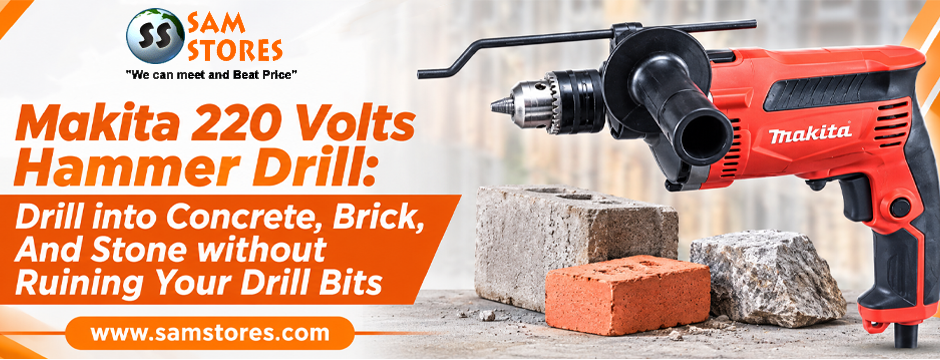
Makita 220 Volts Hammer Drill: Drill into Concrete, Brick, And Stone without Ruining Your Drill Bits

Whether you’re installing shelves, mounting fixtures, or handling a renovation project, the right technique makes a noticeable difference. Choosing reliable equipment, such as a Makita 220 Volts Hammer Drill, can also make demanding drilling tasks easier. However, even a powerful tool needs proper handling.

Drilling into concrete, brick, or stone can test both your patience and your tools. You start with a fresh drill bit, mark the exact spot, and begin working. A few seconds later, the bit overheats, progress slows, and the hole looks nothing like you expected.

The problem isn’t always the drill itself. Masonry materials are harder and more abrasive than wood or plastic. Using the wrong bit, excessive pressure, or an unsuitable drilling mode can wear down cutting edges quickly.

Let’s explore how to drill into different masonry surfaces while protecting your drill bits and getting cleaner results.

Understand The Material before You Start

Concrete, brick, and natural stone might appear similar when viewed from the outside. However, their density, composition, and resistance can vary considerably.

Understanding the surface helps you choose the right drill bit, speed, and drilling approach.

  • Concrete: Dense concrete can contain hard aggregates and reinforcing materials. It generally requires a masonry bit and a hammer drilling function.
  • Brick: Brick is comparatively softer, but its structure can crack under excessive pressure. Drilling into the brick itself is often preferable to drilling into the mortar.
  • Natural Stone: Granite, slate, and other stones have different hardness levels. Some require specialised masonry or diamond-tipped bits.

Before drilling, identify the material and check for hidden electrical wiring, plumbing, and reinforcement. A suitable detector can help identify potential hazards.

Choose The Right Drill Bit

Your drill bit does most of the cutting work, so choosing the correct one matters. Standard wood and metal bits aren’t designed for masonry surfaces.

For most concrete and brick applications, use a carbide-tipped masonry bit. Its hardened cutting tip helps withstand abrasive materials and repeated impact.

For particularly hard stone, specialised diamond-tipped bits may be more appropriate. Always check the manufacturer’s recommendations before selecting one.

A few practical considerations can help:

  • Match the bit diameter to the required hole size.
  • Choose a bit length that suits the drilling depth.
  • Check that the shank fits your drill’s chuck.
  • Inspect the carbide tip for chips or visible damage.
  • Replace worn bits rather than forcing them through the material.

A compatible Makita 220 Volts Hammer Drill can provide the impact action needed for many masonry drilling applications. Pairing the drill with a suitable masonry bit helps improve drilling efficiency.

Use The Correct Drill And Settings

Not every drill is designed for demanding masonry work. A standard rotary drill may handle occasional light drilling, but dense concrete often requires a hammer drill.

A hammer drill combines rotation with rapid forward impacts. This action helps break up masonry material while the bit cuts through it.

When selecting your equipment, consider the following:

  • Hammer Drill: Suitable for many concrete and brick drilling tasks.
  • Rotary Hammer: Often better suited to frequent drilling or demanding applications involving harder concrete.
  • Rotary Drill: Useful for softer materials and applications that don’t require impact action.

Choose the appropriate speed and operating mode for the material and bit. Avoid assuming that maximum speed always produces better results.

If you are comparing brands, we offer access to tools across different manufacturers. Options such as Bosch 220 Volts Power Tools can help buyers explore equipment suited to different workshop and construction requirements.

Start Slowly And Let The Drill Do The Work

One common mistake is applying excessive pressure immediately. This can generate unnecessary heat, damage the cutting edge, and make the drill difficult to control.

Instead, begin drilling at a controlled speed. Allow the bit to establish a small starting point before increasing pressure gradually. Keep the drill steady and maintain alignment throughout the process. Excessive sideways movement can damage the hole and place additional stress on the bit.

Remember these simple practices:

  • Start at a slower speed when positioning the bit.
  • Increase speed gradually when the hole is established.
  • Apply steady pressure without forcing the drill.
  • Keep the drill aligned with the intended hole.
  • Pause if progress slows or the bit becomes unusually hot.

If the drill struggles, stop and investigate. Forcing it further rarely solves the underlying problem.

Control Heat during Drilling

Heat is one of the biggest reasons drill bits lose their cutting performance. Continuous drilling creates friction between the bit and the material. Excessive heat can weaken cutting edges and shorten tool life.

The simplest solution is to avoid uninterrupted drilling whenever possible.

Work in short intervals, allowing the bit to cool between drilling sessions. Remove accumulated dust periodically, since debris can increase friction and interfere with cutting.

For appropriate drilling applications, follow the bit manufacturer’s cooling recommendations. Some specialised bits require particular cooling methods, while others are designed for dry drilling.

Never apply water indiscriminately to electrical equipment. Check that the drill and bit are suitable for the intended wet or dry application.

Remove Dust And Debris Regularly

Concrete and masonry drilling produces fine dust that can accumulate inside the hole. This debris increases resistance and makes drilling less efficient. Pulling the bit out periodically helps clear loose material. Use a suitable dust extraction attachment or vacuum to manage dust around the drilling area.

Avoid blowing masonry dust away with your mouth. Fine particles can irritate your respiratory system. Wear suitable eye protection and respiratory protection.

Follow applicable workplace safety requirements, particularly when drilling concrete containing silica. Keeping the hole clear also helps prevent unnecessary pressure on the cutting tip.

Adjust Your Technique for Different Materials Using A Makita 220 Volts Hammer Drill

The same drilling approach doesn’t work equally well across every masonry surface.

Drilling into Concrete

Use a suitable carbide-tipped masonry bit and an appropriate hammer drilling mode. Begin carefully, then maintain steady pressure.

If you encounter reinforcing steel, stop rather than forcing the bit through. Reassess the drilling location and follow the project’s specifications.

Drilling into Brick

Start slowly and avoid applying excessive force. When possible, drill into the centre of the brick rather than its edges.

For older or brittle brickwork, consider using a lower-impact approach to reduce cracking risks.

Drilling into Stone

Identify the stone type before selecting your equipment. Hard natural stone may require specialised diamond tooling. Avoid overheating the bit, and follow the manufacturer’s recommended drilling method.

Maintain Your Tools for Longer Performance

Even quality tools require regular inspection and maintenance. A damaged chuck, worn bit, or clogged ventilation opening can affect drilling performance.

After each project, clean the drill and inspect the accessories. Store bits in a dry, organised case to protect their cutting edges.

If you’re building a broader tool collection, consider how different equipment supports different jobs. A DeWalt 220 Volts Angle Grinder can assist with suitable cutting and surface-preparation tasks.
How The Braun 220 Volt Hair Dryer Redefines Everyday Glamour_

Likewise, a Milwaukee 220 Volts Circular Saw or Hitachi 220 Volts Circular Saw may suit specific woodworking and construction applications. Choose each tool according to its intended use rather than treating different machines as interchangeable.

Final Thoughts

Successful masonry drilling depends on more than choosing a powerful machine. The right bit, suitable settings, controlled pressure, and regular cooling all contribute to better results. A Makita 220 Volts Hammer Drill can be a useful addition when concrete and masonry drilling feature regularly in your projects. Combine it with compatible accessories and sensible drilling practices to protect your investment.

At Sam Stores, you can explore power tools from recognised manufacturers for different project requirements. Whether you’re upgrading your equipment or preparing for a new job, choosing the right tool makes everyday work more manageable.

Drill carefully, maintain your accessories, and never force equipment beyond its intended capabilities. A little preparation can save both your drill bits and considerable frustration.

FAQs

1. Which drill bit is best for drilling into concrete?

Carbide-tipped masonry bits are suitable for many concrete drilling applications. Harder materials may require specialised diamond-tipped bits.

2. Can I use a regular drill for concrete?

A regular rotary drill may handle light masonry work, but dense concrete generally requires a hammer drill or rotary hammer.

3. Why do drill bits become blunt when drilling into concrete?

Concrete creates significant friction and abrasion. Excessive heat, unsuitable bits, and continuous drilling can accelerate cutting-edge wear, so you may choose Makita 220 Volts Hammer Drill.

4. Should I use water when drilling into brick or concrete?

Cooling requirements depend on the bit and drilling method. Follow manufacturer instructions and never expose unsuitable electrical equipment to water.

5. How can I prevent bricks from cracking while drilling?

Start slowly, use a suitable masonry bit, and avoid excessive pressure. Drilling away from brick edges can also reduce cracking risks.

6. How often should I replace masonry drill bits?

Replace bits when their cutting edges become damaged, noticeably worn, or ineffective. Regular inspection helps prevent poor drilling results.
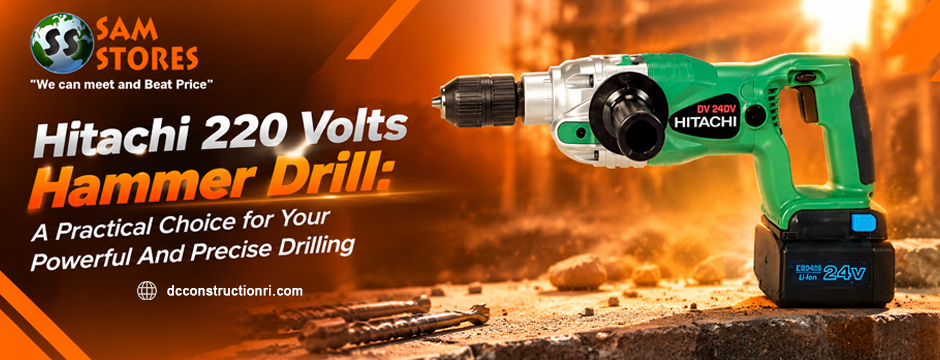
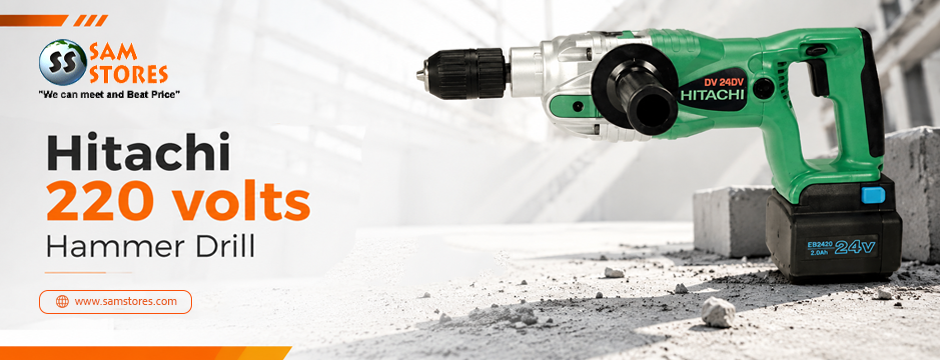
Hitachi 220 Volts Hammer Drill: A Practical Choice for Your Powerful And Precise Drilling

A good drill earns its place in a toolbox when the work gets demanding.

You notice the difference when you’re drilling into tough materials, working through a long project, or handling jobs that require consistent torque. A struggling tool can slow everything down, while the right one simply gets on with the work.

That is where the Hitachi 220 Volts hammer drill becomes an interesting choice for professionals and serious DIY users.

The Hitachi DV24DV 220-240 Volt Cordless Impact Drill combines strong torque, useful operating modes, a precision chuck, and practical design features. It is built for users who expect power without sacrificing control.

For Sam Stores customers looking for dependable drilling equipment, understanding what this drill offers can make the buying decision considerably easier.

Let’s take a closer look at what makes it worth considering.

The Right Hammer Drill Matters: Why?

Not every drilling job demands the same approach. Sometimes you need a straightforward drill for everyday work. Other times, you’re dealing with harder surfaces where additional impact action can make the task much easier.

A hammer or impact drill gives you that additional capability. The key, however, is having enough power and control to use it effectively.

The Hitachi DV24DV is designed around this balance. Its two operating modes allow users to switch between standard drilling and impact drilling according to the task. That means one tool can handle different requirements instead of forcing you to constantly change equipment. For busy workshops and job sites, that versatility can be valuable.

Understanding The Hitachi 220 Volts Hammer Drill

The Hitachi 220 Volts hammer drill is designed for users who want a combination of power and practical handling. One of its standout specifications is its effortless 65 Nm torque. Torque matters because it determines how effectively a drill can apply rotational force during demanding work.

Higher torque can be particularly useful when working with applications that place greater resistance on the drill. The DV24DV also features a powerful impact rate designed to deliver strong performance in its class. This makes it suitable for users who regularly encounter challenging drilling tasks.

Two Modes Give You More Control

One feature worth noting is the two-mode operation. The DV24DV can be used as a standard drill or an impact drill. Drilling requirements change from one job to another. Therefore, having both options available means you can choose the mode based on the job. It also saves space in your toolbox.

65 Nm Torque for Demanding Applications

A drill may perform perfectly well on lighter tasks but start feeling strained when the application becomes more demanding. The DV24DV addresses this with up to 65 Nm of torque.

For tradespeople, contractors, workshop users, and experienced DIY enthusiasts, that additional force can make difficult drilling jobs more manageable. Of course, the appropriate drill bit and operating technique still matter.

A Linear D-Handle Design for Practical Handling

Ergonomics can easily be overlooked when comparing power tools. Yet, anyone who has spent hours using a drill knows that handling makes a considerable difference.

The DV24DV incorporates a linear D-handle design. This configuration gives users a practical grip and can help provide better control during demanding applications. That is particularly useful when additional pressure is required.

Electric Brake Adds An Extra Safety Feature

Power tools should always be handled responsibly. Even experienced users need equipment designed with practical safety features. The DV24DV includes an electric brake, which is designed to stop the rotation of the tool quickly after the trigger is released. This can provide an additional level of control during operation.

However, an electric brake doesn’t replace proper safety practices. Users should still wear appropriate protective equipment, select the correct drill bit, secure their workpiece, and follow the manufacturer’s operating instructions. Good equipment and good working habits should always go together.

Externally Accessible Brushes Make Maintenance Easier

Professional users understand that maintaining power tools is part of getting long-term value from them. The DV24DV features externally accessible brushes. This design makes brush access more convenient when maintenance or replacement is required. That may seem like a minor feature when you’re comparing specifications.

In practice, easier maintenance can save time. You don’t want a straightforward maintenance task to become unnecessarily complicated. For workshops and users who depend heavily on their equipment, serviceability deserves attention alongside power and performance.

Why 220-240 Volt Compatibility Matters

Electrical compatibility is an important consideration when selecting power equipment. The DV24DV is designed for a 220-240 Volt supply, making it suitable for relevant electrical environments.

Before purchasing any electrical power tool, always confirm that its voltage requirements match your intended power source. This is especially important when purchasing equipment for different countries, workshops, or commercial environments.

Choosing the correct voltage specification isn’t simply about convenience. It’s part of using the equipment safely and appropriately.

More Than Just A Drill

When people hear “hammer drill,” they often think about one specific job. But versatile equipment can offer considerably more value.

The Hitachi 220 Volts hammer drill combines standard drilling and impact drilling within the same tool. That flexibility can make it useful across workshops, construction applications, maintenance tasks, renovation work, and serious home projects.

Its optional angle attachment also adds another interesting possibility. An angle attachment can help users reach applications where a conventional straight drill configuration may be awkward.

That kind of adaptability is particularly useful when working in confined or difficult-to-access spaces.

Building A More Capable Hitachi 220 Volts Power Tools Collection

A drill doesn’t have to be the only Hitachi tool in your workshop. Users building a broader collection of Hitachi 220 volt power tools may also consider equipment designed for cutting, grinding, sanding, and other applications.

For example, an angle grinder can be useful for grinding, cutting, and surface preparation. A circular saw can provide a dedicated solution for making controlled cuts through suitable materials.

Choosing between A Drill, Angle Grinder, And Circular Saw

It’s tempting to compare power tools simply by looking at their specifications. However, the better question is what you actually need to accomplish. A Hitachi 220 volt angle grinder is designed around applications such as grinding, cutting, and surface preparation.

A Hitachi 220 volt circular saw, meanwhile, is intended for suitable cutting applications where a dedicated saw provides greater practicality. The DV24DV serves a different role.

Its strength lies in drilling versatility, particularly where standard and impact drilling capabilities are both useful. So, choosing between these tools isn’t about finding one universal winner. It’s about matching the machine to the work.

How The Braun 220 Volt Hair Dryer Redefines Everyday Glamour_

The DV24DV can appeal to several types of users.

  • Professional tradespeople
  • Workshop users
  • Serious DIY enthusiasts

The key is understanding the tool’s capabilities and using it within the manufacturer’s recommended applications.

Getting Better Results from Your Drill

Even a powerful drill performs better when used correctly.

  • Start by selecting the right bit for the material.
  • Check that the bit is properly secured in the chuck before starting.
  • Use the appropriate operating mode for your application.
  • Avoid forcing the drill unnecessarily.
  • Allow the tool to do the work while maintaining controlled pressure.
  • Most importantly, wear appropriate protective equipment and follow the manufacturer’s safety guidance.

These habits may sound basic. They are also the habits that help users work more confidently and consistently.

Why Do Specifications Matter When Buying Power Tools?

Product specifications aren’t just numbers printed on a product page. They help you understand whether a tool matches your working requirements. With the DV24DV, several specifications stand out.

The 220-240 Volt compatibility defines the relevant power supply. The 65 Nm torque indicates its available rotational force. The 13mm keyless chuck tells you about its chuck capacity. So, when viewed together, these specifications tell a much more useful story than any single number.

A Practical Addition to The Toolbox

A good power tool should make work feel more manageable. It should provide enough power for its intended applications while remaining practical to operate and maintain.

The DV24DV brings several useful characteristics together. It offers strong torque, impact capability, standard drilling, a precision keyless chuck, a linear D-handle, electric braking, accessible brushes, and optional angle attachment compatibility.

For users comparing the Hitachi 220 Volts hammer drill, those features provide plenty to consider beyond the basic “drill versus hammer drill” question.

At Sam Stores, choosing the right drilling equipment should begin with understanding what the tool can actually do. That helps you buy for the job rather than simply buying for the specification sheet.

Final Thoughts

The right drill can become one of the most frequently used tools in a workshop. That’s why choosing one based on real working requirements matters.

The Hitachi 220 Volts hammer drill offers a useful combination of 65 Nm torque, two drilling modes, a 13mm precision keyless chuck, electric braking, practical handling, and accessible brushes.

Whether you’re a professional tradesperson, workshop user, or serious DIY enthusiast, the important question is simple: does the tool match the work you expect it to handle?

With the DV24DV, users get a capable drilling solution designed around power, flexibility, and practical usability.

FAQs

1. What is the Hitachi DV24DV hammer drill designed for?

The DV24DV is designed for drilling applications requiring standard drilling or impact drilling. It suits professional and demanding DIY work.

2. How much torque does the Hitachi DV24DV provide?

The DV24DV provides up to 65 Nm of torque, giving users substantial rotational force for suitable demanding applications.

3. Does the DV24DV have different drilling modes?

Yes. The Hitachi 220 Volts hammer drill features two modes: standard drilling and impact drilling. Users can select the appropriate mode based on their application.

4. What type of chuck does the DV24DV use?

The DV24DV features a 13mm precision keyless chuck. This allows convenient drill-bit changes without requiring a traditional chuck key.

5. Does the Hitachi DV24DV include any safety features?

Yes. The drill includes an electric brake designed to stop rotation quickly after releasing the trigger. Users should still follow all recommended safety procedures.

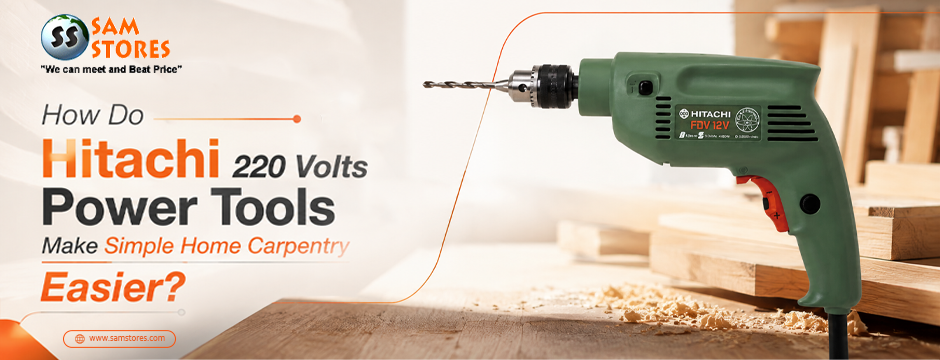
How Do Hitachi 220 Volts Power Tools Make Simple Home Carpentry Easier?

There is something satisfying about fixing or building something with your own hands. Maybe it is a small wooden shelf for the living room, a storage bench for the balcony, or a simple worktable for your garage.

These projects may look intimidating at first. However, the right power tool can make many basic carpentry jobs faster, cleaner, and more manageable.

For homeowners who enjoy practical DIY projects, Hitachi 220 Volts power tools can be useful additions to a home workshop. They can help with cutting, drilling, fastening, and other routine woodworking tasks when used correctly.

At Sam Stores, we understand that residential DIY projects do not always require a professional workshop. Sometimes, you simply need the right tool, a little patience, and a clear idea of what you want to build.

So, how can a power tool transform a simple carpentry project? Let’s explore.

Why Power Tools Make Home Carpentry More Approachable?

Traditional hand tools still have their place. A handsaw, screwdriver, measuring tape, chisel, and hammer can handle many basic jobs. However, cutting several pieces of timber manually can take considerable time and effort.

Power tools introduce speed and consistency.

A suitable saw can make repeated cuts more efficiently. A drill can create clean holes without the physical effort required by a manual brace. A driver can help secure screws quickly across a larger project.

So, it does not mean power tools should replace traditional tools completely. Instead, they complement them. You still need accurate measurements, careful marking, appropriate materials, and good finishing techniques. The power tool simply makes some of the physical work easier.

Start with A Simple Carpentry Project

If you are new to DIY carpentry, don’t begin with an ambitious furniture project.

Start small.

A basic wall shelf is a good example. You might need two or three wooden boards, brackets, screws, and suitable wall fixings.

The process is straightforward:

  1. Measure the available space.
  2. Mark the required board lengths.
  3. Cut the boards accurately.
  4. Smooth rough edges.
  5. Drill necessary holes.
  6. Assemble the components.
  7. Install the finished shelf securely.

A project like this teaches several useful skills without overwhelming you. Once you’re comfortable, you can gradually move toward more complicated projects.

What Can A Power Tool Actually Do?

The term “power tool” covers a surprisingly broad range of equipment. Different tools are designed for different jobs.

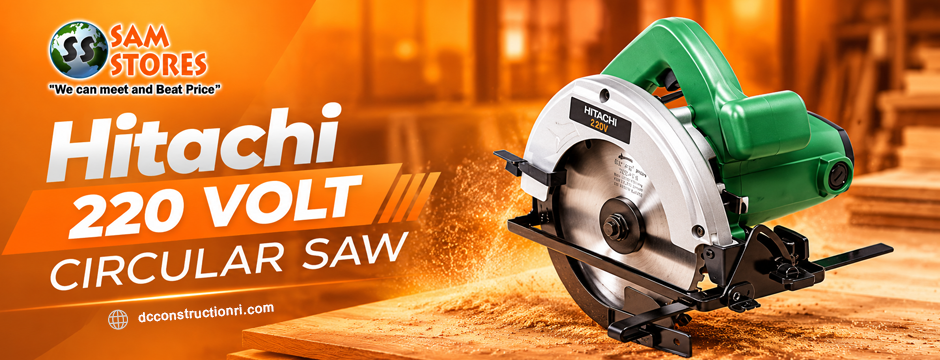
A Hitachi 220 Volts circular saw is primarily used for cutting. A drill creates holes, while certain hammer drills can handle tougher drilling applications. Sanders help smooth wooden surfaces, and drivers make fastening tasks considerably quicker.

Therefore, choosing the right tool matters more than simply buying the most powerful model available. For occasional home carpentry, think about the projects you are likely to undertake. Will you mostly cut timber? Will you drill holes? Do you expect to work with masonry as well as wood?

Your answers can help determine which tools deserve a place in your home workshop.

Choosing Hitachi 220 Volts Power Tools for DIY Projects

For homeowners building a small collection of reliable equipment, Hitachi 220 volts power tools can offer options for different workshop requirements. The important thing is matching the tool to the task.

For example, cutting a long timber board requires a different approach from drilling a hole for a shelf bracket.

Before buying anything, check the tool’s specifications and intended applications. Also consider its power requirements, accessories, ergonomics, and safety features. A tool should feel manageable in your hands.

If it is difficult to control, excessive power can become a disadvantage rather than an advantage.

Cutting Timber with A Circular Saw

Let’s return to our imaginary shelf project. Suppose you have purchased a longer timber board than necessary. You need to cut it into several shorter sections. This is where a circular saw can save considerable time. A Hitachi 220 volts circular saw can be useful for suitable wood-cutting applications when operated according to the manufacturer’s instructions.

The keyword here is “suitable.”

Before making a cut, check the material, blade compatibility, cutting depth, and tool specifications. Secure the workpiece properly and ensure the cutting path is completely clear. Never hold a small piece of timber in your hand while attempting to cut it. Instead, use appropriate supports and keep your hands away from the blade path.

Good preparation makes power-tool work much safer.

Drilling Holes without Struggling

Drilling is another common part of home carpentry. You might need holes for screws, dowels, brackets, handles, hinges, or other fittings. A suitable drill can make these tasks significantly easier.

If your DIY plans also involve occasional masonry work, a Hitachi 220 volts hammer drill may offer useful versatility, depending on its specifications and the materials involved. However, always choose the correct drill bit for the material.

Wood, masonry, and metal require different bits and techniques. Using the wrong accessory can produce poor results and may damage the workpiece or tool. The right combination of tool, bit, speed, and pressure is what produces a clean result.

How The Braun 220 Volt Hair Dryer Redefines Everyday Glamour_

Power Tools Can Save More Than Time

The biggest benefit of power tools is often described as speed. That’s true, but there is more to it. They can also reduce physical effort.

Cutting thick timber repeatedly with a handsaw can become tiring. Drilling multiple holes manually can strain your hands and wrists. Repetitive fastening can become equally uncomfortable.

A suitable power tool can take much of that repetitive effort out of the process. That can make DIY projects more enjoyable. And when a project is enjoyable, you’re more likely to finish it rather than leaving half-built furniture in the garage.

DIY can be rewarding, but knowing your limits is equally important.

Simple shelves, basic wooden storage, small tables, and minor repairs may be suitable for confident homeowners. However, structural modifications, complex electrical work, major installations, or projects involving significant safety risks may require professional expertise.

Don’t let enthusiasm override judgment; use Hitachi 220 volts power tools smartly with all safety.

Making Your Tools Work Smarter

Owning good equipment doesn’t automatically make someone a good carpenter. The real improvement comes from learning how to use tools correctly.

  • Start by understanding the basics.
  • Learn how different blades affect cuts.
  • Understand drill-bit selection. Practise controlling the tool before working on expensive timber.
  • You can also practise on scrap material.

This is particularly useful for beginners. A few practice cuts can help you understand how the saw behaves. A few test holes can show how much pressure a drill requires. Once you become comfortable, your actual project becomes much less intimidating.

A Power Tool Can Change How You See DIY

Something interesting happens after completing your first successful project. You start looking around your home differently.

That unused corner could become a storage area. That empty wall could hold a custom shelf. That awkward space beneath a window might become a small bench. Instead of seeing problems, you begin seeing projects. That’s perhaps the most valuable thing power tools can offer. They don’t simply make cutting and drilling easier. They can make home improvement feel accessible.

At Sam Stores, we believe having suitable tools can help homeowners approach everyday DIY projects with greater confidence. Of course, confidence should always come with careful preparation and responsible tool use.

Final Thoughts

Simple home carpentry does not have to feel like a professional construction project. With accurate measurements, suitable materials, patience, and the right equipment, homeowners can tackle a wide range of practical DIY tasks.

Hitachi 220 volts power tools can help make cutting, drilling, and other repetitive jobs more manageable when the equipment is appropriate for the project. So, whether you are building a shelf, repairing furniture, creating storage, or making something entirely your own, start with a realistic project. Learn your tools, work safely, and focus on accuracy rather than speed.

At our e-commerce platform, Sam Stores, the right equipment can help turn an idea into something you can actually build. It’s because sometimes, the most satisfying thing in your home isn’t something you bought. It’s something you made yourself.

FAQs

1. Are power tools suitable for beginners in home carpentry?

Yes. Beginners can use suitable power tools like Hitachi 220 volts power tools for simple projects after reading the instructions and learning basic safety practices.

2. What power tool is useful for cutting wooden boards?

A suitable circular saw can make straight cuts through compatible wooden boards. Always check the tool and blade specifications before use.

3. Can a hammer drill be used for home carpentry?

A hammer drill can be useful for drilling applications involving wood and masonry, depending on its specifications. Use the appropriate drill bit for each material.

4. What should beginners consider before buying power tools?

Consider the projects you plan to complete, tool specifications, power requirements, ergonomics, accessories, safety features, and manufacturer guidance.

5. How can I use power tools more safely?

Read the instructions, secure your workpiece, use appropriate protective equipment, maintain good lighting, and keep your hands away from moving components.