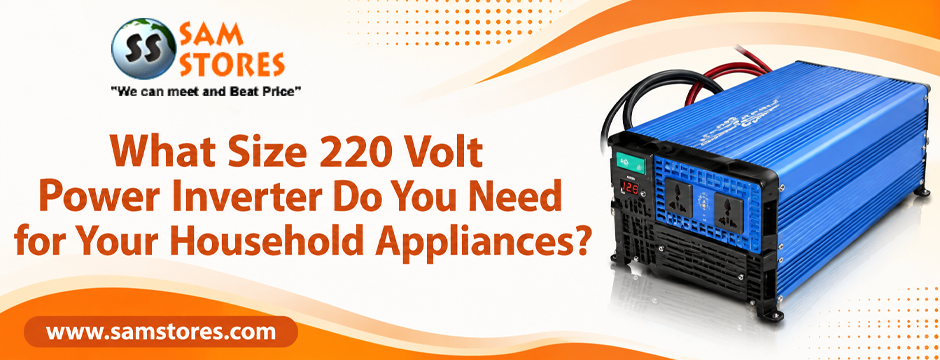
What Size 220 Volt Power Inverter Do You Need for Your Household Appliances?

Buying a power inverter sounds simple until you start looking at the wattage ratings. One model promises 1,000 watts, another offers 2,000 watts, and a few larger options claim to handle almost anything you plug into them. But how do you know which one is actually suitable for your home?

The answer depends on the appliances you want to operate, how much electricity they consume and whether they need extra power when starting up. Choosing an inverter that is too small can lead to frequent shutdowns, while purchasing a much larger model than necessary may mean spending more than you need to.

A 220 volt power inverter can be a useful solution for households that need to operate 220V appliances using a compatible DC battery supply. However, voltage is only one part of the buying decision. You also need to understand continuous wattage, starting power, battery capacity and the type of electrical load your appliances create.

Here is how to work out the right inverter size before placing your order at Sam Stores.

1. Start by Checking the Wattage of Your Household Appliances

Before comparing inverter models, make a list of the appliances you want to run. Check their rating labels, user manuals or manufacturer specifications to find their power consumption in watts.

For example, a household may need backup power for:

  • LED lights
  • Television
  • Laptop and computer equipment
  • Ceiling or table fans
  • Refrigerator
  • Microwave oven
  • Washing machine
  • Small kitchen appliances

Each appliance has a different electricity requirement. A laptop charger might use around 60 watts, while a microwave could require 1,000 watts or more of input power. Refrigerators and washing machines also need additional power during motor startup.

Do not estimate your requirements based only on the number of appliances. Five low-wattage devices may use less electricity than one high-powered kitchen appliance.

Once you have the wattage figures, you can calculate how much power your inverter needs to deliver.

2. Understand Continuous Wattage and Surge Wattage

This is where many first-time inverter buyers make mistakes.

Inverters generally have two important power ratings: continuous wattage and surge wattage.

Continuous wattage refers to the amount of power an inverter can supply consistently under its specified operating conditions. If your household appliances require 800 watts during normal operation, your inverter must be capable of supplying at least that amount.

Surge wattage refers to the additional short-term power available to handle appliances that draw extra electricity when switched on. Refrigerators, pumps, compressors and washing machines can have substantial startup demands.

Consider a refrigerator that consumes 200 watts while running. Its compressor might briefly require considerably more power when starting. An inverter rated at exactly 200 watts would clearly be unsuitable.

When shopping for an inverter, check both ratings rather than focusing on the larger number printed on the product description.

A good buying decision accounts for normal electricity consumption as well as the highest startup demand from appliances that may operate together.

3. Calculate Your Total Household Power Requirement

You do not necessarily need an inverter powerful enough to operate every appliance in your home simultaneously. Instead, consider which devices you genuinely want to use together.

Let’s look at a simple example.

Imagine you want to operate the following appliances during a power interruption:

Household applianceEstimated running wattage
LED lights40W
Television100W
Laptop60W
Ceiling fan75W
Refrigerator250W
Total525W

Your estimated running requirement is 525 watts.

However, buying a 525-watt inverter would leave practically no room for additional demand. You should allow a reasonable operating margin, often around 20% to 25%, depending on the equipment and expected load.

For this example, a continuous inverter capacity of approximately 700 watts or higher would be a sensible starting point. You must still check the refrigerator’s startup requirement and select a model with sufficient surge capacity.

This calculation gives you a much clearer idea of what to look for when comparing products.

4. Which Inverter Size Is Suitable for Different Household Needs?

There is no single inverter size that works for every household. Your requirements will depend on the number of appliances, their combined wattage and their startup characteristics.

Here is a general guide to help narrow down your options.

Inverter capacityPotential applications
500WSmall electronics, LED lights and basic charging
1,000WComputers, televisions, fans and selected small appliances
1,500WLarger combinations of household electronics and suitable appliances
2,000WMultiple appliances with higher combined power requirements
3,000W or aboveLarger loads and selected high-demand household equipment

These are indicative capacity categories, not guarantees of appliance compatibility. Always compare actual continuous and surge ratings, along with the manufacturer’s recommendations.

For example, someone who only needs to keep a laptop, television and a few lights running will have very different requirements from a household that wants to operate a refrigerator, washing machine and microwave.

At Sam Stores, comparing available inverter specifications before purchasing can help you avoid paying for capacity you are unlikely to use.

5. Do Not Ignore Battery Capacity When Choosing an Inverter

An inverter converts direct current (DC) electricity from a battery into alternating current (AC) electricity. The battery supplies the energy, while the inverter makes it usable for compatible household appliances.

This means choosing the right inverter is only half of the equation. You also need a battery capable of supplying the required power for your intended operating period.

Suppose your appliances consume a combined 500 watts and you want to operate them for four hours.

Your basic energy requirement would be:

500 watts × 4 hours = 2,000 watt-hours, or 2kWh.

In practice, you will need additional battery capacity because inverter conversion losses, battery efficiency and permitted depth of discharge affect the usable energy available.

For instance, a 12V battery system supplying a high-power inverter may also require substantial current. Larger inverter systems may be better suited to higher-voltage battery configurations, depending on the manufacturer’s design.

Check the inverter’s DC input voltage, battery compatibility, recommended cable size and protection requirements before purchasing.

6. Pure Sine Wave or Modified Sine Wave: Which Should You Choose?

Inverter capacity is important, but output waveform also matters.

Pure sine wave inverters produce AC electricity with a smooth waveform similar to conventional utility power. They are generally a good choice for sensitive electronics, modern appliances and equipment containing motors or specialised power supplies.

Modified sine wave inverters usually cost less, but their output waveform is less suitable for certain devices. Some appliances may run noisily, become less efficient or fail to operate correctly.

If you intend to power refrigerators, computers, televisions or appliances with electronic controls, check their compatibility carefully. A pure sine wave model is often the safer purchasing choice for mixed household loads.

Also verify the output frequency and voltage. A 220V output does not automatically mean the inverter is suitable for every appliance.

7. Understand the Difference Between a Power Inverter and a Voltage Converter

This distinction is particularly important if you own appliances purchased from another country.

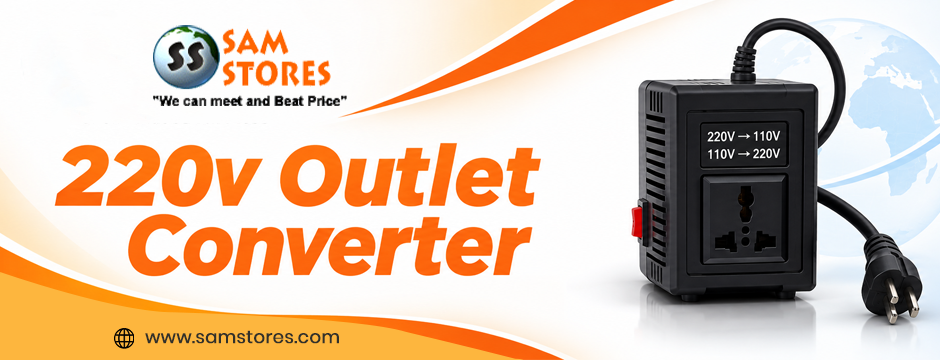
A power inverter converts DC electricity into AC electricity. A voltage converter or transformer changes the voltage of an AC electrical supply.

For example, a transformer 220 to 110 volts is designed to reduce a 220V AC supply to approximately 110V AC for compatible appliances. It does not perform the same function as a battery-powered inverter.

Similarly, a voltage adapter 220 to 110 must be selected according to the appliance’s electrical requirements. A simple plug adapter cannot change voltage.

A 220v outlet converter may refer to a voltage conversion device or an outlet adapter, depending on the product. Always check its specifications rather than relying on the product name.
How The Braun 220 Volt Hair Dryer Redefines Everyday Glamour_

If you need equipment that can increase or decrease voltage, explore the step up and down voltage converter transformer options available through Sam Stores.

You may also need a 220 line adapter when the appliance plug does not match the available socket. Remember that an adapter changes the physical plug connection, not the electrical voltage.

Understanding these differences can prevent an expensive purchasing mistake.

8. Common Mistakes to Avoid When Buying a 220 Volt Power Inverter

Even buyers who understand wattage sometimes overlook important specifications. Watch out for these common mistakes:

Choosing an inverter based only on its peak rating: Always check the continuous output capacity. A large peak rating does not mean the inverter can sustain that power.

Ignoring startup loads: Appliances with motors and compressors can require considerably more power during startup.

Buying without checking battery compatibility: An inverter designed for a particular DC input voltage will not necessarily work with every battery configuration.

Overlooking output frequency: Appliances designed for 50Hz may not operate correctly with an incompatible 60Hz supply, or vice versa.

Assuming every appliance can run together: Add up the loads you intend to operate simultaneously, including startup requirements.

Ignoring electrical safety: Use correctly rated cables, fuses, circuit protection and suitable grounding. Fixed household connections should be installed by a qualified electrician.

Taking a few minutes to check these details can save you from equipment damage, unexpected shutdowns and unnecessary replacement costs.

9. Find the Right Power Solution with Sam Stores

Choosing an inverter should not be about purchasing the biggest model available. It should be about finding equipment that matches your actual household requirements.

At Sam Stores, customers can explore power inverters designed for different DC input and AC output requirements, including 12V DC to 220V AC options. The right model depends on the appliances you intend to operate, their total wattage and the battery system available.

Before making a purchase, compare the continuous output, surge capacity, output waveform, frequency and electrical protection features. If you are unsure about compatibility, review the product specifications or seek technical advice before ordering.

Whether you need backup power for everyday electronics or a more capable setup for selected household appliances, choosing the correct capacity makes a considerable difference to the overall experience.

Final Thoughts

So, what size 220 volt power inverter do you need for your household appliances? Start by calculating the combined running wattage of the devices you want to operate. Add an appropriate safety margin, account for motor startup demands and choose a battery system that can support your required backup duration.

A smaller inverter may be perfectly adequate for lights, computers and basic electronics, while refrigerators, washing machines and other high-demand appliances may require a much larger system.

Take the time to compare specifications instead of making a decision based on voltage or wattage alone. Explore the power solutions available at Sam Stores and choose an inverter that delivers the capacity, compatibility and performance your household needs.

Frequently Asked Questions

1. What size 220 volt power inverter do I need for household appliances?

The right size depends on the combined wattage of your appliances and their startup power requirements. A 1,000W inverter may suit basic electronics, while larger appliances may require 2,000W or more. Always check continuous and surge ratings.

2. Can a 220 volt power inverter run a refrigerator and washing machine?

Yes, provided the inverter has sufficient continuous and surge capacity. Both appliances can have significant startup power requirements, so check their individual specifications before connecting them.

3. Is a 2,000-watt inverter enough to run household appliances?

A 2,000-watt inverter can operate several household appliances, depending on their combined power consumption. However, high-demand appliances such as microwaves, heaters and washing machines may limit how many devices can operate simultaneously.

4. What is the difference between a 220V power inverter and a 220V to 110V transformer?

A power inverter converts DC electricity from a battery into AC electricity. A 220V to 110V transformer changes an existing AC supply from 220V to 110V. They serve different electrical purposes.

5. Does a higher-wattage 220 volt power inverter consume more electricity?

Not necessarily. An inverter’s actual energy consumption depends on the connected appliances, conversion efficiency and standby consumption. A larger inverter does not automatically draw its maximum rated power continuously.
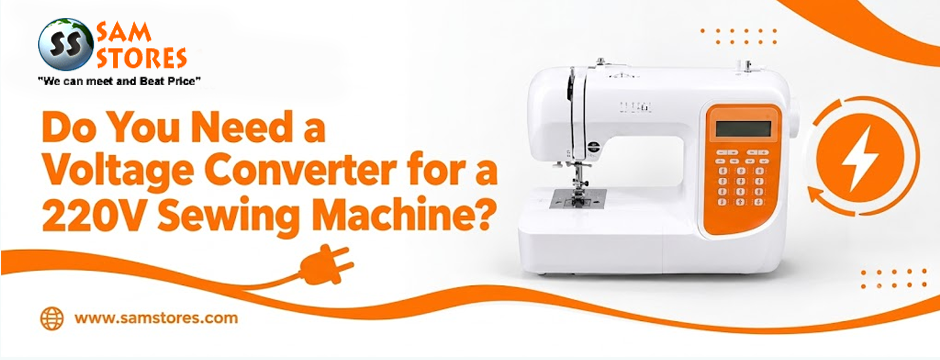
Do You Need a Voltage Converter for a 220V Sewing Machine?

Buying a sewing machine for use in another country can raise a few questions, especially when the voltage at home differs from the machine’s electrical requirements. You might find a sewing machine that suits your projects perfectly, only to discover that its power rating is 220V while your wall outlet supplies 110V or 120V. Should you buy a voltage converter, use a plug adapter, or look for another model?

The answer depends on the machine’s specifications and the electrical supply where you plan to use it. Getting this right matters because an incompatible power supply can prevent your sewing machine from working properly and may even damage its motor or electronic components.

At Sam Stores, choosing the right electrical appliance starts with understanding how it fits your needs. If you are shopping for a sewing machine 220v voltage model, this guide explains when a voltage converter is necessary, how to check compatibility, and what to consider before making a purchase.

Do You Need a Voltage Converter for a 220V Sewing Machine?

Yes, you may need a voltage converter if your sewing machine requires 220V but your electrical outlet supplies only 110V or 120V. However, a converter is not always necessary.

The first step is to check the electrical rating printed on the machine, its power adapter, or the manufacturer’s instruction manual.

Here is a simple guide to help you understand your options:

  • 220V sewing machine with a 110V or 120V outlet: A suitable step-up voltage converter is generally required unless the machine is rated for both voltage ranges.
  • 220V sewing machine with a 220V to 240V outlet: A voltage converter is usually unnecessary if the machine’s rated input supports the local supply.
  • Dual-voltage sewing machine: If the rating specifies an input such as 100V to 240V, a voltage converter is generally unnecessary. You may only need a compatible plug adapter.
  • Unclear voltage rating: Check the manufacturer’s documentation before connecting the machine to the outlet.

Do not assume that every sewing machine sold internationally supports multiple voltages. Even machines from the same brand can have different electrical specifications depending on the model and intended market.

Understanding Sewing Machine 220V Voltage Requirements

Voltage is the electrical pressure that drives current through a device. Sewing machines use electrical power to operate their motors, control systems, lights and other components.

A machine designed for 220V expects a supply within its specified operating range. If you connect it to an incompatible source, it may fail to start, perform poorly or suffer electrical damage.

Understanding the difference between voltage, frequency and plug type can help you avoid an unnecessary purchase or an expensive repair.

Voltage and frequency are not the same

Voltage refers to the electrical supply level, while frequency, measured in hertz (Hz), describes how often the alternating current changes direction.

A sewing machine rated for 220V and 50Hz may have different compatibility requirements from one rated for 120V and 60Hz. Some machines support multiple frequencies, while others have restrictions.

Before buying a converter, check both the voltage and frequency ratings. A converter that changes voltage does not necessarily change frequency.

Plug adapters do not convert voltage

This is one of the most common mistakes buyers make when purchasing appliances for international use.

A plug adapter changes the physical shape of a plug so it can fit a different outlet. It does not change the electrical voltage.

For example, if you bring a 220V sewing machine to a home with 120V outlets, a simple plug adapter will not turn the 120V supply into 220V. You would generally need a properly rated step-up converter, unless the sewing machine supports both voltages.

Knowing this distinction before ordering can save you time and help protect your investment.

When Should You Buy a Voltage Converter?

A voltage converter is worth considering when your sewing machine and household electricity operate at different voltage levels.

Imagine a customer in the United States buying a sewing machine designed for 220V operation. The machine may offer the desired stitching functions, but a standard household outlet in the United States typically supplies around 120V. Connecting the machine directly could leave it unable to operate correctly.

In this situation, a step-up converter may be appropriate.

Before choosing one, consider these factors.

1. Check the machine’s wattage

Voltage is only one part of the calculation. You also need to know how much electrical power the sewing machine consumes.

Look for the wattage or current rating on the product label or in the user manual. The converter must be capable of handling the machine’s power demand, including any startup requirements.

A converter rated too close to the machine’s normal consumption may not provide enough capacity for reliable operation. Follow the converter manufacturer’s sizing guidance and allow for any additional starting load specified for the machine.

2. Consider the motor and electronic controls

A basic mechanical sewing machine may have different power requirements from a computerised model with a display, automatic threading features or electronic speed controls.

If your machine uses sophisticated electronics, choose a converter that is explicitly suitable for that type of equipment. Check the manufacturer’s guidance before using a converter with sensitive electronic components.

3. Confirm frequency compatibility

A voltage converter may adjust the voltage without changing the frequency. If your machine specifies a particular frequency, confirm that it is compatible with your local supply.

If the documentation does not make this clear, contact the manufacturer or an authorised service provider before using the machine.

Can You Use a Singer Sewing Machine 220 Volt Model in the USA?

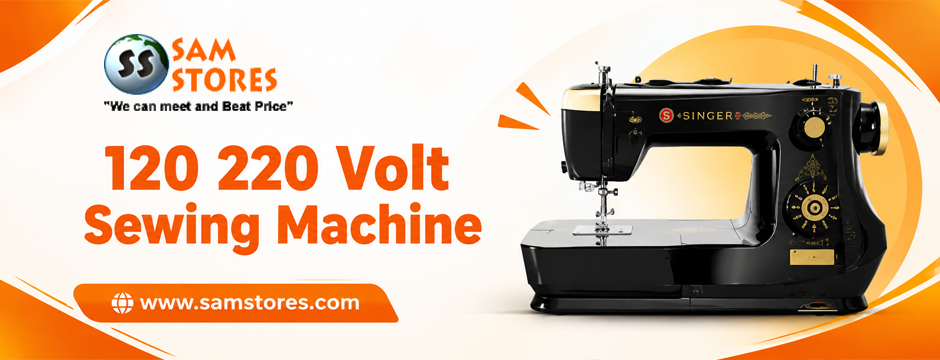
A singer sewing machine 220 volt model can potentially be used in the United States, but the exact model determines what equipment you need.

Singer offers sewing machines for different markets, and their voltage requirements can vary. You should never assume that all Singer machines have the same electrical rating.

Start by locating the rating label on the machine or checking the model’s official manual.

If the label specifies 220V only, you will generally need a suitable step-up converter to use the machine with a standard 120V supply. The converter must also meet the machine’s power requirements and any other electrical specifications.

If the machine is marked for a dual-voltage input, such as 100V to 240V, it may operate directly from a compatible US supply. In that case, a plug adapter may be sufficient, provided the frequency requirements are also met.

A practical buying tip: Check the model number, voltage rating, wattage and frequency before ordering a Singer machine from an international retailer. This is particularly important when purchasing online, where product photographs may show a plug or specification intended for a different country.

How to Choose the Right Converter for a 220 Volts Sewing Machine

Once you establish that a converter is necessary, focus on compatibility rather than choosing the cheapest option.

A suitable converter should meet the following requirements:

  • Correct voltage conversion: It should provide the output voltage required by your sewing machine.
  • Adequate power capacity: Its rating should accommodate the machine’s consumption and startup requirements.
  • Suitable electrical design: It should be appropriate for the machine’s motor and electronic controls.
  • Correct frequency compatibility: It should not be assumed to change 50Hz power to 60Hz, or the reverse.
  • Reliable safety features: Look for appropriate overload protection and recognised safety certifications for your market.

A converter with insufficient capacity can overheat or shut down during operation. A poorly matched device can also cause inconsistent performance.

If you are unsure which converter to buy, consult the sewing machine manufacturer or a qualified electrician. This is preferable to relying on a generic converter listing that does not clearly explain its specifications.

Should You Buy a 220V Sewing Machine or a Dual-Voltage Model?

The right choice depends on where you will use the machine and whether you expect to move between countries.

A dedicated 220V sewing machine can be a practical option for households with compatible electrical outlets. If you are buying the machine for a permanent workspace in a region with a suitable 220V to 240V supply, a separate converter may not be needed.

A dual-voltage model offers more flexibility. If its specifications support both 110V to 120V and 220V to 240V supplies, it may be easier to use when relocating or travelling between regions. You will still need to check frequency compatibility and the appropriate plug arrangement.

Consider your sewing habits before deciding. Someone who sews regularly in a dedicated home studio may prioritise stitch options, durability and ease of maintenance. A person who moves frequently may place greater importance on portability and voltage flexibility.

If you are exploring international appliance options, Sam Stores can be a useful starting point for researching products intended for different electrical standards. Always verify the specifications of the particular model before purchasing.

You can also explore related household appliance options, including 120 220 volt sewing machine, when comparing voltage requirements and available configurations. For other international kitchen appliance needs, browse 220 Volts Bread Machines.

How The Braun 220 Volt Hair Dryer Redefines Everyday Glamour_

Common Mistakes to Avoid When Using a 220V Sewing Machine

Even experienced sewing enthusiasts can overlook electrical compatibility when purchasing a machine online. A few simple checks can help prevent problems.

Mistake 1: Assuming a plug adapter is enough. A plug adapter changes the plug shape, not the voltage. Check whether the machine supports the local supply.

Mistake 2: Ignoring the power rating. A converter must support the machine’s electrical demand. Check the wattage and startup requirements before selecting one.

Mistake 3: Overlooking frequency. A voltage converter may not change the frequency. Confirm that the machine supports the available electrical supply.

Mistake 4: Buying without checking the model number. Product names alone do not guarantee identical electrical specifications. Read the manufacturer’s documentation for the exact model.

Mistake 5: Using an unsuitable converter for electronic equipment. Some computerised machines have specific power requirements. Confirm that the converter is appropriate before connecting the machine.

Taking a few minutes to check these details can help you avoid unnecessary costs and make a more confident purchase.

Find the Right Sewing Machine for Your Needs at Sam Stores

Choosing a sewing machine involves more than comparing stitch patterns, speed settings and prices. Voltage compatibility is just as important, particularly if you are buying an appliance designed for use in another country.

Before placing an order, check the machine’s rated voltage, frequency, wattage and plug type. If it requires 220V but your home supplies 120V, investigate a suitable step-up converter. If it supports a broad dual-voltage range, you may be able to use it with a plug adapter instead.

At Sam Stores, taking the time to understand product specifications helps you make a more informed decision and choose equipment suited to your home or sewing workspace.

Whether you are a beginner learning basic alterations or an experienced sewing enthusiast working on detailed garments, the right machine should fit your projects and your electrical setup. Compare the specifications carefully, confirm compatibility before connecting the machine, and invest in the equipment that makes sense for your needs.

Frequently asked questions

1. Do I need a voltage converter for a 220V sewing machine?

Yes, if the machine requires 220V and your outlet supplies only 110V or 120V, you will generally need a suitable step-up voltage converter. Dual-voltage machines may not require one.

2. Can I use a 220V sewing machine with a 120V outlet?

You should not connect a 220V-only machine directly to a 120V outlet. Check whether the manufacturer permits this setup with a suitable converter or whether the model supports both voltages.

3. Will a plug adapter work for a 220V sewing machine?

A plug adapter only changes the plug configuration. It does not convert voltage, so it is insufficient when the machine requires 220V and the outlet supplies 120V.

4. Can a Singer sewing machine rated at 220V work in the USA?

It may work with an appropriately rated step-up converter if the machine is designed for 220V only. Check the model’s voltage, wattage and frequency requirements before use.

5. Can I use a 220V sewing machine on a 230V or 240V supply?

It depends on the machine’s rated input range. Check the manufacturer’s specifications to confirm whether 230V or 240V operation is supported rather than assuming every 220V machine is compatible.