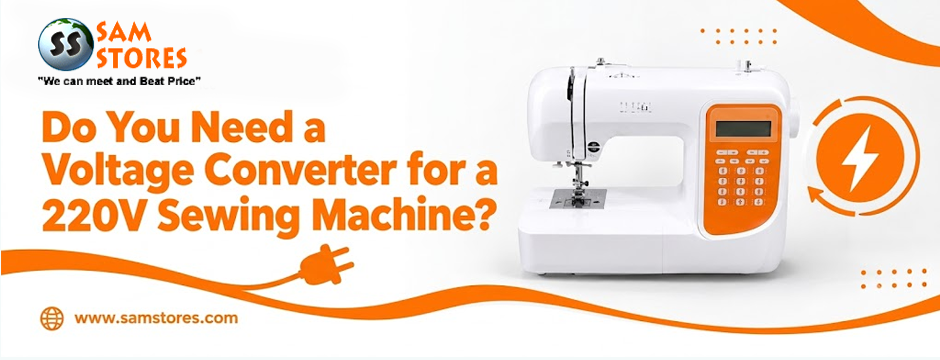
Do You Need a Voltage Converter for a 220V Sewing Machine?

Buying a sewing machine for use in another country can raise a few questions, especially when the voltage at home differs from the machine’s electrical requirements. You might find a sewing machine that suits your projects perfectly, only to discover that its power rating is 220V while your wall outlet supplies 110V or 120V. Should you buy a voltage converter, use a plug adapter, or look for another model?

The answer depends on the machine’s specifications and the electrical supply where you plan to use it. Getting this right matters because an incompatible power supply can prevent your sewing machine from working properly and may even damage its motor or electronic components.

At Sam Stores, choosing the right electrical appliance starts with understanding how it fits your needs. If you are shopping for a sewing machine 220v voltage model, this guide explains when a voltage converter is necessary, how to check compatibility, and what to consider before making a purchase.

Do You Need a Voltage Converter for a 220V Sewing Machine?

Yes, you may need a voltage converter if your sewing machine requires 220V but your electrical outlet supplies only 110V or 120V. However, a converter is not always necessary.

The first step is to check the electrical rating printed on the machine, its power adapter, or the manufacturer’s instruction manual.

Here is a simple guide to help you understand your options:

  • 220V sewing machine with a 110V or 120V outlet: A suitable step-up voltage converter is generally required unless the machine is rated for both voltage ranges.
  • 220V sewing machine with a 220V to 240V outlet: A voltage converter is usually unnecessary if the machine’s rated input supports the local supply.
  • Dual-voltage sewing machine: If the rating specifies an input such as 100V to 240V, a voltage converter is generally unnecessary. You may only need a compatible plug adapter.
  • Unclear voltage rating: Check the manufacturer’s documentation before connecting the machine to the outlet.

Do not assume that every sewing machine sold internationally supports multiple voltages. Even machines from the same brand can have different electrical specifications depending on the model and intended market.

Understanding Sewing Machine 220V Voltage Requirements

Voltage is the electrical pressure that drives current through a device. Sewing machines use electrical power to operate their motors, control systems, lights and other components.

A machine designed for 220V expects a supply within its specified operating range. If you connect it to an incompatible source, it may fail to start, perform poorly or suffer electrical damage.

Understanding the difference between voltage, frequency and plug type can help you avoid an unnecessary purchase or an expensive repair.

Voltage and frequency are not the same

Voltage refers to the electrical supply level, while frequency, measured in hertz (Hz), describes how often the alternating current changes direction.

A sewing machine rated for 220V and 50Hz may have different compatibility requirements from one rated for 120V and 60Hz. Some machines support multiple frequencies, while others have restrictions.

Before buying a converter, check both the voltage and frequency ratings. A converter that changes voltage does not necessarily change frequency.

Plug adapters do not convert voltage

This is one of the most common mistakes buyers make when purchasing appliances for international use.

A plug adapter changes the physical shape of a plug so it can fit a different outlet. It does not change the electrical voltage.

For example, if you bring a 220V sewing machine to a home with 120V outlets, a simple plug adapter will not turn the 120V supply into 220V. You would generally need a properly rated step-up converter, unless the sewing machine supports both voltages.

Knowing this distinction before ordering can save you time and help protect your investment.

When Should You Buy a Voltage Converter?

A voltage converter is worth considering when your sewing machine and household electricity operate at different voltage levels.

Imagine a customer in the United States buying a sewing machine designed for 220V operation. The machine may offer the desired stitching functions, but a standard household outlet in the United States typically supplies around 120V. Connecting the machine directly could leave it unable to operate correctly.

In this situation, a step-up converter may be appropriate.

Before choosing one, consider these factors.

1. Check the machine’s wattage

Voltage is only one part of the calculation. You also need to know how much electrical power the sewing machine consumes.

Look for the wattage or current rating on the product label or in the user manual. The converter must be capable of handling the machine’s power demand, including any startup requirements.

A converter rated too close to the machine’s normal consumption may not provide enough capacity for reliable operation. Follow the converter manufacturer’s sizing guidance and allow for any additional starting load specified for the machine.

2. Consider the motor and electronic controls

A basic mechanical sewing machine may have different power requirements from a computerised model with a display, automatic threading features or electronic speed controls.

If your machine uses sophisticated electronics, choose a converter that is explicitly suitable for that type of equipment. Check the manufacturer’s guidance before using a converter with sensitive electronic components.

3. Confirm frequency compatibility

A voltage converter may adjust the voltage without changing the frequency. If your machine specifies a particular frequency, confirm that it is compatible with your local supply.

If the documentation does not make this clear, contact the manufacturer or an authorised service provider before using the machine.

Can You Use a Singer Sewing Machine 220 Volt Model in the USA?

A singer sewing machine 220 volt model can potentially be used in the United States, but the exact model determines what equipment you need.

Singer offers sewing machines for different markets, and their voltage requirements can vary. You should never assume that all Singer machines have the same electrical rating.

Start by locating the rating label on the machine or checking the model’s official manual.

If the label specifies 220V only, you will generally need a suitable step-up converter to use the machine with a standard 120V supply. The converter must also meet the machine’s power requirements and any other electrical specifications.

If the machine is marked for a dual-voltage input, such as 100V to 240V, it may operate directly from a compatible US supply. In that case, a plug adapter may be sufficient, provided the frequency requirements are also met.

A practical buying tip: Check the model number, voltage rating, wattage and frequency before ordering a Singer machine from an international retailer. This is particularly important when purchasing online, where product photographs may show a plug or specification intended for a different country.

How to Choose the Right Converter for a 220 Volts Sewing Machine

Once you establish that a converter is necessary, focus on compatibility rather than choosing the cheapest option.

A suitable converter should meet the following requirements:

  • Correct voltage conversion: It should provide the output voltage required by your sewing machine.
  • Adequate power capacity: Its rating should accommodate the machine’s consumption and startup requirements.
  • Suitable electrical design: It should be appropriate for the machine’s motor and electronic controls.
  • Correct frequency compatibility: It should not be assumed to change 50Hz power to 60Hz, or the reverse.
  • Reliable safety features: Look for appropriate overload protection and recognised safety certifications for your market.

A converter with insufficient capacity can overheat or shut down during operation. A poorly matched device can also cause inconsistent performance.

If you are unsure which converter to buy, consult the sewing machine manufacturer or a qualified electrician. This is preferable to relying on a generic converter listing that does not clearly explain its specifications.

Should You Buy a 220V Sewing Machine or a Dual-Voltage Model?

The right choice depends on where you will use the machine and whether you expect to move between countries.

A dedicated 220V sewing machine can be a practical option for households with compatible electrical outlets. If you are buying the machine for a permanent workspace in a region with a suitable 220V to 240V supply, a separate converter may not be needed.

A dual-voltage model offers more flexibility. If its specifications support both 110V to 120V and 220V to 240V supplies, it may be easier to use when relocating or travelling between regions. You will still need to check frequency compatibility and the appropriate plug arrangement.

Consider your sewing habits before deciding. Someone who sews regularly in a dedicated home studio may prioritise stitch options, durability and ease of maintenance. A person who moves frequently may place greater importance on portability and voltage flexibility.

If you are exploring international appliance options, Sam Stores can be a useful starting point for researching products intended for different electrical standards. Always verify the specifications of the particular model before purchasing.

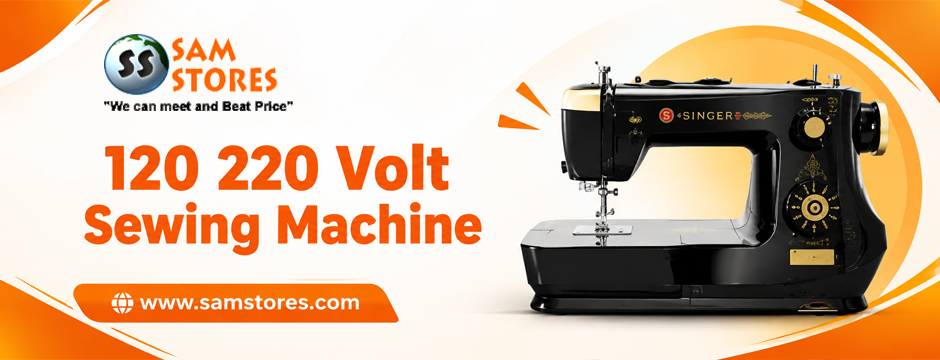
You can also explore related household appliance options, including 120 220 volt sewing machine, when comparing voltage requirements and available configurations. For other international kitchen appliance needs, browse 220 Volts Bread Machines.
How The Braun 220 Volt Hair Dryer Redefines Everyday Glamour_

Common Mistakes to Avoid When Using a 220V Sewing Machine

Even experienced sewing enthusiasts can overlook electrical compatibility when purchasing a machine online. A few simple checks can help prevent problems.

Mistake 1: Assuming a plug adapter is enough. A plug adapter changes the plug shape, not the voltage. Check whether the machine supports the local supply.

Mistake 2: Ignoring the power rating. A converter must support the machine’s electrical demand. Check the wattage and startup requirements before selecting one.

Mistake 3: Overlooking frequency. A voltage converter may not change the frequency. Confirm that the machine supports the available electrical supply.

Mistake 4: Buying without checking the model number. Product names alone do not guarantee identical electrical specifications. Read the manufacturer’s documentation for the exact model.

Mistake 5: Using an unsuitable converter for electronic equipment. Some computerised machines have specific power requirements. Confirm that the converter is appropriate before connecting the machine.

Taking a few minutes to check these details can help you avoid unnecessary costs and make a more confident purchase.

Find the Right Sewing Machine for Your Needs at Sam Stores

Choosing a sewing machine involves more than comparing stitch patterns, speed settings and prices. Voltage compatibility is just as important, particularly if you are buying an appliance designed for use in another country.

Before placing an order, check the machine’s rated voltage, frequency, wattage and plug type. If it requires 220V but your home supplies 120V, investigate a suitable step-up converter. If it supports a broad dual-voltage range, you may be able to use it with a plug adapter instead.

At Sam Stores, taking the time to understand product specifications helps you make a more informed decision and choose equipment suited to your home or sewing workspace.

Whether you are a beginner learning basic alterations or an experienced sewing enthusiast working on detailed garments, the right machine should fit your projects and your electrical setup. Compare the specifications carefully, confirm compatibility before connecting the machine, and invest in the equipment that makes sense for your needs.

Frequently asked questions

1. Do I need a voltage converter for a 220V sewing machine?

Yes, if the machine requires 220V and your outlet supplies only 110V or 120V, you will generally need a suitable step-up voltage converter. Dual-voltage machines may not require one.

2. Can I use a 220V sewing machine with a 120V outlet?

You should not connect a 220V-only machine directly to a 120V outlet. Check whether the manufacturer permits this setup with a suitable converter or whether the model supports both voltages.

3. Will a plug adapter work for a 220V sewing machine?

A plug adapter only changes the plug configuration. It does not convert voltage, so it is insufficient when the machine requires 220V and the outlet supplies 120V.

4. Can a Singer sewing machine rated at 220V work in the USA?

It may work with an appropriately rated step-up converter if the machine is designed for 220V only. Check the model’s voltage, wattage and frequency requirements before use.

5. Can I use a 220V sewing machine on a 230V or 240V supply?

It depends on the machine’s rated input range. Check the manufacturer’s specifications to confirm whether 230V or 240V operation is supported rather than assuming every 220V machine is compatible.
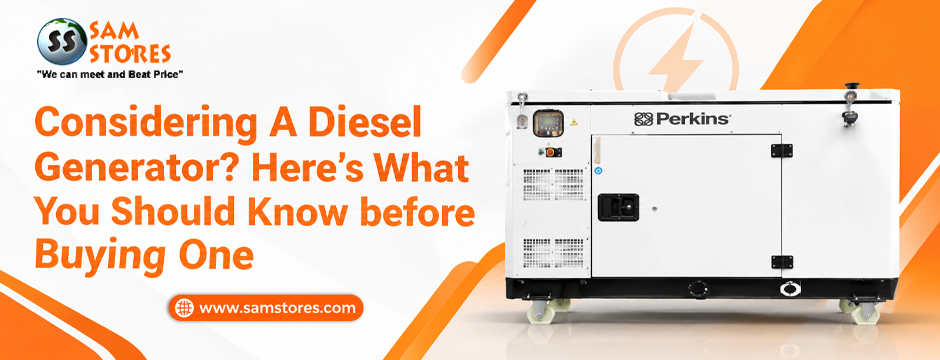
Considering A Diesel Generator? Here’s What You Should Know before Buying One

Power interruptions are inconvenient at home, but they can become expensive for businesses, workshops, farms, and job sites. So, when dependable backup power matters, a generator can provide much-needed peace of mind.

However, choosing the right 220 volt diesel generator involves more than checking its wattage. Fuel type, voltage, phase configuration, runtime, maintenance requirements, noise levels, and connected equipment all influence the buying decision.

If you are considering a diesel generator, understanding how diesel generators work and where they fit into your power requirements can help you make a more confident purchase.

Why Consider A Diesel Generator?

Diesel generators have earned a strong reputation for durability and dependable performance. They are commonly used in environments where generators may need to operate for extended periods.

Diesel engines are designed to handle demanding workloads. This makes them suitable for commercial facilities, construction sites, agricultural operations, workshops, and other applications where consistent backup power is important.

Another advantage is fuel efficiency. Under suitable operating conditions, diesel generators can provide efficient fuel consumption while delivering substantial power output.

That does not automatically make diesel the best choice for everyone. Your usage pattern matters.

If you only need occasional backup power for a few household appliances, a smaller gasoline generator may be more practical. For frequent or heavier-duty use, however, diesel becomes much more attractive.

Understanding 220 Volt Generator Requirements

Voltage is one of the first specifications you should consider before buying a generator. Your generator needs to match the electrical requirements of the equipment you intend to operate.

A 220 volt diesel generator can be appropriate for equipment designed to operate around the 220-volt range. This voltage is commonly associated with heavier electrical loads than those handled by many standard household circuits.

Before purchasing, check the voltage requirements printed on your appliances, machinery, tools, or electrical equipment.

You should also consider the generator’s rated and maximum output. A generator that technically produces the required voltage may still be unsuitable if its power capacity cannot handle your connected load.

Diesel Vs. Gasoline: Which Makes More Sense?

Fuel type can significantly influence your ownership experience.

Gasoline generators are often chosen because they are widely available and can be convenient for occasional use. They can work well for lighter applications where portability and short operating periods are priorities.

A 220 volts gasoline generator may therefore appeal to homeowners or users who need temporary backup power without running a generator regularly.

Diesel generators, meanwhile, are generally better suited to demanding applications and longer operating periods. Diesel engines are known for their robust construction and ability to handle sustained workloads.

The right choice ultimately depends on how often you expect to use the generator, how much power you need, and the environment in which it will operate.

Single-Phase Generators And Electrical Compatibility

Another specification that often gets overlooked is phase configuration.

A 240 volt single phase generator is designed for electrical systems and equipment requiring single-phase power at the specified voltage. Single-phase generators can be suitable for many residential applications, small businesses, workshops, and selected equipment.

Three-phase generators are generally more appropriate for larger commercial or industrial systems that use three-phase electrical loads.

Never choose a generator based solely on its voltage rating. The phase configuration must also correspond with your electrical system and equipment. If you are uncertain about compatibility, reviewing the equipment specifications or consulting a qualified electrician before purchasing can prevent expensive mistakes.

How Much Generator Capacity Do You Actually Need?

Buying the biggest generator available is not necessarily the smartest approach.

Start by identifying everything you expect to operate during a power outage. This could include lighting, refrigerators, pumps, computers, tools, air-conditioning equipment, machinery, or other electrical systems.

Then determine their running wattage and starting wattage.

Some equipment requires considerably more power when its motor starts. Refrigerators, pumps, compressors, and air-conditioning systems are common examples.

For example, a generator may comfortably handle the running load of several devices but struggle when multiple motors start simultaneously. Create a realistic load calculation before shopping. It helps you avoid both under-sizing and unnecessary overspending.

What about 220-240 Volt Generators?

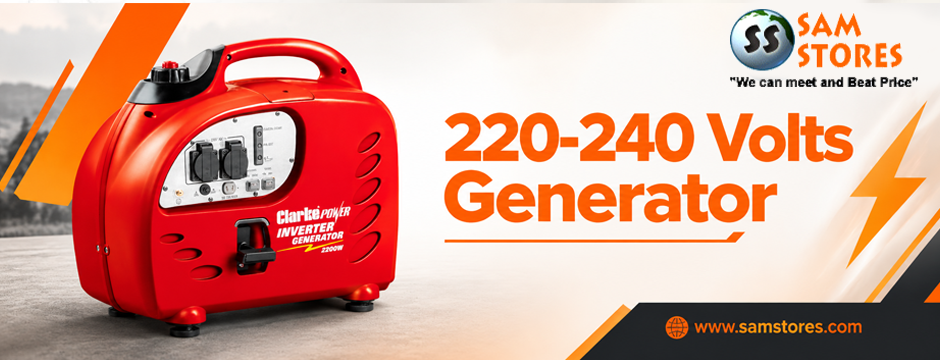
Some buyers search for 220-240 volts generator options because their equipment or electrical system falls within this voltage range. The important point is to understand the exact output specifications rather than assuming every generator labelled within this range will work for every application.

How The Braun 220 Volt Hair Dryer Redefines Everyday Glamour_

Voltage tolerance, frequency, phase, amperage, and connection configuration can all matter. Your equipment’s manufacturer specifications should therefore be the starting point. Once you know the required electrical characteristics, you can compare generator models with much greater confidence.

Think about Runtime before You Buy

A generator’s fuel tank capacity and fuel consumption determine how long it can operate before refuelling. For occasional emergency use, runtime may not be your biggest concern. For businesses or work sites, it can be extremely important.

Imagine losing grid power during a long workday. Constantly stopping to refuel can interrupt operations and create additional inconvenience.

Look at the manufacturer’s stated runtime under specific load conditions. Remember that runtime usually changes depending on how heavily the generator is loaded. A generator running at a lighter load may consume less fuel than one operating close to its maximum capacity.

Maintenance Should Be Part of The Buying Decision

Every engine-powered generator requires maintenance. Diesel models are no exception. Regular servicing helps maintain reliable performance and can reduce the likelihood of unexpected problems during an outage.

Typical maintenance considerations include:

  • Engine oil and filter changes
  • Fuel filter inspection or replacement
  • Air filter maintenance
  • Battery checks
  • Cooling-system inspection
  • Fuel-system checks
  • General electrical and mechanical inspection

Maintenance intervals vary between generator models. So, always follow the manufacturer’s service recommendations rather than relying on a generic schedule.

A generator is an emergency investment. Keeping it maintained ensures it is ready when you actually need it.

Don’t Ignore Noise, Location And Ventilation

Power output is important, but installation conditions matter too.

Diesel generators can produce substantial engine noise, particularly under heavy loads. If the generator will operate near homes, offices, or customer-facing areas, consider its acoustic characteristics before purchasing.

Location is equally important.

Generators should operate in properly ventilated areas because combustion engines produce exhaust gases. They should never be operated in enclosed spaces where dangerous fumes can accumulate.

The installation area should also provide adequate clearance, protection from excessive weather exposure, and convenient access for servicing. For permanently installed systems, professional installation is particularly important.

Consider Long-Term Operating Costs

The purchase price is only one part of the total cost of owning a generator. Consider fuel consumption, routine servicing, replacement parts, installation, battery maintenance, and potential repairs.

A cheaper generator may not always be the most economical option over several years. Likewise, buying a significantly larger generator than necessary can increase acquisition and operating costs.

Think about your actual usage rather than choosing based solely on upfront price. For frequent operation, efficiency and durability can have a much greater impact on long-term value.

When Is A Diesel Generator The Right Choice?

A diesel generator can make considerable sense when reliability and sustained performance are priorities.

It may be particularly suitable if you:

  • Expect frequent or extended generator use
  • Need backup power for demanding equipment
  • Operate a workshop, farm, business, or construction site
  • Require dependable performance during prolonged outages
  • Want an engine designed for heavy-duty applications
  • Prefer to evaluate long-term operating efficiency

On the other hand, occasional users with relatively modest power requirements may find a gasoline generator more convenient. The best generator is not necessarily the most powerful one. It is the one that matches your electrical requirements, operating environment, usage frequency, and budget.

Make Your Generator Purchase with Confidence

Choosing a generator becomes much easier once you stop looking at voltage as the only specification. A reliable buying decision considers voltage, phase, wattage, fuel type, runtime, maintenance, installation requirements, and the equipment you need to power.

Whether you are comparing diesel and gasoline models or evaluating different voltage configurations, take time to understand your actual electrical needs first.

For buyers considering backup power for demanding applications, a 220 volt diesel generator can be a practical solution when its specifications match the intended load.

Sam Stores makes it easier to approach your purchase with the right questions in mind. Compare specifications carefully, understand your power requirements, and choose a generator designed for the way you actually plan to use it.

FAQs

1. What is a 220 volt diesel generator used for?

A 220 volt diesel generator can provide backup electricity for compatible residential, commercial, agricultural, workshop, and job-site equipment.

2. Is a diesel generator better than a gasoline generator?

Diesel generators are generally suited to heavier and longer-duration use, while gasoline models can be convenient for lighter or occasional applications.

3. What should I check before buying a diesel generator?

Check voltage, wattage, phase, fuel consumption, runtime, installation requirements, maintenance needs, and the electrical specifications of your equipment.

4. What does single-phase mean in a generator?

Single-phase refers to the electrical configuration produced by the generator and must match the requirements of the equipment or electrical system being powered.

5. How do I calculate the generator size I need?

Add the running wattage of the equipment you need to power and account for the higher starting wattage required by motors and compressors.

6. Can a diesel generator run continuously?

Some diesel generators are designed for extended operation, but continuous use depends on the model, load, maintenance schedule, cooling, fuel supply, and manufacturer specifications.


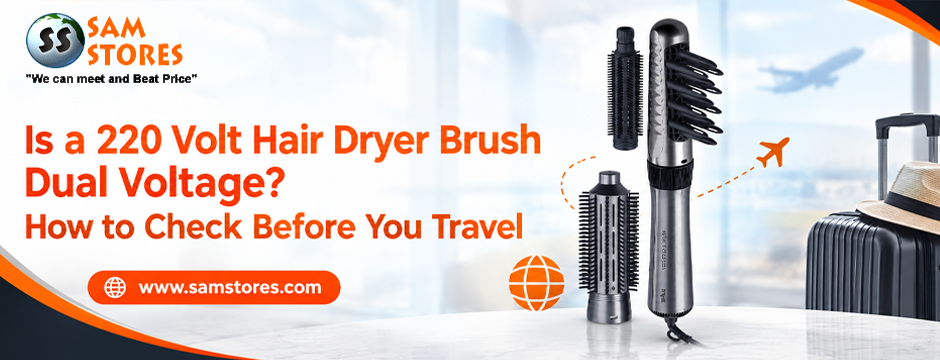
Is a 220 Volt Hair Dryer Brush Dual Voltage? How to Check Before You Travel

Packing for a trip usually involves a familiar checklist: clothes, toiletries, chargers, and personal care essentials. But if styling your hair is part of your daily routine, there is another question worth answering before you head to the airport: Is your 220 volt hair dryer brush compatible with the electrical supply at your destination?

A hot air brush can simplify your styling routine by combining drying and brushing in one tool. However, the fact that a hair dryer brush is advertised as 220V does not automatically mean it supports dual voltage. Taking a single-voltage appliance to a country with a different electrical supply can result in an unsuitable connection, poor performance, or equipment damage.

Whether you are travelling for business, heading on vacation, or purchasing a styling tool from an international retailer, understanding voltage compatibility can save you from an unpleasant surprise.

In this guide, Sam Stores explains how to identify dual-voltage hair dryer brushes, what to check before travelling, and how to choose a styling tool that matches your needs.

What Does a 220 Volt Hair Dryer Brush Mean?

A 220 volt hair dryer brush is a heated styling appliance designed to operate according to a specified electrical voltage. It typically combines airflow and heat with a brush attachment to help dry, smooth, shape, or add volume to hair.

However, the phrase “220 volt” does not tell you the entire electrical story.

Some products are designed for a specific voltage, while others support a wider input range. A dual-voltage appliance may be suitable for use in different countries, provided the destination’s voltage and frequency fall within the manufacturer’s approved specifications.

For example, an appliance labelled:

  • 220V only: Designed for a specific rated voltage, subject to the manufacturer’s stated tolerances.
  • 220 to 240V: Designed to operate within the specified voltage range.
  • 100 to 240V: May support a broad international voltage range, if explicitly stated on the product’s rating label or documentation.

A product’s voltage range should always be confirmed using the actual model’s specifications. Never assume that all hair dryer brushes with similar product names have the same electrical capabilities.

Is Every 220V Hair Dryer Brush Dual Voltage?

No. A 220V hair dryer brush is not automatically dual voltage.

This is one of the most important details to understand before travelling.

A dual-voltage appliance is designed to work across two or more compatible voltage levels or a specified broad range. Some travel-friendly styling tools may feature automatic voltage adjustment, while others require manual voltage selection. Not every model offers either feature.

A hair dryer brush rated for 220V may work in a destination with a compatible supply, but it should not be connected to a different voltage without checking its approved operating range.

For instance, if you are travelling from a country that uses approximately 220V to a destination where household outlets commonly supply around 120V, a 220V-only brush will not automatically become compatible. A plug adapter changes the physical connection, not the voltage supplied to the appliance.

Before you pack your styling tool, look for the manufacturer’s voltage information. This small check can help you avoid buying an unsuitable accessory or replacing an appliance during your trip.

1. Check the Voltage Rating on the Appliance

The easiest place to start is the product’s rating label. Depending on the design, you may find it printed on the handle, near the power cord, on the appliance body, or on the packaging.

Look for a voltage specification such as:

  • 220V
  • 220 to 240V
  • 110 to 120V
  • 100 to 240V
  • 110/220V, with specific switching instructions

A rating such as 100 to 240V may indicate wide-range voltage compatibility, but you should also verify frequency, power requirements, and the manufacturer’s instructions.

If the label only says 220V, do not assume the product is dual voltage. Contact the manufacturer or seller if the documentation does not clearly explain its operating range.

For Sam Stores customers, checking the model-specific product details before ordering is a practical way to establish whether a styling tool suits the intended destination.

2. Understand the Difference Between a Plug Adapter and a Voltage Converter

Many travellers confuse plug adapters with voltage converters. They serve different purposes.

A plug adapter changes the physical shape of a plug so it can fit a compatible outlet. It does not change the voltage.

A voltage converter or transformer is designed to change the supplied voltage, subject to its own specifications and limitations. Whether a converter is appropriate for a particular hair dryer brush depends on the appliance’s electrical characteristics and the converter’s rating.

For example, a traveller with a 220V-only hair dryer brush visiting a 120V region cannot assume that a simple plug adapter will make the appliance suitable.

Before considering a converter, check:

  1. The hair dryer brush’s rated voltage.
  2. Its wattage and current requirements.
  3. The destination’s electrical supply.
  4. The converter’s supported input and output.
  5. Manufacturer and converter safety instructions.

Many heated styling tools have relatively high power requirements. A converter that is unsuitable for the appliance can create safety and performance concerns. If you are unsure, consult the appliance manufacturer or a qualified electrical professional.

3. Check the Electrical Frequency

Voltage is not the only specification that matters when travelling with a hair styling appliance.

Electrical frequency is measured in hertz, commonly written as Hz. Different countries may use 50Hz, 60Hz, or other electrical standards depending on the region.

A hair dryer brush may be rated for a particular frequency or frequency range. If the appliance documentation specifies 50Hz only, do not assume it will operate correctly on a 60Hz supply.

This is especially important when purchasing international appliances online. A product’s title might mention 220V, but the full technical specification may contain additional information about frequency, power, and regional use.

Before travelling, compare the appliance rating with the destination’s electrical supply and follow the manufacturer’s guidance.

4. Look for Automatic or Manual Dual-Voltage Selection

Not all dual-voltage appliances work in exactly the same way.

Some styling tools automatically detect and accommodate the available voltage. Others may require the user to select a voltage setting manually, often through a dedicated switch.

If a hair dryer brush has a voltage selector, check the manufacturer’s instructions before operating it. Selecting an incorrect setting can cause equipment damage or create a safety hazard.

If the product is described as automatically dual voltage, verify that claim using the official documentation rather than relying solely on an online listing.

When shopping at Sam Stores, customers should look for clear product information about:

  • Voltage range
  • Automatic or manual selection
  • Frequency
  • Wattage
  • Plug type
  • Travel suitability

A clear specification makes it easier to decide whether a product is appropriate for your trip.

5. Understand What the Dyson Hair Dryer Voltage 220V Label Means

Dyson is a familiar name in the premium hair styling market, and travellers may search for dyson hair dryer voltage 220v when comparing styling appliances.

However, Dyson hair dryers and styling tools are not necessarily compatible with every country’s electrical system. Voltage ratings and regional versions can vary by product and market.

If you are researching a Dyson product, check the exact model’s official specifications, including its rated voltage, frequency, and intended region of use.

Do not assume that a product purchased in one country will operate safely in another simply because it is manufactured by the same brand.

This is also a useful purchasing lesson for shoppers comparing other hair dryer brushes. The brand name matters, but the precise model specification determines compatibility.

6. What About the Revlon One-Step Hair Dryer 220 Volts?

The revlon one step hair dryer 220 volts is another search phrase used by shoppers looking for international hair styling options.

The Revlon One-Step product family includes different models and regional variants. Buyers should not assume that every version has the same voltage range or travel capabilities.

Before purchasing, review the exact model number and its official electrical specifications. Check whether it is rated for the voltage and frequency at your destination.

If you already own a Revlon One-Step tool, inspect its rating label and instruction manual. If the documentation is unclear, contact the manufacturer or seller for confirmation.

The same principle applies whether you are shopping for a premium styling tool or an affordable everyday brush: Always verify the individual product’s electrical rating.

7. Choose the Right Hair Dryer Brush Features for Travel

Voltage compatibility is essential, but it is not the only factor that determines whether a styling tool is convenient for travelling.

A suitable travel styling brush may offer features that make packing and everyday use easier. The best choice depends on your hair type, styling preferences, and destination.

Here are several features worth considering.

Compact design

A lightweight, compact brush can be easier to pack in a suitcase or carry-on bag. Check the actual product dimensions rather than assuming a tool is travel-friendly because it is described as compact.

Multiple heat settings

Adjustable heat settings can help you choose a temperature appropriate for your hair and styling needs. Follow the manufacturer’s instructions and use heat protection where suitable.

Brush attachments

Some models offer different brush shapes or attachments for smoothing, volume, or other styling techniques. Confirm which attachments are included with the specific product.

Cord length and storage

A practical cord length and manageable design can make styling more convenient, particularly in unfamiliar accommodation.

Verified voltage compatibility

No styling feature can replace the importance of matching the appliance to the destination’s electrical supply. Make this your first consideration.

8. Can You Use a 220V Hair Dryer Brush in a 240V Outlet?

This depends on the appliance’s approved voltage range.

If a hair dryer brush is rated for 220 to 240V, the manufacturer’s specifications may permit operation within that range. If the appliance is marked 220V only, you should obtain confirmation before using it on a 240V supply.

How The Braun 220 Volt Hair Dryer Redefines Everyday Glamour_

Do not rely on the assumption that a small difference in nominal voltage is harmless. Electrical compatibility depends on the appliance’s design and approved operating conditions.

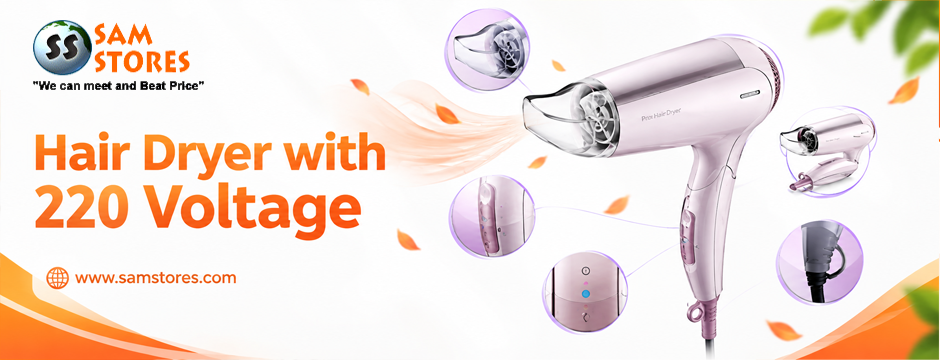
The same principle applies when choosing a hot air brush 220 voltage  or a hair dryer with 220 voltage . The product listing should be checked for its complete electrical specifications, not just its headline voltage.

If the information is unavailable, ask the seller for the technical documentation before ordering.

9. Use a Travel Checklist Before You Leave

A quick pre-travel checklist can help you avoid last-minute problems.

Before packing your hair dryer brush, confirm the following:

  • The appliance voltage matches the destination’s supply or is approved for that supply.
  • The frequency rating is compatible.
  • The plug type is suitable for the destination.
  • Any required adapter is correctly rated and appropriate for the appliance.
  • The appliance’s power requirements are understood.
  • The product documentation is available if you need to check specifications.
  • The styling tool is in good condition, with no damaged cord or plug.
  • The manufacturer permits the intended use.

If your appliance is not compatible with the destination’s electrical supply, do not force the connection. Choosing a suitable alternative may be safer and more convenient than trying to adapt an unsuitable product.

10. Why Buying From a Specialist Appliance Retailer Matters

When buying an international-voltage hair styling tool online, product information is an important part of the purchasing experience.

A specialist retailer can help customers compare technical specifications, understand product differences, and identify the details that matter before checkout.

At Sam Stores, shoppers can use product specifications to evaluate whether a styling appliance fits their intended use. Before ordering, look for clear information about voltage, frequency, product features, and applicable warranty or return policies.

If a product listing does not answer your electrical compatibility questions, seek clarification before placing the order. This is particularly important when purchasing appliances for travel or use in a country different from the one where they were originally sold.

Final Thoughts: Check Voltage Before You Travel

A 220 volt hair dryer brush can be a convenient styling companion, but its suitability for international travel depends on the exact electrical specifications.

Not every 220V brush is dual voltage. A plug adapter does not change voltage, and a converter should not be selected without confirming that it is appropriate for the appliance.

Before you travel, check the voltage range, frequency, plug type, power requirements, and manufacturer’s instructions. If you are comparing products such as Dyson or Revlon styling tools, review the specific model rather than relying on brand names or generic product descriptions.

At Sam Stores, informed shopping starts with choosing a product that meets your practical needs and electrical requirements. Take a few minutes to verify the details before ordering, and you can approach your travel preparation with greater confidence.

Looking for a suitable international-voltage hair styling tool? Explore the available options at Sam Stores, compare product specifications, and confirm compatibility before making your purchase.

Frequently Asked Questions

1. Is a 220 volt hair dryer brush automatically dual voltage?

No. A 220V hair dryer brush may be designed for a specific voltage or a wider operating range. Check the manufacturer’s rating label and technical documentation to determine whether the product supports dual voltage.

2. Can I use a 220V hair dryer brush in a 240V country?

It depends on the model’s approved voltage range. If the appliance is rated for 220 to 240V, it may be compatible. A 220V-only product requires further confirmation before use with a 240V supply.

3. Does a plug adapter convert 220V to 110V?

No. A plug adapter changes the physical plug configuration but does not convert voltage. If an appliance is not compatible with the destination’s voltage, check with the manufacturer or a qualified professional about appropriate options.

4. How can I check whether my Revlon One-Step hair dryer supports 220V?

Find the exact model number and review the rating label, instruction manual, or official product specifications. Different models and regional variants may have different electrical requirements.

5. What should I check before travelling with a 220V hair dryer brush?

Check the voltage range, frequency, plug type, power requirements, and manufacturer instructions. Confirm that the appliance is suitable for the destination’s electrical supply before using it.

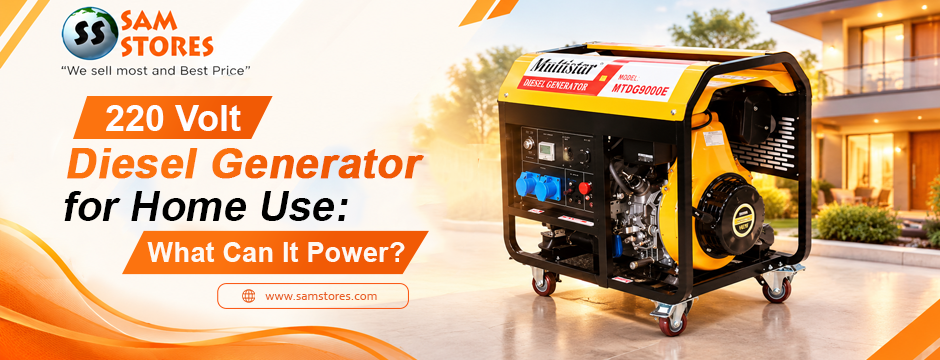
220 Volt Diesel Generator for Home Use: What Can It Power?

A power outage is inconvenient when it lasts for a few minutes. When it stretches into several hours, it can become a serious problem.

The refrigerator stops running. Lights go out. Fans and air conditioners become unusable. Wi-Fi equipment shuts down. If you work from home, operate essential equipment or simply want reliable backup power for your family, a generator can make a big difference.

This is where a 220 volt diesel generator can be a practical choice for home backup power.

But there is an important question to answer before buying one: What can a 220 volt diesel generator actually power?

The answer depends on the generator’s rated output, the appliances you want to operate and how much power those appliances need when starting. Choosing a generator simply because it says 220V on the label is not enough. You need to look at voltage, wattage, frequency, phase and the combined electrical load.

For homeowners looking for dependable backup power, Sam Stores offers generator options designed to provide practical performance without making the buying process unnecessarily complicated.

What Is a 220 Volt Diesel Generator?

A 220 volt diesel generator uses a diesel engine to produce electrical power at around 220 volts. Depending on the model, the output may be specified within the 220 to 240 volt range.

For many household applications, this voltage range makes the generator suitable for powering common electrical equipment, provided the appliance specifications and generator output are compatible.

A typical household generator may be used for:

  • Refrigerators and freezers
  • Ceiling and portable fans
  • Lighting systems
  • Televisions
  • Wi-Fi routers and networking equipment
  • Computers and workstations
  • Washing machines
  • Water pumps
  • Kitchen appliances
  • Air conditioners, depending on capacity
  • Selected power tools and workshop equipment

The key point is that voltage compatibility and generator capacity are two different things.

A generator can provide the correct voltage but still be too small to run several high-powered appliances at the same time.

How Much Can a 220 Volt Diesel Generator Power?

Generator capacity is normally expressed in watts or kilowatts.

For example, a 6 kW generator has a rated output of approximately 6,000 watts. That does not mean you should continuously operate equipment right at the maximum rating. Leaving some capacity available provides a useful safety margin and helps accommodate appliances with higher starting requirements.

Consider a basic household load:

ApplianceApproximate Running Power
Refrigerator150 to 400W
LED lights50 to 200W
Ceiling fans60 to 100W each
Television80 to 200W
Wi-Fi router10 to 30W
Computer100 to 300W
Washing machine400 to 1,000W
Water pump500 to 1,500W+
Microwave1,000 to 1,500W
Air conditioner1,000 to 2,500W+

These figures are only general estimates. Actual consumption varies considerably between appliances and models.

A refrigerator, for instance, may consume relatively little electricity once it is running, but its compressor can require considerably more power during startup. The same principle applies to pumps, air conditioners and other equipment containing motors or compressors.

That is why calculating the total load before buying is so important.

Running Watts vs Starting Watts: The Detail Many Buyers Miss

One of the most common generator-buying mistakes is looking only at running wattage.

Some appliances need additional power for a short period when they start. This is known as starting, surge or startup wattage.

Imagine that your refrigerator normally consumes 300 watts while running. Its starting requirement could be substantially higher. If your generator is already operating several other appliances, that temporary increase could overload the system.

The same issue can arise with:

  • Air conditioners
  • Refrigerators
  • Freezers
  • Water pumps
  • Compressors
  • Power tools

When selecting a 220 volt diesel generator, make a list of the appliances you expect to run together. Note both their running and starting requirements where available.

This simple step can help you choose a generator that is genuinely suited to your home rather than one that only looks suitable on paper.

What Can a 220 Volt Diesel Generator Run During an Outage?

For many homeowners, the goal is not to operate every appliance in the house simultaneously. Instead, it is to keep essential systems running.

A properly sized generator can potentially support a combination such as:

Essential load

  • Refrigerator
  • Several lights
  • Fans
  • Television
  • Wi-Fi router
  • Computer

Medium load

  • Washing machine
  • Water pump
  • Additional lighting
  • Kitchen appliances

Higher load

  • Air conditioner
  • Electric water heater
  • Large pump
  • Heavy workshop equipment

The actual combination depends on the generator’s capacity and the electrical requirements of each appliance.

If you need air conditioning, pumping equipment and multiple large appliances at the same time, you will generally need more generator capacity than someone who only wants lighting, refrigeration and basic electronics.

Is a 240 Volts Generator Single Phase Suitable for a Home?

A 240 volts generator single phase can be appropriate for residential applications where the home’s electrical system and appliances are designed for compatible voltage and single-phase power.

Single-phase generators are commonly considered for houses, small offices, workshops and other applications where three-phase electrical power is not required.

However, don’t assume that every 220V, 230V or 240V appliance can automatically be connected to every generator. Electrical standards differ between countries and properties.

Before purchasing, check:

  1. The voltage requirements of your appliances.
  2. Whether your electrical system is single-phase or three-phase.
  3. The generator’s rated output.
  4. The generator’s frequency.
  5. Plug and outlet compatibility.
  6. Whether professional installation or a transfer switch is required.

If you are uncertain, speak with a qualified electrician before connecting a generator to your home’s electrical system.

Why Consider Diesel for Home Backup Power?

Diesel generators have earned a strong reputation for backup and demanding applications because diesel engines are built for sustained operation.

For homeowners who experience frequent or lengthy power interruptions, diesel can be an attractive option.

A diesel generator can offer several advantages:

Built for Extended Operation

Diesel engines are commonly used in applications where generators may need to operate for extended periods. That makes them particularly useful during prolonged outages.

Strong Performance

Diesel engines are well suited to handling demanding electrical loads, especially when the generator is correctly sized for the application.

Practical for Frequent Backup Use

If your generator is going to be used regularly rather than sitting untouched for years, a diesel model can be worth considering.

Suitable for More Than Just Emergencies

A sufficiently powerful unit can potentially support a home workshop, agricultural equipment, water pumping and other applications beyond basic emergency lighting.

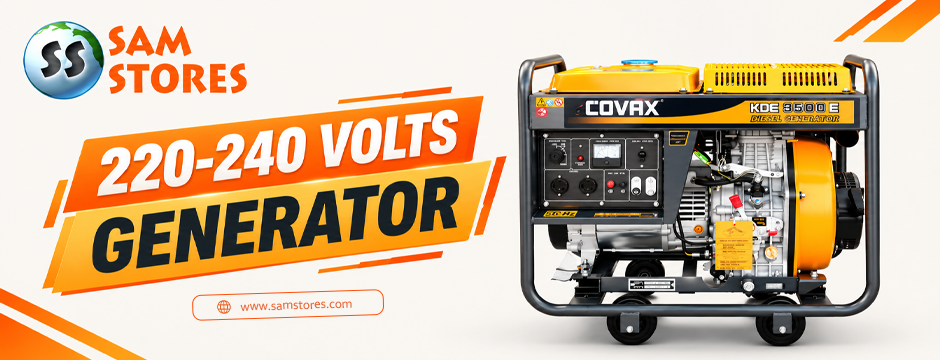
What Is a 220-240 Volts Generator?

You may come across the term 220-240 volts generator while shopping for backup power equipment.

How The Braun 220 Volt Hair Dryer Redefines Everyday Glamour_

This generally indicates that the generator’s electrical output falls within the 220 to 240 volt range, depending on the model and its operating specifications.

For buyers, the important thing is to look beyond the voltage figure.

Check the complete specification, including:

  • Rated power
  • Maximum power
  • Frequency
  • Phase
  • Engine type
  • Fuel tank capacity
  • Starting system
  • Outlet configuration
  • Safety features

A generator with the right voltage but insufficient wattage will not solve your backup power requirements.

Don’t Forget About Fuel Capacity

Generator runtime depends on several factors, including engine efficiency, fuel tank capacity and the electrical load being placed on the generator.

A generator running at a light load may consume fuel differently from one operating close to its rated capacity.

For example, a model with a larger fuel tank can be particularly convenient when you expect extended outages because you may not need to refuel as frequently.

Still, fuel capacity should not be your only purchasing consideration. A larger tank does not automatically mean a better generator. The generator needs to match your home’s actual power requirements.

Features Worth Looking For in a Home Generator

A good home backup generator should be more than an engine attached to an alternator.

Depending on your requirements, useful features can include an electric start, voltage monitoring, low-oil protection, robust outlets and wheels for easier movement.

The Multistar MTDG9000E available from Sam Stores is a good example of a generator designed around practical usability. It provides 220 to 240 volt output at 50 Hz and has a rated power of around 6.0 kW. Its design also includes features such as an LCD volt meter, oil alert, splash-proof outlets and wheels.

For homeowners, these details matter because a generator needs to be straightforward to monitor and operate, particularly during an unexpected outage.

How to Choose the Right Generator for Your Home

Before choosing a 220 volt diesel generator, take five minutes to work out what you actually need.

Step 1: List Your Essential Appliances

Write down everything you want to keep running during an outage.

Step 2: Check Their Wattage

Look at the rating plate or manufacturer’s specifications for each appliance.

Step 3: Identify High-Starting-Load Appliances

Refrigerators, pumps and air conditioners may require additional startup power.

Step 4: Add Your Loads

Calculate the approximate running wattage of the appliances you expect to use simultaneously.

Step 5: Allow Some Headroom

Avoid choosing a generator that operates at its absolute limit all the time. Some spare capacity can make the system more practical and flexible.

Step 6: Check Voltage and Phase

Make sure the generator’s output matches your electrical requirements. This is especially important when comparing 220V, 230V and 240V equipment.

Why Buy Your Generator From Sam Stores?

Buying a generator is not simply about finding the lowest price. You are investing in backup power that you may depend on when the electricity goes out.

Sam Stores gives buyers access to generator equipment for different power requirements, making it easier to compare specifications and find an appropriate solution.

Whether your priority is keeping essential home appliances running, supporting a workshop or maintaining critical equipment during an outage, choosing based on actual electrical demand is the smarter approach.

A 220 volt diesel generator can be an excellent home backup solution when the capacity, voltage, phase and appliance requirements are properly matched.

Final Thoughts

A home generator should make life easier during a power failure, not create another problem.

The right 220 volt diesel generator can keep essential appliances operating, maintain refrigeration, support lighting and electronics, and potentially handle larger equipment when its capacity is sufficient.

The secret is choosing based on your actual power requirements rather than simply buying the biggest or cheapest generator available.

Start with your appliances. Calculate their running and starting loads. Check voltage and phase requirements. Then compare generator specifications carefully.

If your home needs dependable backup power in the 220 to 240 volt range, explore the generator options available from Sam Stores and choose a model that gives you the capacity and features you genuinely need.

FAQs

1. What can a 220 volt diesel generator power at home?
A 220 volt diesel generator can potentially power refrigerators, lights, fans, televisions, computers, Wi-Fi equipment, washing machines, pumps and other appliances, depending on its wattage capacity and the combined electrical load.

2. Is a 220 volt diesel generator suitable for home use?
Yes. A properly sized 220 volt diesel generator can provide reliable residential backup power. Before connecting one, make sure its voltage, frequency, phase and output are compatible with your home’s electrical system.

3. Can a 220 volt diesel generator run an air conditioner?
It can, provided the generator has sufficient capacity to handle both the air conditioner’s running and startup power requirements. Larger air conditioners may require considerably more generator capacity.

4. What is the difference between a 220-240 volts generator and a 240 volts generator single phase?
A 220-240 volts generator describes its voltage output range, while a 240 volts generator single phase also specifies the phase configuration. Always check the complete generator and appliance specifications before connecting equipment.

5. How do I choose the right 220 volt diesel generator?
List the appliances you need during an outage, check their running and starting wattage, calculate the combined load and select a generator with sufficient rated capacity and appropriate voltage and phase specifications.

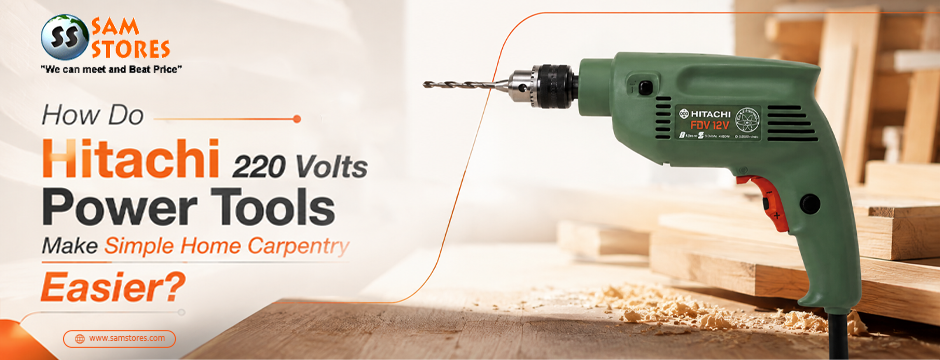
How Do Hitachi 220 Volts Power Tools Make Simple Home Carpentry Easier?

There is something satisfying about fixing or building something with your own hands. Maybe it is a small wooden shelf for the living room, a storage bench for the balcony, or a simple worktable for your garage.

These projects may look intimidating at first. However, the right power tool can make many basic carpentry jobs faster, cleaner, and more manageable.

For homeowners who enjoy practical DIY projects, Hitachi 220 Volts power tools can be useful additions to a home workshop. They can help with cutting, drilling, fastening, and other routine woodworking tasks when used correctly.

At Sam Stores, we understand that residential DIY projects do not always require a professional workshop. Sometimes, you simply need the right tool, a little patience, and a clear idea of what you want to build.

So, how can a power tool transform a simple carpentry project? Let’s explore.

Why Power Tools Make Home Carpentry More Approachable?

Traditional hand tools still have their place. A handsaw, screwdriver, measuring tape, chisel, and hammer can handle many basic jobs. However, cutting several pieces of timber manually can take considerable time and effort.

Power tools introduce speed and consistency.

A suitable saw can make repeated cuts more efficiently. A drill can create clean holes without the physical effort required by a manual brace. A driver can help secure screws quickly across a larger project.

So, it does not mean power tools should replace traditional tools completely. Instead, they complement them. You still need accurate measurements, careful marking, appropriate materials, and good finishing techniques. The power tool simply makes some of the physical work easier.

Start with A Simple Carpentry Project

If you are new to DIY carpentry, don’t begin with an ambitious furniture project.

Start small.

A basic wall shelf is a good example. You might need two or three wooden boards, brackets, screws, and suitable wall fixings.

The process is straightforward:

  1. Measure the available space.
  2. Mark the required board lengths.
  3. Cut the boards accurately.
  4. Smooth rough edges.
  5. Drill necessary holes.
  6. Assemble the components.
  7. Install the finished shelf securely.

A project like this teaches several useful skills without overwhelming you. Once you’re comfortable, you can gradually move toward more complicated projects.

What Can A Power Tool Actually Do?

The term “power tool” covers a surprisingly broad range of equipment. Different tools are designed for different jobs.

A Hitachi 220 Volts circular saw is primarily used for cutting. A drill creates holes, while certain hammer drills can handle tougher drilling applications. Sanders help smooth wooden surfaces, and drivers make fastening tasks considerably quicker.

Therefore, choosing the right tool matters more than simply buying the most powerful model available. For occasional home carpentry, think about the projects you are likely to undertake. Will you mostly cut timber? Will you drill holes? Do you expect to work with masonry as well as wood?

Your answers can help determine which tools deserve a place in your home workshop.

Choosing Hitachi 220 Volts Power Tools for DIY Projects

For homeowners building a small collection of reliable equipment, Hitachi 220 volts power tools can offer options for different workshop requirements. The important thing is matching the tool to the task.

For example, cutting a long timber board requires a different approach from drilling a hole for a shelf bracket.

Before buying anything, check the tool’s specifications and intended applications. Also consider its power requirements, accessories, ergonomics, and safety features. A tool should feel manageable in your hands.

If it is difficult to control, excessive power can become a disadvantage rather than an advantage.

Cutting Timber with A Circular Saw

Let’s return to our imaginary shelf project. Suppose you have purchased a longer timber board than necessary. You need to cut it into several shorter sections. This is where a circular saw can save considerable time. A Hitachi 220 volts circular saw can be useful for suitable wood-cutting applications when operated according to the manufacturer’s instructions.

The keyword here is “suitable.”

Before making a cut, check the material, blade compatibility, cutting depth, and tool specifications. Secure the workpiece properly and ensure the cutting path is completely clear. Never hold a small piece of timber in your hand while attempting to cut it. Instead, use appropriate supports and keep your hands away from the blade path.

Good preparation makes power-tool work much safer.

Drilling Holes without Struggling

Drilling is another common part of home carpentry. You might need holes for screws, dowels, brackets, handles, hinges, or other fittings. A suitable drill can make these tasks significantly easier.

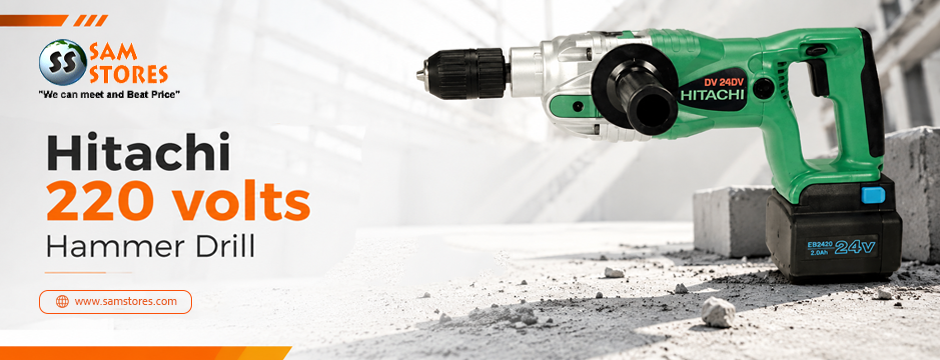
If your DIY plans also involve occasional masonry work, a Hitachi 220 volts hammer drill may offer useful versatility, depending on its specifications and the materials involved. However, always choose the correct drill bit for the material.

Wood, masonry, and metal require different bits and techniques. Using the wrong accessory can produce poor results and may damage the workpiece or tool. The right combination of tool, bit, speed, and pressure is what produces a clean result.

How The Braun 220 Volt Hair Dryer Redefines Everyday Glamour_

Power Tools Can Save More Than Time

The biggest benefit of power tools is often described as speed. That’s true, but there is more to it. They can also reduce physical effort.

Cutting thick timber repeatedly with a handsaw can become tiring. Drilling multiple holes manually can strain your hands and wrists. Repetitive fastening can become equally uncomfortable.

A suitable power tool can take much of that repetitive effort out of the process. That can make DIY projects more enjoyable. And when a project is enjoyable, you’re more likely to finish it rather than leaving half-built furniture in the garage.

DIY can be rewarding, but knowing your limits is equally important.

Simple shelves, basic wooden storage, small tables, and minor repairs may be suitable for confident homeowners. However, structural modifications, complex electrical work, major installations, or projects involving significant safety risks may require professional expertise.

Don’t let enthusiasm override judgment; use Hitachi 220 volts power tools smartly with all safety.

Making Your Tools Work Smarter

Owning good equipment doesn’t automatically make someone a good carpenter. The real improvement comes from learning how to use tools correctly.

  • Start by understanding the basics.
  • Learn how different blades affect cuts.
  • Understand drill-bit selection. Practise controlling the tool before working on expensive timber.
  • You can also practise on scrap material.

This is particularly useful for beginners. A few practice cuts can help you understand how the saw behaves. A few test holes can show how much pressure a drill requires. Once you become comfortable, your actual project becomes much less intimidating.

A Power Tool Can Change How You See DIY

Something interesting happens after completing your first successful project. You start looking around your home differently.

That unused corner could become a storage area. That empty wall could hold a custom shelf. That awkward space beneath a window might become a small bench. Instead of seeing problems, you begin seeing projects. That’s perhaps the most valuable thing power tools can offer. They don’t simply make cutting and drilling easier. They can make home improvement feel accessible.

At Sam Stores, we believe having suitable tools can help homeowners approach everyday DIY projects with greater confidence. Of course, confidence should always come with careful preparation and responsible tool use.

Final Thoughts

Simple home carpentry does not have to feel like a professional construction project. With accurate measurements, suitable materials, patience, and the right equipment, homeowners can tackle a wide range of practical DIY tasks.

Hitachi 220 volts power tools can help make cutting, drilling, and other repetitive jobs more manageable when the equipment is appropriate for the project. So, whether you are building a shelf, repairing furniture, creating storage, or making something entirely your own, start with a realistic project. Learn your tools, work safely, and focus on accuracy rather than speed.

At our e-commerce platform, Sam Stores, the right equipment can help turn an idea into something you can actually build. It’s because sometimes, the most satisfying thing in your home isn’t something you bought. It’s something you made yourself.

FAQs

1. Are power tools suitable for beginners in home carpentry?

Yes. Beginners can use suitable power tools like Hitachi 220 volts power tools for simple projects after reading the instructions and learning basic safety practices.

2. What power tool is useful for cutting wooden boards?

A suitable circular saw can make straight cuts through compatible wooden boards. Always check the tool and blade specifications before use.

3. Can a hammer drill be used for home carpentry?

A hammer drill can be useful for drilling applications involving wood and masonry, depending on its specifications. Use the appropriate drill bit for each material.

4. What should beginners consider before buying power tools?

Consider the projects you plan to complete, tool specifications, power requirements, ergonomics, accessories, safety features, and manufacturer guidance.

5. How can I use power tools more safely?

Read the instructions, secure your workpiece, use appropriate protective equipment, maintain good lighting, and keep your hands away from moving components.

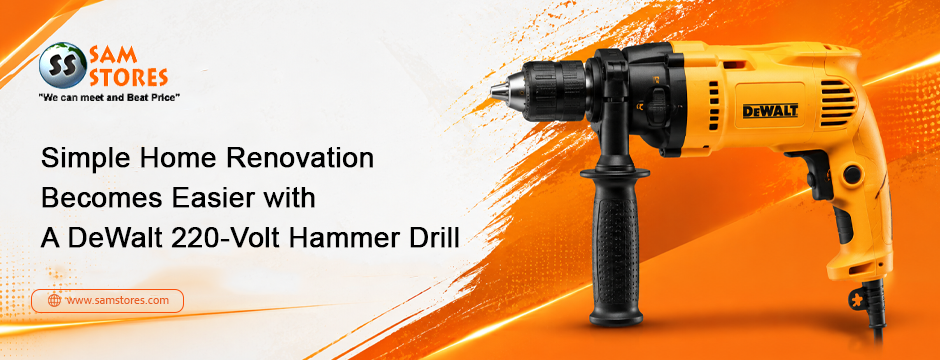
Simple Home Renovation Becomes Easier with A DeWalt 220-Volt Hammer Drill

You finally decide to renovate that part of the house you’ve been ignoring for months. Maybe it is a new shelf in the living room, a wall-mounted television, additional garage storage, or a small home office upgrade. The project seems simple until you discover that the wall is harder than expected. Your regular drill struggles, the bit keeps slipping, and a quick weekend task starts consuming an entire afternoon.

This is where choosing the right tool can completely change the experience. For many residential DIY projects, a DeWalt 220 volt hammer drill can provide the power, control, and versatility needed for demanding household tasks. At Sam Stores, we understand that homeowners do not necessarily need a workshop filled with professional equipment. They need dependable tools that make practical renovation jobs easier. So, what makes a hammer drill useful around the home?

Let’s take a closer look.

Why Home Renovation Projects Often Need More Than A Basic Drill?

Home renovation projects can look remarkably simple on paper. You measure the wall, mark the position, select a drill bit, and get started. However, different wall materials can behave very differently. Wood is generally easier to drill, while drywall requires a different approach. Brick and masonry can demand considerably more drilling force.

This is where a 220-volt hammer drill becomes particularly useful. Unlike a standard drill, a hammer drill combines rotational movement with a rapid hammering action. That additional action helps the bit work through harder masonry surfaces more efficiently. You do not necessarily need a hammer drill for every household task. However, having one available can save considerable effort when your project involves brick, concrete, or other demanding materials.

DeWalt 220 Volts Hammer Drill for Practical Home Projects

A good home tool should make difficult jobs feel manageable rather than intimidating. The DeWalt 220 Volts hammer drill is designed around the versatility homeowners often need for different applications.

Think about the projects you may encounter over several years. Installing wall shelves could require masonry drilling, while mounting a television may involve drilling into a solid wall. Setting up garage storage could require holes for brackets and anchors.

A suitable hammer drill can support these jobs while also handling conventional drilling applications. That versatility is particularly useful for homeowners who prefer investing in fewer capable tools rather than buying separate equipment for every project.

The important thing is to choose equipment based on your actual needs and intended applications.

Installing Shelves Without Turning It into A Weekend Marathon

Let’s start with one of the most common home improvement jobs: installing shelves. You have the shelf, the brackets, and your measurements are ready. Then you hit the wall. If you’re drilling into masonry, a basic drill may struggle to create a clean hole.

You may need excessive pressure, repeated attempts, or several different bits before making progress. A hammer drill can make the process more straightforward because its hammering action helps break through harder surfaces while the rotating bit removes material.

Of course, the correct drill bit remains essential. Always select a bit designed for the wall material and follow the tool manufacturer’s instructions. A little preparation can make the difference between a neat installation and a frustrating afternoon.

Home Improvement Gets Easier When One Tool Handles Multiple Tasks

Storage space matters in residential homes. Most homeowners do not want a garage filled with tools that each perform one specific function. This is one reason versatile DeWalt 220-volt power tools can be useful when building a practical home toolkit. A carefully selected collection can cover a surprisingly broad range of projects.

A hammer drill can support drilling and fastening tasks, while other tools can handle cutting, sanding, grinding, or specialised applications. The key is choosing equipment according to the work you actually expect to do.

Don’t buy a tool simply because it looks impressive. Choose equipment that solves problems you’re likely to encounter around your home.

Why Power & Control Both Matter?

More power does not automatically mean better results. Home renovation often requires precision, particularly when you’re working around finished walls, cabinets, furniture, and fixtures.

You may need to drill a hole at a specific location without damaging the surrounding surface. You might also need controlled speed when working with different materials. This is why power and control need to work together. A capable hammer drill should provide sufficient force while allowing you to maintain control throughout the task.

For homeowners, that balance can make DIY projects less intimidating. You don’t want the drill fighting against you. You want the tool to respond predictably to your movements and the demands of the material.

When A Circular Saw Joins The Renovation

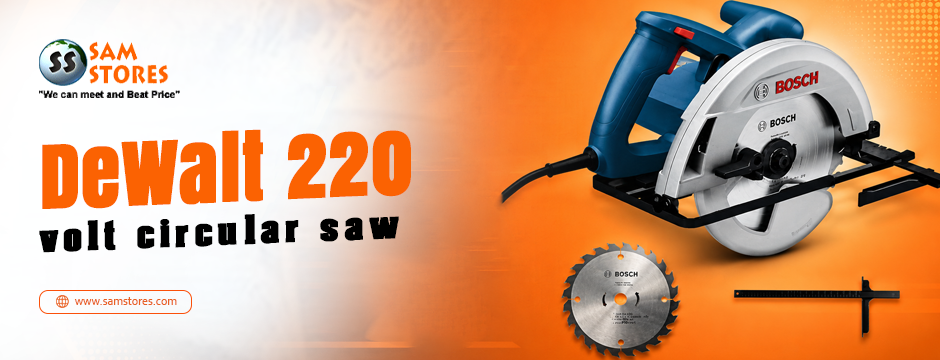
Not every renovation task involves drilling. Once you start improving your home, you may discover projects that require accurate cutting. Building custom shelving, modifying timber panels, creating storage solutions, or completing woodworking projects can involve repeated cuts. This is where a DeWalt 220 volt circular saw can become another useful addition to a homeowner’s toolkit.

A circular saw is designed for cutting materials such as wood and suitable sheet materials, depending on the specific blade and application.

Together, appropriate drilling and cutting tools can cover many practical DIY projects. The important thing is to use each tool for its intended purpose and select accessories suitable for the material.

How The Braun 220 Volt Hair Dryer Redefines Everyday Glamour_

Safety Should Always Come First

DIY should be satisfying, but it should never be careless. Before using any power tool, read the manufacturer’s instructions and understand its controls.

Wear suitable eye protection when drilling or cutting, and keep loose clothing and hair away from moving components. Secure your workpiece when necessary and maintain a stable working position. Most importantly, understand the material you’re working on. When drilling into walls, check for hidden electrical wiring and plumbing before making any holes.

If you’re unsure, stop and seek professional advice. A professional assessment is far cheaper than repairing damaged electrical or plumbing systems. The goal is to complete your renovation safely, not simply quickly.

Why Investing in The Right Tool Can Save Money

Some homeowners hesitate to buy a quality power tool because they expect to use it only occasionally. However, think about how many small projects appear over the years. A shelf today could be followed by a wall-mounted television next year, garage storage later, and a home office after that.

A suitable tool can continue serving you across all these projects. That makes the purchase less about completing one renovation and more about building a useful home toolkit. At Sam Stores, choosing the right equipment should always begin with understanding the project, the material, and the performance required. The right purchase continues providing value long after the original project is finished.

End Note

Home renovation doesn’t always require a major budget or a complete construction crew. Often, the right tools and careful preparation can make everyday improvements much easier. A DeWalt 220 Volts hammer drill can be particularly useful for homeowners tackling masonry drilling, wall mounting, storage installations, and other demanding DIY projects.

So, when paired with suitable DeWalt 220 Volts power tools, homeowners can gradually build a practical toolkit for different renovation needs. At Sam Stores, choosing the right equipment should always begin with understanding the project, the material, and the level of performance required. Because the best DIY projects aren’t necessarily the biggest ones.

Sometimes, transforming one wall, one shelf, or one forgotten corner is enough to make your home feel completely different. With the right tool in your hand, that transformation can be much easier than you expected.

FAQs

1. What is a hammer drill used for at home?

A hammer drill is useful for drilling into harder materials such as brick and masonry. It can also handle many conventional drilling and fastening tasks.

2. Is a hammer drill suitable for DIY home renovation?

Yes. A DeWalt 220-volt hammer drill can be useful for shelves, wall mounts, storage brackets, fixtures, and other household projects requiring masonry drilling.

3. What drill bit should I use for masonry?

Use a masonry-rated drill bit suitable for the material and drill type. Always follow the tool and bit manufacturer’s recommendations.

4. Can a hammer drill replace a regular drill?

A hammer drill can handle many regular drilling tasks. However, the best choice depends on the project, material, required control, and specific tool features.

5. What safety precautions should homeowners take?

Wear appropriate eye protection, secure the work area, use the correct bit, and check walls for hidden wiring or plumbing before drilling.

Choosing The Right 240-Volt AC Unit for Comfortable, Efficient Home Cooling

It usually starts with a simple problem. Summer arrives, the temperature climbs, and your existing air conditioner struggles to keep the room comfortable. You turn the thermostat down, wait, and hope for the best. Sometimes, though, the problem isn’t the temperature setting. Your air conditioner simply isn’t suited to the space.

That’s when choosing the right 240-volt AC unit can make a noticeable difference.

A higher-voltage air conditioning system can be a practical option for larger rooms, homes with demanding cooling requirements, and those that need dependable performance. However, buying one isn’t simply about choosing the biggest model available. Capacity, installation, electrical requirements, room size, energy use, and heating options all deserve consideration.

At Sam Stores, we understand that shopping for home appliances should feel straightforward. You want to know what you’re buying, why it suits your space, and what to expect once it’s installed.

So, before you make your decision, let’s look at what actually matters.

Why Voltage Matters When Choosing An Air Conditioner?

Voltage is one of those specifications most people notice but don’t always understand.

An air conditioner designed for a higher electrical voltage isn’t automatically more powerful than every lower-voltage model. Instead, voltage is part of the electrical system the appliance is designed to operate with.

A 240-volt system can be suitable for larger-capacity appliances that require substantial electrical power. Many homes already have 240-volt circuits for appliances such as electric ranges, dryers, and other high-demand equipment.

However, this doesn’t mean you should simply purchase a unit and plug it into an existing outlet.

Air conditioning installation can involve dedicated circuits, appropriate wiring, breakers, and professional installation. Always check the manufacturer’s electrical requirements and consult a qualified electrician when necessary.

Start With the Room, Not The Air Conditioner

Here’s where many shoppers make their first mistake.

They see a powerful air conditioner and assume bigger must be better.

It isn’t that simple.

The right cooling capacity depends on the room’s size and several other factors. Ceiling height, insulation, windows, sunlight exposure, occupancy, and local climate can all influence cooling requirements.

A unit that is too small may run continuously without adequately cooling the room. A unit that is too large may cool the space quickly but cycle on and off frequently, which can affect comfort and efficiency.

The goal is to find the right match. Before shopping, measure the room and consider how it is used. A bedroom, living room, garage, workshop, and open-plan area may all have very different cooling requirements.

When A 240 Volt AC Unit Makes Sense

A 240-volt AC unit can be an excellent option when you’re looking for substantial cooling performance and your home’s electrical setup supports the required installation. These systems can be particularly useful for larger spaces where compact room air conditioners may not provide enough capacity.

Think about a spacious living room that receives strong afternoon sunlight. Perhaps the room connects to another area, or it has high ceilings that allow warm air to accumulate.

In such situations, having an appropriately sized air conditioner can make the difference between constantly chasing the temperature and actually enjoying the room. However, capacity should always be matched to the space rather than selected purely because the voltage specification sounds more powerful.

Through-the-Wall Air Conditioners: A Practical Alternative

Not every home has the layout or budget for a central air conditioning system. That’s one reason wall-installed air conditioners remain popular.

A 220 volt through-the-wall air conditioner can provide dedicated cooling without requiring a traditional window installation. These systems are installed into a wall opening, creating a more permanent appearance than many window units.

They can work particularly well in rooms where window-mounted installation isn’t practical.

There is also an aesthetic advantage. Because the unit sits within the wall, it can leave the window unobstructed. This can be useful in rooms where natural light and window access are important.

Before installation, however, check wall dimensions, sleeve requirements, electrical specifications, and manufacturer instructions.

How The Braun 220 Volt Hair Dryer Redefines Everyday Glamour_

Air conditioning doesn’t have to be useful only during summer. If you live somewhere with changing seasons, a unit capable of both cooling and heating can provide additional value throughout the year.

A 220 volt wall air conditioner heater combines cooling and heating functions in one appliance. Instead of purchasing separate equipment for different seasons, homeowners can use the same system to manage indoor temperatures throughout the year.

This can be particularly attractive for bedrooms, guest rooms, additions, apartments, workshops, and other spaces that need independent temperature control.

Before purchasing, check the heating method and the temperature range specified by the manufacturer. Not every heating-capable air conditioner is designed for the same outdoor conditions.

Think about Energy Efficiency Too

Running an air conditioner for hours every day can have a noticeable effect on household energy consumption. That’s why efficiency deserves attention before you buy.

Look at the manufacturer’s energy ratings and operating specifications rather than choosing solely by purchase price. A slightly more efficient appliance may cost more initially but potentially deliver better long-term value depending on usage and local electricity rates.

Also consider how you use the room.

Closing blinds during peak sunlight, improving insulation, sealing air leaks, and keeping doors closed while cooling can reduce the workload placed on the air conditioner. The most efficient appliance still has to work harder when the room constantly gains heat from outside.

Features Worth Considering

Modern air conditioners can include a wide range of convenience features. Depending on your priorities, useful options may include:

  • Adjustable temperature controls
  • Multiple fan speeds
  • Programmable timers
  • Remote controls
  • Digital displays
  • Washable filters
  • Energy-saving modes
  • Cooling and heating modes
  • Automatic temperature control

You don’t necessarily need every feature. Instead, focus on the functions you’ll actually use.

For example, a programmable timer can be valuable if you want the room cooled before bedtime. A remote control can make everyday adjustments easier. Washable filters of a 240-volt AC unit can simplify routine maintenance.

The best feature list is the one that makes your daily routine easier.

Maintenance Keeps Performance on Track

Even the best air conditioner needs regular care. Filters can collect dust over time, reducing airflow and making the system work harder. Exterior components can also accumulate dirt and debris depending on the installation environment.

Follow the manufacturer’s maintenance recommendations.

Clean or replace filters as instructed. Keep airflow paths clear and inspect the unit periodically for unusual noises, leaks, or changes in performance. If an air conditioner suddenly takes much longer to cool the room, don’t automatically turn the thermostat lower.

The problem could be a dirty filter, blocked airflow, installation issue, or another technical problem. Early attention can prevent small problems from becoming expensive repairs.

A little preparation makes online appliance shopping much less stressful.

A Simple Checklist Before You Buy

Before ordering your next air conditioner, take a moment to check these points:

  • Measure The room: Know the approximate space you need to cool.
  • Check Voltage: Confirm that the appliance matches your home’s electrical requirements.
  • Review Capacity: Choose cooling performance based on the room rather than appearance.
  • Check Installation: Understand whether professional electrical or wall installation is required.
  • Consider Heating: A heating function may provide additional year-round value.
  • Compare Efficiency: Look at energy ratings and expected usage.
  • Think about Noise: This matters particularly for bedrooms and workspaces.
  • Review Maintenance: Understand filter cleaning and routine care requirements.

This simple checklist can prevent many common purchasing mistakes.

Final Thoughts

Finding the right 240-volt AC unit isn’t about buying the biggest or most expensive appliance you can find. It’s about finding a system that matches your room, electrical setup, comfort expectations, and everyday routine.

Whether you’re considering a through-the-wall installation, a cooling-only model, or a unit that provides heating as well, take time to compare specifications before making your decision.

At Sam Stores, we believe better appliance shopping starts with better information. Once you understand your room, electrical requirements, installation needs, and desired features, choosing the right system becomes much easier.

The best air conditioner isn’t simply the one that makes a room cold. It’s the one that makes your home feel comfortable when you need it most.

FAQs

1. What is a 240-volt AC unit?

A 240-volt AC unit is an air conditioner designed to operate on a 240-volt electrical supply. The appropriate model depends on the home’s electrical system and the manufacturer’s requirements.

2. Is a 240-volt air conditioner suitable for a large room?

It can be suitable for larger spaces, depending on the unit’s cooling capacity. Room size, insulation, windows, ceiling height, and climate should also be considered.

3. What is a 220-volt through-the-wall air conditioner?

A 220-volt through-the-wall air conditioner is designed for permanent wall installation rather than conventional window mounting. It can provide an efficient solution where window installation isn’t suitable.

4. Can a wall air conditioner also provide heating?

Yes, some models combine cooling and heating functionality. A 220-volt wall air conditioner heater can provide temperature control across multiple seasons.

5. Do I need professional installation for a 240-volt AC unit?

Professional installation may be required, particularly when dedicated electrical circuits or wall modifications are involved. Always follow the manufacturer’s installation requirements and local electrical codes.

Stay Warm & Comfortable: Choosing The Right Portable 220 Volt Electric Heater for Mid-Size Rooms

Creating a cozy home environment becomes essential when temperatures drop. Households often look for reliable heating solutions that are efficient and easy to use. This is where a portable 220-volt electric heater becomes a practical choice.

Designed for convenience and performance, these heaters work perfectly in mid-size rooms. They provide consistent warmth without requiring complex installation. As a result, homeowners can enjoy comfort without hassle.

Sam Stores offers a wide range of heating appliances that combine efficiency, safety, and modern design. Choosing the right heater ensures both comfort and energy savings throughout the season.

H2 Why Portable Electric Heaters Are Ideal for Homes?

Portable heaters have gained popularity due to their flexibility and ease of use. Unlike central heating systems, they allow targeted heating.

This means you can warm specific rooms without increasing overall energy consumption. Therefore, they are cost-effective and energy-efficient.

Additionally, portability allows users to move the heater between rooms as needed. This makes them suitable for living rooms, bedrooms, and even home offices.

Understanding 220 Volt Electric Heaters

Voltage compatibility plays a crucial role in appliance performance. Many regions use 220-volt electrical systems, making compatible appliances essential.

A heater designed for 220 volts delivers optimal efficiency and stable performance. It eliminates the need for voltage converters, ensuring safety and convenience.

For households using an electric heater with a 220V plug, compatibility becomes even more important. It ensures smooth operation and reduces the risk of electrical issues.

Why Mid-Size Rooms Need The Right Heating Solution?

Mid-size rooms require balanced heating. Too little power results in insufficient warmth, while excessive power wastes energy.

Portable electric heaters are designed to handle this balance effectively. They provide consistent heating without overloading energy consumption.

Additionally, modern heaters come with advanced features like thermostats and timers. These features improve both comfort and efficiency.

The Role of Thermostats in Portable Heaters

Thermostats play a key role in maintaining a comfortable temperature. They automatically adjust heat output based on room conditions. This prevents overheating and ensures energy efficiency.

Users can set their desired temperature and let the heater do the rest. Moreover, thermostats help reduce electricity bills by preventing unnecessary power usage. This makes them an essential feature in modern heaters.

Key Benefits of Portable 220 Volt Electric Heaters

1. Energy Efficiency

These heaters focus on heating specific areas, reducing overall energy consumption.

2. Easy Mobility

Lightweight designs allow easy movement between rooms.

3. Quick Heating

They provide instant warmth, making them ideal for sudden temperature drops.

4. Safety Features

Modern heaters include overheat protection and automatic shut-off systems.

5. Space-Saving Design

Compact designs fit easily into small spaces without cluttering the room.

Choosing The Right Heater for Your Home

Selecting the right heater depends on several factors. Understanding these ensures better performance and satisfaction.

  • Room Size: Mid-size rooms require moderate heating capacity. Choose a heater designed for such spaces.
  • Power Rating: Higher wattage provides more heat but increases energy usage. Balance is key.
  • Thermostat Control: Look for adjustable thermostats for better temperature management.
  • Safety Features: Ensure the heater includes safety mechanisms like tip-over protection.
  • Design & Portability: Compact and stylish designs enhance usability and aesthetics.

Why Households Prefer Portable Heating Solutions?

Modern lifestyles demand convenience and flexibility. Portable heaters meet these needs effectively.

How The Braun 220 Volt Hair Dryer Redefines Everyday Glamour_

They eliminate the need for permanent installation and allow targeted heating. This reduces energy waste and increases comfort.

Additionally, they are easy to operate, making them suitable for all age groups.

With options like 220-volt electric heaters for sale, households can easily find models that match their requirements and budget.

How Portable Heaters Improve Daily Comfort?

A warm room significantly enhances comfort and productivity. Portable heaters create a cozy environment quickly.

For example, they make bedrooms comfortable during cold nights. They also improve focus in home offices by maintaining a steady temperature.

Moreover, they are useful in spaces where central heating is unavailable. This makes them a versatile solution for various needs.

Maintenance Tips for Long-Lasting Performance

Proper maintenance ensures that heaters perform efficiently for years. Simple steps can extend their lifespan significantly.

  • Clean the heater regularly to remove dust buildup
  • Avoid placing objects too close to the heater
  • Check power cords for any damage
  • Store the heater safely when not in use
  • Follow the manufacturer’s instructions carefully

These practices help maintain safety and efficiency.

Common Mistakes to Avoid When Using Heaters

While portable heaters are easy to use, certain mistakes can affect performance. Avoiding these ensures better results.

  • Using the heater in poorly ventilated areas
  • Ignoring safety guidelines
  • Setting excessively high temperatures
  • Blocking airflow around the heater
  • Using incompatible power outlets

Being mindful of these factors improves both safety and efficiency.

Why Buy from Sam Stores?

Sam Stores is known for offering high-quality home appliances that meet modern needs. Their product range focuses on performance, durability, and user convenience.

Customers can explore a wide variety of heating solutions suitable for different room sizes. This makes it easier to find the perfect match.

Additionally, Sam Stores ensures reliable customer support and a smooth shopping experience. This builds trust and long-term satisfaction.

Comparing Portable Heaters with Other Heating Options

Portable heaters offer several advantages over traditional heating systems. Central heating systems require installation and higher costs.

In contrast, portable heaters are affordable and easy to use. They provide targeted heating, reducing energy consumption.

Options like a portable 220-volt heater offer flexibility that fixed systems cannot match. This makes them a preferred choice for many households.

The Growing Demand for Smart Heating Solutions

Modern homes are adopting smarter and more efficient appliances. Portable heaters align perfectly with this trend. Advanced features like thermostats, timers, and energy-saving modes enhance usability.

These features improve both comfort and efficiency.

As energy costs rise, households increasingly prefer solutions that offer better control and savings. Portable heaters meet these expectations effectively.

Safety Tips for Using Electric Heaters

Safety should always be a priority when using heating appliances. Following simple precautions ensures safe operation.

  • Keep heaters away from flammable materials
  • Place them on flat, stable surfaces
  • Avoid using extension cords
  • Turn off the heater when not in use
  • Keep them out of reach of children and pets

These measures help prevent accidents and ensure peace of mind.

Final Thoughts

Portable heating solutions have transformed the way households manage indoor comfort. They offer flexibility, efficiency, and convenience in one package.

A portable 220-volt electric heater is an excellent choice for mid-size or large rooms. It provides consistent warmth while maintaining energy efficiency.

Sam Stores offers reliable options that combine modern features with durable performance. Choosing the right heater ensures a cozy and comfortable home environment.

For anyone looking to stay warm during colder months, investing in a portable 220-volt electric heater is a smart and practical decision.

FAQs

What size room is suitable for a portable 220-volt electric heater?

A portable 220-volt electric heater works best in mid-size rooms like bedrooms, living rooms, or home offices.

Do portable electric heaters with thermostats save energy?

Yes, thermostats regulate temperature automatically, reducing unnecessary power usage and helping lower electricity bills.

Is it safe to use a portable 220-volt heater daily?

Yes, it is safe when used properly with built-in safety features and by following manufacturer guidelines.

Why Busy Couples Should Consider A Gas Dryer 220 Volt for Faster, Smarter Laundry?

Modern households move at a fast pace. Between work, family, and personal commitments, time feels limited. Daily chores often become overwhelming, especially laundry. Therefore, choosing efficient appliances becomes essential for maintaining balance.

For many couples, investing in a gas dryer 220 volt offers a practical solution. It speeds up drying, reduces effort, and fits perfectly into busy lifestyles. With advanced features and reliable performance, gas dryers are becoming a preferred choice for modern homes.

Sam Stores offers a curated selection of premium appliances designed for convenience and durability. For households seeking efficiency without compromise, gas dryers stand out as a smart investment. Understanding Gas Dryers And How They Work

Gas dryers use natural gas or propane to generate heat. This heat dries clothes quickly and efficiently. Unlike electric dryers, they rely on gas burners instead of heating coils.

This method allows faster drying cycles, making them ideal for households with heavy laundry loads. Additionally, gas dryers often consume less electricity, which helps manage energy costs.

Therefore, understanding how they function helps couples make informed decisions when upgrading their laundry setup.

Why Busy Couples Need Efficient Laundry Solutions?

Time management becomes crucial for couples juggling multiple responsibilities. Laundry can take several hours each week if not managed properly.

Traditional drying methods often consume time and energy. Waiting for clothes to air dry or using inefficient machines adds to the workload.

Therefore, upgrading to faster and more reliable appliances helps reduce stress. Gas dryers offer the efficiency needed to keep up with demanding schedules.

Faster Drying for Time-Saving Convenience

One of the biggest advantages of gas dryers is speed. They heat up quickly and maintain consistent temperatures throughout the cycle.

This allows clothes to dry faster compared to standard options. For busy couples, this means fewer hours spent on laundry tasks.

Additionally, quicker cycles allow multiple loads to be completed in a shorter time. This efficiency helps free up time for more important activities.

Energy Efficiency That Reduces Costs

Energy consumption is a major concern for households. Appliances that use less energy help reduce utility bills over time.

Gas dryers typically use less electricity compared to electric models. While they rely on gas for heating, their overall energy efficiency remains high.

For couples managing household budgets, this balance between performance and cost becomes highly beneficial.

Ideal for Large & Frequent Laundry Loads

Busy couples often deal with large laundry loads. Work clothes, casual wear, and household linens add up quickly.

A gas dryer 220-volt handles these loads efficiently without compromising performance. Its powerful heating system ensures even drying for all fabric types.

This reliability reduces the need for repeated cycles, saving both time and energy.

Better Fabric Care & Longevity

Clothing care is another important consideration. Frequent washing and drying can damage fabrics if not handled properly. Gas dryers provide consistent heat, which helps protect delicate materials. This reduces wear and tear on clothes over time.

Additionally, modern dryers come with advanced settings for different fabric types. This ensures optimal care for every load.

Convenience And Ease of Use

Modern gas dryers are designed with user convenience in mind. Features like digital controls and preset cycles simplify operation.

Couples can easily select the right settings without guesswork. Some models also include smart features for remote control and monitoring.

This level of convenience enhances the overall laundry experience.

Comparing Gas Dryers with Electric Alternatives

How The Braun 220 Volt Hair Dryer Redefines Everyday Glamour_

When choosing a dryer, understanding the differences between gas and electric models is important.

A 220-volt electric dryer typically relies entirely on electricity for heating. While effective, it may take longer to reach optimal temperatures.

Gas dryers, on the other hand, heat up quickly and maintain consistent performance. This makes them more efficient for frequent use.

Therefore, couples seeking speed and efficiency often prefer gas-powered options.

Space-Saving and Modern Designs

Today’s dryers are designed to fit seamlessly into modern homes. Compact and stackable designs help save space.

This is especially useful for apartments or homes with limited laundry areas.

Additionally, sleek designs enhance the overall look of the space. Appliances no longer need to be hidden away. They can complement modern interiors.

Reliable Performance for Long-Term Use

Durability is a key factor when investing in appliances. Gas dryers are known for their robust construction and long lifespan.

With proper maintenance, they continue to perform efficiently for years. This reliability makes them a cost-effective choice in the long run.

Couples can depend on consistent performance without frequent repairs or replacements.

Why Choose Sam Stores for Your Appliance Needs?

Sam Stores provides a wide range of high-quality appliances tailored to modern households. Their selection includes trusted brands and advanced models.

Customers benefit from reliable products, competitive pricing, and excellent support. This ensures a smooth and satisfying shopping experience.

For couples looking to upgrade their laundry setup, Sam Stores offers dependable solutions that meet everyday needs.

Tips for Choosing The Right Gas Dryer

Selecting the right dryer involves considering several factors. Understanding these helps ensure the best purchase decision.

  • Choose the appropriate capacity based on household size
  • Look for energy-efficient models to reduce costs
  • Consider advanced features like moisture sensors
  • Ensure compatibility with home gas connections
  • Check for reliable brand support and warranty

Making an informed choice ensures long-term satisfaction and performance.

Maintenance Tips for Optimal Performance

Proper maintenance keeps dryers running efficiently. Simple practices can extend their lifespan significantly.

  • Clean the lint filter after every use
  • Inspect gas connections regularly
  • Avoid overloading the drum
  • Schedule periodic professional servicing
  • Keep the surrounding area clean and ventilated

Following these steps ensures safe and efficient operation.

Enhancing Everyday Life with Smart Appliances

Modern appliances are designed to simplify daily routines. Gas dryers play a significant role in improving household efficiency.

For busy couples, saving time on chores creates more opportunities for relaxation and quality time. Investing in reliable appliances helps create a more organized and stress-free lifestyle.

Final Thoughts

Managing a busy household requires smart decisions and efficient tools. Laundry should not become a time-consuming burden.

A Gas dryer 220 volt offers speed, efficiency, and reliability, making it an ideal choice for modern couples. It simplifies daily routines and enhances convenience.

With quality options available at Sam Stores, upgrading your laundry setup becomes easier than ever. Hence, choosing the right appliance ensures a smoother, more enjoyable home experience.

FAQs

Why is a gas dryer better for busy couples?

Gas dryers heat faster and dry clothes quicker, helping couples save valuable time on daily laundry tasks.

Is a gas dryer 220-volt energy-efficient?

Yes, it uses gas for heating and less electricity overall, making it more energy-efficient compared to many electric dryers.

Can gas dryers handle large laundry loads?

Absolutely, gas dryers are designed for consistent performance, making them ideal for frequent and heavy laundry loads.

How A 220 Volt Electric Wall Heater Can Make Your Family Time More Comfortable?

Modern homes focus on comfort, efficiency, and smart use of space. Heating solutions play a major role in achieving this balance, especially during colder months. Many homeowners today are switching to compact and efficient heating systems that keep indoor spaces warm without taking up valuable space.

A 220-volt electric wall heater has become a popular solution for families seeking reliable warmth and convenience. Unlike bulky portable heaters or traditional heating systems, wall heaters provide consistent heating while maintaining a clean and organized living environment.

We at Sam Stores, an e-commerce platform offering quality wall heaters, make it easier for homeowners to find modern heating solutions that improve comfort at home.

So, let’s explore how a 220-volt electric wall heater can transform your family time and create a cozy atmosphere in your home.

The Need for a 220 Volt Electric Wall Heater

A 220-volt electric wall heater is a built-in heating system installed directly into a wall. It operates using a 220-volt power supply, which allows it to generate more efficient heat compared to many standard portable heaters.

These heaters are designed to warm rooms quickly while distributing heat evenly across the space.

Key Features of 220 Volt Wall Heaters

  • Wall-mounted installation
  • Efficient heating performance
  • Space-saving design
  • Quiet operation
  • Adjustable thermostat controls

Because they are permanently installed, they eliminate the need for extra floor equipment, making them ideal for living rooms, bedrooms, and family spaces.

Why Home Comfort Matters during Family Time?

Family time often revolves around shared activities. Whether watching movies, having dinner, or relaxing together, the environment plays a major role in creating enjoyable moments.

Cold indoor temperatures can quickly make a space uncomfortable. People may feel distracted, restless, or unwilling to spend extended time in common areas.

A well-heated home solves this issue by creating a cozy and inviting atmosphere where everyone feels relaxed. A 220-volt wall heater helps maintain a stable temperature, ensuring that your family enjoys comfort throughout the day.

Efficient Heating for Modern Homes

One of the biggest advantages of a 220-volt electric wall heater is its heating efficiency.

Because the unit uses higher voltage, it produces stronger and more consistent heat output. This means rooms warm up faster and maintain a steady temperature.

For homeowners, this efficiency provides several benefits:

  • Faster heating during cold mornings
  • Consistent warmth during evenings
  • Reduced dependence on multiple heating devices

Families can enjoy warm living spaces without constantly adjusting portable heaters.

Space-Saving Design for Better Living Areas

Portable heaters often occupy floor space and create clutter in living areas. This can become inconvenient, especially in homes where space is limited.

Wall heaters solve this problem by being installed directly into the wall. The design keeps heating equipment out of the way while still providing powerful warmth.

Benefits of Wall-Mounted Heating

  • No floor space required
  • Cleaner and more organized rooms
  • Safer movement around the house
  • Improved interior aesthetics

This makes wall heaters an excellent choice for family rooms, hallways, and bedrooms.

Creating A Cozy Atmosphere for Family Activities

Comfortable temperatures encourage families to spend more time together. Warm living spaces support activities such as:

  • Watching movies together
  • Playing board games
  • Reading books
  • Sharing meals
  • Relaxing during weekends

When the temperature feels pleasant, family members naturally gather in shared spaces. A 220-volt electric wall heater ensures these areas remain warm and welcoming.

Instead of retreating to separate rooms, everyone can enjoy quality time together in comfort.

Consistent Heating for Every Room

Another advantage of wall heaters is the ability to heat specific rooms effectively. Homeowners can install multiple units in different areas of the house to ensure consistent warmth throughout the property.

For example:

  • Living room heaters create a warm family gathering space.
  • Bedroom heaters provide comfort during cold nights.
  • Bathroom heaters add warmth during early mornings.

This targeted heating approach helps families maintain comfortable temperatures in the rooms they use most often.

Quiet Operation for Relaxed Home Environments

Noise can interrupt peaceful moments at home. Many traditional heaters produce noticeable sound while operating, which may disturb conversations or relaxation.

How The Braun 220 Volt Hair Dryer Redefines Everyday Glamour_

Most modern 220-volt heaters for garages or rooms operate quietly. This allows families to enjoy calm environments without background noise. Whether watching television, studying, or resting, quiet heating contributes to a more comfortable atmosphere.

Energy Efficiency And Cost Savings

Energy efficiency is an important consideration for homeowners. Heating systems that consume excessive electricity can increase monthly utility bills.

Many modern wall heaters are designed to operate efficiently while maintaining effective heat output.

Energy-Saving Features

  • Adjustable thermostat controls
  • Automatic temperature regulation
  • Quick heat distribution

These features allow homeowners to manage heating levels based on their comfort needs.

Using a well-designed wall heater can help reduce energy waste while maintaining comfortable indoor temperatures.

Safety Benefits for Families

Safety is a critical factor when choosing home heating equipment. Portable heaters can sometimes pose risks, especially in households with children or pets.

Wall heaters offer improved safety because they are permanently installed and positioned above the floor.

Safety Advantages

  • Reduced risk of tipping over
  • No exposed heating equipment on the floor
  • Built-in safety controls in modern models

These design features help create a safer home environment for families.

Easy Temperature Control

Comfort preferences may vary among family members. Some people prefer slightly warmer temperatures, while others prefer cooler environments.

Most 220-volt electric wall heaters include adjustable thermostat settings. These controls allow homeowners to easily manage indoor temperature.

For example, you can increase the heat during cold evenings and reduce it during milder weather. Such flexibility ensures that the entire family enjoys comfortable living conditions.

Ideal for Different Home Spaces

Wall heaters are versatile heating solutions suitable for many areas within a home.

Common Installation Areas

  • Living Rooms: Living rooms often serve as the main family gathering area. Wall heaters keep these spaces warm and welcoming.
  • Bedrooms: Bedrooms benefit from steady warmth during winter nights, improving sleep comfort.
  • Hallways: Hallway heaters help maintain consistent temperatures between rooms.
  • Bathrooms: Warm bathrooms improve comfort during early mornings and colder days.

Because of their compact design, wall heaters can easily fit into various areas without affecting room layout.

Choosing The Right Wall Heater for Your Home

Selecting the right heating solution depends on several factors, including room size, insulation, and heating preferences.

When choosing a 220-volt electric wall heater, homeowners should consider:

  • Heating capacity
  • Energy efficiency ratings
  • Safety features
  • Thermostat controls
  • Installation requirements

Our reliable online platform, Sam Stores, provides a range of wall heater options designed to meet different household needs. Homeowners can explore product specifications, compare models, and choose heaters that best suit their living spaces.

Enhancing Everyday Comfort at Home

A comfortable home environment makes daily life more enjoyable. Simple improvements, such as better heating, can significantly enhance how families spend time together.220-voltt electric wall heater provides steady warmth, efficient heating, and a clutter-free solution for modern homes. By maintaining cozy indoor temperatures, these heaters encourage families to gather, relax, and create meaningful moments together.

Final Thoughts

Family time becomes more enjoyable when the home environment feels warm and inviting. Efficient heating plays a crucial role in creating this comfort.

A 220-volt electric wall heater offers reliable performance, space-saving design, and energy efficiency for modern households.

By installing the right wall heater, homeowners can transform living spaces into cozy environments where families can relax and spend quality time together.With a wide selection of wall heaters available through Sam Stores, finding the ideal heating solution for your home becomes simple and convenient. Hence, investing in efficient heating today ensures your family enjoys warmth, comfort, and memorable moments together for years to come.