Do You Need a Voltage Converter for a 220V Sewing Machine?

Buying a sewing machine for use in another country can raise a few questions, especially when the voltage at home differs from the machine’s electrical requirements. You might find a sewing machine that suits your projects perfectly, only to discover that its power rating is 220V while your wall outlet supplies 110V or 120V. Should you buy a voltage converter, use a plug adapter, or look for another model?

The answer depends on the machine’s specifications and the electrical supply where you plan to use it. Getting this right matters because an incompatible power supply can prevent your sewing machine from working properly and may even damage its motor or electronic components.

At Sam Stores, choosing the right electrical appliance starts with understanding how it fits your needs. If you are shopping for a sewing machine 220v voltage model, this guide explains when a voltage converter is necessary, how to check compatibility, and what to consider before making a purchase.

Do You Need a Voltage Converter for a 220V Sewing Machine?

Yes, you may need a voltage converter if your sewing machine requires 220V but your electrical outlet supplies only 110V or 120V. However, a converter is not always necessary.

The first step is to check the electrical rating printed on the machine, its power adapter, or the manufacturer’s instruction manual.

Here is a simple guide to help you understand your options:

  • 220V sewing machine with a 110V or 120V outlet: A suitable step-up voltage converter is generally required unless the machine is rated for both voltage ranges.
  • 220V sewing machine with a 220V to 240V outlet: A voltage converter is usually unnecessary if the machine’s rated input supports the local supply.
  • Dual-voltage sewing machine: If the rating specifies an input such as 100V to 240V, a voltage converter is generally unnecessary. You may only need a compatible plug adapter.
  • Unclear voltage rating: Check the manufacturer’s documentation before connecting the machine to the outlet.

Do not assume that every sewing machine sold internationally supports multiple voltages. Even machines from the same brand can have different electrical specifications depending on the model and intended market.

Understanding Sewing Machine 220V Voltage Requirements

Voltage is the electrical pressure that drives current through a device. Sewing machines use electrical power to operate their motors, control systems, lights and other components.

A machine designed for 220V expects a supply within its specified operating range. If you connect it to an incompatible source, it may fail to start, perform poorly or suffer electrical damage.

Understanding the difference between voltage, frequency and plug type can help you avoid an unnecessary purchase or an expensive repair.

Voltage and frequency are not the same

Voltage refers to the electrical supply level, while frequency, measured in hertz (Hz), describes how often the alternating current changes direction.

A sewing machine rated for 220V and 50Hz may have different compatibility requirements from one rated for 120V and 60Hz. Some machines support multiple frequencies, while others have restrictions.

Before buying a converter, check both the voltage and frequency ratings. A converter that changes voltage does not necessarily change frequency.

Plug adapters do not convert voltage

This is one of the most common mistakes buyers make when purchasing appliances for international use.

A plug adapter changes the physical shape of a plug so it can fit a different outlet. It does not change the electrical voltage.

For example, if you bring a 220V sewing machine to a home with 120V outlets, a simple plug adapter will not turn the 120V supply into 220V. You would generally need a properly rated step-up converter, unless the sewing machine supports both voltages.

Knowing this distinction before ordering can save you time and help protect your investment.

When Should You Buy a Voltage Converter?

A voltage converter is worth considering when your sewing machine and household electricity operate at different voltage levels.

Imagine a customer in the United States buying a sewing machine designed for 220V operation. The machine may offer the desired stitching functions, but a standard household outlet in the United States typically supplies around 120V. Connecting the machine directly could leave it unable to operate correctly.

In this situation, a step-up converter may be appropriate.

Before choosing one, consider these factors.

1. Check the machine’s wattage

Voltage is only one part of the calculation. You also need to know how much electrical power the sewing machine consumes.

Look for the wattage or current rating on the product label or in the user manual. The converter must be capable of handling the machine’s power demand, including any startup requirements.

A converter rated too close to the machine’s normal consumption may not provide enough capacity for reliable operation. Follow the converter manufacturer’s sizing guidance and allow for any additional starting load specified for the machine.

2. Consider the motor and electronic controls

A basic mechanical sewing machine may have different power requirements from a computerised model with a display, automatic threading features or electronic speed controls.

If your machine uses sophisticated electronics, choose a converter that is explicitly suitable for that type of equipment. Check the manufacturer’s guidance before using a converter with sensitive electronic components.

3. Confirm frequency compatibility

A voltage converter may adjust the voltage without changing the frequency. If your machine specifies a particular frequency, confirm that it is compatible with your local supply.

If the documentation does not make this clear, contact the manufacturer or an authorised service provider before using the machine.

Can You Use a Singer Sewing Machine 220 Volt Model in the USA?

A singer sewing machine 220 volt model can potentially be used in the United States, but the exact model determines what equipment you need.

Singer offers sewing machines for different markets, and their voltage requirements can vary. You should never assume that all Singer machines have the same electrical rating.

Start by locating the rating label on the machine or checking the model’s official manual.

If the label specifies 220V only, you will generally need a suitable step-up converter to use the machine with a standard 120V supply. The converter must also meet the machine’s power requirements and any other electrical specifications.

If the machine is marked for a dual-voltage input, such as 100V to 240V, it may operate directly from a compatible US supply. In that case, a plug adapter may be sufficient, provided the frequency requirements are also met.

A practical buying tip: Check the model number, voltage rating, wattage and frequency before ordering a Singer machine from an international retailer. This is particularly important when purchasing online, where product photographs may show a plug or specification intended for a different country.

How to Choose the Right Converter for a 220 Volts Sewing Machine

Once you establish that a converter is necessary, focus on compatibility rather than choosing the cheapest option.

A suitable converter should meet the following requirements:

  • Correct voltage conversion: It should provide the output voltage required by your sewing machine.
  • Adequate power capacity: Its rating should accommodate the machine’s consumption and startup requirements.
  • Suitable electrical design: It should be appropriate for the machine’s motor and electronic controls.
  • Correct frequency compatibility: It should not be assumed to change 50Hz power to 60Hz, or the reverse.
  • Reliable safety features: Look for appropriate overload protection and recognised safety certifications for your market.

A converter with insufficient capacity can overheat or shut down during operation. A poorly matched device can also cause inconsistent performance.

If you are unsure which converter to buy, consult the sewing machine manufacturer or a qualified electrician. This is preferable to relying on a generic converter listing that does not clearly explain its specifications.

Should You Buy a 220V Sewing Machine or a Dual-Voltage Model?

The right choice depends on where you will use the machine and whether you expect to move between countries.

A dedicated 220V sewing machine can be a practical option for households with compatible electrical outlets. If you are buying the machine for a permanent workspace in a region with a suitable 220V to 240V supply, a separate converter may not be needed.

A dual-voltage model offers more flexibility. If its specifications support both 110V to 120V and 220V to 240V supplies, it may be easier to use when relocating or travelling between regions. You will still need to check frequency compatibility and the appropriate plug arrangement.

Consider your sewing habits before deciding. Someone who sews regularly in a dedicated home studio may prioritise stitch options, durability and ease of maintenance. A person who moves frequently may place greater importance on portability and voltage flexibility.

If you are exploring international appliance options, Sam Stores can be a useful starting point for researching products intended for different electrical standards. Always verify the specifications of the particular model before purchasing.

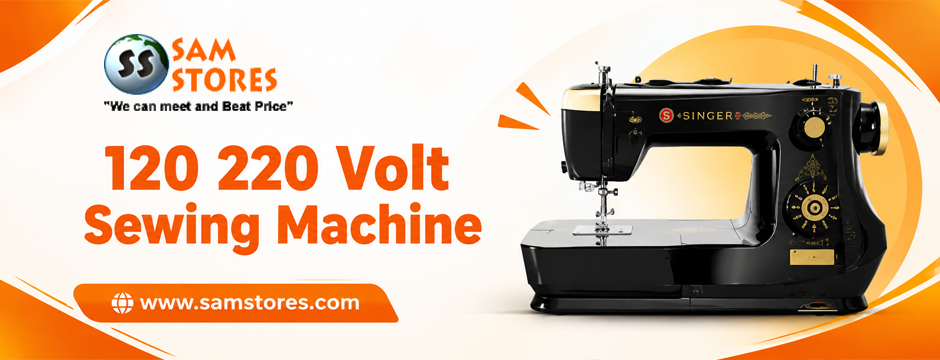
You can also explore related household appliance options, including 120 220 volt sewing machine, when comparing voltage requirements and available configurations. For other international kitchen appliance needs, browse 220 Volts Bread Machines.
How The Braun 220 Volt Hair Dryer Redefines Everyday Glamour_

Common Mistakes to Avoid When Using a 220V Sewing Machine

Even experienced sewing enthusiasts can overlook electrical compatibility when purchasing a machine online. A few simple checks can help prevent problems.

Mistake 1: Assuming a plug adapter is enough. A plug adapter changes the plug shape, not the voltage. Check whether the machine supports the local supply.

Mistake 2: Ignoring the power rating. A converter must support the machine’s electrical demand. Check the wattage and startup requirements before selecting one.

Mistake 3: Overlooking frequency. A voltage converter may not change the frequency. Confirm that the machine supports the available electrical supply.

Mistake 4: Buying without checking the model number. Product names alone do not guarantee identical electrical specifications. Read the manufacturer’s documentation for the exact model.

Mistake 5: Using an unsuitable converter for electronic equipment. Some computerised machines have specific power requirements. Confirm that the converter is appropriate before connecting the machine.

Taking a few minutes to check these details can help you avoid unnecessary costs and make a more confident purchase.

Find the Right Sewing Machine for Your Needs at Sam Stores

Choosing a sewing machine involves more than comparing stitch patterns, speed settings and prices. Voltage compatibility is just as important, particularly if you are buying an appliance designed for use in another country.

Before placing an order, check the machine’s rated voltage, frequency, wattage and plug type. If it requires 220V but your home supplies 120V, investigate a suitable step-up converter. If it supports a broad dual-voltage range, you may be able to use it with a plug adapter instead.

At Sam Stores, taking the time to understand product specifications helps you make a more informed decision and choose equipment suited to your home or sewing workspace.

Whether you are a beginner learning basic alterations or an experienced sewing enthusiast working on detailed garments, the right machine should fit your projects and your electrical setup. Compare the specifications carefully, confirm compatibility before connecting the machine, and invest in the equipment that makes sense for your needs.

Frequently asked questions

1. Do I need a voltage converter for a 220V sewing machine?

Yes, if the machine requires 220V and your outlet supplies only 110V or 120V, you will generally need a suitable step-up voltage converter. Dual-voltage machines may not require one.

2. Can I use a 220V sewing machine with a 120V outlet?

You should not connect a 220V-only machine directly to a 120V outlet. Check whether the manufacturer permits this setup with a suitable converter or whether the model supports both voltages.

3. Will a plug adapter work for a 220V sewing machine?

A plug adapter only changes the plug configuration. It does not convert voltage, so it is insufficient when the machine requires 220V and the outlet supplies 120V.

4. Can a Singer sewing machine rated at 220V work in the USA?

It may work with an appropriately rated step-up converter if the machine is designed for 220V only. Check the model’s voltage, wattage and frequency requirements before use.

5. Can I use a 220V sewing machine on a 230V or 240V supply?

It depends on the machine’s rated input range. Check the manufacturer’s specifications to confirm whether 230V or 240V operation is supported rather than assuming every 220V machine is compatible.
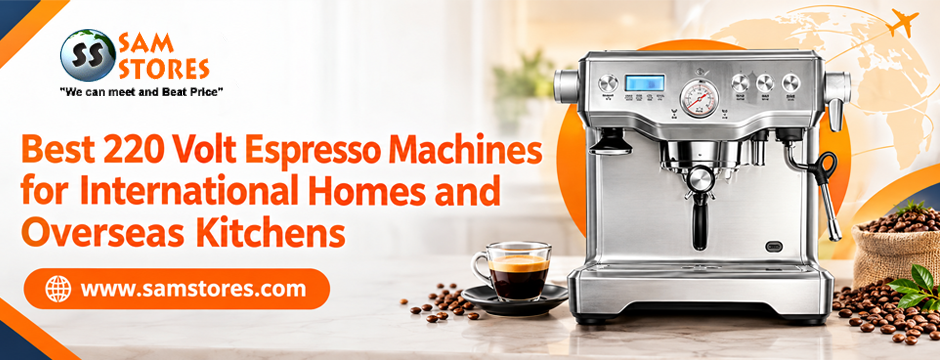
Best 220 Volt Espresso Machines for International Homes and Overseas Kitchens

A good cup of espresso can make an ordinary morning feel a little better. For people living overseas, travelling between countries, or setting up a kitchen outside the United States, finding the right coffee machine involves more than choosing a stylish design or a familiar brand. Voltage compatibility, plug type, kitchen space, brewing features, and long-term reliability all deserve attention.

A 220 volt espresso machine is a practical option for homes where the electrical supply operates at 220V or 230V. It allows coffee lovers to explore home espresso preparation without relying on appliances designed exclusively for a different electrical standard. However, the right choice depends on the machine’s specifications, the destination country’s power supply, and the type of coffee you enjoy.

At Sam Stores, shoppers looking for international appliances can explore the features that matter before deciding which coffee machine belongs in their kitchen. Whether you prefer a strong morning espresso, a creamy cappuccino, or an occasional latte after dinner, understanding your options makes the buying process much easier.

Why Choose a 220 Volt Espresso Machine for an International Home?

Electrical compatibility is one of the first things to consider when purchasing appliances for an overseas kitchen. Many countries use a nominal supply of 220V to 240V, while others operate primarily at 110V to 120V. A machine designed for one voltage range may not work safely or correctly on another.

A 220 volt espresso machine is worth considering if your home’s electrical supply matches the appliance’s rated input. It can be particularly useful for expatriates, international students, families relocating abroad, and homeowners furnishing a second property in another country.

There are several reasons buyers prefer this type of appliance.

  • Better electrical compatibility: A machine rated for the local supply can operate without a voltage converter, provided the frequency and other electrical requirements also match.
  • Convenient daily coffee preparation: You can prepare espresso at home instead of visiting a coffee shop every morning.
  • More control over your coffee: Depending on the model, you may be able to adjust brewing strength, water volume, temperature, or grind size.
  • A practical addition to a modern kitchen: Compact machines can fit comfortably into apartments, holiday homes, and smaller overseas kitchens.

Before ordering, check the manufacturer’s voltage rating rather than relying on the product title alone. A machine marked 220V may not automatically support every 230V or 240V electrical system.

What to Look for in the Best 220 Volt Espresso Machine

Not every coffee drinker needs a professional-style machine with multiple controls. Some people want a quick espresso before leaving for work. Others enjoy experimenting with coffee beans, milk texture, and brewing techniques on weekends.

The best choice depends on how you actually prepare coffee.

1. Check Voltage and Frequency First

Start with the electrical specifications. Look for the rated voltage, frequency, wattage, and plug configuration on the product listing or manufacturer’s documentation.

A machine rated for 220V to 240V may be suitable for many international kitchens, but buyers should verify the exact permitted range. Frequency matters too, particularly when choosing appliances with pumps, motors, or electronic controls.

If you are moving from a country with 110V outlets to one with a 220V supply, do not assume your existing coffee machine will work simply because the plug fits. Likewise, a plug adapter does not convert voltage.

For the most straightforward setup, choose an appliance whose electrical specifications match your destination.

2. Decide Between Manual, Semi-Automatic, and Automatic Models

The machine’s operating style has a direct impact on your everyday experience.

Manual espresso machines give experienced users more control over preparation. They can be rewarding for people who enjoy learning brewing techniques, although they may require more practice.

Semi-automatic machines offer a balance between control and convenience. Users generally manage the coffee preparation while the machine handles essential brewing functions.

Automatic espresso machines reduce some of the work involved in making coffee. Depending on the model, they may offer preset drink options, automated brewing, or integrated grinders.

If several people in your household drink coffee, an automatic or semi-automatic model may be a sensible starting point. Buyers who enjoy experimenting with different beans may prefer a machine with adjustable settings.

3. Consider an Integrated Grinder

Freshly ground coffee can make a noticeable difference to the flavour and aroma of espresso. Some machines include a built-in grinder, while others require a separate appliance.

An integrated grinder keeps the setup compact and reduces the number of items on the kitchen counter. It may also simplify preparation because grinding and brewing happen in one place.

A separate grinder offers greater flexibility if you want to upgrade individual components over time. However, it takes up additional space and adds another purchase to your budget.

Think about your morning routine before deciding. If you value convenience, an all-in-one machine may be worth considering. If coffee preparation is a hobby, separate equipment could offer more flexibility.

4. Look at the Milk-Frothing Options

Espresso is only the starting point for many coffee drinks. Cappuccinos, flat whites, and lattes require milk that has been heated and textured appropriately.

A machine with a steam wand gives you more control over milk texture, although it takes some practice to use well. Automatic milk systems can be easier for beginners, but they often require additional cleaning.

Check how the milk system works, how frequently it needs maintenance, and whether replacement parts are available in your country.

5. Match the Machine to Your Kitchen

A large espresso machine may look impressive, but it is not always the best choice for an apartment or compact overseas kitchen.

Measure the available counter space before purchasing. Remember to allow room for opening water reservoirs, filling the bean hopper, removing drip trays, and cleaning the machine.

Also consider the location of the power outlet and whether the cord can reach safely without an extension arrangement that exceeds the appliance’s requirements.

Coffee Machine 220 Volts: Features That Make Everyday Use Easier

Searching for a coffee machine 220 volts brings up appliances with different brewing systems, sizes, and levels of automation. Comparing them by appearance alone can lead to an expensive mistake.

Instead, pay attention to the features you will use regularly.

A removable water reservoir makes refilling and cleaning easier. A detachable drip tray helps with routine maintenance. Adjustable coffee settings can be useful if you switch between different beans or prefer different drink strengths.

For households where more than one person drinks coffee, consider the water tank capacity and the time needed to prepare consecutive cups. A compact machine may suit one or two coffee drinkers, while a busy household may benefit from a larger reservoir or a model designed for repeated use.

Build quality is another consideration. Look at the manufacturer’s warranty, availability of service, and access to consumables such as water filters or cleaning products.

These details may not be as exciting as a new brewing feature, but they can make a meaningful difference after months of daily use.

Can Other 220V Kitchen Appliances Complete Your Coffee Setup?

An international kitchen often needs more than a coffee machine. Buyers relocating overseas may also need to replace or upgrade blenders, multicookers, and other small appliances.

Understanding each appliance’s electrical requirements helps you build a compatible kitchen without purchasing equipment that cannot be used safely.

Instant Pot 220 Voltage: What Buyers Should Know

An instant pot 220 voltage search usually reflects interest in multicookers designed for higher-voltage electrical systems. These appliances serve a different purpose from espresso machines, but both require careful compatibility checks.

A multicooker can be useful for preparing rice, soups, beans, and one-pot meals. Before purchasing one for an overseas kitchen, confirm its rated voltage, frequency, plug type, capacity, and available cooking programmes.

Do not assume that every Instant Pot model supports 220V simply because another model in the same product family does. Check the exact model specifications and intended market.

If you are equipping a kitchen from scratch, choosing compatible appliances from the beginning can simplify daily use and reduce the need for additional electrical equipment.

240 Volt Blender Options for Everyday Preparation

A 240 volt blender can be useful for smoothies, sauces, milkshakes, and other kitchen tasks. Some coffee lovers also use blenders to prepare iced coffee drinks or blend ingredients for flavoured beverages.

When comparing blender models, consider motor power, jug capacity, blade design, cleaning requirements, and the types of ingredients you plan to process.

Voltage compatibility remains essential. A blender rated for 240V should not be treated as automatically interchangeable with every 220V appliance. Check the manufacturer’s permitted input range before plugging it in.

For smaller kitchens, a compact personal blender may be more practical than a full-size model. If you prepare drinks for several people, a larger jug could be a better fit.

Sam Stores shoppers can compare appliance requirements across product categories to make more informed decisions about their kitchen setup.

Accessories and Product Research Before You Buy

Buying the machine is only one part of preparing for a good home coffee experience. Depending on the model, you may also need an appropriate grinder, espresso cups, a milk pitcher, cleaning supplies, or a water filter.

Check whether the machine includes the accessories you need. Some models come with basic brewing tools, while others require separate purchases.

If you are researching older or less common appliances, documentation can also be useful. For example, someone searching for the Frigidaire espresso maker FD7189 manual should verify the exact model and consult the manufacturer’s documentation for operating instructions, cleaning procedures, and electrical specifications. Confirm that any manual applies to the appliance in question before following its guidance.

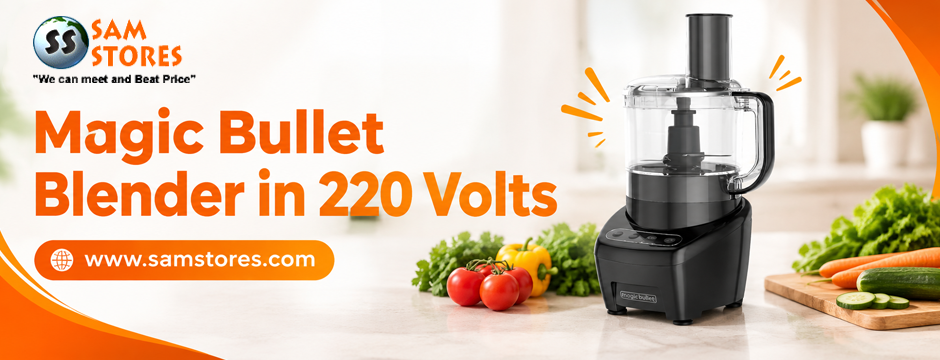
For compact blending needs, shoppers comparing small kitchen appliances may also want to explore a Magic Bullet blender in 220 volts. Make sure the exact product is rated for the destination’s electrical supply, as voltage specifications can vary by model and market.

How The Braun 220 Volt Hair Dryer Redefines Everyday Glamour_

These checks are particularly important when purchasing appliances for overseas homes, where replacement parts and local servicing may differ from those available in the original market.

Common Mistakes to Avoid When Buying a 220 Volt Espresso Machine

A little research before checkout can prevent unnecessary expenses later.

Assuming every 220V appliance works worldwide: Countries may use different voltage ranges, frequencies, and plug configurations. Confirm the machine’s complete electrical rating.

Choosing a machine based only on price: A lower upfront cost may not be worthwhile if the appliance lacks suitable features, a reliable warranty, or accessible replacement parts.

Ignoring maintenance requirements: Espresso machines need regular cleaning and, depending on the model and water conditions, descaling. Consider how easy the process will be.

Forgetting the available counter space: Check the machine’s dimensions and allow enough room for maintenance and daily use.

Overlooking local service support: An appliance that is difficult to repair in your destination country may become inconvenient if a component fails.

Using an unsuitable voltage converter: Converters must be appropriate for the appliance’s wattage and electrical characteristics. Some electronic controls and motors may not work correctly with unsuitable conversion equipment. Matching the appliance to the local supply is generally the simpler approach.

Avoiding these mistakes helps you focus on the features that matter rather than discovering compatibility problems after delivery.

How to Choose the Right Espresso Machine for Your Lifestyle

Before selecting a model, ask yourself three simple questions.

First, how often will you make coffee? If you prepare one or two cups each morning, a compact machine may be sufficient. If several household members drink espresso throughout the day, look for a model designed for more frequent use.

Second, how much control do you want? Beginners may appreciate automatic features, while experienced coffee enthusiasts may prefer manual adjustments and a separate grinder.

Third, where will you use the appliance? A permanent overseas home, a rented apartment, and a second residence may have different space and maintenance requirements.

Once you know the answers, compare models based on voltage compatibility, brewing functions, dimensions, warranty coverage, and ease of cleaning. This approach makes it easier to find a machine that suits your budget and your daily routine.

Find the Right 220 Volt Espresso Machine at Sam Stores

Setting up an overseas kitchen should be an opportunity to create a space that works for you. A well-chosen espresso machine can make breakfast more enjoyable, provide a convenient alternative to daily coffee-shop visits, and give you greater control over how your coffee is prepared.

The key is to look beyond the product photograph. Check the voltage rating, understand the brewing options, measure your counter space, and review maintenance and warranty details before making a purchase.

At Sam Stores, shoppers can use these considerations to narrow their search for international kitchen appliances and compare options that suit their needs. Whether you want a straightforward machine for everyday espresso or a more feature-rich setup for cappuccinos and lattes, careful research can help you make a confident choice.

Take the time to match the appliance to your electrical supply and coffee preferences. The right machine should fit naturally into your kitchen, work with your routine, and make that first cup of the day something to look forward to.

FAQs –

1. What is the best 220 volt espresso machine for an international home?

The best machine depends on your coffee preferences, kitchen space, budget, and local electrical supply. Compare brewing features, voltage and frequency ratings, cleaning requirements, warranty coverage, and available replacement parts before choosing.

2. Can I use a 220 volt espresso machine in a 240V country?

Only if the manufacturer’s specified input voltage range includes the local supply. Check the appliance label and manual rather than assuming a machine rated at 220V can automatically operate at 240V.

3. What should I check before buying a coffee machine 220 volts online?

Check the rated voltage, frequency, wattage, plug type, dimensions, brewing functions, warranty, and return policy. Also confirm whether the machine includes a grinder or milk frother if those features are important to you.

4. Is a 220 volt espresso machine different from a 240 volt blender?

Yes. An espresso machine brews coffee, while a blender mixes or processes ingredients. They have different functions and electrical requirements, so each appliance must be checked against the destination’s power supply.

5. Can I use a plug adapter with a 220 volt espresso machine?

A plug adapter changes the physical plug connection but does not convert voltage or frequency. Use one only when the appliance is electrically compatible with the supply and the adapter is suitable for the plug and required current. If voltage conversion is necessary, consult the manufacturer or a qualified electrician about an appropriate solution.

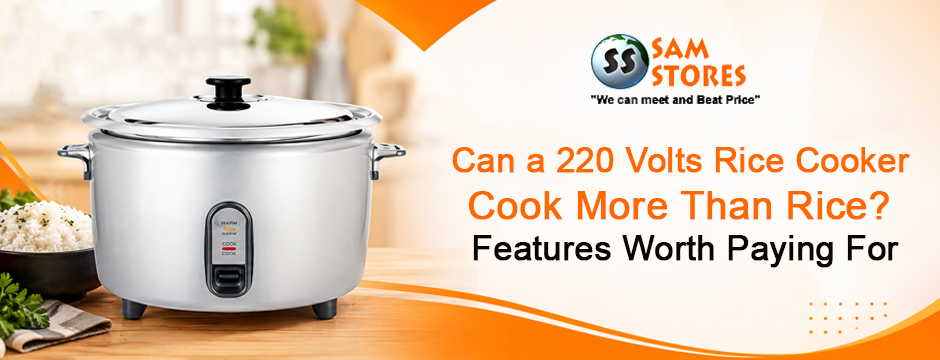
Can a 220 Volts Rice Cooker Cook More Than Rice? Features Worth Paying For

A rice cooker sounds like a simple appliance. Add rice, add water, press a button, and wait. But modern rice cookers have moved well beyond that basic job. Depending on the model, the same appliance can steam vegetables, prepare grains, cook porridge, warm meals, and even handle dishes that would otherwise need a separate pot.

That makes a 220 volts rice cooker worth a closer look if you want more from your kitchen appliances. The right model can save counter space and make everyday cooking easier without turning your kitchen into a collection of single-purpose gadgets.

For shoppers comparing models, the challenge is knowing which features genuinely add value and which ones are little more than extras on a specification sheet.

What Can a 220 Volts Rice Cooker Actually Cook?

Rice remains the main attraction, but it is far from the only food you can prepare.

Many modern rice cookers can handle different types of rice, including white rice, brown rice, jasmine rice, basmati rice and other grains. Some models also include steaming baskets or separate steaming functions, allowing you to prepare vegetables, fish or dumplings while the rice cooks below.

Depending on the manufacturer’s instructions and the specific model, you may also be able to prepare:

  • Oatmeal and breakfast cereals
  • Quinoa and other grains
  • Steamed vegetables
  • Eggs
  • Soup
  • Porridge
  • Beans
  • Simple one-pot meals
  • Pasta and similar dishes

The important point is that not every rice cooker is designed for all of these foods. A basic model may be excellent at cooking rice but offer few additional functions. A programmable model with multiple cooking settings can give you considerably more flexibility.

If you regularly prepare simple meals at home, choosing a cooker based on its overall functionality rather than its rice capacity alone can be a smart buying decision.

The Features That Actually Make a Difference

When shopping for a 220 volts rice cooker, it is easy to get distracted by long lists of features. Instead of paying for every available function, think about how you cook.

Some features are genuinely useful for everyday meals.

1. Multiple Cooking Settings

Different types of rice need different cooking conditions. Brown rice, for example, generally requires more water and a longer cooking time than white rice.

A cooker with dedicated settings can take some of the guesswork out of preparation. Depending on the model, you might find settings for white rice, brown rice, quick cooking, porridge or steaming.

If you cook different foods throughout the week, multiple settings can be more valuable than a higher wattage number alone.

2. Keep-Warm Function

This is one of those features that may seem minor until you actually use it.

Dinner rarely finishes exactly when you expect it to. A keep-warm function can help maintain the temperature of cooked rice after the cooking cycle ends, which is useful when family members eat at different times.

It also means you do not necessarily need to transfer freshly cooked rice into another container immediately.

However, keeping food warm for too long can affect its texture and quality. Always follow the manufacturer’s recommendations for safe food handling.

3. Steaming Capability

A steaming basket can turn a rice cooker into a surprisingly practical meal-preparation appliance.

Imagine cooking rice in the main pot while vegetables steam above it. You could have two parts of a meal cooking at the same time without using another saucepan.

For smaller households, students, apartment residents and anyone trying to simplify meal preparation, this can be a particularly useful feature.

4. Programmable Controls

Digital controls are worth considering if you want more control over cooking times and settings.

A programmable rice cooker may allow you to select a cooking mode, set a timer or delay the start of cooking, depending on the model.

This is particularly handy for people who plan meals around work schedules. You can prepare the ingredients in advance and use the appropriate programmed setting when available.

Just make sure you understand what the timer actually controls. A delayed start feature is not suitable for every ingredient, especially foods that should not remain unrefrigerated for extended periods.

5. Removable, Easy-to-Clean Parts

A rice cooker that cooks well but takes forever to clean is unlikely to become a favourite appliance.

Look for a removable inner pot, accessible lid components and parts that can be cleaned without much effort. Nonstick cooking pots can also make serving and cleaning easier, although the coating needs to be treated carefully.

The simpler the cleanup, the more likely you are to use the appliance regularly.

What About an Aroma Rice Cooker 220 Volts?

If you have been comparing international rice cookers, you may come across searches for an aroma rice cooker 220 volts.

Aroma is known for rice cookers and multicookers with different capacities and functions. But when buying any appliance, the voltage specification should be checked carefully rather than assuming that a product will work simply because the brand is familiar.

A cooker designed specifically for 220 to 240 volts is intended for electrical systems within that range. A model designed for another voltage may require additional equipment, and using unsuitable electrical equipment can create safety and performance concerns.

That is why voltage should be one of the first specifications you check when shopping for a rice cooker for a particular country or electrical system.

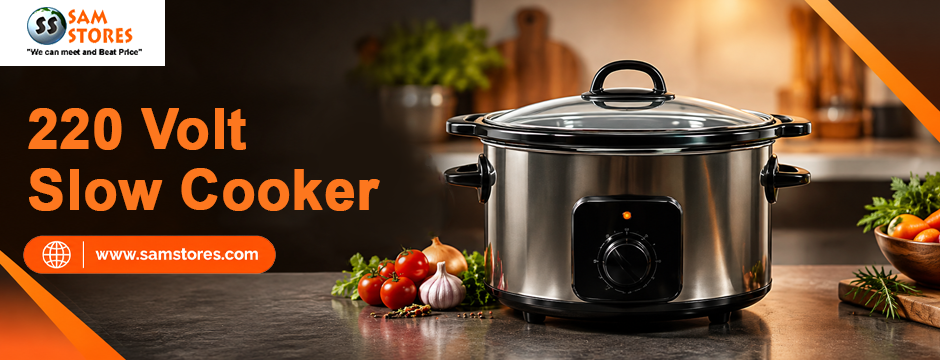
Is a 220 Volt Slow Cooker the Same Thing?

Not quite.

A 220 volt slow cooker and a rice cooker may both be used for convenient meal preparation, but they are designed around different cooking methods.

A slow cooker is generally intended for longer cooking at lower temperatures. It is useful for dishes such as stews, soups, pulled meats and other meals that benefit from extended cooking.

How The Braun 220 Volt Hair Dryer Redefines Everyday Glamour_

A rice cooker is primarily designed to cook rice and similar grains efficiently. More advanced models may offer steaming, porridge and other functions.

There can be some overlap, but the two appliances should not automatically be treated as interchangeable.

If rice is a regular part of your meals and you want a compact appliance that can handle more than one task, a multifunction rice cooker may be the better fit. If slow-cooked stews and long-simmered meals are your priority, a dedicated slow cooker may make more sense.

Capacity Matters More Than You Might Expect

Buying the largest cooker available is not always the best choice.

A person living alone has very different requirements from a household of six. A large cooker may take up unnecessary counter space if you usually prepare small quantities.

On the other hand, choosing a cooker that is too small can become frustrating if you regularly cook for a family.

Think about how much rice you normally prepare at one time, how often you entertain guests and whether you want to use the appliance for other foods.

Also pay attention to how manufacturers describe capacity. Some specifications refer to uncooked rice, while others may highlight the cooked capacity. Checking the manufacturer’s measurements can prevent confusion.

One Appliance, Several Meals

The biggest advantage of a multifunction rice cooker is not that it can replace every appliance in your kitchen. It is that it can handle several everyday tasks reasonably well.

For example, you could use it for:

Breakfast: Oatmeal or porridge.

Lunch: Rice with steamed vegetables.

Dinner: Rice alongside steamed fish or another protein suitable for the appliance.

Meal preparation: Cook a batch of grains for several meals.

Quick meals: Prepare simple one-pot recipes where supported by the manufacturer’s instructions.

This versatility can be particularly useful in smaller kitchens where counter and storage space are limited.

Which Features Are Worth Paying More For?

Not every premium feature deserves a higher price.

If you are trying to stay within a budget, prioritise features that you are actually going to use.

A practical shopping checklist might include:

High priority: Correct voltage, suitable capacity, reliable cooking performance, durable inner pot and easy cleaning.

Worth considering: Multiple cooking settings, steaming function, keep-warm mode and programmable controls.

Only if you need them: Highly specialised cooking programs, extensive digital menus or advanced features that duplicate appliances you already own.

The best purchase is not necessarily the rice cooker with the longest feature list. It is the one that matches your cooking habits.

Why Voltage Should Be Checked Before Anything Else

Voltage is particularly important when purchasing electrical appliances online.

A 220 volts rice cooker should have a voltage specification that is compatible with your electrical supply. You should also check the plug configuration and the product’s stated frequency requirements where applicable.

Do not rely only on a product title. Check the manufacturer’s specifications and product documentation before ordering.

For shoppers looking for a suitable model, the Powerpac Digital Rice Cooker 220-240 Volt can be worth considering when its capacity and functions match your needs.

The 220 to 240 volt range is also an important detail for buyers who specifically need an appliance designed for higher-voltage electrical systems.

Should You Buy a Multifunction Rice Cooker?

The answer depends on how you cook.

If you only make plain white rice occasionally, a basic rice cooker may be enough. Spending considerably more for a dozen cooking programs may not offer much practical value.

But if rice appears on your menu several times a week, or you want to steam vegetables, prepare grains and make simple meals using one appliance, a multifunction model can make sense.

It can reduce the number of pans you use, simplify meal preparation and save valuable kitchen space.

That is where a good rice cooker becomes more than a rice cooker. It becomes a convenient part of your everyday cooking routine.

Final Thoughts

A 220 volts rice cooker can do considerably more than cook a pot of rice, but its usefulness depends on the model you choose.

Look beyond the number of buttons and focus on the features that fit your routine. A suitable capacity, reliable cooking settings, steaming capability, keep-warm function and easy cleanup can make a noticeable difference.

If you are comparing models, also verify the voltage before making a purchase. A product that looks perfect on paper is not the right choice if its electrical specifications do not match your requirements.

For shoppers at Sam Stores, the goal should be simple: choose a rice cooker that earns its place on your kitchen counter. When the right features come together, one compact appliance can handle rice, grains, steaming and several other everyday cooking jobs without making meal preparation complicated.

FAQs

1. Can a 220 volts rice cooker cook foods other than rice? 

Yes. Depending on the model, a 220 volts rice cooker may prepare grains, oatmeal, porridge, steamed vegetables, eggs, soup and other simple meals. Always check the manufacturer’s recommended uses.

2. What features should I look for in a 220 volts rice cooker? 

Useful features include multiple cooking settings, a keep-warm function, steaming capability, programmable controls, an easy-to-clean inner pot and a capacity suitable for your household.

3. Is a 220 volt slow cooker the same as a rice cooker? 

No. A slow cooker is designed primarily for longer, low-temperature cooking, while a rice cooker is designed mainly for rice and grains. Some multifunction models can perform several additional cooking tasks.

4. What is an aroma rice cooker 220 volts model? 

It refers to an Aroma rice cooker designed or rated for a 220-volt electrical supply. Buyers should always verify the exact voltage and plug specifications of the model before purchasing.

5. How do I choose the right rice cooker capacity? 

Consider how many people you normally cook for and how much rice you prepare at once. Avoid choosing a very large model if you usually cook small portions, as it can take up unnecessary counter and storage space.

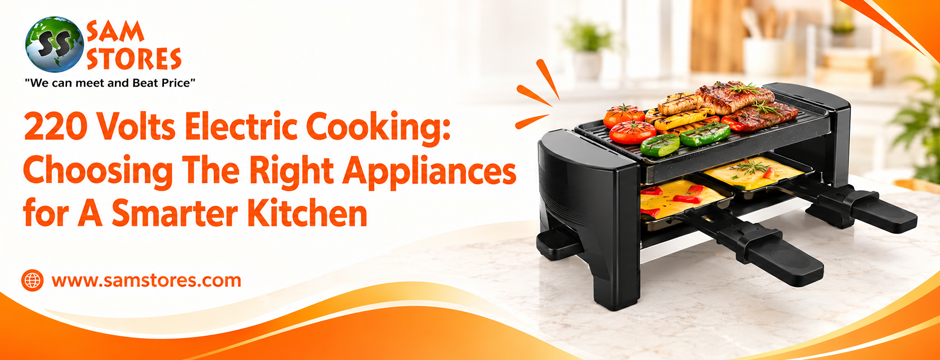
220 Volts Electric Cooking: Choosing The Right Appliances for A Smarter Kitchen

A modern kitchen does not need to be complicated to be efficient. The right appliances can make everyday cooking faster, cleaner, and considerably more convenient.

For many households, 220 volts electric cooking offers a practical way to power essential kitchen appliances while maintaining a familiar cooking routine. From blending ingredients to preparing breakfast, frying meals, and grinding coffee, electric appliances can take much of the effort out of repetitive tasks.

But with so many options available, choosing the right appliances can feel overwhelming.

Should you buy a hand blender first? Would an electric fry pan be more useful? Is an omelette maker worth adding to your countertop?

At Sam Stores, we understand that buying electronics is easier when you know what each appliance can genuinely contribute to your kitchen. So, let’s explore the essentials and see how they can fit into everyday cooking.

What Makes 220-Volt Kitchen Appliances Practical?

Before choosing individual appliances, it helps to understand what voltage means in everyday use.

Voltage refers to the electrical potential supplied to an appliance. Appliances designed for 220-volt systems are intended to operate with compatible electrical supplies.

That makes checking voltage an important step before buying any electrical kitchen product.

The right appliance should match your home’s electrical system and comply with applicable safety requirements. Using an incompatible appliance can create performance problems and potential safety risks.

Therefore, don’t choose an appliance based only on its appearance or features. Check its voltage specification first. Once compatibility is established, you can start considering the features that actually matter for your cooking habits.

220 Volts Hand Blenders for Everyday Preparation

Hand blenders are among the more versatile kitchen appliances. They are compact, relatively easy to store, and useful for numerous preparation tasks. A suitable 220 volts hand blender model can help with blending soups, sauces, dips, smoothies, and other ingredients, depending on its design and attachments.

Their biggest advantage is convenience. You don’t necessarily need to transfer ingredients into a separate countertop blender. Instead, you can often blend directly inside a suitable bowl, jug, or cooking pot.

So, when choosing one, look at the motor performance, speed settings, included attachments, grip design, cleaning requirements, and overall build quality. If you frequently prepare small batches, a hand blender can become one of those appliances you wonder how you managed without.

220 Volts Omelette Maker for Easier Breakfasts

Breakfast should not require a complicated production line. An omelette maker can simplify one of the most popular breakfast options while helping create consistent results. A 220 volts omelette maker can be particularly convenient for people who want quick preparation without constantly monitoring a frying pan.

Depending on the model, features may include non-stick cooking surfaces, indicator lights, compact designs, and easy-clean surfaces. However, convenience should not replace good cooking habits. Always follow the manufacturer’s instructions regarding preheating, food quantities, cleaning, and safe handling.

For busy mornings, though, a dedicated omelette maker can make breakfast preparation feel much less demanding.

Electric Fry Pans Bring Flexibility beyond The Stovetop

Imagine preparing dinner while your main stovetop is already occupied. An electric fry pan can provide another cooking surface. 220 volts electric fry pans can be useful for frying, sautéing, simmering, and other cooking tasks, depending on their temperature range and construction. They can also offer more flexibility when preparing meals for several people.

When comparing models, consider the pan’s cooking surface, temperature control, capacity, handles, lid design, and ease of cleaning.

A larger pan isn’t automatically better. If you typically cook for one or two people, a compact option may be easier to store and handle. For larger households, additional cooking capacity can be more valuable. Think about your kitchen before thinking about the specifications.

Don’t Forget The Coffee Grinder

For coffee enthusiasts, grinding beans immediately before brewing can become part of the daily ritual. The aroma alone can make an ordinary morning feel different.

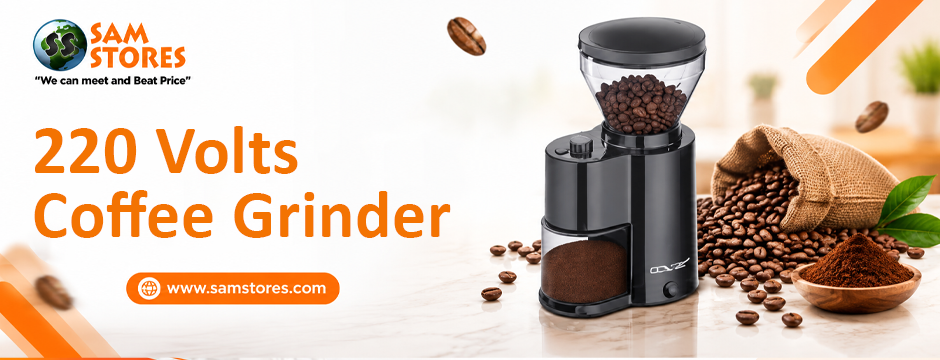
A suitable 220 volts coffee grinder model can help you grind beans at home rather than relying entirely on pre-ground coffee. Different brewing methods can require different grind sizes. Therefore, look for a grinder that offers appropriate adjustment options if you regularly switch between brewing styles.

Also consider capacity, grinding mechanism, cleaning requirements, noise, and ease of operation. You don’t necessarily need the most complicated grinder. The right choice depends on how often you drink coffee and how much control you want over the preparation process.

How The Braun 220 Volt Hair Dryer Redefines Everyday Glamour_

Now imagine your morning. You wake up and prepare coffee. Freshly ground beans go into your preferred brewing setup.

  • Next comes breakfast. An omelette maker handles the main cooking while you prepare other ingredients.
  • Later, you make soup for lunch. A hand blender turns cooked vegetables into a smooth consistency.

By evening, an electric fry pan gives you another convenient cooking surface for dinner. None of these appliances needs to completely transform your kitchen. Together, however, they can create a more efficient workflow.

This is where 220 volts electric cooking becomes more than simply an electrical specification. It becomes part of a practical kitchen ecosystem where different appliances handle specific tasks.

Safety Should Always Come Before Convenience

Electrical kitchen appliances combine electricity, heat, moisture, and food. That combination requires sensible handling.

  • Always follow the manufacturer’s instructions and safety recommendations.
  • Check the voltage rating before connecting an appliance.
  • Keep electrical components away from water unless the product is specifically designed for such exposure.
  • Avoid using damaged cords or plugs.
  • Unplug appliances when required during cleaning or maintenance.
  • Also, give heated appliances enough ventilation and place them on suitable surfaces.

These habits may sound basic. They are still worth following every time. A convenient kitchen appliance is only useful when it is operated safely and correctly.

Quality Matters More Than A Long Feature List

Online shopping makes it easy to compare specifications. You might see one appliance offering several speed settings, another promising multiple attachments, and another featuring a digital display.

More features can be useful, but they should not distract you from fundamental qualities. Look at construction, controls, ease of cleaning, warranty information, product instructions, and suitability for your needs.

Think about long-term usability.

Would you rather have an appliance with ten rarely used features or one with three functions you use every week?

For most kitchens, practical design wins.

Choose Appliances That Work Together

A good kitchen appliance collection should feel coordinated. The objective isn’t necessarily to buy products from the same category. Instead, choose appliances that solve different problems.

Before adding another appliance to your basket, ask yourself one question:

What specific cooking problem will this solve?

If you have a clear answer, the appliance is more likely to earn its place.

Shopping Online Requires A Little Extra Attention

When buying electronics online, product descriptions deserve careful reading. Check the voltage, dimensions, capacity, included accessories, power requirements, materials, warranty information, and manufacturer’s instructions where available.

Product images can help you understand the design. Specifications tell you whether the appliance suits your kitchen. Customer reviews may provide additional context about everyday use, although individual experiences can vary. Don’t overlook delivery considerations either. Larger appliances may require more careful handling, while smaller appliances are generally easier to store and transport.

Taking a few extra minutes to check these details can prevent disappointing purchases. For safe buying options, you may consider purchasing from Sam Stores.

Final Thoughts

A practical kitchen is built around habits. The right appliances can reduce preparation time, simplify repetitive tasks, and make cooking more enjoyable. However, choosing them requires more thought than simply selecting the most attractive model.

So, when exploring 220 volts electric cooking, always begin with electrical compatibility and safety. Then consider your cooking routine, available space, appliance features, cleaning requirements, and long-term usefulness.

So, whether you are comparing hand blenders, omelette makers, electric fry pans, or coffee grinders, choose products that solve genuine everyday problems.

Sam Stores can be part of that journey by helping shoppers explore practical electronics for modern kitchens. Because the smartest kitchen isn’t necessarily packed with appliances. It’s equipped with the ones you actually use.

FAQs

1. What does 220 volts mean for kitchen appliances?

It refers to the electrical voltage an appliance is designed to operate with. Always check compatibility with your home’s electrical supply before use.

2. Are hand blenders useful for everyday cooking?

Yes. They can be convenient for preparing soups, sauces, smoothies, dips, and other blended foods, depending on the model.

3. What should I consider when buying an electric fry pan?

Consider cooking capacity, temperature controls, cooking surface, lid design, handles, storage requirements, and cleaning convenience.

4. Is an omelette maker worth buying?

It can be useful if you regularly prepare omelettes and want a convenient appliance designed specifically for quick breakfast preparation.

5. Why should I check voltage before buying kitchen electronics?

Voltage compatibility, such as for a 220 volts electric cooking appliance, helps ensure an appliance is suitable for your electrical supply. Using incompatible electrical equipment can create safety and performance concerns.

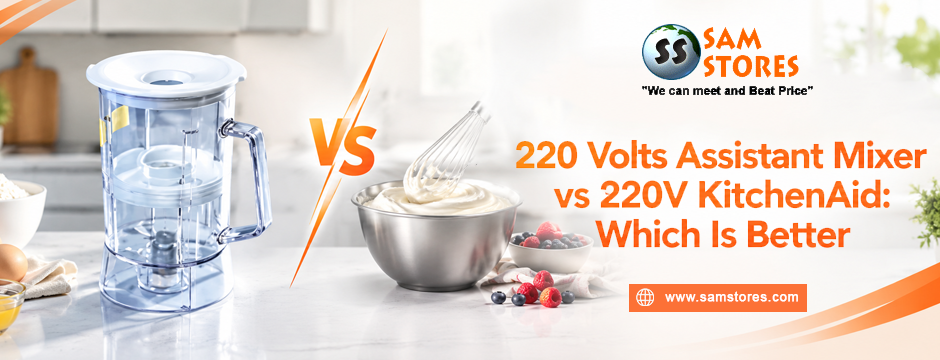
220 Volts Assistant Mixer vs 220V KitchenAid: Which Is Better?

Buying a stand mixer sounds simple until you start comparing the options.

Then the questions begin. Should you choose an 220 Volts Assistant Mixer or spend more on a 220V KitchenAid? Is one better for bread? Which one offers more useful attachments? Does the higher price of a KitchenAid automatically mean better performance?

The honest answer is that neither machine is the perfect choice for everyone.

The better option depends on what you actually do in your kitchen.

For someone who bakes regularly, makes bread, experiments with homemade pasta and wants one machine that can take on several jobs, an Assistant mixer can be a very interesting choice. Someone who values the familiar KitchenAid design, brand reputation and extensive attachment ecosystem may lean towards a 220 volt kitchenaid mixer.

Sam Stores carries a wide selection of 220-volt kitchen appliances, including Assistant mixer accessories and 220-volt KitchenAid options. The goal is not to tell every buyer to choose one brand. It is to help you understand what you are paying for and which machine makes sense for your kitchen.

What Is an Assistant Mixer?

The Assistant mixer concept is different from the conventional tilt-head or bowl-lift stand mixer many people picture when they hear the words “stand mixer.”

The Electrolux and Verona Assistent products available through Sam Stores are particularly interesting because the system can be expanded with different accessories. The current Sam Stores range includes items such as an Assistent grain mill, flake mill, fruit and berry strainer, grater and nut grinder, food processor drum set, sausage stuffer, pasta maker, citrus juicer and blender.

That tells you something important about the product philosophy.

It is not simply about mixing cake batter.

The idea is to build a broader food preparation system around the mixer.

For a home cook who likes making food from scratch, that versatility can be a major advantage.

Why Is KitchenAid Still Such a Popular Choice?

KitchenAid has built an enormous following around its stand mixers, and there is a reason for that.

The brand has become closely associated with home baking. Its mixers are instantly recognisable, available in different configurations and supported by a large range of compatible accessories.

For buyers searching specifically for a 220 volt KitchenAid mixer, electrical compatibility is an important part of the purchasing decision. A 220V model is designed for the appropriate electrical supply, which can be far more convenient than buying an appliance that requires an unsuitable voltage arrangement.

KitchenAid also appeals to buyers who want a mixer that looks good enough to remain on the countertop.

For many people, that matters.

A kitchen appliance does not have to be purely functional. If you are going to use it several times a week, you want something you enjoy having in your kitchen.

220 Volts Assistant Mixer vs KitchenAid: The Real Difference

The biggest difference is not simply brand name or appearance.

It comes down to how you intend to use the machine.

Think of the Assistant as a flexible food preparation platform. Think of KitchenAid as a highly established stand mixer system with a strong baking identity and a broad accessory ecosystem.

Both can be excellent choices.

But the right one depends on your priorities.

1. Baking Performance

If your main goal is baking cakes, cookies, whipped cream and similar recipes, both options can make sense.

A quality stand mixer saves considerable effort compared with mixing everything by hand. More importantly, it gives you consistency.

That matters when you are making the same bread recipe every weekend or preparing several batches of cookie dough before a family gathering.

If bread is a major part of your routine, pay close attention to the specific model rather than judging an entire brand. Motor specifications, bowl capacity and dough-handling capability vary between machines.

This is one area where buyers sometimes make a mistake.

They buy based on the logo instead of the actual specifications.

2. Versatility and Attachments

This is where the Assistant system becomes especially interesting.

Sam Stores currently lists a range of Assistent accessories, including a grain mill, flake mill, fruit and berry press, grater and nut grinder, food processor drum set, sausage stuffer, pasta maker, citrus juicer and blender.

Imagine buying one machine and gradually expanding what it can do as your cooking interests change.

One month, you may be interested in homemade pasta.

A few months later, you may start grinding grains.

Later, you may want to make sausage or process fresh fruit.

You do not necessarily need to buy a completely separate appliance for every task.

That is a strong selling point for the Assistant approach.

KitchenAid also has a large attachment ecosystem, so it is not fair to describe it as a basic mixer with limited functionality. However, shoppers should compare the actual attachments they plan to use instead of simply counting how many accessories exist.

The useful question is:

Which system gives you the tools you will actually use?

That answer is more valuable than a generic “more attachments equals better.”

3. Ease of Use

A mixer should make cooking easier, not introduce another complicated routine.

KitchenAid’s familiar design makes it approachable for many home bakers. Controls and attachments are generally easy to understand once you have spent some time with the machine.

The Assistant system takes a slightly different approach. Buyers who plan to use several attachments may need a little more time to understand how the system works.

That is not necessarily a disadvantage.

In fact, people who enjoy cooking from scratch may appreciate having a machine that can grow with them.

If you only want to mix cake batter twice a month, however, paying for a highly versatile system may not make sense.

4. Bread and Dough Preparation

Bread bakers should pay special attention to mixer design.

Dough is much more demanding than a light cake batter. It places greater strain on the machine and requires a mixer that can handle the workload appropriate to the recipe.

This is where you should look at:

  • Motor specifications
  • Bowl capacity
  • Dough hook design
  • Recommended quantities
  • Operating instructions
  • Construction quality
  • Manufacturer limitations

Do not assume that a higher wattage number automatically means a better mixer.

Electrical power ratings are only one part of the picture.

For serious bread making, the complete machine design matters.

5. Space on the Countertop

This is an overlooked buying factor.

A stand mixer is not something you buy and forget about. If you use it regularly, it will probably live on your countertop.

Before buying, measure your available space.

Think about the machine’s footprint, height and how much room you need to attach accessories or remove the bowl.

KitchenAid models come in different sizes and configurations, so the countertop requirements can vary.

The same is true when comparing different Assistant systems.

A machine that technically fits your kitchen but makes every other appliance difficult to access is not really a convenient purchase.

6. Price and Long-Term Value

Price is where comparisons can become misleading.

A buyer may see a cheaper mixer and immediately assume it offers better value.

Another buyer may see the KitchenAid name and decide that the premium is automatically justified.

Neither approach is particularly helpful.

Instead, calculate the value based on how you will use the machine.

Suppose you bake every weekend and regularly make dough, pasta and other foods from scratch. A versatile mixer with useful attachments may save you from purchasing several separate appliances later.

On the other hand, if you mainly make occasional cakes, cookies and whipped cream, you may not need a large accessory ecosystem.

When searching for a kitchenaid mixer 220 volts best price, do not look only at the sticker price. Consider the model, included accessories, voltage specification, shipping, warranty considerations and what you will actually receive in the package.

A cheaper listing is not always the cheaper purchase.

How The Braun 220 Volt Hair Dryer Redefines Everyday Glamour_

7. Which One Offers Better Kitchen Versatility?

This is probably the strongest argument in favour of an Assistant system.

The Sam Stores category demonstrates just how broad the accessory selection can be. Current listings include a grain mill, flake mill, fruit and berry strainer, food processor drum set, sausage stuffer, pasta maker and blender, among other accessories.

For someone who enjoys making ingredients from scratch, that is attractive.

You can start with the mixer and add accessories when you actually need them.

That approach can also make more financial sense than buying a cupboard full of specialist appliances that only get used occasionally.

Who Should Buy a 220 Volts Assistant Mixer?

An Assistant mixer may be the better fit if you:

  • Enjoy bread making and homemade cooking
  • Want to explore different attachments
  • Make pasta, grains or other foods from scratch
  • Want one system for several kitchen jobs
  • Prefer buying accessories gradually
  • Value versatility over brand familiarity
  • Expect to use your mixer regularly

It is especially appealing to enthusiastic home cooks who see their kitchen as more than a place to prepare quick meals.

Who Should Buy a 220V KitchenAid?

A KitchenAid may be the better choice if you:

  • Primarily want a dedicated stand mixer
  • Bake frequently
  • Prefer KitchenAid’s design and operating style
  • Want access to its established accessory ecosystem
  • Already own compatible KitchenAid accessories
  • Care strongly about the brand
  • Want a mixer that fits naturally into a familiar baking routine

For these buyers, a 220 volt KitchenAid mixer can be a sensible long-term purchase.

Don’t Ignore Voltage

There is one issue that should come before colour, design or even brand.

Voltage.

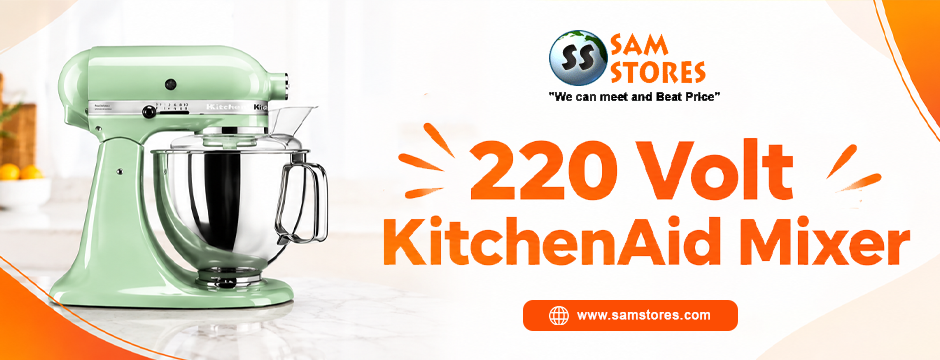
Sam Stores specifically organises its kitchen appliance range around 220-volt products, including a dedicated 220 Volt KitchenAid Mixer category and a separate Assistant Mixer section.

If you need a 220V appliance, confirm the voltage and frequency requirements of the exact model before placing your order.

This is particularly important when purchasing imported appliances.

A beautiful mixer that is not electrically compatible with your setup is not a bargain.

What About Attachments You Will Not Use?

This is worth considering before spending more.

A huge accessory collection sounds impressive, but there is no reason to pay for capabilities you will never use.

Make a simple list.

Do you make bread?

Do you want fresh pasta?

Would you actually grind grains?

Do you make sausage?

Do you process fruit?

Do you need a food processor?

Once you answer those questions, the decision becomes much easier.

For some buyers, an Assistant system will suddenly make perfect sense.

For others, a straightforward KitchenAid setup will be the smarter choice.

So, Which Is Better?

There is no universal winner.

The 220 Volts Assistant Mixer is particularly compelling for buyers who want a flexible food preparation system and intend to take advantage of different accessories.

A 220V KitchenAid makes a lot of sense for buyers who want the familiar KitchenAid experience, strong baking credentials and a wide range of compatible accessories.

If your kitchen revolves around baking, KitchenAid deserves serious consideration.

If your kitchen revolves around experimentation and making more foods from scratch, the Assistant system deserves an equally serious look.

And if you are still undecided, start with your recipes rather than the brand name.

That is the simplest way to make the right choice.

Why Shop 220V Kitchen Appliances From Sam Stores?

Finding the right appliance is only half the job. Finding the right voltage version is just as important.

Sam Stores has built its catalogue around 220-volt appliances across multiple categories. Its current kitchen appliance selection includes 220 Volts Stand Mixers, 220 Volt KitchenAid Mixers and 220 Volts Assistant Mixers, making it easier for shoppers to explore compatible options in one place.

The Assistant Mixer section also gives buyers access to a range of accessories, so you can think beyond the initial mixer purchase and build a setup around the way you actually cook.

That is ultimately what a good appliance purchase should do.

It should fit your kitchen, your recipes and your habits.

Final Verdict

So, 220 Volts Assistant Mixer vs 220V KitchenAid: which is better?

For maximum flexibility and a broader food preparation approach, the Assistant deserves a close look.

For buyers who prioritise the established KitchenAid experience and a mixer-led baking setup, a 220 volt KitchenAid may be the more natural choice.

Neither should be purchased simply because somebody says it is “the best.”

Look at your cooking habits. Check voltage compatibility. Compare bowl capacity and specifications. Think about the attachments you will genuinely use. Then compare the total value of the package.

That is how you avoid an expensive kitchen appliance sitting untouched in the corner.

And if you are looking for a 220V mixer that can become a bigger part of your kitchen over time, explore the 220 Volts Assistant Mixer and KitchenAid options available from Sam Stores before making your final decision.

Frequently Asked Questions

1. Is a 220 Volts Assistant Mixer better than a KitchenAid?

It depends on your needs. An Assistant mixer can be particularly attractive for buyers who want extensive food preparation capabilities through different attachments. KitchenAid can be a better fit for buyers focused primarily on baking and the established KitchenAid ecosystem.

2. Is a 220 volt KitchenAid mixer suitable for international kitchens?

A 220V KitchenAid can be suitable where the electrical supply matches the appliance’s voltage and frequency requirements. Always verify the exact specifications of the model before purchase.

3. Which mixer is better for making bread?

Both can be suitable, but buyers should compare the specifications of the exact models, including dough capacity, motor design and manufacturer recommendations. Heavy bread dough places considerably more demand on a mixer than light cake batter.

4. Are Assistant mixer attachments worth buying?

They can be, especially if you will actually use them. Sam Stores currently lists Assistant accessories for tasks including grain milling, flaking, fruit pressing, grating, food processing, sausage making, pasta preparation and blending.

5. How can I find a KitchenAid mixer 220 volts at the best price?

Compare the exact model rather than looking only at the brand or headline price. Check voltage, included accessories, capacity, specifications and the overall package. Sam Stores offers a dedicated 220-volt KitchenAid category alongside its other 220-volt kitchen appliances.

Why A KitchenAid Stand Mixer Is Becoming Every Modern Homeowner’s Secret Weapon?

Saturday mornings used to feel chaotic in someone’s kitchen.

Between kneading dough for fresh bread, whisking cake batter for her children, and preparing ingredients for lunch, cooking often felt more exhausting than enjoyable. What was meant to be a comforting weekend ritual slowly turned into a time-consuming chore.

Many homeowners experience the same frustration. Cooking at home brings joy, but repetitive kitchen tasks can quickly become overwhelming. Mixing dough by hand, whipping cream, or preparing batters often consumes more time and energy than expected.

That changed when someone discovered the KitchenAid stand mixer 220 volts. Suddenly, complicated kitchen tasks became smoother, faster, and far less stressful.

Today, more homeowners are rethinking how they cook. Instead of spending unnecessary time on repetitive preparation, they are investing in smart kitchen tools that simplify everyday life.

This blog explores how a stand mixer can transform cooking efficiency, save time, and bring excitement back into the kitchen.

Why Modern Homeowners Are Rethinking Their Cooking Routine?

Home cooking has evolved significantly.

People are preparing healthier meals, experimenting with international recipes, and embracing homemade baking more than ever. Yet, busy schedules leave little room for time-intensive kitchen preparation.

This creates a common problem.

Cooking feels rewarding, but preparation often feels tiring.

Tasks like kneading dough, mixing batter, whisking cream, or preparing mashed potatoes can consume valuable time. Over time, many homeowners either simplify recipes or avoid cooking altogether.

This is exactly where modern kitchen appliances step in.

Rather than replacing the joy of cooking, they remove repetitive effort and improve efficiency.

What Makes A Stand Mixer So Useful?

At first glance, a stand mixer may seem like another countertop appliance. However, homeowners who use one often describe it differently.

Thus, a KitchenAid stand mixer 220 volts becomes a kitchen partner.

Unlike handheld mixers, stand mixers work independently. This allows users to multitask while ingredients mix perfectly.

A good stand mixer helps with:

  • Dough kneading
  • Cake batter preparation
  • Cookie mixing
  • Whipping cream
  • Pasta preparation
  • Mashed potatoes
  • Frosting and icing

Instead of spending energy on repetitive mixing, homeowners can focus on creativity and meal planning.

The Real Kitchen Problem Nobody Talks About

Most cooking frustration starts before actual cooking begins. It begins during preparation.

Heavy dough feels impossible to knead after a long workday. Manual whisking becomes tiring. Baking often feels intimidating because recipes demand too much effort.

As a result, many kitchens become underutilized despite homeowners wanting to cook more often.

This challenge has become especially noticeable among busy families balancing work, children, and household responsibilities.

The desire to cook exists.

The energy often does not.

A stand mixer solves this hidden problem by reducing physical effort while improving cooking consistency.

Why Homeowners Prefer A Premium Kitchen Solution?

There is a reason professional kitchens rarely rely on manual mixing.

Consistency matters.

When mixing is uneven, the dough texture changes. Batters become inconsistent. Recipes feel unpredictable.

Premium stand mixers provide:

Consistent Results Every Time

Whether preparing pizza dough or birthday cake batter, consistency improves outcomes dramatically. The machine mixes ingredients evenly, helping homeowners achieve reliable results without guesswork.

Hands-Free Convenience

Imagine preparing frosting while the dough kneads automatically nearby. A stand mixer allows multitasking, making meal preparation faster and more organized.

Less Physical Effort

Mixing heavy ingredients manually can strain wrists and shoulders. This becomes especially valuable for homeowners who cook frequently or prepare meals for larger families.

Long-Term Versatility

Stand mixers are no longer limited to baking.

Modern attachments support:

  • Pasta making
  • Vegetable slicing
  • Grinding ingredients
  • Food preparation tasks

This makes them a practical long-term kitchen investment.

Why Voltage Matters More Than You Think?

One mistake homeowners often make is ignoring appliance compatibility.

Imported kitchen appliances frequently come with voltage limitations. Buying the wrong appliance can create frustration and performance issues.

For international households or countries that use higher electrical standards, choosing a KitchenAid mixer with 220-voltage becomes extremely important.

It ensures proper functionality without requiring unreliable converters or complicated electrical adjustments. A compatible appliance delivers safer operation and better long-term performance.

How The Braun 220 Volt Hair Dryer Redefines Everyday Glamour_

The Story of An Upgraded Kitchen

After struggling for years with time-consuming preparation, Priya finally decided to upgrade her kitchen setup.

Initially, she hesitated.

Was a stand mixer really necessary?

However, after using one for just a week, the difference became obvious. Bread dough required almost no effort. Pancake batter became smoother. Family baking weekends felt exciting again.

Most importantly, cooking no longer felt stressful. Instead of rushing through preparation, she had time to enjoy the process. This transformation reflects what many homeowners experience after investing in smarter kitchen tools.

Cooking shifts from exhausting to enjoyable.

How Does A Stand Mixer Make Everyday Cooking More Efficient?

Efficiency does not always mean cooking faster. Sometimes, it means cooking smarter.

Faster Meal Preparation

Mixing, kneading, and whipping happen automatically. This shortens preparation time significantly.

Better Recipe Confidence

Many people avoid baking because recipes feel intimidating. A reliable stand mixer removes much of the uncertainty by improving mixing precision.

Easier Batch Cooking

Preparing meals for gatherings becomes simpler. Larger quantities of dough, batter, or whipped ingredients can be prepared effortlessly.

Reduced Kitchen Fatigue

Cooking should not feel physically draining. A stand mixer reduces repetitive manual effort, allowing homeowners to cook comfortably.

Why Homeowners Are Investing in Smarter Kitchens?

Modern kitchens are becoming more experience-focused. Homeowners are investing in appliances that improve convenience while enhancing cooking enjoyment.

Instead of cluttering countertops with gadgets used occasionally, people now prefer versatile appliances that solve multiple problems.

This is why the KitchenAid stand mixer 220 volts continues to gain popularity among homeowners seeking premium functionality. It combines reliability, convenience, and versatility in one appliance.

Features That Truly Matter in A Stand Mixer

Not every stand mixer delivers the same experience. Before choosing one, homeowners should consider:

  • Bowl Capacity: Larger households benefit from higher-capacity mixing bowls.
  • Motor Strength: A powerful motor handles heavier dough more efficiently.
  • Multiple Speed Settings: Different recipes require different mixing intensities. Flexible speed control improves results.
  • Attachment Compatibility: Additional attachments increase functionality and long-term value.
  • Durable Construction: Premium materials improve durability and appliance lifespan. Choosing quality often saves money over time.

Where Sam Stores Fits into The Picture?

Finding premium international appliances can often feel challenging. Homeowners want authenticity, compatibility, and dependable quality.

This is where Sam Stores becomes valuable.

Known for offering international appliances designed for different voltage requirements, Sam Stores helps homeowners access trusted kitchen solutions without unnecessary complications.

For homeowners seeking a stand mixer with 220 volts, choosing the right retailer becomes just as important as choosing the appliance itself.

Reliable sourcing ensures better performance and peace of mind.

Common Myths about Stand Mixers

“It’s Only for Baking”

This is one of the biggest misconceptions. Modern stand mixers support much more than cakes and cookies. They simplify meal preparation across multiple cuisines.

“Hand Mixing Works Fine”

Technically, yes.

However, manual mixing requires more effort and often produces inconsistent results. A stand mixer saves time while improving quality.

“It Takes Too Much Space”

Many homeowners initially worry about storage. However, once regularly used, the mixer often becomes a permanent countertop essential. Its convenience outweighs the space concern.

Is A Stand Mixer Worth The Investment?

For occasional cooks, this question feels valid.

However, for homeowners who regularly prepare meals, bake, or enjoy experimenting in the kitchen, the answer often becomes obvious.

A stand mixer saves:

  • Time
  • Energy
  • Physical effort
  • Kitchen stress

More importantly, it encourages cooking consistency and confidence.

Instead of simplifying meals out of convenience, homeowners gain the freedom to cook what they truly enjoy.

A Kitchen Upgrade That Changes Everyday Life

The best kitchen upgrades are not always dramatic. Sometimes, they quietly improve everyday routines.

A stand mixer may not seem life-changing initially. Yet, over time, the convenience becomes impossible to ignore.

  • Cooking feels smoother.
  • Preparation becomes easier.
  • Homemade meals feel exciting again.

For many families, this small change creates a noticeable difference in daily life.

End Note

Cooking should feel rewarding, not exhausting.

As kitchens continue evolving, homeowners increasingly seek tools that simplify preparation while improving results. Investing in a premium appliance like the KitchenAid stand mixer 220 volts helps reduce effort, improve consistency, and make cooking more enjoyable.

Whether preparing everyday meals, family desserts, or weekend baking projects, choosing the right kitchen appliance matters.

For homeowners looking for trusted international appliances, Sam Stores provides reliable access to premium options, including the KitchenAid mixer 220 voltage, helping kitchens become smarter, more efficient, and far more enjoyable spaces.

Frequently Asked Questions

Why should homeowners choose a KitchenAid stand mixer 220 volts?

A KitchenAid stand mixer 220 volts is ideal for households using 220V electrical systems. It delivers reliable performance without requiring converters, making cooking and baking more efficient.

What can a stand mixer be used for besides baking?

A stand mixer can handle much more than baking. It helps with dough kneading, whipping cream, mixing batters, preparing mashed potatoes, and even making pasta with attachments.

Is a KitchenAid mixer 220 voltage suitable for everyday cooking?

Yes, a KitchenAid mixer 220 voltage works perfectly for daily meal preparation. It reduces manual effort and speeds up repetitive kitchen tasks.

Are stand mixers worth the investment for homeowners?

For homeowners who cook regularly, a stand mixer saves time, improves consistency, and makes cooking more enjoyable, making it a worthwhile kitchen investment.

How do I choose the right stand mixer for my kitchen with 220 volts?

You should consider factors like motor power, bowl capacity, speed settings, and attachment compatibility. Choosing a reliable retailer also ensures better product authenticity and long-term performance.

Why 220 Volts Stand Mixers Are A Must-Have for Every Modern Kitchen?

A well-equipped kitchen makes everyday cooking faster, easier, and more enjoyable. Many households now prefer appliances that save time while delivering consistent results. Among these, 220 Volts stand mixers have become an essential addition for modern kitchens.

From baking cakes to kneading dough, these mixers simplify multiple tasks effortlessly. Instead of manual effort, users can rely on precision and power. As a result, cooking becomes less stressful and more efficient.

Sam Stores offers a wide range of high-quality kitchen appliances designed for convenience and durability. For households seeking reliable performance, stand mixers provide both versatility and long-term value.

H1 What Makes Stand Mixers So Popular?

Stand mixers are designed to handle various kitchen tasks with minimal effort. Unlike handheld mixers, they operate on a stable base and offer better control.

They come with multiple attachments, allowing users to mix, whisk, knead, and blend ingredients easily. This versatility makes them ideal for both beginners and experienced cooks.

Additionally, stand mixers save time by completing tasks quickly and efficiently. Therefore, they have become a preferred choice for busy households.

Why Voltage Matters in Kitchen Appliances?

Voltage plays a crucial role in appliance performance and safety. Using the correct voltage ensures smooth operation and prevents damage.

In many regions, 220 volts is the standard electrical supply. Appliances designed for this voltage deliver optimal performance without requiring converters.

How The Braun 220 Volt Hair Dryer Redefines Everyday Glamour_

Choosing appliances like a 220 Volts assistant mixer compatible with local voltage reduces risks and improves efficiency. Therefore, selecting the right voltage is an important step when buying kitchen equipment.

Key Benefits of Using Stand Mixers

1. Time-Saving Convenience

Stand mixers automate repetitive tasks like mixing and kneading. This allows users to focus on other cooking activities.

2. Consistent Results

Manual mixing often leads to uneven textures. Stand mixers ensure consistent blending every time.

3. Multi-Functionality

With different attachments, one appliance can perform several tasks. This reduces the need for multiple tools.

4. Hands-Free Operation

Users can set the mixer and step away while it works. This adds convenience and efficiency.

5. Durable Performance

High-quality mixers are built to last, making them a long-term investment for households.

Why Households Prefer 220 Volts Stand Mixers?

For homes using a 220-volt power supply, compatibility becomes essential. Using mismatched appliances can lead to performance issues or damage.

220 Volts stand mixers are specifically designed to match these electrical standards. This ensures safe and efficient operation without additional equipment.

Moreover, these mixers often provide powerful motors suitable for heavy-duty tasks. Whether preparing dough or whipping cream, they deliver reliable results.

This makes them an excellent choice for families who cook regularly.

Features to Look for Before Buying A Stand Mixer

Choosing the right mixer requires careful consideration. Several features determine performance and usability.

  • Motor Power: A powerful motor ensures smooth operation, especially for tough tasks like kneading dough.
  • Bowl Capacity: Larger bowls are ideal for families or frequent cooking. Smaller bowls suit occasional use.
  • Speed Settings: Multiple speed options provide better control for different recipes.
  • Attachments: Look for mixers with versatile attachments for added functionality.
  • Build Quality: Durable materials ensure long-lasting performance and reliability.

Sam Stores offers models that combine these features, making selection easier for customers.

How Stand Mixers Improve Everyday Cooking?

Cooking often involves repetitive tasks that consume time and effort. Stand mixers simplify these processes significantly.

For example, kneading dough manually can be tiring. A stand mixer completes the task quickly and efficiently.

Similarly, whipping cream or mixing batter becomes effortless. This consistency improves the quality of dishes. Additionally, users can experiment with new recipes confidently. Reliable equipment encourages creativity in the kitchen.

Ideal Uses of Stand Mixers in Daily Life

Stand mixers are not limited to baking. They serve multiple purposes in everyday cooking.

  • Preparing dough for bread, pizza, or rotis
  • Mixing cake and cookie batter
  • Whipping cream and eggs
  • Blending sauces and dressings
  • Preparing mashed potatoes or fillings

This versatility makes them a valuable addition to any kitchen.

Why Buy from Sam Stores?

Sam Stores is known for offering high-quality appliances that meet customer needs effectively. Their product range focuses on performance, durability, and convenience. Customers benefit from a wide selection of trusted brands and models. This ensures they find the perfect mixer for their kitchen.

Additionally, Sam Stores provides reliable customer support and easy purchasing options. This makes the buying process smooth and hassle-free.

For households seeking dependable appliances, Sam Stores remains a trusted choice.

Maintenance Tips for Long-Lasting Performance

Proper maintenance ensures that stand mixers perform efficiently for years. Following simple care practices can extend their lifespan.

  • Clean the mixer after every use to prevent residue buildup
  • Avoid overloading the bowl beyond its capacity
  • Use appropriate attachments for specific tasks
  • Store the appliance in a dry and safe place
  • Regularly check for wear and tear

Hence, taking these steps helps maintain performance and reliability.

Common Mistakes to Avoid When Using Stand Mixers

While stand mixers are easy to use, certain mistakes can affect performance. Avoiding these ensures better results.

  • Using incorrect speed settings for recipes
  • Overfilling the mixing bowl
  • Ignoring manufacturer instructions
  • Using incompatible attachments
  • Running the mixer for extended periods without breaks

Being mindful of these factors improves efficiency and safety.

How to Choose The Right Mixer for Your Needs?

Selecting the right mixer depends on individual requirements. Consider cooking habits and frequency of use.

For occasional use, a basic model may suffice. However, frequent cooking requires a more powerful and durable option.

Additionally, consider kitchen space and storage needs. Compact designs are ideal for smaller kitchens.

Households should also evaluate features and budget before making a decision. This ensures they choose a mixer that fits their lifestyle.

The Growing Demand for Smart Kitchen Appliances

Modern households increasingly prefer smart and efficient appliances. Convenience and time-saving features drive this demand.

Stand mixers align perfectly with these needs. They simplify cooking while delivering professional-quality results.

As lifestyles become busier, investing in reliable appliances becomes essential. This trend continues to grow across households worldwide.

Final Thoughts

Kitchen appliances play a vital role in simplifying daily cooking tasks. Choosing the right tools improves efficiency and enhances overall experience.

220 Volts stand mixers offer the perfect combination of power, convenience, and versatility. They help households prepare meals quickly while maintaining quality.

Sam Stores provides a reliable platform to explore and purchase these essential appliances. With the right mixer, cooking becomes easier, faster, and more enjoyable.

For anyone looking to upgrade their kitchen, investing in a stand mixer is a smart and practical decision.

The Safety Features of 240 Volts Kitchen Appliances

If you live in the United States, you’re likely more familiar with appliances running between 110 and 120 volts. This standardized voltage is designed to operate safely, preventing fires and other hazards on your property. However, some devices require 240 volts, such as kitchen appliances, electric dryers, and water heaters.

Continue reading “The Safety Features of 240 Volts Kitchen Appliances”

Advantages of Using 220v Coffee Maker

It may be more convenient to buy coffee from your favorite cafes. But if you want to save money, it may be best to invest in a high-quality 220v coffee maker. Making your coffee may also help minimize your risks during this COVID-19 pandemic when it’s more advisable to stay home and limit your trips outside. Plus, it could give you the freedom to experiment on different brews and ensure you’re making coffee your way.

Continue reading “Advantages of Using 220v Coffee Maker”

Finding the Best 220v Coffee Makers in Town

A cup of coffee has always been the go-to for a quick pick-me-up during a stressful day. The drink doesn’t just help you stay awake—it also has several health benefits when consumed in moderation. Caffeine, the main substance in coffee, helps burn fat, stimulates your nervous system, and protects you from various diseases. It even contains vitamins and nutrients to help keep you in good shape.

Continue reading “Finding the Best 220v Coffee Makers in Town”