A modern kitchen does not need to be complicated to be efficient. The right appliances can make everyday cooking faster, cleaner, and considerably more convenient.
For many households, 220 volts electric cooking offers a practical way to power essential kitchen appliances while maintaining a familiar cooking routine. From blending ingredients to preparing breakfast, frying meals, and grinding coffee, electric appliances can take much of the effort out of repetitive tasks.
But with so many options available, choosing the right appliances can feel overwhelming.
Should you buy a hand blender first? Would an electric fry pan be more useful? Is an omelette maker worth adding to your countertop?
At Sam Stores, we understand that buying electronics is easier when you know what each appliance can genuinely contribute to your kitchen. So, let’s explore the essentials and see how they can fit into everyday cooking.
What Makes 220-Volt Kitchen Appliances Practical?
Before choosing individual appliances, it helps to understand what voltage means in everyday use.
Voltage refers to the electrical potential supplied to an appliance. Appliances designed for 220-volt systems are intended to operate with compatible electrical supplies.
That makes checking voltage an important step before buying any electrical kitchen product.
The right appliance should match your home’s electrical system and comply with applicable safety requirements. Using an incompatible appliance can create performance problems and potential safety risks.
Therefore, don’t choose an appliance based only on its appearance or features. Check its voltage specification first. Once compatibility is established, you can start considering the features that actually matter for your cooking habits.
220 Volts Hand Blenders for Everyday Preparation
Hand blenders are among the more versatile kitchen appliances. They are compact, relatively easy to store, and useful for numerous preparation tasks. A suitable 220 volts hand blender model can help with blending soups, sauces, dips, smoothies, and other ingredients, depending on its design and attachments.
Their biggest advantage is convenience. You don’t necessarily need to transfer ingredients into a separate countertop blender. Instead, you can often blend directly inside a suitable bowl, jug, or cooking pot.
So, when choosing one, look at the motor performance, speed settings, included attachments, grip design, cleaning requirements, and overall build quality. If you frequently prepare small batches, a hand blender can become one of those appliances you wonder how you managed without.
220 Volts Omelette Maker for Easier Breakfasts
Breakfast should not require a complicated production line. An omelette maker can simplify one of the most popular breakfast options while helping create consistent results. A 220 volts omelette maker can be particularly convenient for people who want quick preparation without constantly monitoring a frying pan.
Depending on the model, features may include non-stick cooking surfaces, indicator lights, compact designs, and easy-clean surfaces. However, convenience should not replace good cooking habits. Always follow the manufacturer’s instructions regarding preheating, food quantities, cleaning, and safe handling.
For busy mornings, though, a dedicated omelette maker can make breakfast preparation feel much less demanding.
Electric Fry Pans Bring Flexibility beyond The Stovetop
Imagine preparing dinner while your main stovetop is already occupied. An electric fry pan can provide another cooking surface. 220 volts electric fry pans can be useful for frying, sautéing, simmering, and other cooking tasks, depending on their temperature range and construction. They can also offer more flexibility when preparing meals for several people.
When comparing models, consider the pan’s cooking surface, temperature control, capacity, handles, lid design, and ease of cleaning.
A larger pan isn’t automatically better. If you typically cook for one or two people, a compact option may be easier to store and handle. For larger households, additional cooking capacity can be more valuable. Think about your kitchen before thinking about the specifications.
Don’t Forget The Coffee Grinder
For coffee enthusiasts, grinding beans immediately before brewing can become part of the daily ritual. The aroma alone can make an ordinary morning feel different.
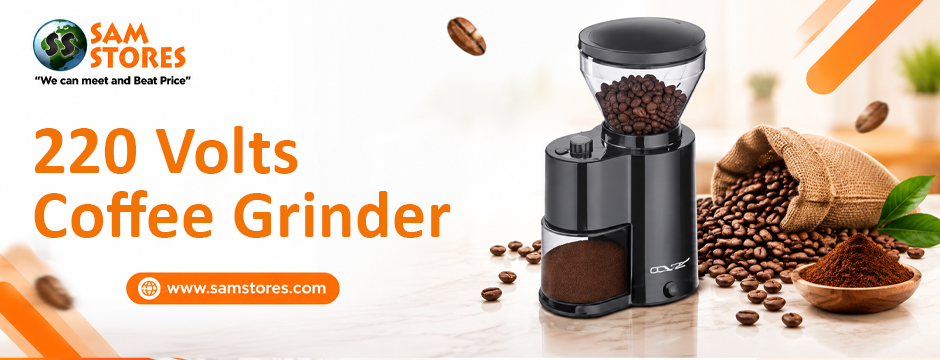
A suitable 220 volts coffee grinder model can help you grind beans at home rather than relying entirely on pre-ground coffee. Different brewing methods can require different grind sizes. Therefore, look for a grinder that offers appropriate adjustment options if you regularly switch between brewing styles.
Also consider capacity, grinding mechanism, cleaning requirements, noise, and ease of operation. You don’t necessarily need the most complicated grinder. The right choice depends on how often you drink coffee and how much control you want over the preparation process.
Now imagine your morning. You wake up and prepare coffee. Freshly ground beans go into your preferred brewing setup.
- Next comes breakfast. An omelette maker handles the main cooking while you prepare other ingredients.
- Later, you make soup for lunch. A hand blender turns cooked vegetables into a smooth consistency.
By evening, an electric fry pan gives you another convenient cooking surface for dinner. None of these appliances needs to completely transform your kitchen. Together, however, they can create a more efficient workflow.
This is where 220 volts electric cooking becomes more than simply an electrical specification. It becomes part of a practical kitchen ecosystem where different appliances handle specific tasks.
Safety Should Always Come Before Convenience
Electrical kitchen appliances combine electricity, heat, moisture, and food. That combination requires sensible handling.
- Always follow the manufacturer’s instructions and safety recommendations.
- Check the voltage rating before connecting an appliance.
- Keep electrical components away from water unless the product is specifically designed for such exposure.
- Avoid using damaged cords or plugs.
- Unplug appliances when required during cleaning or maintenance.
- Also, give heated appliances enough ventilation and place them on suitable surfaces.
These habits may sound basic. They are still worth following every time. A convenient kitchen appliance is only useful when it is operated safely and correctly.
Quality Matters More Than A Long Feature List
Online shopping makes it easy to compare specifications. You might see one appliance offering several speed settings, another promising multiple attachments, and another featuring a digital display.
More features can be useful, but they should not distract you from fundamental qualities. Look at construction, controls, ease of cleaning, warranty information, product instructions, and suitability for your needs.
Think about long-term usability.
Would you rather have an appliance with ten rarely used features or one with three functions you use every week?
For most kitchens, practical design wins.
Choose Appliances That Work Together
A good kitchen appliance collection should feel coordinated. The objective isn’t necessarily to buy products from the same category. Instead, choose appliances that solve different problems.
Before adding another appliance to your basket, ask yourself one question:
What specific cooking problem will this solve?
If you have a clear answer, the appliance is more likely to earn its place.
Shopping Online Requires A Little Extra Attention
When buying electronics online, product descriptions deserve careful reading. Check the voltage, dimensions, capacity, included accessories, power requirements, materials, warranty information, and manufacturer’s instructions where available.
Product images can help you understand the design. Specifications tell you whether the appliance suits your kitchen. Customer reviews may provide additional context about everyday use, although individual experiences can vary. Don’t overlook delivery considerations either. Larger appliances may require more careful handling, while smaller appliances are generally easier to store and transport.
Taking a few extra minutes to check these details can prevent disappointing purchases. For safe buying options, you may consider purchasing from Sam Stores.
Final Thoughts
A practical kitchen is built around habits. The right appliances can reduce preparation time, simplify repetitive tasks, and make cooking more enjoyable. However, choosing them requires more thought than simply selecting the most attractive model.
So, when exploring 220 volts electric cooking, always begin with electrical compatibility and safety. Then consider your cooking routine, available space, appliance features, cleaning requirements, and long-term usefulness.
So, whether you are comparing hand blenders, omelette makers, electric fry pans, or coffee grinders, choose products that solve genuine everyday problems.
Sam Stores can be part of that journey by helping shoppers explore practical electronics for modern kitchens. Because the smartest kitchen isn’t necessarily packed with appliances. It’s equipped with the ones you actually use.
FAQs
1. What does 220 volts mean for kitchen appliances?
It refers to the electrical voltage an appliance is designed to operate with. Always check compatibility with your home’s electrical supply before use.
2. Are hand blenders useful for everyday cooking?
Yes. They can be convenient for preparing soups, sauces, smoothies, dips, and other blended foods, depending on the model.
3. What should I consider when buying an electric fry pan?
Consider cooking capacity, temperature controls, cooking surface, lid design, handles, storage requirements, and cleaning convenience.
4. Is an omelette maker worth buying?
It can be useful if you regularly prepare omelettes and want a convenient appliance designed specifically for quick breakfast preparation.
5. Why should I check voltage before buying kitchen electronics?
Voltage compatibility, such as for a 220 volts electric cooking appliance, helps ensure an appliance is suitable for your electrical supply. Using incompatible electrical equipment can create safety and performance concerns.