Imagine buying a hair dryer brush online, waiting for it to arrive and finally getting ready to style your hair. Then you notice something on the product label: it says 220V, while your electrical supply is rated at 240V. Is it safe to plug it in? Will it work properly? Could the voltage difference damage the appliance?
These are reasonable questions, especially if you are shopping for hair styling appliances from international retailers. Voltage compatibility is one of those details that is easy to overlook when comparing product features, but getting it wrong can lead to an unpleasant surprise.
A 220 volt hair dryer brush is designed for a particular electrical supply range. However, that does not automatically mean it cannot work with a 240V supply. Many appliances are designed to operate across a voltage range, while others are built for a specific voltage.
The important thing is to check the manufacturer’s specifications rather than assume that 220V and 240V appliances are interchangeable.
If you are considering a new hot air styling tool, this guide explains the differences, what to look for on the product label and how to choose a compatible appliance. It will also help you understand which features matter when buying a hair dryer brush from Sam Stores.
Is a 220V Hair Dryer Brush Compatible with a 240V Power Supply?
In many cases, yes, but compatibility depends on the appliance’s rated input voltage.
A hair dryer brush labelled 220V may be designed to operate within a range such as 220-240V. If that is what the manufacturer specifies, using it on a compatible 240V supply is generally acceptable.
However, a product rated strictly for 220V should not automatically be assumed to support 240V.
The distinction matters because electrical appliances are designed with specific operating limits. Supplying a voltage outside those limits can affect performance, generate excessive heat or damage internal components.
Before plugging in your appliance, check the electrical information printed on its handle, body, plug area or instruction manual.
Look for markings such as:
- 220V
- 220-240V
- 220-230V
- 230V
- 240V
- 100-240V
A marking of 220-240V indicates that the appliance is designed for that operating range. A 100-240V rating indicates a much wider input range.
If the label only says 220V, contact the manufacturer or seller to confirm whether 240V operation is permitted.
Understanding the Difference Between 220V and 240V
The difference between 220V and 240V is 20 volts. That might not sound like much, but it can matter when an appliance is connected to an electrical supply.
Voltage is the electrical potential that drives current through an appliance. Hair dryer brushes use electricity to power a heating element, a motor and sometimes additional features such as ionic technology.
When the supplied voltage exceeds an appliance’s intended rating, its electrical components may experience additional stress.
For example, a simple resistive heating element operating at a higher voltage can produce more heat. In a real hair dryer brush, however, the outcome also depends on its motor, electronic controls, heating system and protective components.
This is why voltage compatibility should never be judged by appearance or plug shape.
Here is a quick comparison:
| Feature | 220V Hair Dryer Brush | 240V Hair Dryer Brush |
| Designed voltage | 220 volts | 240 volts |
| Operating compatibility | Depends on rated range | Depends on rated range |
| Heating performance | Depends on wattage and design | Depends on wattage and design |
| Plug compatibility | Depends on plug type | Depends on plug type |
| International use | Requires supply verification | Requires supply verification |
The key takeaway is simple: a 220V and 240V hair dryer brush may be interchangeable if their approved operating ranges overlap. The voltage printed on the product should always guide your decision.
What Happens If You Plug a 220V Hair Dryer Brush into a 240V Outlet?
The answer depends on the appliance’s electrical design.
If the manufacturer specifies 220-240V operation, the appliance is designed to handle both voltages. You can generally use it on a compatible supply without needing a voltage converter.
But if the product is rated for 220V only, connecting it to 240V could create problems.
Potential issues include:
Excessive heat: A heating element designed for a lower voltage may produce more heat when supplied with a higher voltage.
Motor stress: The motor may not operate within its intended electrical limits, potentially affecting performance and lifespan.
Component damage: Internal electronic controls, thermal protection systems and other components may be exposed to conditions they were not designed to handle.
Safety concerns: Excessive heat or electrical stress can increase the risk of appliance failure.
Do not rely on a short test to determine whether an appliance is compatible. A hair dryer brush may appear to work initially while still operating outside its approved limits.
If you are unsure, check the manufacturer’s documentation before use.
Does a Hot Air Brush Need a Voltage Converter?
Not always. It depends on the voltage rating of the appliance and the electrical supply where you intend to use it.
A hot air brush 220 voltage model may work without a converter if its input specification includes the local supply voltage.
There are three common situations.
1. The Appliance Is Rated 220-240V
This is generally the easiest situation. If your electrical supply is within the manufacturer’s stated range, you normally do not need a voltage converter.
You may still need a suitable plug adapter if the appliance plug does not match your wall socket.
2. The Appliance Is Rated 100-240V
This is a dual-voltage or universal-voltage appliance. It can operate across the stated voltage range, making it a convenient choice for people who travel internationally.
However, always check the wattage and frequency requirements as well.
3. The Appliance Is Rated 220V Only
Do not assume that it is suitable for a 240V supply.
Contact the manufacturer to confirm its permitted operating range. If a voltage converter is required, it must be specifically rated for the appliance’s wattage and type of load.
A plug adapter and voltage converter perform different jobs. An adapter changes the plug connection, while a converter changes the supplied voltage.
Using the wrong one can create electrical hazards or damage your styling tool.
What About Dyson Hair Dryer Voltage 220V?
Buyers researching premium styling appliances often have questions about international voltage compatibility, particularly when considering products from brands such as Dyson.
The dyson hair dryer voltage 220v search is a good example of why checking the exact model matters.
Different Dyson hair styling products may have different electrical specifications. A hair dryer, multi-styler and other styling appliances should not be assumed to share the same voltage compatibility.
If you are purchasing a Dyson appliance for use in another country, check:
- The exact model number.
- Its rated input voltage.
- Whether it supports dual voltage.
- The frequency requirements.
- The manufacturer’s guidance on international use.
Do not assume that a product purchased in one country will work safely in another simply because the plug can be adapted.
This is particularly important for high-wattage styling appliances. Some manufacturers design their products for specific regional electrical systems, and a travel adapter cannot change those electrical requirements.
Does Voltage Affect Hair Dryer Brush Performance?
Voltage is important, but it is not the only specification that determines how well a hair dryer brush performs.
When comparing two appliances, buyers should also consider wattage, temperature control, airflow, barrel design and heating technology.
Here are the features worth examining.
Wattage and Heating Power
Wattage indicates how much electrical power an appliance consumes under specified operating conditions.
A higher wattage does not automatically mean better styling results. The appliance’s design, airflow and heat distribution also matter.
A well-designed hair dryer brush should provide sufficient heat and airflow to dry and style hair without requiring unnecessarily high temperatures.
Temperature Settings
Different hair types respond differently to heat.
Fine or chemically treated hair may require lower heat settings, while thicker hair may need more drying time and a suitable temperature setting.
Look for a brush with adjustable heat options so you can select a setting appropriate for your hair.
Airflow Control
Airflow helps distribute heat while drying and shaping the hair.
A good hot air brush should make it easier to create volume, smooth the lengths and shape the ends without repeatedly passing over the same section.
Barrel Design
The shape and size of the barrel influence the styling result.
An oval barrel can help create volume and a smooth, rounded finish. A smaller round barrel may be more suitable for shaping shorter layers or adding definition.
Choosing the right barrel can make everyday styling considerably easier.
Ionic Technology
Some hair dryer brushes include ionic technology, which is marketed to help reduce static and improve the appearance of frizz.
If you regularly struggle with flyaways, this feature may be worth considering. However, the actual results depend on the appliance and your hair type.
How to Choose the Right 220 Volt Hair Dryer Brush
Buying a styling appliance should involve more than checking its price and appearance. The right product should suit your hair, electrical supply and everyday routine.
Here are six things to check before placing an order.
1. Confirm the voltage range
This should be your first step. Look for a clearly stated input voltage range that matches your electrical supply.
2. Check the wattage
Make sure the appliance’s power requirements are compatible with your electrical circuit. Hair dryer brushes can draw considerable power, so avoid using unsuitable extension cords or overloaded sockets.
3. Choose suitable styling features
Consider whether you need adjustable temperatures, multiple airflow settings, ionic technology or interchangeable attachments.
4. Think about your hair length and texture
Longer hair may benefit from a larger barrel, while shorter hair can be easier to style with a smaller brush.
5. Check the plug configuration
The plug must be compatible with your wall socket. If you need an adapter, make sure it is properly rated for the appliance.
6. Review the warranty
Check the manufacturer’s warranty terms, service availability and whether international use affects coverage.
Taking these steps before purchasing can help you avoid compatibility problems and choose a styling tool that you can use confidently.
Popular Hair Dryer Brush Options Worth Comparing
If you are exploring different styling appliances, it helps to understand what each product offers rather than choosing based on brand recognition alone.
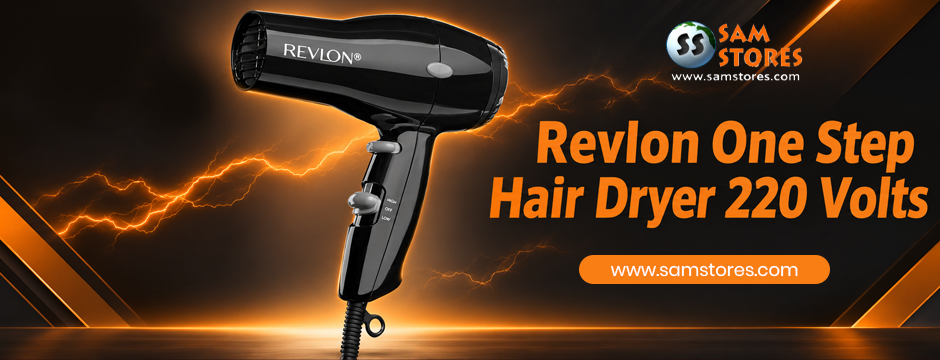
For example, buyers interested in a Revlon One-Step hair dryer 220 volts should verify the exact model’s electrical rating before purchasing. Product versions can differ by market, so do not assume every Revlon One-Step model supports the same voltage.
Similarly, if you are looking for a hair dryer with 220 voltage, compare its voltage range, wattage, heat settings and styling attachments.
A few minutes spent reviewing these specifications can save you the inconvenience of buying an appliance that does not suit your electrical supply.
At Sam Stores, buyers can explore hair styling appliances with different specifications and features. Check the individual product details to find an option that matches your requirements.
Common Mistakes to Avoid When Buying a 220V Hair Dryer Brush
Even experienced shoppers sometimes overlook important electrical details. These are a few mistakes worth avoiding.
Assuming 220V and 240V are always interchangeable: They may be compatible when the manufacturer’s approved voltage range covers both, but this should never be taken for granted.
Confusing plug adapters with voltage converters: An adapter changes the physical connection, not the voltage.
Ignoring wattage: An adapter or converter must be suitable for the appliance’s power requirements.
Buying based only on brand name: Two models from the same manufacturer can have different electrical specifications.
Overlooking the instruction manual: The manufacturer’s operating and safety instructions provide the most reliable information about compatibility.
Using an unsuitable extension cord: High-powered styling appliances need an appropriate electrical connection. Follow the manufacturer’s instructions and avoid overloaded outlets.
Final Verdict: Are 220V and 240V Hair Dryer Brushes Interchangeable?
Yes, they can be, but only when the manufacturer’s specified operating voltage range supports both.
A 220V hair dryer brush rated for 220-240V can generally be used with a compatible 240V supply. A model rated strictly for 220V should not be connected to 240V without confirmation from the manufacturer.
For buyers, the smartest approach is to check voltage, wattage, plug type and product specifications before ordering. These details matter just as much as barrel design, heat settings and styling performance.
Whether you want a simple hot air brush for everyday grooming or a multi-functional styling appliance for creating salon-inspired looks at home, choosing the correct electrical specification is essential.
Explore hair styling appliances at Sam Stores and compare the available features before making your purchase. Finding a suitable styling tool starts with understanding what your hair needs and what your electrical supply can safely support.
Frequently Asked Questions
1. Can I use a 220V hair dryer brush in a 240V outlet?
Only if the manufacturer’s specified voltage range includes 240V. Check the product label or manual before connecting it.
2. Is a 220V hair dryer brush the same as a 240V model?
Not necessarily. They may have similar features, but their electrical ratings can differ. Always compare the specified input voltage.
3. Do I need a voltage converter for a 220V hot air brush?
You do not need one if the appliance supports your electrical supply voltage. A plug adapter alone does not convert voltage.
4. Are all Dyson hair dryers compatible with 220V electricity?
No. Compatibility depends on the exact model and its regional electrical specifications. Check the manufacturer’s documentation before international use.
5. What should I check before buying a 220 volt hair dryer brush?
Check its voltage range, wattage, plug type, temperature settings, barrel design, safety features and warranty conditions.