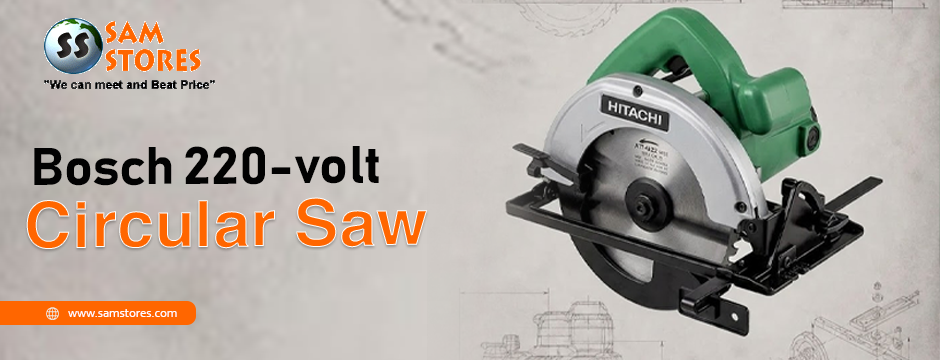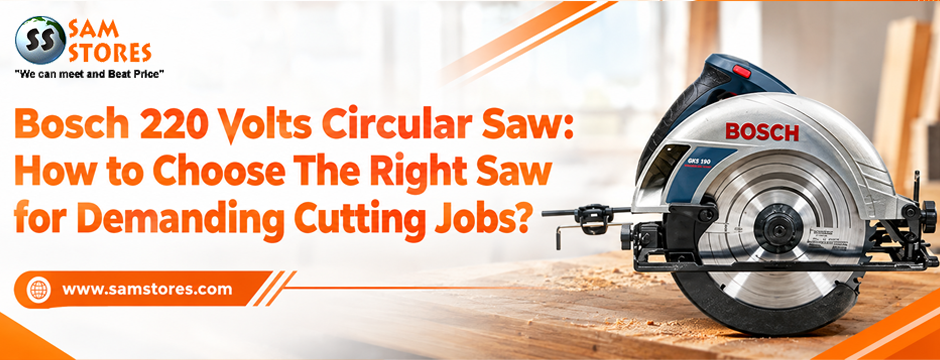
A clean cut can make all the difference when you are working on a construction, renovation, carpentry, or DIY project. The right saw gives you better control, consistent results, and confidence during demanding jobs. That is why choosing a Bosch 220 Volts circular saw can be a practical decision for users who value dependable cutting performance.
However, buying a power tool should involve more than looking at the brand name. Blade compatibility, motor performance, cutting depth, handling, safety features, and the type of material you regularly cut all deserve attention.
Sam Stores helps tool buyers explore authentic and practical options for professional and everyday applications. With the right information, choosing a circular saw becomes considerably easier.
Why Does A Circular Saw Matter for Your Cutting Work?
A circular saw is designed for making fast, controlled cuts through materials such as timber, boards, and other suitable construction materials. Unlike a handsaw, it combines a rotating blade with powered operation.
That means you can complete repetitive cuts with considerably less physical effort. For contractors, carpenters, installers, and serious DIY users, this can make a noticeable difference during longer projects.
However, speed should never come at the expense of control. A good circular saw should feel balanced in your hands and allow you to maintain a consistent cutting line. The tool should also match the material and cutting requirements of your project.
This is why understanding the saw’s specifications matters before purchasing.
What Should You Look for in A Circular Saw?
Start by considering the work you expect the tool to perform regularly. If you mainly cut timber for home improvement projects, your requirements may differ from those of a contractor working continuously on construction sites.
Pay attention to several practical factors.
- Motor Performance: A suitable motor should provide enough power for your typical workload.
- Cutting Depth: This determines how deeply the blade can cut at different angles.
- Blade Size: Blade diameter influences the type and capacity of cutting applications.
- Ergonomics: Comfortable handling becomes increasingly important during extended use.
- Adjustment Mechanisms: Easy depth and bevel adjustments can make repeated cuts more convenient.
- Safety Features: Guards, switches, and controlled operation should always receive attention.
A Bosch 220 Volts circular saw can be considered within this wider evaluation rather than chosen solely because of its brand.
Why 220 Volts Can Be Relevant to Your Workshop?
Voltage compatibility is an important consideration when purchasing electrical power tools. Before buying any tool, users should confirm that its electrical specifications are appropriate for their intended working environment.
A tool designed for the correct electrical supply can provide straightforward operation without requiring unnecessary adaptations.
For workshops where compatible 220-volt equipment is already being used, maintaining consistency can also make equipment selection simpler. This is especially relevant when building a collection of Bosch 220 Volts power tools for different applications.
A consistent tool range can make it easier to organise equipment around the requirements of a workshop or job site.
Cutting Accuracy Depends on More Than Motor Power
Power attracts attention because it sounds impressive. Yet professional-looking cuts depend on several factors working together. Your cutting technique matters. The blade matters. The material matters. The workpiece must also be supported properly. A powerful saw cannot compensate for an unstable workpiece or an unsuitable blade.
- Before starting a cut, secure the material and establish the cutting line clearly.
- Allow the blade to reach appropriate operating speed before beginning the cut.
- Then guide the tool steadily rather than forcing it through the material.
This approach can help produce cleaner results while reducing unnecessary strain on both the user and the tool.
How Does A Circular Saw Fit into A Larger Tool Collection?
Most professionals do not rely on one power tool for every task. A circular saw handles certain cutting jobs particularly well, while other tools are better suited to grinding, drilling, fastening, or specialised applications.
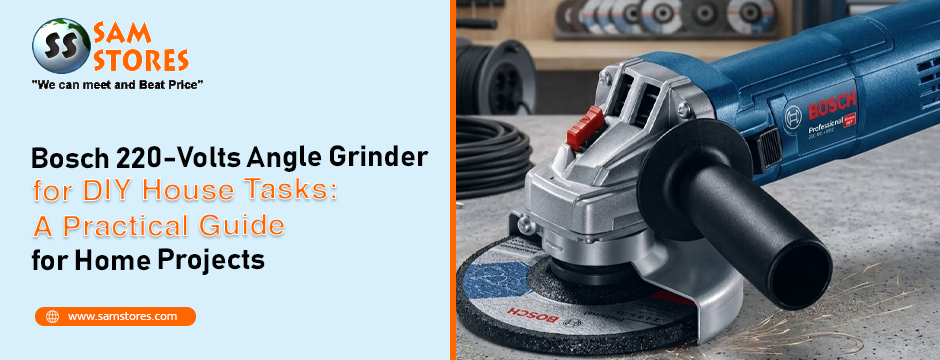
For example, a Bosch 220 Volts angle grinder can be useful for suitable grinding, cutting, and surface preparation applications.
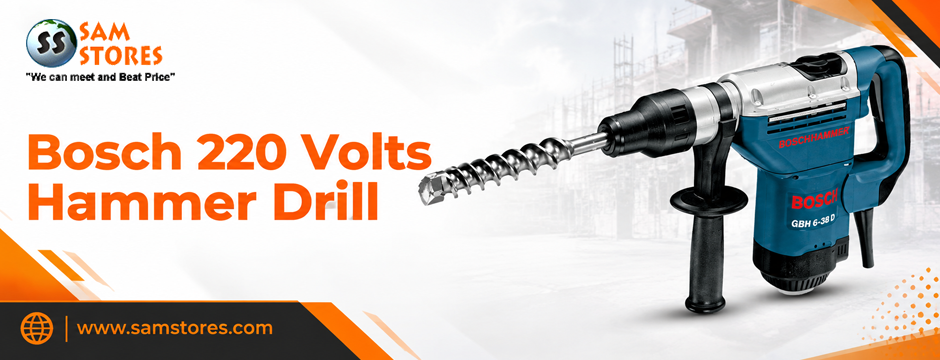
A hammer drill serves another purpose. A Bosch 220 Volts hammer drill can be considered when drilling into suitable masonry and other demanding materials requires a tool with an appropriate hammering function.
The important point is understanding that these tools complement each other. You do not need one tool to perform every job. Instead, a carefully selected collection allows each machine to handle the work it was designed for.
When Is A Circular Saw Better Than A Hand Saw?
Hand saws still have their place. They can be convenient for small jobs, occasional cuts, and situations where powered equipment is unnecessary.
However, repetitive cutting can become tiring. A powered circular saw can significantly reduce the physical effort involved in repeated cuts. It can also help maintain consistent cutting speed across multiple pieces of material. For larger projects, this efficiency can become particularly valuable.
Imagine preparing dozens of timber pieces for a construction project. Hence. making every cut manually would consume considerable time and physical energy. A suitable circular saw can streamline the process while allowing the operator to concentrate on accuracy and consistency.
Safety Should Always Come before Speed
Circular saws contain rapidly rotating blades, so safe operation should never be treated as an optional consideration.
- Read the manufacturer’s instructions before operating the tool.
- Use appropriate protective equipment and keep your hands away from the blade path.
- Make sure the workpiece is properly supported.
- Check that the blade and guard are correctly installed before starting work.
- Never rush a cut simply because you are trying to finish quickly.
- Keep the working area clear and avoid distractions.
It is also important to disconnect the tool from its power source before performing maintenance or changing components, following the manufacturer’s instructions. Good tool performance begins with responsible operation.
Why Does Buying from A Reliable Online Platform Matter?
The product itself is only one part of a successful purchase. A reliable supplier can help you understand specifications, compatibility, and available options before you commit.
This becomes especially useful when you are building a professional toolkit and need several tools for different applications. At Sam Stores, buyers can explore power tool options with their specific requirements in mind.
Rather than selecting equipment based purely on appearance, consider the work the tool needs to perform. That approach can help you avoid buying equipment that is either underpowered for your requirements or unnecessarily advanced for occasional use.
What Makes A Circular Saw A Practical Investment?
A good power tool should solve a real problem. For circular saw users, that problem is often the need to make repeated, controlled cuts efficiently. The right tool can save physical effort and reduce the time required for repetitive work. It can also become a dependable part of a broader workshop setup.
A Bosch 220 Volts circular saw may therefore be worth considering when your projects demand powered cutting performance and your electrical setup is compatible. The final choice should still be based on your application, material, cutting requirements, handling preferences, and safety considerations.
Final Thoughts
Choosing a circular saw becomes easier when you focus on the work rather than simply the product name. A Bosch 220 Volts circular saw can be a practical option for compatible workshops and job sites requiring efficient, controlled cutting.
Consider motor performance, cutting depth, blade compatibility, ergonomics, safety, and your expected workload before purchasing. Sam Stores can be part of that buying journey by helping users explore suitable power tool options for different applications.
So, when the tool matches the job, good preparation and responsible operation can turn demanding cutting work into a more efficient and manageable process.
FAQs
1. What is a circular saw mainly used for?
A circular saw is primarily used for making fast, controlled cuts through suitable materials such as timber and construction boards.
2. How do I choose the right circular saw?
Consider the materials, cutting depth, blade size, workload, ergonomics, electrical requirements, and safety features relevant to your projects.
3. Are Bosch 220-volt tools suitable for every workshop?
Bosch 220 Volts circular saws are generally suitable only when their electrical specifications match the power supply as well as the operating environment where they will be used.
4. Can one power tool handle every construction task?
No. Circular saws, angle grinders, and hammer drills are designed for different applications and complement one another in a wider toolkit.
5. How can I maintain a circular saw?
Keep it clean, inspect components regularly, use compatible blades, follow manufacturer maintenance guidance, and store it in suitable conditions.