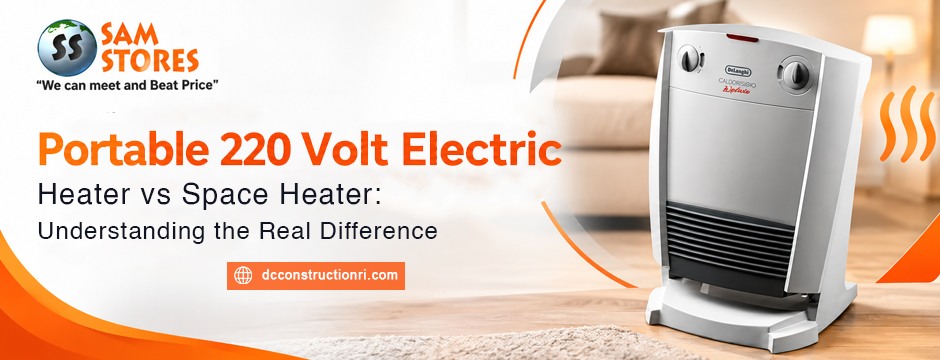
Portable 220 Volt Electric Heater vs Space Heater: Understanding the Real Difference

When the temperature drops, choosing a heater can seem straightforward until you start comparing voltage, wattage, room size, installation and operating costs. A quick search for a space heater can bring up hundreds of options, but not every heater is built for the same electrical system or heating requirement.

One comparison that often causes confusion is a Portable 220 volt Electric Heater versus a conventional space heater. They may look similar at first, but their electrical requirements, power capacity and ideal applications can be quite different.

For homeowners, office managers, workshop owners and anyone trying to heat a specific area efficiently, understanding that difference can make the buying decision much easier.

Sam Stores specialises in 220 volt appliances and heating solutions, giving customers access to products designed for specific voltage requirements. The right choice is not necessarily the smallest or cheapest heater. It is the one that matches your room, electrical setup and heating needs.

What Is a Portable 220 Volt Electric Heater?

A portable 220 volt electric heater is a movable heating appliance designed to operate on a 220V electrical supply. Unlike permanently installed heating equipment, a portable unit can generally be moved to different areas when required, provided the electrical connection and installation requirements are appropriate for the particular model.

This flexibility is one of its biggest advantages.

Imagine a home where the living room needs additional heat in the evening, but the home office becomes the coldest room during the day. A portable heater can be moved between these areas rather than installing a separate heating system in every room.

The 220V configuration can also be suitable for appliances designed for higher electrical power. However, voltage alone does not determine how much heat a heater produces. Wattage, heating technology, room size and insulation all matter.

That is why checking the manufacturer’s specifications before buying is essential.

What Do People Mean by a Space Heater?

“Space heater” is a broad term rather than a specific electrical configuration.

It generally refers to a heater designed to warm a relatively small or defined area instead of an entire building. Space heaters can operate at different voltages and can include several technologies, such as fan-forced heating, infrared heating, ceramic heating and oil-filled radiators.

In other words, a 220V portable heater can also be considered a type of space heater.

The real distinction comes down to the specifications.

A typical low-voltage portable space heater may be designed for smaller areas and a particular household outlet. A 220V model may be designed for a different electrical system or a higher-power application.

So, when comparing the two, don’t focus only on the name. Look at voltage, wattage, heating capacity, controls and installation requirements.

Portable 220V Heater vs Space Heater: The Key Differences

The easiest way to understand the difference is to compare the factors that actually affect everyday use.

1. Voltage Requirements

The most obvious difference is electrical compatibility.

A portable 220V heater is designed for a 220V supply. A conventional space heater may be designed for a different voltage depending on its intended market and model.

This is not something to overlook.

Using an appliance with an incompatible electrical supply can create performance problems and potentially serious safety risks. Before purchasing an electric heater with 220v plug, check the voltage, frequency, plug configuration and circuit requirements specified by the manufacturer.

For international buyers and customers purchasing imported appliances, this check is particularly important.

2. Heating Power

Wattage provides a better indication of electrical power consumption and potential heating output than voltage alone.

Two heaters can both operate at 220V while having very different wattage ratings.

A higher-wattage heater may be suitable for a larger or harder-to-heat space, while a lower-wattage model may be perfectly adequate for a bedroom, office or other compact room.

The mistake is assuming that higher wattage automatically means better performance.

It does not.

The heater should be appropriately sized for the space. Oversizing can increase unnecessary energy consumption, while undersizing may leave the room uncomfortable and force the heater to work continuously.

3. Portability

Portability is where portable electric heaters have an obvious advantage over permanently installed systems.

If your heating needs change throughout the day, being able to move a heater can be useful. A home office, workshop, bedroom or enclosed recreation area may each need heat at different times.

However, portability should never mean repeatedly moving an appliance without considering electrical safety.

The heater should be positioned on a stable surface, kept away from curtains and other combustible materials, and connected according to the manufacturer’s instructions.

4. Installation

A portable heater generally requires less installation than a fixed heating system, but that does not mean every 220V heater can simply be plugged into any outlet.

Some high-powered 220V appliances may require a dedicated circuit or specific outlet configuration. Always follow the manufacturer’s installation requirements and consult a qualified electrician where necessary.

For customers looking for permanent heating, a fixed installation may make more sense.

A 220 volt wall mount heater, for example, can free up floor space and provide a dedicated heating solution in a room where the furniture layout rarely changes.

When Is a Portable 220 Volt Electric Heater the Better Choice?

Portability becomes particularly valuable when heating requirements change from one area to another.

It can make sense for:

  • Home offices
  • Bedrooms
  • Workshops
  • Garages
  • Utility rooms
  • Enclosed work areas
  • Studios
  • Commercial spaces requiring supplementary heating

The biggest selling point is control. Instead of heating every part of a property, you can concentrate warmth where it is actually needed.

That can be particularly useful when only one room is occupied.

For example, heating an entire house simply because one person is working in a home office may not be the most practical approach. A properly selected portable heater can provide targeted warmth without requiring a permanent heating installation.

When Should You Consider a Fixed Heater?

Portability is not always the priority.

If you know exactly where heating is required and want a cleaner, more permanent setup, a wall-mounted or ceiling-mounted heater may be worth considering.

A wall-mounted model keeps the floor clear, which can be especially helpful in smaller rooms, workshops or busy commercial areas.

You can explore options such as a 220 volt wall mount heater when permanent positioning and space efficiency are more important than mobility.

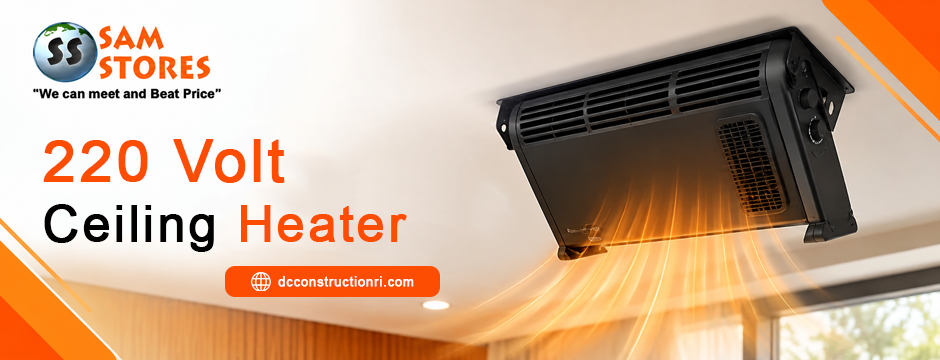
Similarly, ceiling-mounted heating can work well in areas where floor and wall space are limited. A 220 volt ceiling heater can be particularly useful in larger rooms, workshops and commercial environments where distributing heat from above makes practical sense.

The best configuration depends on the room layout, ceiling height, insulation and intended use.
How The Braun 220 Volt Hair Dryer Redefines Everyday Glamour_

This is one of the biggest misconceptions surrounding 220V heaters.

Voltage itself does not automatically make a heater more energy efficient.

Electric resistance heaters convert electrical energy into heat, and the amount of electricity consumed depends heavily on the appliance’s wattage and how long it operates.

The advantage of a particular 220V heater may instead come from its design, power capacity, thermostat, controls and suitability for the electrical system in which it is being used.

A heater that is correctly sized for the room can be a better purchase than simply choosing the model with the highest voltage or wattage.

Look for practical features such as:

  • Adjustable thermostat
  • Multiple heat settings
  • Automatic shut-off
  • Overheat protection
  • Timer controls
  • Appropriate heating capacity
  • Suitable plug and circuit requirements

These features can make everyday operation easier and more controlled.

What About Energy Costs?

A heater’s running cost depends primarily on its power consumption and operating time.

For example, a heater rated at 2,000 watts uses approximately 2 kWh when operating continuously for one hour at full output. Your actual cost depends on your electricity tariff and whether the heater cycles on and off through thermostat control.

This is why buying based purely on the lowest upfront price can be misleading.

A heater with useful temperature controls may offer better day-to-day usability because it does not necessarily need to operate at maximum output continuously.

Before buying, consider both the purchase price and how frequently the appliance will be used.

Which Heater Is Better for Your Home?

There is no universal winner.

A portable 220V heater is likely to appeal to someone who wants flexibility and targeted heating. You can move it between suitable spaces as your needs change.

A conventional space heater may be perfectly adequate when the room is small and the electrical configuration matches the appliance.

A wall-mounted heater makes more sense when floor space is limited and the heating location is permanent.

For larger workshops or rooms with high ceilings, a ceiling-mounted solution may provide a more appropriate installation.

The important point is to buy according to the application rather than the product label.

Safety Should Come Before Convenience

Heating appliances require sensible handling regardless of voltage.

Keep the heater away from curtains, bedding, paper, clothing and other materials that can catch fire. Never cover an operating heater. Keep children and pets away from hot surfaces, and do not use an appliance if its cord, plug or housing appears damaged.

Avoid using unsuitable extension cords or power strips with high-powered heating equipment unless the manufacturer specifically permits it and the electrical setup is rated accordingly.

For 220V appliances, electrical compatibility deserves extra attention. If you are uncertain about the outlet, circuit or installation requirements, ask a qualified electrician before connecting the appliance.

A few minutes of checking can prevent a costly mistake.

Why Buy Your 220V Heating Appliance From Sam Stores?

Choosing the right heater is easier when you have access to appliances designed around specific voltage requirements.

Sam Stores has built its product range around 220V appliances and international electrical requirements, giving shoppers a convenient place to explore heating and other household appliances.

Whether you need a portable heating solution or are considering a more permanent installation, the important thing is to compare specifications rather than choosing purely on appearance or price.

Look at voltage compatibility, wattage, room size, heating method, controls, safety features and installation requirements before making the final decision.

That approach helps you buy a heater that fits your actual needs instead of replacing an unsuitable appliance later.

Final Verdict: Portable 220V Heater or Space Heater?

The answer depends on what you mean by “space heater” and what your room requires.

A Portable 220 volt Electric Heater is a strong choice when flexibility, targeted heating and 220V compatibility are priorities. A conventional space heater can work well for smaller applications when its voltage and power specifications match the electrical setup.

If floor space is limited, consider a wall-mounted design. If you need to heat a larger open area, a ceiling-mounted solution may be worth investigating.

Most importantly, don’t buy based on voltage alone. Match the heater’s wattage and heating capacity to the room, verify electrical compatibility and prioritise safety features.

At Sam Stores, shoppers can explore 220V heating appliances with different configurations and choose according to the space they actually need to heat. When the right appliance meets the right application, staying comfortable becomes considerably simpler.

Frequently Asked Questions

1. Is a Portable 220 volt Electric Heater the same as a space heater?

Not exactly. “Space heater” is a broad category covering heaters designed to warm a particular area. A portable 220V heater is one type of space-heating appliance designed for a 220V electrical supply.

2. Can I use an electric heater with 220V plug in any outlet?

No. Always check the heater’s voltage, frequency, plug configuration and circuit requirements. If you are unsure whether your electrical system is suitable, consult a qualified electrician.

3. Is a 220 volt heater better than a standard space heater?

Neither is automatically better. The right choice depends on the room size, required heating capacity, electrical supply, installation and intended use.

4. When should I choose a 220 volt wall mount heater?

A wall-mounted heater can be useful when you want a permanent heating position while keeping floor space available. It can be particularly practical in compact rooms and busy work areas.

5. What should I check before buying a portable 220V heater?

Check voltage compatibility, wattage, room size, heating capacity, thermostat controls, safety features, plug configuration and any dedicated circuit or installation requirements.
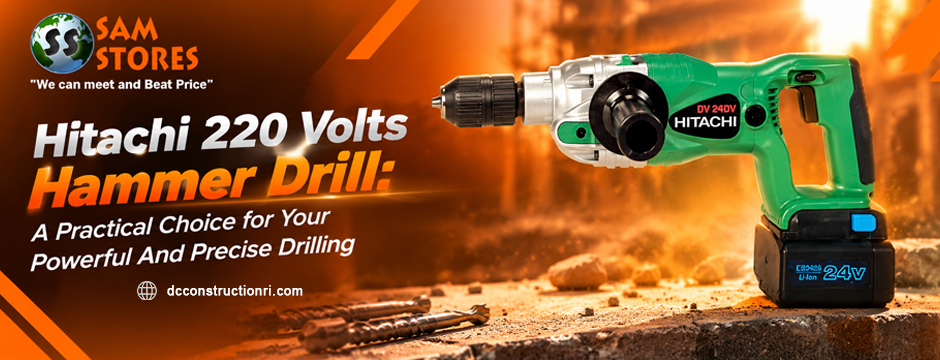
Hitachi 220 Volts Hammer Drill: A Practical Choice for Your Powerful And Precise Drilling

A good drill earns its place in a toolbox when the work gets demanding.

You notice the difference when you’re drilling into tough materials, working through a long project, or handling jobs that require consistent torque. A struggling tool can slow everything down, while the right one simply gets on with the work.

That is where the Hitachi 220 Volts hammer drill becomes an interesting choice for professionals and serious DIY users.

The Hitachi DV24DV 220-240 Volt Cordless Impact Drill combines strong torque, useful operating modes, a precision chuck, and practical design features. It is built for users who expect power without sacrificing control.

For Sam Stores customers looking for dependable drilling equipment, understanding what this drill offers can make the buying decision considerably easier.

Let’s take a closer look at what makes it worth considering.

The Right Hammer Drill Matters: Why?

Not every drilling job demands the same approach. Sometimes you need a straightforward drill for everyday work. Other times, you’re dealing with harder surfaces where additional impact action can make the task much easier.

A hammer or impact drill gives you that additional capability. The key, however, is having enough power and control to use it effectively.

The Hitachi DV24DV is designed around this balance. Its two operating modes allow users to switch between standard drilling and impact drilling according to the task. That means one tool can handle different requirements instead of forcing you to constantly change equipment. For busy workshops and job sites, that versatility can be valuable.

Understanding The Hitachi 220 Volts Hammer Drill

The Hitachi 220 Volts hammer drill is designed for users who want a combination of power and practical handling. One of its standout specifications is its effortless 65 Nm torque. Torque matters because it determines how effectively a drill can apply rotational force during demanding work.

Higher torque can be particularly useful when working with applications that place greater resistance on the drill. The DV24DV also features a powerful impact rate designed to deliver strong performance in its class. This makes it suitable for users who regularly encounter challenging drilling tasks.

Two Modes Give You More Control

One feature worth noting is the two-mode operation. The DV24DV can be used as a standard drill or an impact drill. Drilling requirements change from one job to another. Therefore, having both options available means you can choose the mode based on the job. It also saves space in your toolbox.

65 Nm Torque for Demanding Applications

A drill may perform perfectly well on lighter tasks but start feeling strained when the application becomes more demanding. The DV24DV addresses this with up to 65 Nm of torque.

For tradespeople, contractors, workshop users, and experienced DIY enthusiasts, that additional force can make difficult drilling jobs more manageable. Of course, the appropriate drill bit and operating technique still matter.

A Linear D-Handle Design for Practical Handling

Ergonomics can easily be overlooked when comparing power tools. Yet, anyone who has spent hours using a drill knows that handling makes a considerable difference.

The DV24DV incorporates a linear D-handle design. This configuration gives users a practical grip and can help provide better control during demanding applications. That is particularly useful when additional pressure is required.

Electric Brake Adds An Extra Safety Feature

Power tools should always be handled responsibly. Even experienced users need equipment designed with practical safety features. The DV24DV includes an electric brake, which is designed to stop the rotation of the tool quickly after the trigger is released. This can provide an additional level of control during operation.

However, an electric brake doesn’t replace proper safety practices. Users should still wear appropriate protective equipment, select the correct drill bit, secure their workpiece, and follow the manufacturer’s operating instructions. Good equipment and good working habits should always go together.

Externally Accessible Brushes Make Maintenance Easier

Professional users understand that maintaining power tools is part of getting long-term value from them. The DV24DV features externally accessible brushes. This design makes brush access more convenient when maintenance or replacement is required. That may seem like a minor feature when you’re comparing specifications.

In practice, easier maintenance can save time. You don’t want a straightforward maintenance task to become unnecessarily complicated. For workshops and users who depend heavily on their equipment, serviceability deserves attention alongside power and performance.

Why 220-240 Volt Compatibility Matters

Electrical compatibility is an important consideration when selecting power equipment. The DV24DV is designed for a 220-240 Volt supply, making it suitable for relevant electrical environments.

Before purchasing any electrical power tool, always confirm that its voltage requirements match your intended power source. This is especially important when purchasing equipment for different countries, workshops, or commercial environments.

Choosing the correct voltage specification isn’t simply about convenience. It’s part of using the equipment safely and appropriately.

More Than Just A Drill

When people hear “hammer drill,” they often think about one specific job. But versatile equipment can offer considerably more value.

The Hitachi 220 Volts hammer drill combines standard drilling and impact drilling within the same tool. That flexibility can make it useful across workshops, construction applications, maintenance tasks, renovation work, and serious home projects.

Its optional angle attachment also adds another interesting possibility. An angle attachment can help users reach applications where a conventional straight drill configuration may be awkward.

That kind of adaptability is particularly useful when working in confined or difficult-to-access spaces.

Building A More Capable Hitachi 220 Volts Power Tools Collection

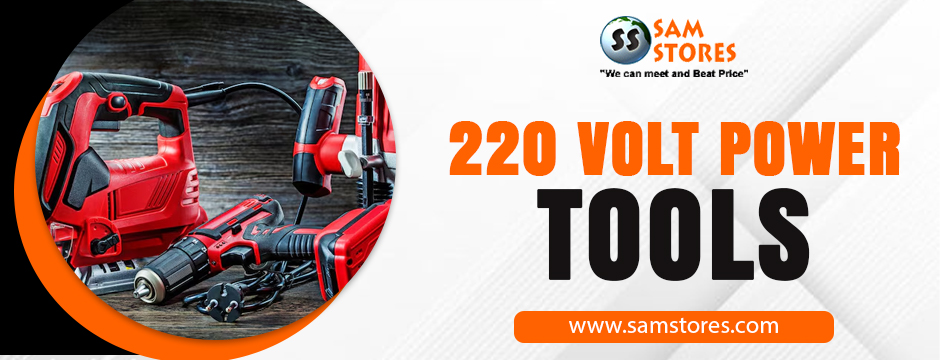
A drill doesn’t have to be the only Hitachi tool in your workshop. Users building a broader collection of Hitachi 220 volt power tools may also consider equipment designed for cutting, grinding, sanding, and other applications.

For example, an angle grinder can be useful for grinding, cutting, and surface preparation. A circular saw can provide a dedicated solution for making controlled cuts through suitable materials.

Choosing between A Drill, Angle Grinder, And Circular Saw

It’s tempting to compare power tools simply by looking at their specifications. However, the better question is what you actually need to accomplish. A Hitachi 220 volt angle grinder is designed around applications such as grinding, cutting, and surface preparation.

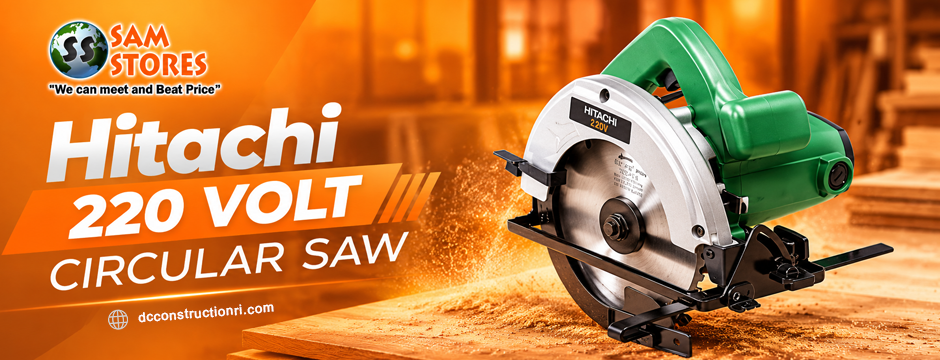
A Hitachi 220 volt circular saw, meanwhile, is intended for suitable cutting applications where a dedicated saw provides greater practicality. The DV24DV serves a different role.

Its strength lies in drilling versatility, particularly where standard and impact drilling capabilities are both useful. So, choosing between these tools isn’t about finding one universal winner. It’s about matching the machine to the work.

How The Braun 220 Volt Hair Dryer Redefines Everyday Glamour_

The DV24DV can appeal to several types of users.

  • Professional tradespeople
  • Workshop users
  • Serious DIY enthusiasts

The key is understanding the tool’s capabilities and using it within the manufacturer’s recommended applications.

Getting Better Results from Your Drill

Even a powerful drill performs better when used correctly.

  • Start by selecting the right bit for the material.
  • Check that the bit is properly secured in the chuck before starting.
  • Use the appropriate operating mode for your application.
  • Avoid forcing the drill unnecessarily.
  • Allow the tool to do the work while maintaining controlled pressure.
  • Most importantly, wear appropriate protective equipment and follow the manufacturer’s safety guidance.

These habits may sound basic. They are also the habits that help users work more confidently and consistently.

Why Do Specifications Matter When Buying Power Tools?

Product specifications aren’t just numbers printed on a product page. They help you understand whether a tool matches your working requirements. With the DV24DV, several specifications stand out.

The 220-240 Volt compatibility defines the relevant power supply. The 65 Nm torque indicates its available rotational force. The 13mm keyless chuck tells you about its chuck capacity. So, when viewed together, these specifications tell a much more useful story than any single number.

A Practical Addition to The Toolbox

A good power tool should make work feel more manageable. It should provide enough power for its intended applications while remaining practical to operate and maintain.

The DV24DV brings several useful characteristics together. It offers strong torque, impact capability, standard drilling, a precision keyless chuck, a linear D-handle, electric braking, accessible brushes, and optional angle attachment compatibility.

For users comparing the Hitachi 220 Volts hammer drill, those features provide plenty to consider beyond the basic “drill versus hammer drill” question.

At Sam Stores, choosing the right drilling equipment should begin with understanding what the tool can actually do. That helps you buy for the job rather than simply buying for the specification sheet.

Final Thoughts

The right drill can become one of the most frequently used tools in a workshop. That’s why choosing one based on real working requirements matters.

The Hitachi 220 Volts hammer drill offers a useful combination of 65 Nm torque, two drilling modes, a 13mm precision keyless chuck, electric braking, practical handling, and accessible brushes.

Whether you’re a professional tradesperson, workshop user, or serious DIY enthusiast, the important question is simple: does the tool match the work you expect it to handle?

With the DV24DV, users get a capable drilling solution designed around power, flexibility, and practical usability.

FAQs

1. What is the Hitachi DV24DV hammer drill designed for?

The DV24DV is designed for drilling applications requiring standard drilling or impact drilling. It suits professional and demanding DIY work.

2. How much torque does the Hitachi DV24DV provide?

The DV24DV provides up to 65 Nm of torque, giving users substantial rotational force for suitable demanding applications.

3. Does the DV24DV have different drilling modes?

Yes. The Hitachi 220 Volts hammer drill features two modes: standard drilling and impact drilling. Users can select the appropriate mode based on their application.

4. What type of chuck does the DV24DV use?

The DV24DV features a 13mm precision keyless chuck. This allows convenient drill-bit changes without requiring a traditional chuck key.

5. Does the Hitachi DV24DV include any safety features?

Yes. The drill includes an electric brake designed to stop rotation quickly after releasing the trigger. Users should still follow all recommended safety procedures.

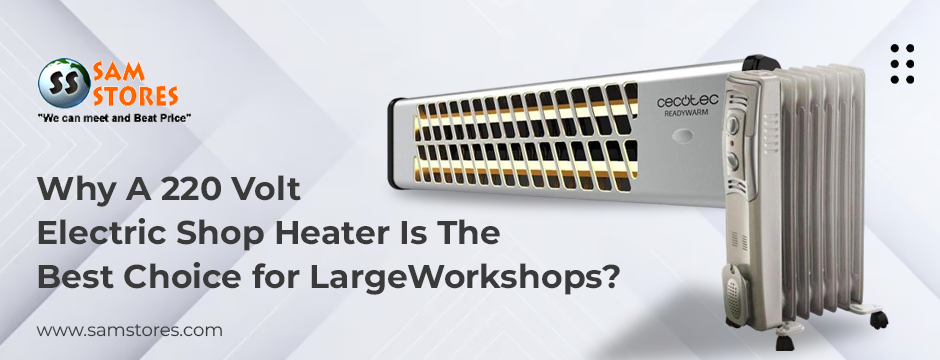
Why A 220 Volt Electric Shop Heater Is The Best Choice for Large Workshops?

Heating a large workshop is never as simple as plugging in a small portable heater and hoping for the best. Workshops are typically expansive, open areas with high ceilings, concrete floors, rolling doors, and minimal insulation. These structural features make heat retention difficult, especially during colder months. As a result, standard residential heaters often fail to maintain a comfortable and consistent temperature.

In such a situation, a 220 Volt electric shop heater would be a great choice. How?

When temperatures drop, productivity follows. Cold environments affect worker efficiency, reduce concentration, and even impact machinery performance. Tools can become brittle, lubricants may thicken, and certain materials may become harder to handle. Therefore, selecting the right heating solution is not just about comfort; it is about operational efficiency.

A 220V electric heater for shops stands out as one of the most reliable and practical solutions for large workshop environments. Its higher power capacity, efficiency, durability, and safety features make it a superior choice compared to lower-voltage or fuel-based alternatives.

The Power Advantage of 220 Volts

The primary difference between standard heaters and a 220V electric heater for shops lies in electrical capacity. Most household heaters operate on 110 to 120 volts, which limits their heat output. While suitable for small rooms or offices, they struggle in larger industrial spaces.

A 220 Volt system, on the other hand, allows for significantly higher wattage. Higher wattage translates into stronger heat output and better coverage across wide areas. This added capacity enables the heater to warm large workshops quickly and maintain consistent temperatures without overworking the unit.

Instead of running continuously at maximum output, a properly sized 220V heater reaches the desired temperature efficiently and then cycles on and off as needed. This balanced operation improves both performance and longevity.

Designed for Large, Open Workspaces

Workshops present unique heating challenges. Large garage doors open frequently, allowing cold air to enter. High ceilings cause warm air to rise, leaving working areas colder. Concrete floors absorb and retain cold temperatures. All of these factors demand a heating system with substantial power.

How The Braun 220 Volt Hair Dryer Redefines Everyday Glamour_

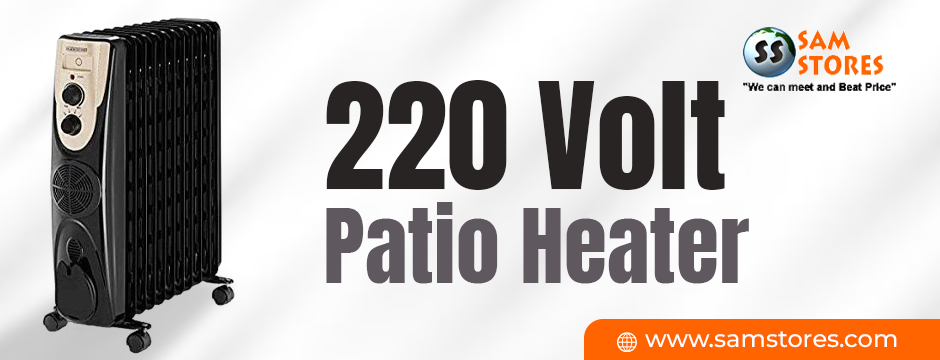
A 220 Volt patio heater is specifically designed to address these conditions. Many models include fan-forced systems that push warm air evenly throughout the space. This reduces cold spots and ensures consistent heating at ground level where work takes place.

In contrast, smaller heaters often create uneven temperature zones. Workers may feel warm near the unit but cold elsewhere. Over time, this inconsistency becomes uncomfortable and inefficient.

Faster Heat-Up Time for Immediate Productivity

Time is valuable in any workshop setting. Employees should not spend the first hour of the day waiting for the space to warm up.

A high-powered 220V electric shop heater delivers rapid heating performance. Thus, it allows the workshop to reach comfortable temperatures quickly. This fast heat-up capability is particularly important during early mornings or sudden temperature drops.

Instead of prolonged discomfort, workers can begin tasks promptly in a warm and stable environment. Maintaining productivity from the start of the day directly benefits operational output and employee morale.

Long-Term Energy Efficiency

Some assume that higher voltage automatically means higher energy bills. However, efficiency depends on how effectively a system performs its job. A lower-powered heater may run continuously without ever fully warming a large space. Continuous operation consumes more electricity over time.

A 220 Volt electric shop heater operates differently. Because it produces more heat in less time, it reaches target temperatures faster. Once achieved, the thermostat regulates operation efficiently. This cycling system reduces unnecessary runtime and minimizes wasted energy.

When properly sized for the space, a 220V heater can actually lower overall energy consumption compared to multiple smaller units running simultaneously.

Built for Durability in Demanding Environments

Workshops are rarely gentle environments. Dust, debris, vibration, and heavy equipment are common. Heating systems must withstand these conditions without frequent breakdowns.

Most 220V electric shop heater models are constructed with heavy-duty materials such as steel housings and reinforced heating elements. Many units are wall-mounted or ceiling-mounted, keeping them out of harm’s way and preserving valuable floor space.

Additionally, built-in safety features such as thermal cut-off protection and overheat sensors provide extra reliability. These safeguards ensure safe operation during long work hours and demanding seasonal use.

A Cleaner And Safer Heating Option

Safety is a top priority in workshops, especially those handling flammable materials, chemicals, or wood dust. Fuel-based heaters, including propane or gas systems, involve open flames and combustion gases. These systems require ventilation and careful monitoring.

A 220 Volt patio heater eliminates these concerns. Because it operates without combustion, it produces no fumes, smoke, or carbon monoxide. This makes it ideal for enclosed spaces where ventilation may be limited.

Electric heating also removes the need to store fuel tanks, reducing clutter and lowering fire risks. For businesses seeking a safer and more compliant heating solution, electric systems offer significant advantages.

Precise Temperature Control

Maintaining stable temperatures in a workshop protects both people and materials. Sudden temperature fluctuations can affect paints, adhesives, finishes, and sensitive equipment.

Most 220V electric heater units for shops come equipped with advanced thermostat controls. Some feature digital displays and programmable settings, allowing precise adjustments based on working hours and seasonal needs.

Consistent temperature control enhances comfort while protecting tools and materials from temperature-related damage. This stability contributes to smoother operations and higher-quality output.

Reduced Noise for Better Work Conditions

Industrial spaces often generate considerable noise from machinery and tools. Adding a loud heating system can further disrupt communication and concentration.

Many modern 220V electric heater models for shops are engineered for quieter performance. While fan-forced units naturally produce some sound, they typically operate at manageable noise levels that do not interfere with daily operations.

Lower noise levels improve teamwork, reduce stress, and create a more professional working environment.

Simplified Installation & Integration

Large workshops frequently have access to 220V circuits for heavy machinery such as welders, air compressors, and industrial tools. This makes integrating a 220 Volt electric shop heater relatively straightforward.

A licensed electrician can install the heater safely on a dedicated breaker, ensuring stable performance without overloading the system. Once installed, operation becomes simple and reliable.

Ceiling-mounted options also maximize space efficiency, keeping pathways clear and preserving usable floor area.

Cost-Effective over Time

While the initial investment in 220V electric heaters for shops or garages may be higher than smaller units, long-term savings often justify the expense. Electric heaters require less maintenance than gas or propane systems. There are no burners to clean, no pilot lights to maintain, and no fuel filters to replace.

Fewer moving parts reduce the likelihood of breakdowns. Maintenance is generally minimal and straightforward. Over time, these advantages lower total ownership costs.

When evaluating heating solutions for a large workshop, it is important to consider not only the purchase price but also operating efficiency, maintenance requirements, and lifespan.

Ideal for Various Industrial Applications

A 220V electric heater for large shopping areas is suitable for a wide range of large spaces, including automotive garages, woodworking shops, metal fabrication facilities, warehouses, agricultural buildings, and maintenance workshops. Each of these environments requires consistent and reliable heating to maintain productivity.

By delivering strong performance and even heat distribution, these heaters meet the demands of diverse industrial settings.

End Note

Heating a large workshop requires careful planning and the right equipment. Small residential heaters simply cannot provide the power and coverage necessary for expansive industrial spaces. A 220 Volt electric shop heater offers the capacity, efficiency, durability, and safety features needed to maintain a comfortable and productive environment.

With faster heat-up times, consistent temperature control, lower maintenance demands, and improved long-term efficiency, it represents a practical and reliable solution.

For workshop owners and facility managers seeking dependable performance during colder months, investing in a 220V system is a decision that supports both operational success and workplace comfort. So, if you are looking for electric heaters for your indoor or outdoor areas, visit Sam Stores. Here, you’ll get various types of heaters, so the options are many.

Noise, Heat & Reliability: What Transformers Don’t Tell You

When most people shop for transformers, they focus on voltage ratings, wattage, and plug compatibility. Those numbers matter, but they only tell part of the story. The real performance of voltage transformers is often shaped by factors that rarely make it onto spec sheets. Noise, heat behavior, and long-term reliability quietly determine whether a transformer becomes a dependable workhorse or a constant source of frustration.

At Sam Stores, we speak daily with engineers, technicians, frequent travelers, and professionals using everything from sensitive electronics to heavy-duty 220 volt power tools. The questions they ask reveal a pattern. What really matters is not just what a transformer does on day one, but how it behaves after hours of use, under stress, in real environments.

This guide pulls back the curtain on what transformers do not always tell you upfront, and why understanding these hidden factors can save money, time, and equipment in the long run.

Why Transformer Noise Is More Than an Annoyance

Transformer noise is often dismissed as a minor inconvenience. A low hum here, a faint vibration there. In reality, noise is one of the earliest indicators of deeper electrical and mechanical behavior.

The Source of Transformer Noise

Most transformer noise comes from magnetostriction. As the core magnetizes and demagnetizes, it physically expands and contracts. This movement creates vibration, which becomes audible sound. Cheaper cores, loose laminations, or poor assembly amplify this effect.

In well-designed voltage transformers, this vibration is minimized through tight core stacking, quality insulation, and proper enclosure design. In poorly designed units, noise increases as load increases.

Why Engineers Pay Attention to Noise

Noise is not just about comfort. It signals inefficiency. Excess vibration often means energy loss, mechanical stress, and eventually reduced lifespan. In commercial settings, persistent hum can also indicate harmonic distortion or overload conditions.

For travelers using travel converters in hotel rooms or shared spaces, excessive noise quickly becomes a problem. For workshops running 220 volt power tools, noise can point to a transformer being pushed beyond its practical operating range.

Quiet operation is often a sign of better engineering, even when the specs look similar on paper.

Heat: The Silent Reliability Killer

Heat is the most underestimated factor in transformer performance. Every transformer generates heat. The difference lies in how well that heat is managed.

Where Transformer Heat Comes From

Heat is produced through copper losses in windings and core losses in the magnetic material. When load increases, heat rises. When ventilation is poor, heat accumulates. When internal components are low quality, heat builds faster and dissipates slower.

Many budget voltage converters technically meet voltage requirements, but lack adequate thermal design. This results in transformers that feel hot to the touch within minutes.

Why Heat Matters More Than You Think

Heat shortens insulation life. It dries out varnishes, weakens winding insulation, and accelerates failure. A transformer that runs hot may still work today, but its reliability curve drops sharply over time.

Engineers often judge transformers not by maximum wattage, but by temperature rise under continuous load. A transformer rated for 1000 watts that runs cool at 600 watts will outlast a cheaper unit rated for the same output but operating near thermal limits.

At Sam Stores, many customers choose slightly higher capacity voltage transformers not for power, but for thermal headroom. That margin is what protects devices during long operating cycles.

Reliability Is Built Long Before the First Plug-In

Reliability does not start when you turn a transformer on. It begins with design decisions made months earlier.

Core Materials and Long-Term Performance

High-quality silicon steel cores reduce hysteresis losses and noise. Inferior cores saturate faster, generate more heat, and degrade quicker. This difference is rarely highlighted in product listings, yet it has a massive impact on lifespan.

For applications involving 220 volt power tools, core quality determines whether the transformer can handle startup surges without stress. Tools with motors draw high inrush current. A weak core struggles, overheats, and fails prematurely.

Winding Quality and Insulation Integrity

Copper purity, winding tension, and insulation layering all affect reliability. Loose windings vibrate. Thin insulation cracks under heat. These failures do not happen instantly. They develop quietly, then suddenly cause breakdown.

Well-built voltage transformers feel heavier not by accident, but because better materials are used where it matters.

The Overlooked Role of Load Behavior

One of the most misunderstood aspects of transformer use is load type.

Resistive vs Inductive Loads

A hair dryer behaves differently than a power drill. A laptop charger behaves differently than a compressor. Inductive loads, such as motors and tools, place far greater stress on transformers.

Many travel converters are suitable only for resistive loads. Plugging an inductive device into the wrong converter leads to noise, excessive heat, and eventual failure.

Customers often tell us their transformer worked fine until it did not. When we dig deeper, the issue is usually mismatched load behavior.

Continuous Load vs Intermittent Use

Transformers rated for intermittent use may survive short bursts but fail under sustained operation. Workshops and industrial users should always look for continuous duty ratings, even if that means stepping up capacity.

Environmental Conditions Matter More Than Specs

A transformer that performs well in a lab may struggle in real environments.

Ventilation and Placement

Poor airflow traps heat. Placing transformers near walls, under desks, or inside cabinets restricts cooling. Engineers factor this into selection. Casual buyers often do not.

Voltage Stability and Grid Quality

In many regions, incoming voltage fluctuates. This puts additional stress on voltage transformers and voltage converters. A transformer designed with wider tolerance handles these conditions more gracefully, running cooler and quieter.

Travelers moving between countries experience this firsthand. A reliable travel converter is one that adapts smoothly to inconsistent power quality.

Why Cheap Transformers Cost More Over Time

Upfront savings often hide long-term costs.

  • Noisy transformers lead to replacement.
  • Hot transformers damage connected devices.
  • Unreliable transformers cause downtime.

Professionals understand this tradeoff. That is why experienced engineers often choose conservative ratings and proven designs over flashy features.

At Sam Stores, our customers return because they see the difference after months, not minutes. Their tools run smoother. Their electronics last longer. Their setups stay stable.

Choosing Transformers That Perform in the Real World

When evaluating voltage transformers, look beyond wattage.

Ask these questions:

  • Does it run quietly under load?
  • Does it stay cool after extended use?
  • Is it designed for inductive loads if needed?
  • Does it provide thermal and electrical headroom?
  • Is it built with durability, not just compliance?

For travelers, this means choosing travel converters designed for real appliances, not just chargers. For professionals, it means selecting transformers that respect the demands of 220 volt power tools and industrial equipment.

converter-adapter-120v-to-240v

Why Sam Stores Focuses on What Specs Leave Out

At Sam Stores, we do not just sell transformers. We help customers avoid problems they did not know to anticipate.

Our product selection prioritizes:

  • Stable thermal behavior
  • Low noise operation
  • Load-appropriate design
  • Long-term reliability

Whether you need voltage converters for international travel, workshop-grade voltage transformers, or heavy-duty solutions for demanding equipment, our focus remains the same. Performance that lasts beyond the first plug-in.

Final Thoughts

Transformers rarely fail dramatically at first. They whisper warnings through noise, heat, and subtle instability. Those signals are easy to ignore until failure becomes unavoidable.

Understanding these non-obvious factors gives engineers, professionals, and everyday users a significant advantage. It leads to smarter purchases, safer operation, and better long-term value.

If you want transformers that perform quietly, stay cool, and remain reliable when it matters most, start looking beyond the label. That is where real quality lives.

And that is where Sam Stores stands apart.