A good drill earns its place in a toolbox when the work gets demanding.
You notice the difference when you’re drilling into tough materials, working through a long project, or handling jobs that require consistent torque. A struggling tool can slow everything down, while the right one simply gets on with the work.
That is where the Hitachi 220 Volts hammer drill becomes an interesting choice for professionals and serious DIY users.
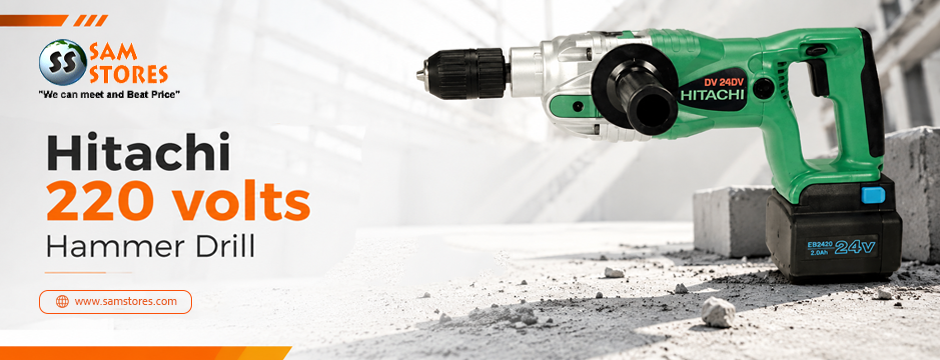
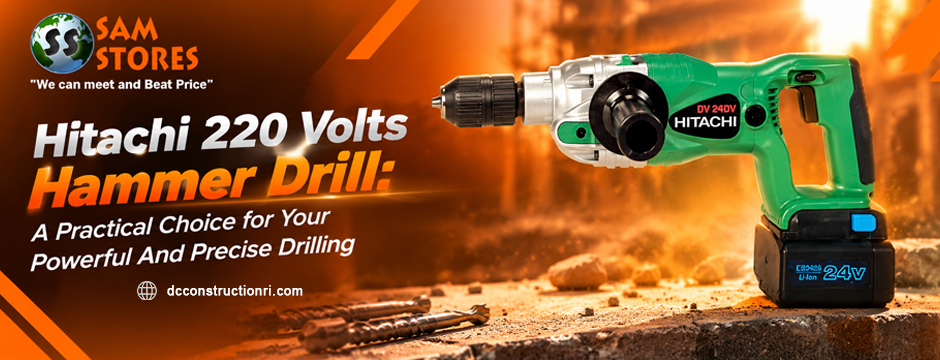
The Hitachi DV24DV 220-240 Volt Cordless Impact Drill combines strong torque, useful operating modes, a precision chuck, and practical design features. It is built for users who expect power without sacrificing control.
For Sam Stores customers looking for dependable drilling equipment, understanding what this drill offers can make the buying decision considerably easier.
Let’s take a closer look at what makes it worth considering.
The Right Hammer Drill Matters: Why?
Not every drilling job demands the same approach. Sometimes you need a straightforward drill for everyday work. Other times, you’re dealing with harder surfaces where additional impact action can make the task much easier.
A hammer or impact drill gives you that additional capability. The key, however, is having enough power and control to use it effectively.
The Hitachi DV24DV is designed around this balance. Its two operating modes allow users to switch between standard drilling and impact drilling according to the task. That means one tool can handle different requirements instead of forcing you to constantly change equipment. For busy workshops and job sites, that versatility can be valuable.
Understanding The Hitachi 220 Volts Hammer Drill
The Hitachi 220 Volts hammer drill is designed for users who want a combination of power and practical handling. One of its standout specifications is its effortless 65 Nm torque. Torque matters because it determines how effectively a drill can apply rotational force during demanding work.
Higher torque can be particularly useful when working with applications that place greater resistance on the drill. The DV24DV also features a powerful impact rate designed to deliver strong performance in its class. This makes it suitable for users who regularly encounter challenging drilling tasks.
Two Modes Give You More Control
One feature worth noting is the two-mode operation. The DV24DV can be used as a standard drill or an impact drill. Drilling requirements change from one job to another. Therefore, having both options available means you can choose the mode based on the job. It also saves space in your toolbox.
65 Nm Torque for Demanding Applications
A drill may perform perfectly well on lighter tasks but start feeling strained when the application becomes more demanding. The DV24DV addresses this with up to 65 Nm of torque.
For tradespeople, contractors, workshop users, and experienced DIY enthusiasts, that additional force can make difficult drilling jobs more manageable. Of course, the appropriate drill bit and operating technique still matter.
A Linear D-Handle Design for Practical Handling
Ergonomics can easily be overlooked when comparing power tools. Yet, anyone who has spent hours using a drill knows that handling makes a considerable difference.
The DV24DV incorporates a linear D-handle design. This configuration gives users a practical grip and can help provide better control during demanding applications. That is particularly useful when additional pressure is required.
Electric Brake Adds An Extra Safety Feature
Power tools should always be handled responsibly. Even experienced users need equipment designed with practical safety features. The DV24DV includes an electric brake, which is designed to stop the rotation of the tool quickly after the trigger is released. This can provide an additional level of control during operation.
However, an electric brake doesn’t replace proper safety practices. Users should still wear appropriate protective equipment, select the correct drill bit, secure their workpiece, and follow the manufacturer’s operating instructions. Good equipment and good working habits should always go together.
Externally Accessible Brushes Make Maintenance Easier
Professional users understand that maintaining power tools is part of getting long-term value from them. The DV24DV features externally accessible brushes. This design makes brush access more convenient when maintenance or replacement is required. That may seem like a minor feature when you’re comparing specifications.
In practice, easier maintenance can save time. You don’t want a straightforward maintenance task to become unnecessarily complicated. For workshops and users who depend heavily on their equipment, serviceability deserves attention alongside power and performance.
Why 220-240 Volt Compatibility Matters
Electrical compatibility is an important consideration when selecting power equipment. The DV24DV is designed for a 220-240 Volt supply, making it suitable for relevant electrical environments.
Before purchasing any electrical power tool, always confirm that its voltage requirements match your intended power source. This is especially important when purchasing equipment for different countries, workshops, or commercial environments.
Choosing the correct voltage specification isn’t simply about convenience. It’s part of using the equipment safely and appropriately.
More Than Just A Drill
When people hear “hammer drill,” they often think about one specific job. But versatile equipment can offer considerably more value.
The Hitachi 220 Volts hammer drill combines standard drilling and impact drilling within the same tool. That flexibility can make it useful across workshops, construction applications, maintenance tasks, renovation work, and serious home projects.
Its optional angle attachment also adds another interesting possibility. An angle attachment can help users reach applications where a conventional straight drill configuration may be awkward.
That kind of adaptability is particularly useful when working in confined or difficult-to-access spaces.
Building A More Capable Hitachi 220 Volts Power Tools Collection
A drill doesn’t have to be the only Hitachi tool in your workshop. Users building a broader collection of Hitachi 220 volt power tools may also consider equipment designed for cutting, grinding, sanding, and other applications.
For example, an angle grinder can be useful for grinding, cutting, and surface preparation. A circular saw can provide a dedicated solution for making controlled cuts through suitable materials.
Choosing between A Drill, Angle Grinder, And Circular Saw
It’s tempting to compare power tools simply by looking at their specifications. However, the better question is what you actually need to accomplish. A Hitachi 220 volt angle grinder is designed around applications such as grinding, cutting, and surface preparation.
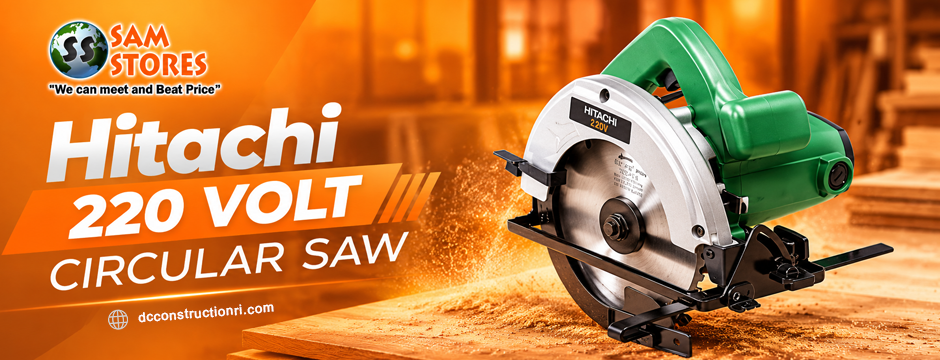
A Hitachi 220 volt circular saw, meanwhile, is intended for suitable cutting applications where a dedicated saw provides greater practicality. The DV24DV serves a different role.
Its strength lies in drilling versatility, particularly where standard and impact drilling capabilities are both useful. So, choosing between these tools isn’t about finding one universal winner. It’s about matching the machine to the work.
The DV24DV can appeal to several types of users.
- Professional tradespeople
- Workshop users
- Serious DIY enthusiasts
The key is understanding the tool’s capabilities and using it within the manufacturer’s recommended applications.
Getting Better Results from Your Drill
Even a powerful drill performs better when used correctly.
- Start by selecting the right bit for the material.
- Check that the bit is properly secured in the chuck before starting.
- Use the appropriate operating mode for your application.
- Avoid forcing the drill unnecessarily.
- Allow the tool to do the work while maintaining controlled pressure.
- Most importantly, wear appropriate protective equipment and follow the manufacturer’s safety guidance.
These habits may sound basic. They are also the habits that help users work more confidently and consistently.
Why Do Specifications Matter When Buying Power Tools?
Product specifications aren’t just numbers printed on a product page. They help you understand whether a tool matches your working requirements. With the DV24DV, several specifications stand out.
The 220-240 Volt compatibility defines the relevant power supply. The 65 Nm torque indicates its available rotational force. The 13mm keyless chuck tells you about its chuck capacity. So, when viewed together, these specifications tell a much more useful story than any single number.
A Practical Addition to The Toolbox
A good power tool should make work feel more manageable. It should provide enough power for its intended applications while remaining practical to operate and maintain.
The DV24DV brings several useful characteristics together. It offers strong torque, impact capability, standard drilling, a precision keyless chuck, a linear D-handle, electric braking, accessible brushes, and optional angle attachment compatibility.
For users comparing the Hitachi 220 Volts hammer drill, those features provide plenty to consider beyond the basic “drill versus hammer drill” question.
At Sam Stores, choosing the right drilling equipment should begin with understanding what the tool can actually do. That helps you buy for the job rather than simply buying for the specification sheet.
Final Thoughts
The right drill can become one of the most frequently used tools in a workshop. That’s why choosing one based on real working requirements matters.
The Hitachi 220 Volts hammer drill offers a useful combination of 65 Nm torque, two drilling modes, a 13mm precision keyless chuck, electric braking, practical handling, and accessible brushes.
Whether you’re a professional tradesperson, workshop user, or serious DIY enthusiast, the important question is simple: does the tool match the work you expect it to handle?
With the DV24DV, users get a capable drilling solution designed around power, flexibility, and practical usability.
FAQs
1. What is the Hitachi DV24DV hammer drill designed for?
The DV24DV is designed for drilling applications requiring standard drilling or impact drilling. It suits professional and demanding DIY work.
2. How much torque does the Hitachi DV24DV provide?
The DV24DV provides up to 65 Nm of torque, giving users substantial rotational force for suitable demanding applications.
3. Does the DV24DV have different drilling modes?
Yes. The Hitachi 220 Volts hammer drill features two modes: standard drilling and impact drilling. Users can select the appropriate mode based on their application.
4. What type of chuck does the DV24DV use?
The DV24DV features a 13mm precision keyless chuck. This allows convenient drill-bit changes without requiring a traditional chuck key.
5. Does the Hitachi DV24DV include any safety features?
Yes. The drill includes an electric brake designed to stop rotation quickly after releasing the trigger. Users should still follow all recommended safety procedures.