Choosing a space heater is easy until you start comparing voltage, wattage, room size, heating technology, and installation requirements. One question usually comes up first: how much space can the heater actually warm?
If you are considering 220 volt electric space heaters, the answer depends on more than voltage alone. A 220 volt heater can deliver substantial heating power, but the right model for a small bedroom may be completely different from the one needed for a garage, workshop, patio, or large living area.
The good news is that you can get a fairly reliable estimate by looking at the heater’s wattage, the room’s square footage, insulation, ceiling height, climate, and how much heat the space loses.
For shoppers at Sam Stores, understanding these factors before buying can make it much easier to choose a heater that matches the space rather than simply choosing the highest-powered model available.
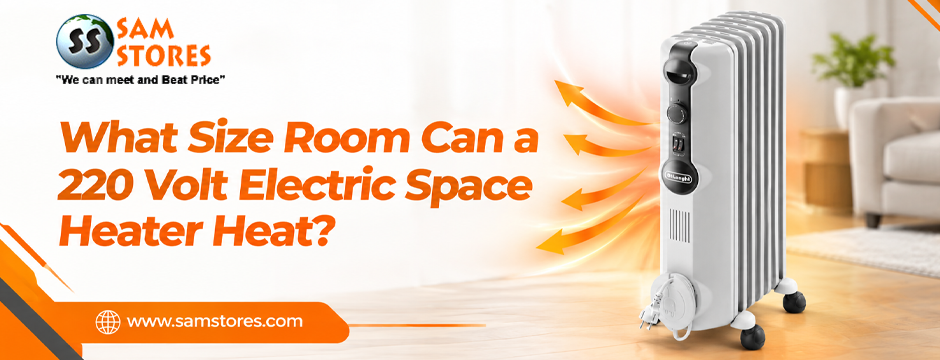
How Much Space Can a 220 Volt Electric Space Heater Heat?
There is no single room-size rating that applies to every 220 volt heater.
Voltage tells you about the electrical supply the appliance is designed to use. It does not, by itself, tell you how large an area the heater can warm. Wattage is more important when estimating heating capacity.
As a general starting point, electric resistance heating is often estimated at roughly 10 watts per square foot for a reasonably insulated space. Colder climates, poorly insulated rooms, high ceilings, exterior walls, large windows, and frequent door openings can increase the amount of heating power required.
For example:
| Heater Wattage | Approximate Area* |
| 1,500 watts | Up to about 150 sq. ft. |
| 2,000 watts | Up to about 200 sq. ft. |
| 2,500 watts | Up to about 250 sq. ft. |
| 3,000 watts | Up to about 300 sq. ft. |
| 4,000 watts | Up to about 400 sq. ft. |
| 5,000 watts | Up to about 500 sq. ft. |
*These are general estimates, not guaranteed coverage ratings. Actual performance varies considerably depending on insulation, outdoor temperature, ceiling height, room layout, and heater design.
A heater operating in a well-insulated 300-square-foot room may feel very different from the same heater being used in a drafty 300-square-foot garage.
Why 220 Volts Does Not Automatically Mean More Heating
It is easy to assume that a 220 volt heater must heat a larger room than a 120 volt model. That is not necessarily true.
The key measurement is wattage.
A 2,000-watt heater is still producing approximately 2,000 watts of electrical heating output whether it operates on a suitable 120 volt or 240 volt electrical system. The voltage and amperage requirements change, but the wattage is what gives you a better indication of the heater’s heating capacity.
This is one reason 220 volt electric space heaters are popular for applications where higher electrical loads are needed. A higher-voltage circuit can support substantial wattage without requiring the same amperage that a lower-voltage circuit would need for equivalent power.
That can make higher-voltage heaters useful for larger rooms, workshops, garages, and other spaces where supplemental heating is required.
Room Size Is Only Part of the Calculation
Two rooms with identical square footage can require very different amounts of heating.
Consider a 400-square-foot finished room with insulated walls, double-pane windows, and a relatively low ceiling. Now compare it with a 400-square-foot detached garage with a concrete floor, uninsulated walls, a large garage door, and regular air leakage.
Both spaces measure 400 square feet.
The garage will generally need considerably more heating power to reach and maintain a comfortable temperature.
Here are some of the factors worth considering before selecting a heater.
Insulation
Insulation helps keep heated air inside the room. A well-insulated space generally requires less heating power than a poorly insulated one.
If you are heating an older building, workshop, shed, or garage, take the insulation level seriously when choosing a heater.
Ceiling Height
Most basic room-size calculations assume a standard ceiling height.
A room with a 12-foot ceiling contains significantly more air than a room with an 8-foot ceiling covering the same floor area. That extra volume can affect how quickly the space warms and how much heating capacity you need.
Windows and Doors
Large windows can contribute to heat loss, particularly if they are older or poorly sealed. Exterior doors can have a similar effect.
A frequently opened garage door is an even bigger consideration.
Outdoor Temperature
A heater may perform perfectly well in mild winter conditions but struggle to maintain the same temperature when outdoor temperatures drop sharply.
If you live in a particularly cold climate, consider the lowest temperatures you expect during the heating season rather than choosing a heater based on an average winter day.
What About a 220 Volt Electric Shop Heater?
A 220 volt electric shop heater is designed for spaces where more substantial heating output may be required.
Workshops and garages often have higher ceilings, larger doors, unfinished walls, and more air movement than residential rooms. These conditions can make heating challenging.
For example, someone working in a 500-square-foot insulated workshop may need a very different heating solution from someone trying to heat a 500-square-foot detached garage with an uninsulated metal exterior.
Before buying, check the heater’s recommended coverage area and wattage. Also make sure the electrical circuit is properly suited to the appliance.
If the heater requires a dedicated circuit, installation should be handled by a qualified electrician rather than attempting to modify household wiring yourself.
Can 220 Volt Heaters Work in Large Rooms?
Yes, but “large room” needs to be defined carefully.
A 220 volt heater can be an effective source of supplemental heat in a large living room, workshop, garage, office, or other space when its wattage is appropriate for the area.
For very large spaces, however, one heater may not always distribute warmth evenly.
Room shape matters. A long, narrow room can develop colder areas at the far end, while an open-plan space can have different temperature zones.
In some situations, two appropriately sized heaters may provide more even heating than one very powerful unit. The right setup depends on the space, electrical requirements, heater design, and manufacturer’s recommendations.
Where Should You Install a 220 Volt Heater?
Placement can make a noticeable difference.
A heater installed in an appropriate location can distribute warmth more effectively, while poor placement may leave some areas cold.
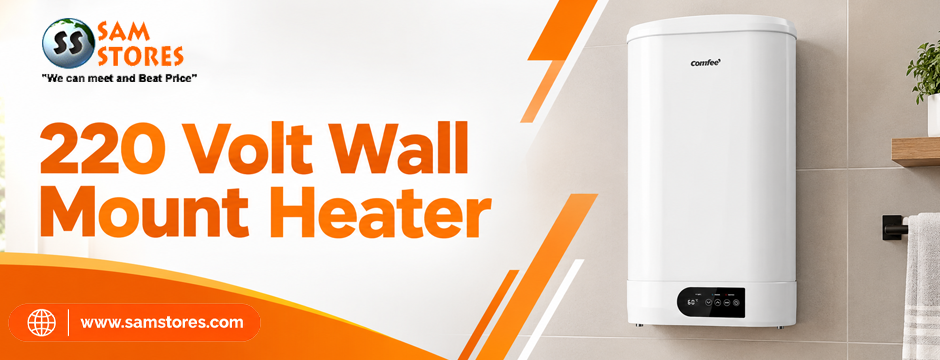
For permanent installations, a 220 volt wall mount heater can be a practical choice when floor space is limited. Mounting the unit on a wall keeps the floor clear and can make sense in rooms where people regularly move around.
For smaller spaces such as kitchens, bathrooms, or areas beneath cabinets, a 220 volt toe kick heater can provide another space-saving option, depending on the application and manufacturer’s specifications.
Always follow the installation clearances and safety instructions supplied with the specific heater.
What About Baseboard Heaters 220 Volts?
Electric baseboard heating is another option worth considering when you want a more permanent heating solution.
Baseboard heaters 220 volts can provide steady heat along the perimeter of a room. They are often considered for bedrooms, offices, living areas, and other spaces where a permanently installed heating system is preferred.
The advantage is not simply the voltage. The length and wattage of the baseboard heater, room size, insulation, window placement, and thermostat control all influence performance.
Baseboard heating can also work well when you want a quiet heating solution without the fan noise associated with some portable or fan-forced heaters.
Could a 220 Volt Heater Be Used Outdoors?
Outdoor heating is a different situation.
A 220 volt patio heater may be designed to provide targeted warmth in an outdoor seating area, but outdoor heaters should not be judged by the same room-size calculations used for enclosed spaces.
There is no enclosed room holding the heated air. Wind can carry warmth away quickly, so outdoor heaters are generally intended to create a comfortable zone around people rather than raise the temperature of an entire patio.
When comparing outdoor models, pay attention to the manufacturer’s intended application, mounting requirements, weather protection, heating range, and safety instructions.
What About 240 Volt Portable Heaters?
You may also come across 240 volt portable heaters while shopping for higher-powered electric heating equipment.
In everyday product discussions, 220 volt and 240 volt terminology can sometimes be used interchangeably, but you should not assume that every appliance is compatible with every electrical connection.
Always check the heater’s actual electrical specifications, plug configuration, circuit requirements, and installation instructions before purchasing.
If you are replacing an existing heater, matching the electrical requirements of the new appliance with the existing circuit is especially important.
How to Choose the Right Heater for Your Room
Instead of starting with voltage, start with the room.
Measure the length and width to calculate the floor area.
Room size = length × width
For example, a room measuring 20 feet by 20 feet has:
20 × 20 = 400 square feet
Then consider:
- Is the room well insulated?
- How high is the ceiling?
- How many windows does it have?
- Are the windows well sealed?
- Is the room above a heated or unheated space?
- How cold does the area become during winter?
- Are doors opened frequently?
- Is the heater intended as primary or supplemental heating?
- Does the room have an existing electrical circuit capable of supporting the heater?
These details will help you narrow down the appropriate wattage.
Do Not Buy More Power Than Your Electrical System Can Handle
A common mistake is to focus entirely on heating capacity and overlook the electrical side.
A high-wattage 220 volt heater can require a dedicated electrical circuit. The plug, wiring, breaker, and outlet all need to be appropriate for the appliance.
Never use an adapter or extension cord simply to make an incompatible connection work.
Before purchasing a high-powered heater, review the manufacturer’s electrical requirements. If you are unsure whether your existing electrical system can support the appliance, speak with a licensed electrician.
This is particularly important for workshops, garages, older homes, and commercial spaces.
Should You Choose a Portable or Permanent Heater?
The answer depends on how you use the space.
A portable heater may make sense when you need flexibility and want to move the heating source between areas. A wall-mounted or permanently installed heater can be more suitable when one room consistently needs heating.
Think about your daily routine.
If you work in a garage only for a few hours at a time, portable heating may be convenient. If you need consistent heat in a home office every day, a permanent installation could make more sense.
There is no universal winner. The better choice is the one that matches how the space is actually used.
Shop for the Right 220 Volt Heater at Sam Stores
Finding the right heater is not simply a matter of choosing the largest wattage or the highest voltage.
The best starting point is the room itself. Measure the space, consider insulation and ceiling height, think about heat loss, and then compare heater wattage and installation requirements.
Whether you are heating a bedroom, workshop, garage, office, or another space, 220 volt electric space heaters can offer a practical way to add substantial electric heating capacity when the product and electrical system are properly matched.
At Sam Stores, shoppers can compare heating equipment based on the type of space they need to heat, the required electrical setup, and the features that matter for everyday use.
Take the time to check the specifications before ordering. A few minutes spent measuring your room and reviewing the heater’s requirements can help you choose equipment that delivers the right amount of warmth without paying for capacity you do not actually need.
FAQs
1. What size room can a 220 volt electric space heater heat?
It depends on wattage, insulation, ceiling height, outdoor temperature, and heat loss. As a general estimate, 10 watts per square foot is often used for reasonably insulated spaces.
2. Does 220 volts mean a heater can heat a larger room?
Not necessarily. Voltage alone does not determine heating capacity. Wattage is a more useful measurement when estimating how much space an electric heater can warm.
3. Can a 220 volt electric heater heat a garage?
Yes. A suitable 220 volt heater can provide effective supplemental or primary heating in a garage, provided its wattage and coverage rating match the space and the electrical circuit is properly rated.
4. Are 220 volt electric space heaters suitable for large rooms?
They can be, particularly when higher wattage is required. Large or poorly insulated spaces may need more than one heater or a heating system specifically designed for the area.
5. Can I use an extension cord with a 220 volt electric space heater?
You should not assume an extension cord is safe. High-wattage heaters can place significant demands on electrical circuits. Follow the manufacturer’s instructions and consult a qualified electrician when necessary.