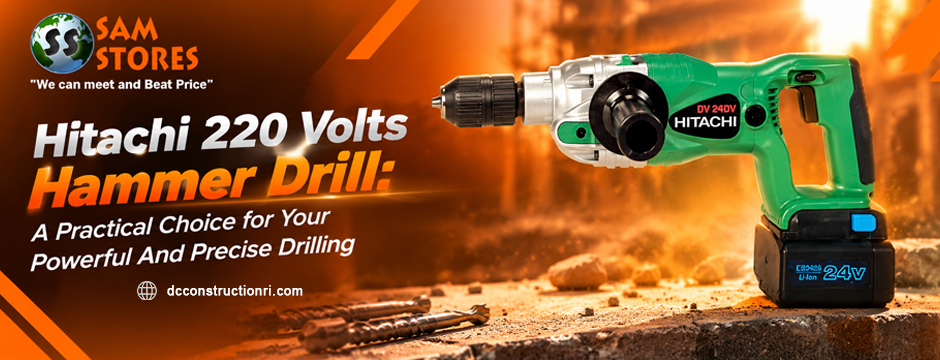
Hitachi 220 Volts Hammer Drill: A Practical Choice for Your Powerful And Precise Drilling

A good drill earns its place in a toolbox when the work gets demanding.

You notice the difference when you’re drilling into tough materials, working through a long project, or handling jobs that require consistent torque. A struggling tool can slow everything down, while the right one simply gets on with the work.

That is where the Hitachi 220 Volts hammer drill becomes an interesting choice for professionals and serious DIY users.

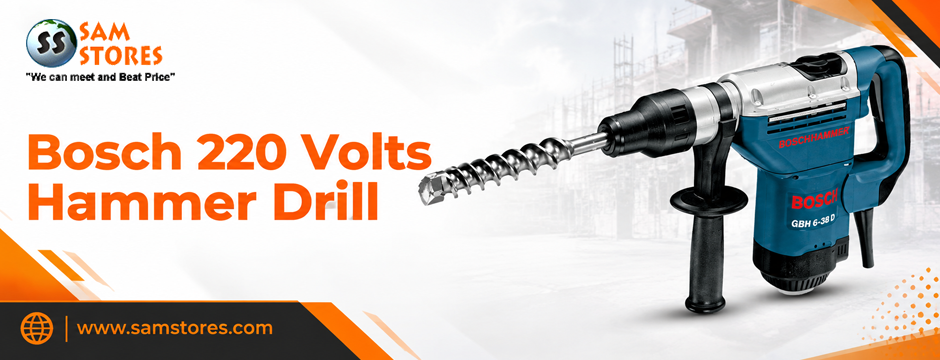
The Hitachi DV24DV 220-240 Volt Cordless Impact Drill combines strong torque, useful operating modes, a precision chuck, and practical design features. It is built for users who expect power without sacrificing control.

For Sam Stores customers looking for dependable drilling equipment, understanding what this drill offers can make the buying decision considerably easier.

Let’s take a closer look at what makes it worth considering.

The Right Hammer Drill Matters: Why?

Not every drilling job demands the same approach. Sometimes you need a straightforward drill for everyday work. Other times, you’re dealing with harder surfaces where additional impact action can make the task much easier.

A hammer or impact drill gives you that additional capability. The key, however, is having enough power and control to use it effectively.

The Hitachi DV24DV is designed around this balance. Its two operating modes allow users to switch between standard drilling and impact drilling according to the task. That means one tool can handle different requirements instead of forcing you to constantly change equipment. For busy workshops and job sites, that versatility can be valuable.

Understanding The Hitachi 220 Volts Hammer Drill

The Hitachi 220 Volts hammer drill is designed for users who want a combination of power and practical handling. One of its standout specifications is its effortless 65 Nm torque. Torque matters because it determines how effectively a drill can apply rotational force during demanding work.

Higher torque can be particularly useful when working with applications that place greater resistance on the drill. The DV24DV also features a powerful impact rate designed to deliver strong performance in its class. This makes it suitable for users who regularly encounter challenging drilling tasks.

Two Modes Give You More Control

One feature worth noting is the two-mode operation. The DV24DV can be used as a standard drill or an impact drill. Drilling requirements change from one job to another. Therefore, having both options available means you can choose the mode based on the job. It also saves space in your toolbox.

65 Nm Torque for Demanding Applications

A drill may perform perfectly well on lighter tasks but start feeling strained when the application becomes more demanding. The DV24DV addresses this with up to 65 Nm of torque.

For tradespeople, contractors, workshop users, and experienced DIY enthusiasts, that additional force can make difficult drilling jobs more manageable. Of course, the appropriate drill bit and operating technique still matter.

A Linear D-Handle Design for Practical Handling

Ergonomics can easily be overlooked when comparing power tools. Yet, anyone who has spent hours using a drill knows that handling makes a considerable difference.

The DV24DV incorporates a linear D-handle design. This configuration gives users a practical grip and can help provide better control during demanding applications. That is particularly useful when additional pressure is required.

Electric Brake Adds An Extra Safety Feature

Power tools should always be handled responsibly. Even experienced users need equipment designed with practical safety features. The DV24DV includes an electric brake, which is designed to stop the rotation of the tool quickly after the trigger is released. This can provide an additional level of control during operation.

However, an electric brake doesn’t replace proper safety practices. Users should still wear appropriate protective equipment, select the correct drill bit, secure their workpiece, and follow the manufacturer’s operating instructions. Good equipment and good working habits should always go together.

Externally Accessible Brushes Make Maintenance Easier

Professional users understand that maintaining power tools is part of getting long-term value from them. The DV24DV features externally accessible brushes. This design makes brush access more convenient when maintenance or replacement is required. That may seem like a minor feature when you’re comparing specifications.

In practice, easier maintenance can save time. You don’t want a straightforward maintenance task to become unnecessarily complicated. For workshops and users who depend heavily on their equipment, serviceability deserves attention alongside power and performance.

Why 220-240 Volt Compatibility Matters

Electrical compatibility is an important consideration when selecting power equipment. The DV24DV is designed for a 220-240 Volt supply, making it suitable for relevant electrical environments.

Before purchasing any electrical power tool, always confirm that its voltage requirements match your intended power source. This is especially important when purchasing equipment for different countries, workshops, or commercial environments.

Choosing the correct voltage specification isn’t simply about convenience. It’s part of using the equipment safely and appropriately.

More Than Just A Drill

When people hear “hammer drill,” they often think about one specific job. But versatile equipment can offer considerably more value.

The Hitachi 220 Volts hammer drill combines standard drilling and impact drilling within the same tool. That flexibility can make it useful across workshops, construction applications, maintenance tasks, renovation work, and serious home projects.

Its optional angle attachment also adds another interesting possibility. An angle attachment can help users reach applications where a conventional straight drill configuration may be awkward.

That kind of adaptability is particularly useful when working in confined or difficult-to-access spaces.

Building A More Capable Hitachi 220 Volts Power Tools Collection

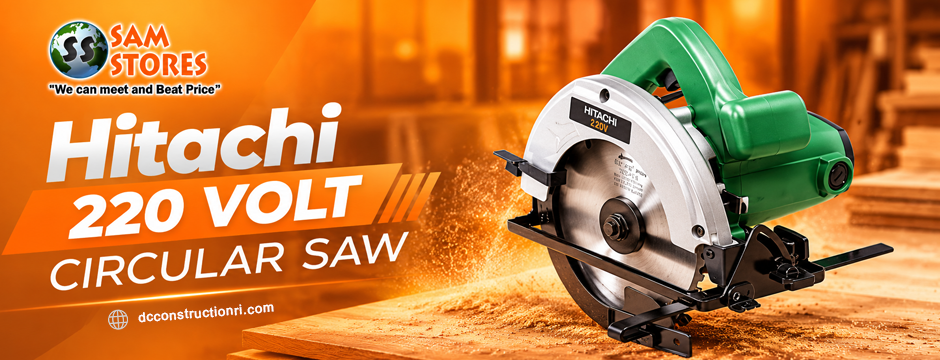
A drill doesn’t have to be the only Hitachi tool in your workshop. Users building a broader collection of Hitachi 220 volt power tools may also consider equipment designed for cutting, grinding, sanding, and other applications.

For example, an angle grinder can be useful for grinding, cutting, and surface preparation. A circular saw can provide a dedicated solution for making controlled cuts through suitable materials.

Choosing between A Drill, Angle Grinder, And Circular Saw

It’s tempting to compare power tools simply by looking at their specifications. However, the better question is what you actually need to accomplish. A Hitachi 220 volt angle grinder is designed around applications such as grinding, cutting, and surface preparation.

A Hitachi 220 volt circular saw, meanwhile, is intended for suitable cutting applications where a dedicated saw provides greater practicality. The DV24DV serves a different role.

Its strength lies in drilling versatility, particularly where standard and impact drilling capabilities are both useful. So, choosing between these tools isn’t about finding one universal winner. It’s about matching the machine to the work.

How The Braun 220 Volt Hair Dryer Redefines Everyday Glamour_

The DV24DV can appeal to several types of users.

  • Professional tradespeople
  • Workshop users
  • Serious DIY enthusiasts

The key is understanding the tool’s capabilities and using it within the manufacturer’s recommended applications.

Getting Better Results from Your Drill

Even a powerful drill performs better when used correctly.

  • Start by selecting the right bit for the material.
  • Check that the bit is properly secured in the chuck before starting.
  • Use the appropriate operating mode for your application.
  • Avoid forcing the drill unnecessarily.
  • Allow the tool to do the work while maintaining controlled pressure.
  • Most importantly, wear appropriate protective equipment and follow the manufacturer’s safety guidance.

These habits may sound basic. They are also the habits that help users work more confidently and consistently.

Why Do Specifications Matter When Buying Power Tools?

Product specifications aren’t just numbers printed on a product page. They help you understand whether a tool matches your working requirements. With the DV24DV, several specifications stand out.

The 220-240 Volt compatibility defines the relevant power supply. The 65 Nm torque indicates its available rotational force. The 13mm keyless chuck tells you about its chuck capacity. So, when viewed together, these specifications tell a much more useful story than any single number.

A Practical Addition to The Toolbox

A good power tool should make work feel more manageable. It should provide enough power for its intended applications while remaining practical to operate and maintain.

The DV24DV brings several useful characteristics together. It offers strong torque, impact capability, standard drilling, a precision keyless chuck, a linear D-handle, electric braking, accessible brushes, and optional angle attachment compatibility.

For users comparing the Hitachi 220 Volts hammer drill, those features provide plenty to consider beyond the basic “drill versus hammer drill” question.

At Sam Stores, choosing the right drilling equipment should begin with understanding what the tool can actually do. That helps you buy for the job rather than simply buying for the specification sheet.

Final Thoughts

The right drill can become one of the most frequently used tools in a workshop. That’s why choosing one based on real working requirements matters.

The Hitachi 220 Volts hammer drill offers a useful combination of 65 Nm torque, two drilling modes, a 13mm precision keyless chuck, electric braking, practical handling, and accessible brushes.

Whether you’re a professional tradesperson, workshop user, or serious DIY enthusiast, the important question is simple: does the tool match the work you expect it to handle?

With the DV24DV, users get a capable drilling solution designed around power, flexibility, and practical usability.

FAQs

1. What is the Hitachi DV24DV hammer drill designed for?

The DV24DV is designed for drilling applications requiring standard drilling or impact drilling. It suits professional and demanding DIY work.

2. How much torque does the Hitachi DV24DV provide?

The DV24DV provides up to 65 Nm of torque, giving users substantial rotational force for suitable demanding applications.

3. Does the DV24DV have different drilling modes?

Yes. The Hitachi 220 Volts hammer drill features two modes: standard drilling and impact drilling. Users can select the appropriate mode based on their application.

4. What type of chuck does the DV24DV use?

The DV24DV features a 13mm precision keyless chuck. This allows convenient drill-bit changes without requiring a traditional chuck key.

5. Does the Hitachi DV24DV include any safety features?

Yes. The drill includes an electric brake designed to stop rotation quickly after releasing the trigger. Users should still follow all recommended safety procedures.

Travelling Abroad? Why A 220 Volt Outlet Adapter Belongs in Your Bag

You have packed your clothes, passport, charger, toiletries, and perhaps a small camera for the trip. Everything seems ready until you arrive at your hotel and discover something frustrating: your favourite appliance cannot connect to the local outlet.

It is a surprisingly common travel problem.

Electrical outlets and voltage standards can vary between countries. That means the plug that works perfectly at home may not fit your destination’s socket. In some cases, the voltage can also be different.

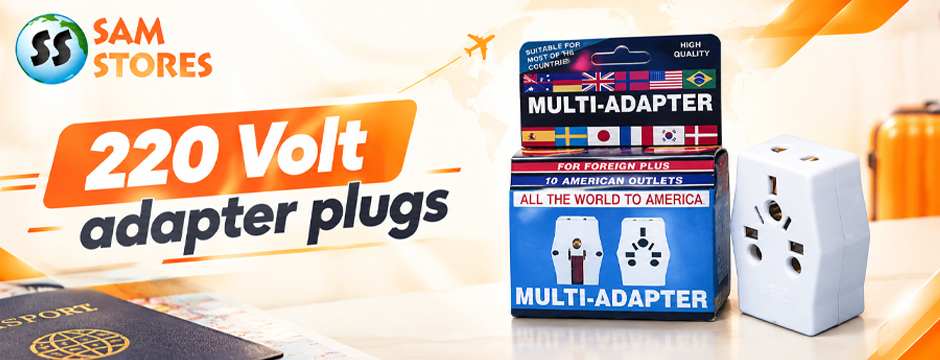
This is where a 220 volt outlet adapter can become a useful addition to your travel kit.

At Sam Stores, we understand that small electrical accessories can make a surprisingly big difference when you’re away from home. The right adapter can help you connect compatible devices without searching for an electrical shop after landing.

However, there’s an important distinction between changing a plug shape and changing voltage. Understanding that difference can help you choose the right accessory and use it safely.

Let’s explore why an outlet adapter deserves space in your suitcase.

What Exactly Does A 220-Volt Outlet Adapter Do?

The name can sometimes be confusing. A 220 volt outlet adapter generally refers to an accessory designed to provide a compatible physical connection for equipment using a particular plug configuration. An adapter itself typically does not transform electrical voltage.

For example, if your appliance is designed for 220–240V and your destination provides compatible voltage, you may only need the appropriate plug adapter.

However, if your appliance is designed exclusively for 110–120V and you’re connecting it to a 220–240V supply, you may need a properly rated voltage converter or transformer.

These are different products. That distinction should always be checked before plugging anything in.

Adapter Or Converter? Don’t Mix Them Up

This is probably the most important thing to understand before buying travel electrical accessories.

  • A plug adapter changes the shape of the connection.
  • A voltage converter or transformer changes the electrical voltage.

They solve different problems.

Suppose you take a device designed for 110V to a country using 220–240V. A simple plug adapter will allow the plug to physically enter the socket, but it will not reduce the voltage. That could damage equipment that isn’t rated for the higher voltage.

On the other hand, many modern chargers are designed for a wide input range. Look at the label on your device for something like “Input: 100–240V.”

If you see that rating, the device may only require a suitable plug adapter. Always check the manufacturer’s specifications rather than assuming.

Why Do Frequent Travellers Keep Electrical Adapters Handy?

Frequent travellers learn quickly that preparation saves time. A universal adapter takes up little luggage space compared with the inconvenience of being unable to use essential electronics.

Think about everything you might use during a trip.

Your phone charger needs power. Your laptop may need charging. A camera battery might need to be topped up. You may want to use a hair dryer, electric shaver, electric toothbrush, or other personal appliance.

Not every item necessarily needs the same connection. Having the appropriate adapter available means you have one less thing to figure out after arrival. For business travellers, the convenience can be even more important.

Imagine arriving at a conference and discovering that your laptop charger cannot connect to the hotel’s socket. A small accessory suddenly becomes extremely valuable.

Different Appliances Have Different Requirements

Don’t assume every electrical device behaves the same way. A phone charger generally consumes relatively little power. A hair dryer or heater can require significantly more. This means the power rating of an adapter or converter matters.

High-wattage appliances require equipment rated for their electrical load. This is particularly relevant when dealing with products such as dryers, curling irons, kettles, or other heating appliances.

For instance, someone searching for a 220 dryer plug adapter to 110 may actually need to determine whether they need a plug adapter, voltage converter, or both.

The wording used in online searches can be confusing. The solution is to identify the appliance’s input voltage and wattage first. Then choose equipment that is specifically rated for those requirements.

What About A 230 Volt Plug Adapter?

You may also come across products described as a 230 volt plug adapter. Again, the number refers to voltage compatibility rather than necessarily describing a voltage conversion function.

Many regions use nominal voltages around 220–240V, while others use around 100–127V. Actual standards can vary by country and electrical system.

That’s why travellers should check their destination’s requirements before choosing an adapter.

220 Adapter Plugs Can Be Useful Beyond International Travel

Travel isn’t the only situation where plug adapters can become useful. People sometimes purchase equipment designed for a particular electrical connection and later discover that their existing outlet configuration differs.

That’s where 220 adapter plugs can provide a practical connection solution when the voltage and electrical requirements are already compatible. However, compatibility should always come first. The fact that two plugs can physically connect does not automatically mean the electrical setup is safe.

Before using any adapter, confirm the voltage, current, frequency, grounding requirements, and appliance rating where relevant. If you’re unsure, consult a qualified electrician.

How The Braun 220 Volt Hair Dryer Redefines Everyday Glamour_

A Quick Pre-Travel Electrical Checklist

Before leaving for an international trip, take a few minutes to check your electronics. Start with your destination. Then check each device.

  • Step 1: Identify the destination’s socket type.

Different countries use different plug configurations.

  • Step 2: Check your device’s voltage rating.

Look at the manufacturer’s label or specifications.

  • Step 3: Check whether the device accepts multiple voltages.

A 100–240V rating usually indicates broad input compatibility.

  • Step 4: Check wattage for high-power appliances.

Hair dryers and heating devices need particular attention.

  • Step 5: Determine whether you need an adapter or converter.

Don’t assume they are interchangeable.

  • Step 6: Pack the right accessory.

Ideally, test it with your equipment before travelling.

A five-minute check at home can prevent a frustrating situation abroad.

What About Searching for A 220V to 110V Adapter at Home Depot?

You may encounter searches such as 220V to 110V adapter home depot when looking for a solution. But remember that “adapter” is often used casually online to describe different types of electrical equipment. A true voltage conversion device is different from a simple plug adapter.

If your appliance requires 110–120V and your wall supply provides approximately 220–240V, look specifically for a correctly rated step-down transformer or voltage converter. The converter’s wattage capacity should be appropriate for the appliance. Never select one based solely on the plug shape.

Don’t Let Your Electronics Dictate Your Trip

Your travel itinerary should be about the places you’re visiting, not electrical outlets. You shouldn’t have to spend your first evening searching for a shop because your charger doesn’t fit. You shouldn’t risk damaging an expensive appliance because you confused an adapter with a converter. And you certainly shouldn’t assume that every international plug problem can be solved with one universal accessory.

A little preparation makes a big difference.

  • Pack the appropriate adapter.
  • Check your device ratings.
  • Understand the difference between connection and voltage conversion.
  • Then get on with your journey.

Final Thoughts

A 220 volt outlet adapter can be a small but valuable addition to your travel essentials. It can help you connect compatible electronics to different socket configurations and avoid unnecessary inconvenience.

However, the most important lesson is understanding what an adapter actually does. It changes the plug connection. It does not automatically change voltage.

Before travelling, check your destination’s electrical system and every device you plan to take. For equipment that isn’t compatible with the available voltage, use an appropriately rated converter or transformer instead. When you’re travelling, the last thing you want is a tiny plug to become a big problem.

Practical electrical accessories should make everyday life easier, whether you’re preparing for a trip or solving a connection problem at home. You can find such useful items at Sam Stores.

FAQs

1. What is a 220 volt outlet adapter used for?

A plug adapter changes the physical connection between an appliance plug and a wall socket. A 220 volt outlet adapter does not normally convert electrical voltage.

2. Is a plug adapter the same as a voltage converter?

No. A plug adapter changes the plug configuration, while a voltage converter changes the supplied voltage. They perform different functions.

3. Can I use a 110V appliance with a 220V outlet?

Not with a basic plug adapter. A compatible step-down transformer or voltage converter may be required, depending on the appliance.

4. How can I tell whether my device needs a voltage converter?

Check the input rating on the device. Equipment marked “100–240V” generally supports both common voltage ranges with the appropriate plug adapter.

5. Can I use one adapter for every appliance?

Not necessarily. Check each appliance’s voltage, wattage, plug configuration, and grounding requirements before use. High-power appliances require particular care.

220 Volt Diesel Generator for Home Use: What Can It Power?

A power outage is inconvenient when it lasts for a few minutes. When it stretches into several hours, it can become a serious problem.

The refrigerator stops running. Lights go out. Fans and air conditioners become unusable. Wi-Fi equipment shuts down. If you work from home, operate essential equipment or simply want reliable backup power for your family, a generator can make a big difference.

This is where a 220 volt diesel generator can be a practical choice for home backup power.

But there is an important question to answer before buying one: What can a 220 volt diesel generator actually power?

The answer depends on the generator’s rated output, the appliances you want to operate and how much power those appliances need when starting. Choosing a generator simply because it says 220V on the label is not enough. You need to look at voltage, wattage, frequency, phase and the combined electrical load.

For homeowners looking for dependable backup power, Sam Stores offers generator options designed to provide practical performance without making the buying process unnecessarily complicated.

What Is a 220 Volt Diesel Generator?

A 220 volt diesel generator uses a diesel engine to produce electrical power at around 220 volts. Depending on the model, the output may be specified within the 220 to 240 volt range.

For many household applications, this voltage range makes the generator suitable for powering common electrical equipment, provided the appliance specifications and generator output are compatible.

A typical household generator may be used for:

  • Refrigerators and freezers
  • Ceiling and portable fans
  • Lighting systems
  • Televisions
  • Wi-Fi routers and networking equipment
  • Computers and workstations
  • Washing machines
  • Water pumps
  • Kitchen appliances
  • Air conditioners, depending on capacity
  • Selected power tools and workshop equipment

The key point is that voltage compatibility and generator capacity are two different things.

A generator can provide the correct voltage but still be too small to run several high-powered appliances at the same time.

How Much Can a 220 Volt Diesel Generator Power?

Generator capacity is normally expressed in watts or kilowatts.

For example, a 6 kW generator has a rated output of approximately 6,000 watts. That does not mean you should continuously operate equipment right at the maximum rating. Leaving some capacity available provides a useful safety margin and helps accommodate appliances with higher starting requirements.

Consider a basic household load:

ApplianceApproximate Running Power
Refrigerator150 to 400W
LED lights50 to 200W
Ceiling fans60 to 100W each
Television80 to 200W
Wi-Fi router10 to 30W
Computer100 to 300W
Washing machine400 to 1,000W
Water pump500 to 1,500W+
Microwave1,000 to 1,500W
Air conditioner1,000 to 2,500W+

These figures are only general estimates. Actual consumption varies considerably between appliances and models.

A refrigerator, for instance, may consume relatively little electricity once it is running, but its compressor can require considerably more power during startup. The same principle applies to pumps, air conditioners and other equipment containing motors or compressors.

That is why calculating the total load before buying is so important.

Running Watts vs Starting Watts: The Detail Many Buyers Miss

One of the most common generator-buying mistakes is looking only at running wattage.

Some appliances need additional power for a short period when they start. This is known as starting, surge or startup wattage.

Imagine that your refrigerator normally consumes 300 watts while running. Its starting requirement could be substantially higher. If your generator is already operating several other appliances, that temporary increase could overload the system.

The same issue can arise with:

  • Air conditioners
  • Refrigerators
  • Freezers
  • Water pumps
  • Compressors
  • Power tools

When selecting a 220 volt diesel generator, make a list of the appliances you expect to run together. Note both their running and starting requirements where available.

This simple step can help you choose a generator that is genuinely suited to your home rather than one that only looks suitable on paper.

What Can a 220 Volt Diesel Generator Run During an Outage?

For many homeowners, the goal is not to operate every appliance in the house simultaneously. Instead, it is to keep essential systems running.

A properly sized generator can potentially support a combination such as:

Essential load

  • Refrigerator
  • Several lights
  • Fans
  • Television
  • Wi-Fi router
  • Computer

Medium load

  • Washing machine
  • Water pump
  • Additional lighting
  • Kitchen appliances

Higher load

  • Air conditioner
  • Electric water heater
  • Large pump
  • Heavy workshop equipment

The actual combination depends on the generator’s capacity and the electrical requirements of each appliance.

If you need air conditioning, pumping equipment and multiple large appliances at the same time, you will generally need more generator capacity than someone who only wants lighting, refrigeration and basic electronics.

Is a 240 Volts Generator Single Phase Suitable for a Home?

A 240 volts generator single phase can be appropriate for residential applications where the home’s electrical system and appliances are designed for compatible voltage and single-phase power.

Single-phase generators are commonly considered for houses, small offices, workshops and other applications where three-phase electrical power is not required.

However, don’t assume that every 220V, 230V or 240V appliance can automatically be connected to every generator. Electrical standards differ between countries and properties.

Before purchasing, check:

  1. The voltage requirements of your appliances.
  2. Whether your electrical system is single-phase or three-phase.
  3. The generator’s rated output.
  4. The generator’s frequency.
  5. Plug and outlet compatibility.
  6. Whether professional installation or a transfer switch is required.

If you are uncertain, speak with a qualified electrician before connecting a generator to your home’s electrical system.

Why Consider Diesel for Home Backup Power?

Diesel generators have earned a strong reputation for backup and demanding applications because diesel engines are built for sustained operation.

For homeowners who experience frequent or lengthy power interruptions, diesel can be an attractive option.

A diesel generator can offer several advantages:

Built for Extended Operation

Diesel engines are commonly used in applications where generators may need to operate for extended periods. That makes them particularly useful during prolonged outages.

Strong Performance

Diesel engines are well suited to handling demanding electrical loads, especially when the generator is correctly sized for the application.

Practical for Frequent Backup Use

If your generator is going to be used regularly rather than sitting untouched for years, a diesel model can be worth considering.

Suitable for More Than Just Emergencies

A sufficiently powerful unit can potentially support a home workshop, agricultural equipment, water pumping and other applications beyond basic emergency lighting.

What Is a 220-240 Volts Generator?

You may come across the term 220-240 volts generator while shopping for backup power equipment.

How The Braun 220 Volt Hair Dryer Redefines Everyday Glamour_

This generally indicates that the generator’s electrical output falls within the 220 to 240 volt range, depending on the model and its operating specifications.

For buyers, the important thing is to look beyond the voltage figure.

Check the complete specification, including:

  • Rated power
  • Maximum power
  • Frequency
  • Phase
  • Engine type
  • Fuel tank capacity
  • Starting system
  • Outlet configuration
  • Safety features

A generator with the right voltage but insufficient wattage will not solve your backup power requirements.

Don’t Forget About Fuel Capacity

Generator runtime depends on several factors, including engine efficiency, fuel tank capacity and the electrical load being placed on the generator.

A generator running at a light load may consume fuel differently from one operating close to its rated capacity.

For example, a model with a larger fuel tank can be particularly convenient when you expect extended outages because you may not need to refuel as frequently.

Still, fuel capacity should not be your only purchasing consideration. A larger tank does not automatically mean a better generator. The generator needs to match your home’s actual power requirements.

Features Worth Looking For in a Home Generator

A good home backup generator should be more than an engine attached to an alternator.

Depending on your requirements, useful features can include an electric start, voltage monitoring, low-oil protection, robust outlets and wheels for easier movement.

The Multistar MTDG9000E available from Sam Stores is a good example of a generator designed around practical usability. It provides 220 to 240 volt output at 50 Hz and has a rated power of around 6.0 kW. Its design also includes features such as an LCD volt meter, oil alert, splash-proof outlets and wheels.

For homeowners, these details matter because a generator needs to be straightforward to monitor and operate, particularly during an unexpected outage.

How to Choose the Right Generator for Your Home

Before choosing a 220 volt diesel generator, take five minutes to work out what you actually need.

Step 1: List Your Essential Appliances

Write down everything you want to keep running during an outage.

Step 2: Check Their Wattage

Look at the rating plate or manufacturer’s specifications for each appliance.

Step 3: Identify High-Starting-Load Appliances

Refrigerators, pumps and air conditioners may require additional startup power.

Step 4: Add Your Loads

Calculate the approximate running wattage of the appliances you expect to use simultaneously.

Step 5: Allow Some Headroom

Avoid choosing a generator that operates at its absolute limit all the time. Some spare capacity can make the system more practical and flexible.

Step 6: Check Voltage and Phase

Make sure the generator’s output matches your electrical requirements. This is especially important when comparing 220V, 230V and 240V equipment.

Why Buy Your Generator From Sam Stores?

Buying a generator is not simply about finding the lowest price. You are investing in backup power that you may depend on when the electricity goes out.

Sam Stores gives buyers access to generator equipment for different power requirements, making it easier to compare specifications and find an appropriate solution.

Whether your priority is keeping essential home appliances running, supporting a workshop or maintaining critical equipment during an outage, choosing based on actual electrical demand is the smarter approach.

A 220 volt diesel generator can be an excellent home backup solution when the capacity, voltage, phase and appliance requirements are properly matched.

Final Thoughts

A home generator should make life easier during a power failure, not create another problem.

The right 220 volt diesel generator can keep essential appliances operating, maintain refrigeration, support lighting and electronics, and potentially handle larger equipment when its capacity is sufficient.

The secret is choosing based on your actual power requirements rather than simply buying the biggest or cheapest generator available.

Start with your appliances. Calculate their running and starting loads. Check voltage and phase requirements. Then compare generator specifications carefully.

If your home needs dependable backup power in the 220 to 240 volt range, explore the generator options available from Sam Stores and choose a model that gives you the capacity and features you genuinely need.

FAQs

1. What can a 220 volt diesel generator power at home?
A 220 volt diesel generator can potentially power refrigerators, lights, fans, televisions, computers, Wi-Fi equipment, washing machines, pumps and other appliances, depending on its wattage capacity and the combined electrical load.

2. Is a 220 volt diesel generator suitable for home use?
Yes. A properly sized 220 volt diesel generator can provide reliable residential backup power. Before connecting one, make sure its voltage, frequency, phase and output are compatible with your home’s electrical system.

3. Can a 220 volt diesel generator run an air conditioner?
It can, provided the generator has sufficient capacity to handle both the air conditioner’s running and startup power requirements. Larger air conditioners may require considerably more generator capacity.

4. What is the difference between a 220-240 volts generator and a 240 volts generator single phase?
A 220-240 volts generator describes its voltage output range, while a 240 volts generator single phase also specifies the phase configuration. Always check the complete generator and appliance specifications before connecting equipment.

5. How do I choose the right 220 volt diesel generator?
List the appliances you need during an outage, check their running and starting wattage, calculate the combined load and select a generator with sufficient rated capacity and appropriate voltage and phase specifications.