Buying a power tool for concrete or masonry work sounds straightforward until you start comparing hammer drills with rotary hammers.
Both can drill into hard materials. Both use impact action. Both are available in corded configurations. Yet they are not designed for exactly the same jobs.
For a homeowner putting up shelves, a contractor installing anchors, or a tradesperson drilling through masonry regularly, choosing the wrong tool can mean slower work, unnecessary fatigue and a tool that does not match the job.
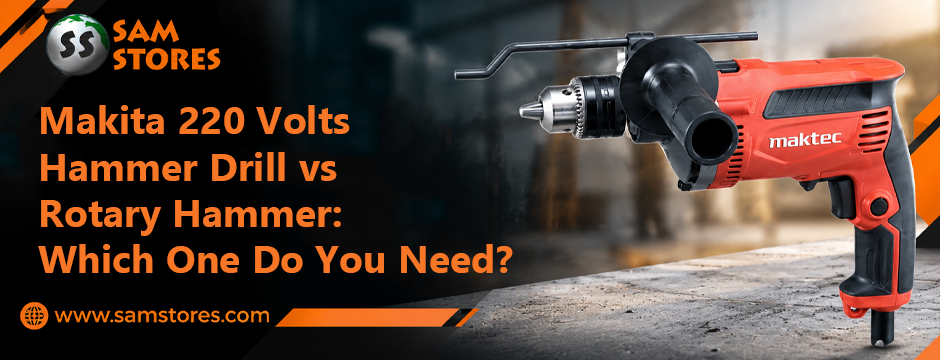
A Makita 220 Volts Hammer Drill can be an excellent choice when you need a versatile drill capable of handling wood, metal, masonry and routine fastening work. A rotary hammer is generally the better option when the work involves frequent drilling into hard concrete, larger holes or heavier demolition.
So which one belongs in your toolbox?
The answer depends on what you actually plan to do with it.
Hammer Drill vs Rotary Hammer: The Basic Difference
The easiest way to understand the difference is to look at how the two tools create impact.
A hammer drill uses a rapid hammering action while the bit rotates. The impact mechanism helps the bit work through brick, block and lighter masonry.
A rotary hammer uses a more substantial hammering mechanism. It is designed for demanding masonry and concrete applications and can deliver considerably more impact force.
That distinction matters.
If you occasionally need to drill small holes for wall plugs or masonry anchors, a hammer drill can provide the flexibility you need. If your daily work involves drilling deep holes into reinforced or hard concrete, a rotary hammer is usually the more appropriate tool.
Where a Makita 220 Volts Hammer Drill Makes Sense
A hammer drill earns its place in a toolbox because it is not limited to masonry.
Switch off the hammer function and it can often be used for conventional drilling applications, depending on the model. That makes it useful for tradespeople and serious DIY users who work with different materials.
Typical applications include:
- Drilling into brick
- Drilling into block
- Installing masonry anchors
- Drilling wood
- Drilling metal
- General construction work
- Home renovation
- Workshop projects
- Light to moderate masonry jobs
For someone who wants one corded tool capable of tackling a range of everyday drilling tasks, a Makita hammer drill can be a practical investment.
The 220V configuration is particularly relevant for buyers shopping for tools intended for compatible electrical systems outside standard 110V markets.
Before purchasing, always verify the tool’s voltage and frequency requirements against your local electrical supply.
When a Rotary Hammer Is the Better Choice
Now imagine a different type of job.
You need to drill dozens of holes into a concrete slab. The holes are relatively large, the material is hard, and the work continues for several hours.
That is where a rotary hammer starts to make much more sense.
Rotary hammers are designed around higher-impact applications. Depending on the model and bit system, they can handle jobs such as:
- Heavy concrete drilling
- Large masonry holes
- Anchoring work
- Chiselling
- Tile removal
- Concrete demolition
- Construction and renovation work
Some rotary hammers offer different operating modes, allowing the user to drill with rotation and impact, drill without impact, or use hammer-only action for chiselling.
That additional capability is one reason professional contractors often keep both types of tools available.
Which Tool Is More Powerful?
In most cases, a rotary hammer delivers substantially greater impact force than a standard hammer drill.
However, “more powerful” does not automatically mean “better.”
If you are drilling a few small holes in brick, the extra size and weight of a rotary hammer may not provide much practical benefit.
You may actually prefer a hammer drill because it is easier to handle and more versatile for everyday jobs.
On the other hand, if you regularly work with concrete, the stronger impact mechanism of a rotary hammer can save time and reduce the amount of effort required.
Think about it this way:
Hammer drill: versatility first.
Rotary hammer: heavy-duty masonry performance first.
What About Speed and Control?
Speed is another area where buyers sometimes focus on the wrong specification.
A high RPM figure can look impressive on a product page, but drilling performance depends on more than rotational speed.
Material, bit type, impact force, torque and operator technique all affect the result.
For general drilling, variable speed can be useful because it allows you to adapt the tool to different materials and applications.
For masonry, impact performance becomes increasingly important as the material gets harder.
That is why comparing tools solely by RPM can lead to a poor purchasing decision.
Look at the complete specification rather than one headline number.
The Importance of the Right Drill Bit
Even an excellent power tool will struggle with the wrong accessory.
Masonry and concrete require appropriate bits designed for the material and the tool’s chuck or bit system.
Using an unsuitable bit can result in slow drilling, excessive heat, poor hole quality and unnecessary wear.
Before buying a hammer drill or rotary hammer, check which bit system it accepts and whether the accessories you need are readily available.
This becomes particularly important for professionals who cannot afford frequent interruptions to replace or locate specialised accessories.
Hammer Drill or Rotary Hammer for Home Renovation?
For many homeowners, the answer depends on the renovation project.
Installing curtain brackets, shelves, cabinets or wall-mounted equipment into brick or block does not necessarily justify buying a heavy rotary hammer.
A hammer drill may be more convenient because it can handle several other drilling tasks around the home.
However, renovations involving concrete floors, extensive masonry work or tile removal can quickly move into rotary-hammer territory.
If you are renovating an older property and expect to encounter substantial masonry work, having access to a rotary hammer can make difficult jobs considerably easier.
What About Professional Contractors?
Professionals should consider workload rather than occasional capability.
A contractor who drills a handful of masonry holes each week may get excellent value from a versatile hammer drill.
A concrete installer, electrician, plumber or construction worker drilling anchors throughout the day may benefit much more from a rotary hammer designed for continuous heavy-duty work.
Ergonomics matter here, too.
If a tool is going to be used for hours rather than minutes, weight, grip, vibration control and overall handling can affect productivity and comfort.
The best tool is the one that matches the work you repeatedly perform.
How Does Voltage Fit Into the Decision?
The 220V specification deserves attention when shopping for international power tools.
A 220V tool is designed to operate with a compatible electrical supply. It should not be treated as a universal replacement for a 110V tool simply because the voltage is higher.
Buyers should check:
- Rated voltage
- Frequency
- Plug configuration
- Amperage
- Electrical circuit requirements
- Compatibility with the intended location
This is especially important when purchasing imported Makita 220 Volts Power Tools.
Do not assume that a plug adapter changes the operating voltage. An adapter changes the physical connection, not the electrical characteristics supplied to the tool.
If you are uncertain about compatibility, check the manufacturer’s specifications or speak with a qualified electrician.
Is a Hammer Drill Enough for Concrete?
This is one of the most common questions buyers ask.
The answer is: sometimes.
A hammer drill can handle many smaller concrete and masonry drilling tasks when paired with the correct bit. But there is a point where the job becomes better suited to a rotary hammer.
Hole diameter, drilling depth, concrete hardness and the number of holes you need to make all matter.
If you only need to drill a few small holes, a hammer drill may be perfectly adequate.
If you are drilling large, deep holes repeatedly, a rotary hammer is likely to be the smarter investment.
Trying to force a general-purpose tool through work that requires a specialised machine rarely saves money in the long run.
Can You Use a Rotary Hammer for Everyday Drilling?
Technically, a rotary hammer can handle many drilling applications, particularly when it has the appropriate modes and accessories.
But that does not mean you should automatically choose one for every job.
Rotary hammers tend to be larger and heavier than conventional hammer drills. Carrying a heavy tool around for simple drilling tasks can become inconvenient.
For a toolbox that needs to cover a broad range of everyday work, a hammer drill can be the more balanced option.
For a dedicated concrete or masonry toolkit, a rotary hammer becomes much more attractive.
Don’t Forget the Rest of Your Toolkit
A good workshop is rarely built around one tool.
Once you start taking on construction, renovation or maintenance projects, different tools serve different purposes.
For example, a hammer drill may cover drilling applications while an angle grinder handles cutting, grinding and surface preparation. A circular saw can take care of many wood-cutting jobs.
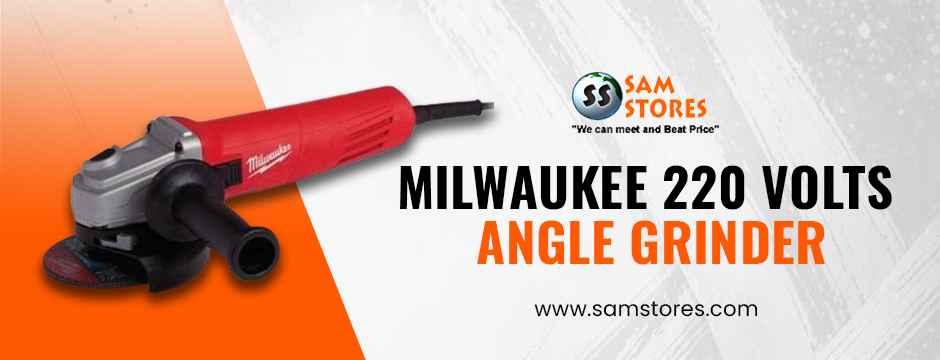
If you are building a compatible collection of corded tools, you can explore options such as a Makita 220 Volts Angle Grinder alongside other Makita 220 Volts Power Tools.
A well-matched toolkit can be more useful than spending the entire budget on one exceptionally powerful machine.
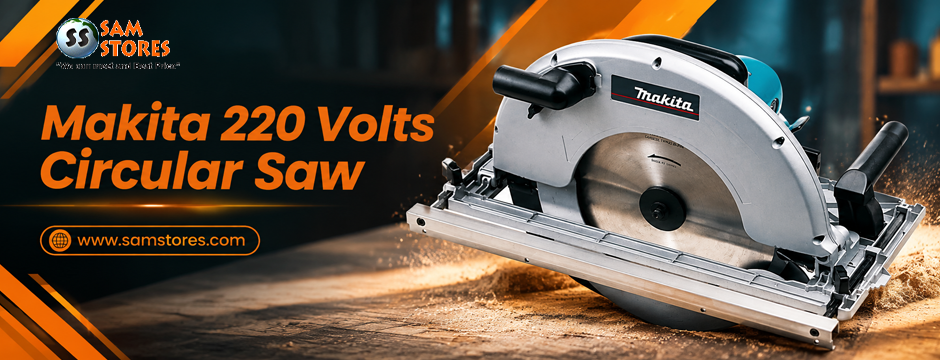
For cutting applications, you may also want to consider a Makita 220 Volts Circular Saw when the project calls for a dedicated saw rather than trying to make a drill do a job it was never designed to perform.
Makita Hammer Drill vs Rotary Hammer: Quick Comparison
| Feature | Hammer Drill | Rotary Hammer |
| Small masonry holes | Excellent | More than capable |
| Wood drilling | Excellent | Model dependent |
| Metal drilling | Excellent | Model dependent |
| Hard concrete | Moderate to good | Excellent |
| Large holes | Limited | Excellent |
| Chiselling | Generally unavailable | Available on suitable models |
| Portability | Usually easier | Generally heavier |
| Versatility | High | More specialised |
| Heavy masonry work | Limited | Excellent |
| Occasional DIY use | Very suitable | May be excessive |
Which One Should You Buy?
If your projects change from one material to another and you want a versatile corded drilling tool, a Makita 220 Volts Hammer Drill is worth considering.
It can be a sensible choice for homeowners, maintenance workers, installers and contractors who need one tool for a mixture of drilling tasks.
If your work is dominated by hard concrete, deep holes, larger masonry applications or chiselling, step up to a rotary hammer.
There is no prize for buying the biggest tool in the shop. The better purchase is the one that fits your actual workload.
At Sam Stores, the goal should be to choose based on application, electrical compatibility, tool specifications and long-term usefulness. A carefully selected power tool can serve you for years, while an unsuitable one can become an expensive item sitting on a shelf.
Final Verdict
So, Makita 220 Volts Hammer Drill or rotary hammer?
Choose the hammer drill when you value versatility and regularly work across wood, metal and lighter masonry.
Choose the rotary hammer when concrete and heavy masonry are the main part of your workload.
And if you are still undecided, look at the jobs you perform most often. The answer usually becomes obvious once you stop thinking about the tool itself and start thinking about the work it needs to accomplish.
The right drill is not necessarily the most powerful one. It is the one that gives you the right combination of power, control, versatility and practicality for the projects ahead.
FAQs
1. Is a Makita 220 Volts Hammer Drill good for concrete?
Yes. A hammer drill can handle many smaller concrete drilling jobs with the correct masonry bit. For frequent heavy-duty concrete drilling, a rotary hammer is generally more suitable.
2. What is the main difference between a hammer drill and a rotary hammer?
A rotary hammer typically produces a stronger impact force and is designed for heavier concrete and masonry applications. A hammer drill is generally lighter and more versatile for everyday drilling.
3. Should I buy a hammer drill or rotary hammer for home renovation?
For occasional drilling into brick or block, a hammer drill is often sufficient. If the renovation involves extensive concrete drilling or chiselling, a rotary hammer may be the better choice.
4. Are Makita 220V power tools compatible with every 220V outlet?
Not necessarily. You should verify the tool’s voltage, frequency, amperage and plug configuration before connecting it to an electrical supply.
5. Is a rotary hammer better than a hammer drill?
Neither is universally better. A rotary hammer is better for demanding concrete and masonry work, while a hammer drill offers greater versatility for users working across different materials.