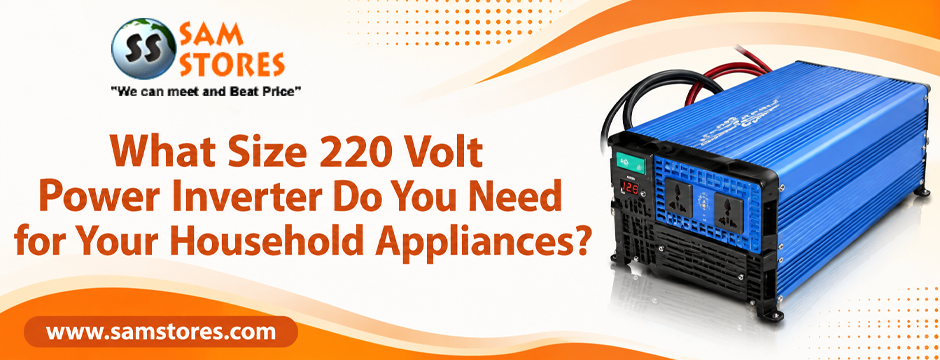
What Size 220 Volt Power Inverter Do You Need for Your Household Appliances?

Buying a power inverter sounds simple until you start looking at the wattage ratings. One model promises 1,000 watts, another offers 2,000 watts, and a few larger options claim to handle almost anything you plug into them. But how do you know which one is actually suitable for your home?

The answer depends on the appliances you want to operate, how much electricity they consume and whether they need extra power when starting up. Choosing an inverter that is too small can lead to frequent shutdowns, while purchasing a much larger model than necessary may mean spending more than you need to.

A 220 volt power inverter can be a useful solution for households that need to operate 220V appliances using a compatible DC battery supply. However, voltage is only one part of the buying decision. You also need to understand continuous wattage, starting power, battery capacity and the type of electrical load your appliances create.

Here is how to work out the right inverter size before placing your order at Sam Stores.

1. Start by Checking the Wattage of Your Household Appliances

Before comparing inverter models, make a list of the appliances you want to run. Check their rating labels, user manuals or manufacturer specifications to find their power consumption in watts.

For example, a household may need backup power for:

  • LED lights
  • Television
  • Laptop and computer equipment
  • Ceiling or table fans
  • Refrigerator
  • Microwave oven
  • Washing machine
  • Small kitchen appliances

Each appliance has a different electricity requirement. A laptop charger might use around 60 watts, while a microwave could require 1,000 watts or more of input power. Refrigerators and washing machines also need additional power during motor startup.

Do not estimate your requirements based only on the number of appliances. Five low-wattage devices may use less electricity than one high-powered kitchen appliance.

Once you have the wattage figures, you can calculate how much power your inverter needs to deliver.

2. Understand Continuous Wattage and Surge Wattage

This is where many first-time inverter buyers make mistakes.

Inverters generally have two important power ratings: continuous wattage and surge wattage.

Continuous wattage refers to the amount of power an inverter can supply consistently under its specified operating conditions. If your household appliances require 800 watts during normal operation, your inverter must be capable of supplying at least that amount.

Surge wattage refers to the additional short-term power available to handle appliances that draw extra electricity when switched on. Refrigerators, pumps, compressors and washing machines can have substantial startup demands.

Consider a refrigerator that consumes 200 watts while running. Its compressor might briefly require considerably more power when starting. An inverter rated at exactly 200 watts would clearly be unsuitable.

When shopping for an inverter, check both ratings rather than focusing on the larger number printed on the product description.

A good buying decision accounts for normal electricity consumption as well as the highest startup demand from appliances that may operate together.

3. Calculate Your Total Household Power Requirement

You do not necessarily need an inverter powerful enough to operate every appliance in your home simultaneously. Instead, consider which devices you genuinely want to use together.

Let’s look at a simple example.

Imagine you want to operate the following appliances during a power interruption:

Household applianceEstimated running wattage
LED lights40W
Television100W
Laptop60W
Ceiling fan75W
Refrigerator250W
Total525W

Your estimated running requirement is 525 watts.

However, buying a 525-watt inverter would leave practically no room for additional demand. You should allow a reasonable operating margin, often around 20% to 25%, depending on the equipment and expected load.

For this example, a continuous inverter capacity of approximately 700 watts or higher would be a sensible starting point. You must still check the refrigerator’s startup requirement and select a model with sufficient surge capacity.

This calculation gives you a much clearer idea of what to look for when comparing products.

4. Which Inverter Size Is Suitable for Different Household Needs?

There is no single inverter size that works for every household. Your requirements will depend on the number of appliances, their combined wattage and their startup characteristics.

Here is a general guide to help narrow down your options.

Inverter capacityPotential applications
500WSmall electronics, LED lights and basic charging
1,000WComputers, televisions, fans and selected small appliances
1,500WLarger combinations of household electronics and suitable appliances
2,000WMultiple appliances with higher combined power requirements
3,000W or aboveLarger loads and selected high-demand household equipment

These are indicative capacity categories, not guarantees of appliance compatibility. Always compare actual continuous and surge ratings, along with the manufacturer’s recommendations.

For example, someone who only needs to keep a laptop, television and a few lights running will have very different requirements from a household that wants to operate a refrigerator, washing machine and microwave.

At Sam Stores, comparing available inverter specifications before purchasing can help you avoid paying for capacity you are unlikely to use.

5. Do Not Ignore Battery Capacity When Choosing an Inverter

An inverter converts direct current (DC) electricity from a battery into alternating current (AC) electricity. The battery supplies the energy, while the inverter makes it usable for compatible household appliances.

This means choosing the right inverter is only half of the equation. You also need a battery capable of supplying the required power for your intended operating period.

Suppose your appliances consume a combined 500 watts and you want to operate them for four hours.

Your basic energy requirement would be:

500 watts × 4 hours = 2,000 watt-hours, or 2kWh.

In practice, you will need additional battery capacity because inverter conversion losses, battery efficiency and permitted depth of discharge affect the usable energy available.

For instance, a 12V battery system supplying a high-power inverter may also require substantial current. Larger inverter systems may be better suited to higher-voltage battery configurations, depending on the manufacturer’s design.

Check the inverter’s DC input voltage, battery compatibility, recommended cable size and protection requirements before purchasing.

6. Pure Sine Wave or Modified Sine Wave: Which Should You Choose?

Inverter capacity is important, but output waveform also matters.

Pure sine wave inverters produce AC electricity with a smooth waveform similar to conventional utility power. They are generally a good choice for sensitive electronics, modern appliances and equipment containing motors or specialised power supplies.

Modified sine wave inverters usually cost less, but their output waveform is less suitable for certain devices. Some appliances may run noisily, become less efficient or fail to operate correctly.

If you intend to power refrigerators, computers, televisions or appliances with electronic controls, check their compatibility carefully. A pure sine wave model is often the safer purchasing choice for mixed household loads.

Also verify the output frequency and voltage. A 220V output does not automatically mean the inverter is suitable for every appliance.

7. Understand the Difference Between a Power Inverter and a Voltage Converter

This distinction is particularly important if you own appliances purchased from another country.

A power inverter converts DC electricity into AC electricity. A voltage converter or transformer changes the voltage of an AC electrical supply.

For example, a transformer 220 to 110 volts is designed to reduce a 220V AC supply to approximately 110V AC for compatible appliances. It does not perform the same function as a battery-powered inverter.

Similarly, a voltage adapter 220 to 110 must be selected according to the appliance’s electrical requirements. A simple plug adapter cannot change voltage.

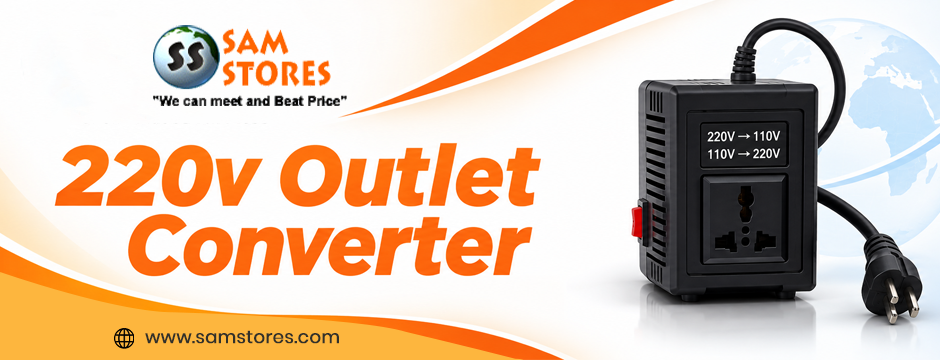
A 220v outlet converter may refer to a voltage conversion device or an outlet adapter, depending on the product. Always check its specifications rather than relying on the product name.
How The Braun 220 Volt Hair Dryer Redefines Everyday Glamour_

If you need equipment that can increase or decrease voltage, explore the step up and down voltage converter transformer options available through Sam Stores.

You may also need a 220 line adapter when the appliance plug does not match the available socket. Remember that an adapter changes the physical plug connection, not the electrical voltage.

Understanding these differences can prevent an expensive purchasing mistake.

8. Common Mistakes to Avoid When Buying a 220 Volt Power Inverter

Even buyers who understand wattage sometimes overlook important specifications. Watch out for these common mistakes:

Choosing an inverter based only on its peak rating: Always check the continuous output capacity. A large peak rating does not mean the inverter can sustain that power.

Ignoring startup loads: Appliances with motors and compressors can require considerably more power during startup.

Buying without checking battery compatibility: An inverter designed for a particular DC input voltage will not necessarily work with every battery configuration.

Overlooking output frequency: Appliances designed for 50Hz may not operate correctly with an incompatible 60Hz supply, or vice versa.

Assuming every appliance can run together: Add up the loads you intend to operate simultaneously, including startup requirements.

Ignoring electrical safety: Use correctly rated cables, fuses, circuit protection and suitable grounding. Fixed household connections should be installed by a qualified electrician.

Taking a few minutes to check these details can save you from equipment damage, unexpected shutdowns and unnecessary replacement costs.

9. Find the Right Power Solution with Sam Stores

Choosing an inverter should not be about purchasing the biggest model available. It should be about finding equipment that matches your actual household requirements.

At Sam Stores, customers can explore power inverters designed for different DC input and AC output requirements, including 12V DC to 220V AC options. The right model depends on the appliances you intend to operate, their total wattage and the battery system available.

Before making a purchase, compare the continuous output, surge capacity, output waveform, frequency and electrical protection features. If you are unsure about compatibility, review the product specifications or seek technical advice before ordering.

Whether you need backup power for everyday electronics or a more capable setup for selected household appliances, choosing the correct capacity makes a considerable difference to the overall experience.

Final Thoughts

So, what size 220 volt power inverter do you need for your household appliances? Start by calculating the combined running wattage of the devices you want to operate. Add an appropriate safety margin, account for motor startup demands and choose a battery system that can support your required backup duration.

A smaller inverter may be perfectly adequate for lights, computers and basic electronics, while refrigerators, washing machines and other high-demand appliances may require a much larger system.

Take the time to compare specifications instead of making a decision based on voltage or wattage alone. Explore the power solutions available at Sam Stores and choose an inverter that delivers the capacity, compatibility and performance your household needs.

Frequently Asked Questions

1. What size 220 volt power inverter do I need for household appliances?

The right size depends on the combined wattage of your appliances and their startup power requirements. A 1,000W inverter may suit basic electronics, while larger appliances may require 2,000W or more. Always check continuous and surge ratings.

2. Can a 220 volt power inverter run a refrigerator and washing machine?

Yes, provided the inverter has sufficient continuous and surge capacity. Both appliances can have significant startup power requirements, so check their individual specifications before connecting them.

3. Is a 2,000-watt inverter enough to run household appliances?

A 2,000-watt inverter can operate several household appliances, depending on their combined power consumption. However, high-demand appliances such as microwaves, heaters and washing machines may limit how many devices can operate simultaneously.

4. What is the difference between a 220V power inverter and a 220V to 110V transformer?

A power inverter converts DC electricity from a battery into AC electricity. A 220V to 110V transformer changes an existing AC supply from 220V to 110V. They serve different electrical purposes.

5. Does a higher-wattage 220 volt power inverter consume more electricity?

Not necessarily. An inverter’s actual energy consumption depends on the connected appliances, conversion efficiency and standby consumption. A larger inverter does not automatically draw its maximum rated power continuously.
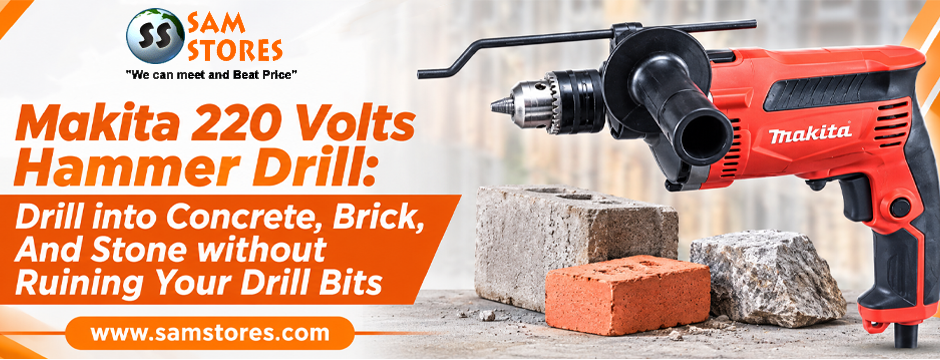
Makita 220 Volts Hammer Drill: Drill into Concrete, Brick, And Stone without Ruining Your Drill Bits

Whether you’re installing shelves, mounting fixtures, or handling a renovation project, the right technique makes a noticeable difference. Choosing reliable equipment, such as a Makita 220 Volts Hammer Drill, can also make demanding drilling tasks easier. However, even a powerful tool needs proper handling.

Drilling into concrete, brick, or stone can test both your patience and your tools. You start with a fresh drill bit, mark the exact spot, and begin working. A few seconds later, the bit overheats, progress slows, and the hole looks nothing like you expected.

The problem isn’t always the drill itself. Masonry materials are harder and more abrasive than wood or plastic. Using the wrong bit, excessive pressure, or an unsuitable drilling mode can wear down cutting edges quickly.

Let’s explore how to drill into different masonry surfaces while protecting your drill bits and getting cleaner results.

Understand The Material before You Start

Concrete, brick, and natural stone might appear similar when viewed from the outside. However, their density, composition, and resistance can vary considerably.

Understanding the surface helps you choose the right drill bit, speed, and drilling approach.

  • Concrete: Dense concrete can contain hard aggregates and reinforcing materials. It generally requires a masonry bit and a hammer drilling function.
  • Brick: Brick is comparatively softer, but its structure can crack under excessive pressure. Drilling into the brick itself is often preferable to drilling into the mortar.
  • Natural Stone: Granite, slate, and other stones have different hardness levels. Some require specialised masonry or diamond-tipped bits.

Before drilling, identify the material and check for hidden electrical wiring, plumbing, and reinforcement. A suitable detector can help identify potential hazards.

Choose The Right Drill Bit

Your drill bit does most of the cutting work, so choosing the correct one matters. Standard wood and metal bits aren’t designed for masonry surfaces.

For most concrete and brick applications, use a carbide-tipped masonry bit. Its hardened cutting tip helps withstand abrasive materials and repeated impact.

For particularly hard stone, specialised diamond-tipped bits may be more appropriate. Always check the manufacturer’s recommendations before selecting one.

A few practical considerations can help:

  • Match the bit diameter to the required hole size.
  • Choose a bit length that suits the drilling depth.
  • Check that the shank fits your drill’s chuck.
  • Inspect the carbide tip for chips or visible damage.
  • Replace worn bits rather than forcing them through the material.

A compatible Makita 220 Volts Hammer Drill can provide the impact action needed for many masonry drilling applications. Pairing the drill with a suitable masonry bit helps improve drilling efficiency.

Use The Correct Drill And Settings

Not every drill is designed for demanding masonry work. A standard rotary drill may handle occasional light drilling, but dense concrete often requires a hammer drill.

A hammer drill combines rotation with rapid forward impacts. This action helps break up masonry material while the bit cuts through it.

When selecting your equipment, consider the following:

  • Hammer Drill: Suitable for many concrete and brick drilling tasks.
  • Rotary Hammer: Often better suited to frequent drilling or demanding applications involving harder concrete.
  • Rotary Drill: Useful for softer materials and applications that don’t require impact action.

Choose the appropriate speed and operating mode for the material and bit. Avoid assuming that maximum speed always produces better results.

If you are comparing brands, we offer access to tools across different manufacturers. Options such as Bosch 220 Volts Power Tools can help buyers explore equipment suited to different workshop and construction requirements.

Start Slowly And Let The Drill Do The Work

One common mistake is applying excessive pressure immediately. This can generate unnecessary heat, damage the cutting edge, and make the drill difficult to control.

Instead, begin drilling at a controlled speed. Allow the bit to establish a small starting point before increasing pressure gradually. Keep the drill steady and maintain alignment throughout the process. Excessive sideways movement can damage the hole and place additional stress on the bit.

Remember these simple practices:

  • Start at a slower speed when positioning the bit.
  • Increase speed gradually when the hole is established.
  • Apply steady pressure without forcing the drill.
  • Keep the drill aligned with the intended hole.
  • Pause if progress slows or the bit becomes unusually hot.

If the drill struggles, stop and investigate. Forcing it further rarely solves the underlying problem.

Control Heat during Drilling

Heat is one of the biggest reasons drill bits lose their cutting performance. Continuous drilling creates friction between the bit and the material. Excessive heat can weaken cutting edges and shorten tool life.

The simplest solution is to avoid uninterrupted drilling whenever possible.

Work in short intervals, allowing the bit to cool between drilling sessions. Remove accumulated dust periodically, since debris can increase friction and interfere with cutting.

For appropriate drilling applications, follow the bit manufacturer’s cooling recommendations. Some specialised bits require particular cooling methods, while others are designed for dry drilling.

Never apply water indiscriminately to electrical equipment. Check that the drill and bit are suitable for the intended wet or dry application.

Remove Dust And Debris Regularly

Concrete and masonry drilling produces fine dust that can accumulate inside the hole. This debris increases resistance and makes drilling less efficient. Pulling the bit out periodically helps clear loose material. Use a suitable dust extraction attachment or vacuum to manage dust around the drilling area.

Avoid blowing masonry dust away with your mouth. Fine particles can irritate your respiratory system. Wear suitable eye protection and respiratory protection.

Follow applicable workplace safety requirements, particularly when drilling concrete containing silica. Keeping the hole clear also helps prevent unnecessary pressure on the cutting tip.

Adjust Your Technique for Different Materials Using A Makita 220 Volts Hammer Drill

The same drilling approach doesn’t work equally well across every masonry surface.

Drilling into Concrete

Use a suitable carbide-tipped masonry bit and an appropriate hammer drilling mode. Begin carefully, then maintain steady pressure.

If you encounter reinforcing steel, stop rather than forcing the bit through. Reassess the drilling location and follow the project’s specifications.

Drilling into Brick

Start slowly and avoid applying excessive force. When possible, drill into the centre of the brick rather than its edges.

For older or brittle brickwork, consider using a lower-impact approach to reduce cracking risks.

Drilling into Stone

Identify the stone type before selecting your equipment. Hard natural stone may require specialised diamond tooling. Avoid overheating the bit, and follow the manufacturer’s recommended drilling method.

Maintain Your Tools for Longer Performance

Even quality tools require regular inspection and maintenance. A damaged chuck, worn bit, or clogged ventilation opening can affect drilling performance.

After each project, clean the drill and inspect the accessories. Store bits in a dry, organised case to protect their cutting edges.

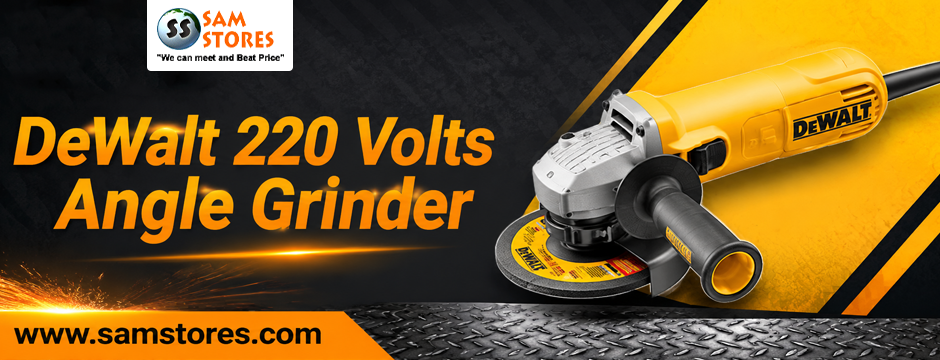
If you’re building a broader tool collection, consider how different equipment supports different jobs. A DeWalt 220 Volts Angle Grinder can assist with suitable cutting and surface-preparation tasks.

How The Braun 220 Volt Hair Dryer Redefines Everyday Glamour_

Likewise, a Milwaukee 220 Volts Circular Saw or Hitachi 220 Volts Circular Saw may suit specific woodworking and construction applications. Choose each tool according to its intended use rather than treating different machines as interchangeable.

Final Thoughts

Successful masonry drilling depends on more than choosing a powerful machine. The right bit, suitable settings, controlled pressure, and regular cooling all contribute to better results. A Makita 220 Volts Hammer Drill can be a useful addition when concrete and masonry drilling feature regularly in your projects. Combine it with compatible accessories and sensible drilling practices to protect your investment.

At Sam Stores, you can explore power tools from recognised manufacturers for different project requirements. Whether you’re upgrading your equipment or preparing for a new job, choosing the right tool makes everyday work more manageable.

Drill carefully, maintain your accessories, and never force equipment beyond its intended capabilities. A little preparation can save both your drill bits and considerable frustration.

FAQs

1. Which drill bit is best for drilling into concrete?

Carbide-tipped masonry bits are suitable for many concrete drilling applications. Harder materials may require specialised diamond-tipped bits.

2. Can I use a regular drill for concrete?

A regular rotary drill may handle light masonry work, but dense concrete generally requires a hammer drill or rotary hammer.

3. Why do drill bits become blunt when drilling into concrete?

Concrete creates significant friction and abrasion. Excessive heat, unsuitable bits, and continuous drilling can accelerate cutting-edge wear, so you may choose Makita 220 Volts Hammer Drill.

4. Should I use water when drilling into brick or concrete?

Cooling requirements depend on the bit and drilling method. Follow manufacturer instructions and never expose unsuitable electrical equipment to water.

5. How can I prevent bricks from cracking while drilling?

Start slowly, use a suitable masonry bit, and avoid excessive pressure. Drilling away from brick edges can also reduce cracking risks.

6. How often should I replace masonry drill bits?

Replace bits when their cutting edges become damaged, noticeably worn, or ineffective. Regular inspection helps prevent poor drilling results.

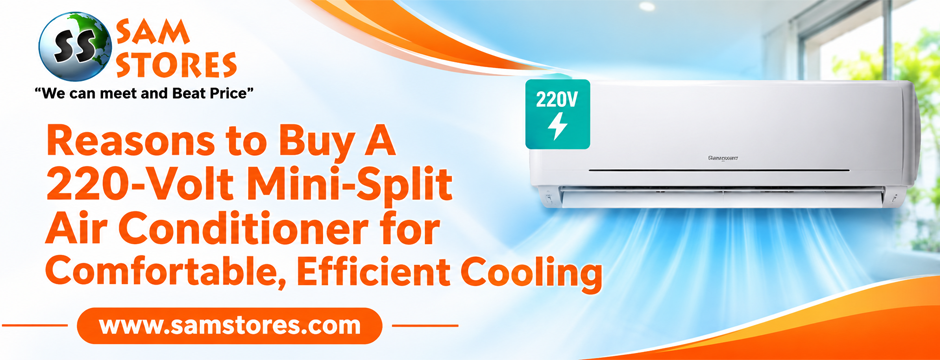
Reasons to Buy A 220-Volt Mini-Split Air Conditioner for Comfortable, Efficient Cooling

Choosing the right air conditioner can make a noticeable difference in your home’s comfort, energy use, and everyday convenience. Traditional window units remain popular, but mini-split systems offer another option for people seeking targeted cooling and flexible installation.

A 220 volt mini split air conditioner can be an appealing choice for homeowners who want efficient, room-by-room temperature control. These systems typically include an outdoor compressor and one or more indoor air handlers. Because they don’t require a large window opening, they can preserve natural light and keep your space looking cleaner.

At Sam Stores, choosing an air conditioner starts with understanding your space, cooling needs, and installation requirements.

Reasons That Are Worth Considering Buying A 220 Volt Mini Split Air Conditioner

Here are the key reasons to consider a mini-split system.

Enjoy Targeted Cooling Where You Need It

One of the biggest advantages of a mini split air conditioner is its ability to cool specific areas. Instead of relying on a central system to condition an entire home, a mini-split can focus on a bedroom, home office, living room, or other frequently used space.

This can be especially useful when certain rooms receive more sunlight or tend to stay warmer than others. With a properly sized system, you can adjust the temperature in the area you use most.

A 220-volt mini-split AC may suit rooms that need dependable cooling without requiring a traditional window unit. However, the right capacity depends on room size, ceiling height, insulation, climate, and other factors. A professional assessment can help avoid choosing a system that is too small or unnecessarily powerful.

Create A More Energy-Conscious Cooling Routine

Mini-split systems can offer energy-saving advantages, particularly when they use inverter technology. Inverter-driven compressors can adjust their output to meet cooling demand instead of repeatedly switching between full power and off.

This can help maintain a more consistent indoor temperature. It may also reduce energy use compared with some conventional systems, depending on the model, usage patterns, and installation quality.

Energy efficiency is not determined by voltage alone. Before purchasing a 220 volt mini-split air conditioner, compare its efficiency ratings, cooling capacity, and estimated operating costs. Look for specifications that help you understand how much energy the system may use under typical conditions.

A system that is appropriately sized and correctly installed is more likely to deliver the comfort and efficiency you expect.

Avoid Losing Valuable Window Space

Window air conditioners can be practical, especially when you need a straightforward cooling solution. However, they occupy part of a window and may affect natural light, views, or the appearance of a room.

Mini-split systems offer a different arrangement. The indoor unit is mounted on a wall, while the compressor sits outside. This can leave windows available for daylight and ventilation when the weather permits.

For homeowners who want a cleaner interior layout, an LG window air conditioner 220 volt may be an attractive alternative to a window-mounted unit. Installation still requires a suitable wall location and a route for refrigerant lines, drainage, and electrical connections.

Compare Mini Splits with 220-Volt Window Air Conditioners

Window air conditioners remain a familiar option for many homes. They can be suitable for individual rooms, rental properties, or spaces where a permanent installation is not practical.

A 220 volt air conditioner window unit may provide substantial cooling capacity for larger rooms. However, the unit must fit the window opening, and the window and surrounding structure must support its weight.

When comparing options, consider more than the initial purchase price. Installation, energy use, noise, maintenance, appearance, and available space all affect long-term satisfaction.

Window Unit or Mini Split?

FeatureMini Split SystemWindow Air Conditioner
InstallationRequires indoor and outdoor componentsFits into a suitable window opening
Window spaceUsually keeps the window clearOccupies part of the window
Cooling approachTargeted room or zone coolingPrimarily cools the room where installed
AppearanceWall-mounted indoor unitVisible unit within the window
Initial setupOften requires professional installationMay be simpler, depending on the unit
Best suited forHomeowners seeking a fixed, targeted solutionUsers seeking a practical room-cooling option

The better choice depends on your property, budget, cooling requirements, and installation preferences.

Explore Different Brands And Cooling Solutions

Shopping for air conditioning often means comparing several brands and product types. A window unit may be the right fit for one room, while a mini split may better suit another.

For example, shoppers may compare an LG 220 volt window air conditioner with a mini split system. LG window models can appeal to buyers who prefer a familiar window-mounted format and want to review features such as cooling capacity, controls, and efficiency.

How The Braun 220 Volt Hair Dryer Redefines Everyday Glamour_

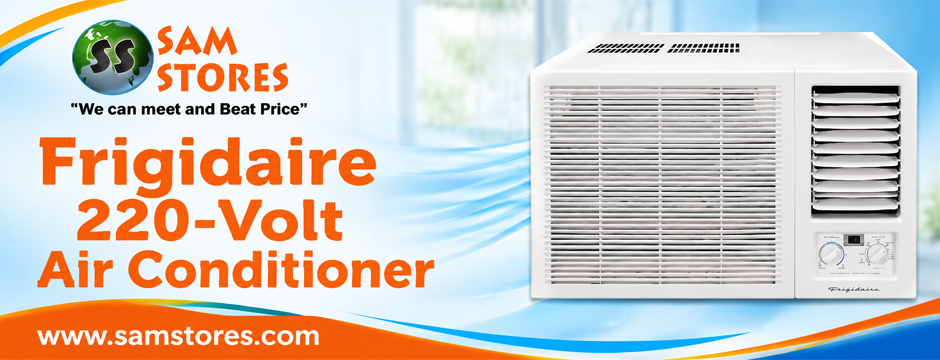
A Frigidaire 220-volt air conditioner may also enter the comparison when shoppers are evaluating window-based cooling options. As with any model, check the product specifications, installation requirements, and room-size recommendations before purchasing.

Some shoppers may also research the Samsung AS18UA split-type air conditioner for 220 volts when exploring split-system options. Confirm the exact model specifications, availability, and compatibility with your property before making a decision.

The goal is not simply to choose a brand. It is to find a system that fits your room, electrical setup, and comfort expectations.

Understand Electrical Along with Installation Requirements

Voltage is an important part of choosing an air conditioner, but it is only one specification to consider. A 220-volt system must match the electrical supply and installation requirements of the selected model.

Check the product’s voltage, amperage, circuit requirements, and manufacturer installation instructions. Do not assume that every 220-volt unit uses the same wiring or breaker configuration.

Mini split installation may involve mounting the indoor unit, positioning the outdoor compressor, connecting refrigerant lines, arranging condensate drainage, and completing electrical work. These tasks should be handled by qualified professionals who follow applicable codes and manufacturer guidance.

If you are comparing an LG window air conditioner 220 volt with a mini split, review the installation requirements for both products. The best choice should work safely with your home’s electrical system and physical layout.

Consider Comfort, Noise, And Everyday Convenience

A cooling system should do more than lower the temperature. It should also support a comfortable environment for sleeping, working, relaxing, or spending time with family.

Many mini-split systems offer remote controls, adjustable fan speeds, timers, and operating modes. Some models provide additional features, but availability varies by product.

Indoor and outdoor noise levels are also worth comparing. A quieter indoor unit may be especially valuable in bedrooms or home offices. Review the manufacturer’s published sound ratings and consider where the outdoor unit will be placed.

A 220 volt mini split air conditioner can be a practical long-term investment when its features match your daily routine. The right model should provide reliable cooling without adding unnecessary complexity.

Final Thoughts

A mini-split system can offer targeted cooling, flexible placement, and potential energy-efficiency advantages. It may also preserve window space and suit rooms without existing ductwork.

Still, the best air conditioner depends on your room dimensions, local climate, electrical setup, budget, and installation options. Compare cooling capacity, efficiency ratings, noise levels, warranty details, and product requirements before making a final choice.

At Sam Stores, exploring your options carefully can help you find a cooling solution that supports your comfort throughout the warmer months. Whether you are considering a mini split or comparing window units, focus on the features that matter most in your space.

FAQs

1. What is a 220-volt mini split air conditioner?

A 220 volt mini-split air conditioner is a split-system air conditioner designed for a compatible 220-volt electrical supply, with indoor and outdoor components.

2. Are mini split air conditioners more energy-efficient than window units?

Some mini-splits, particularly inverter models, can be more efficient, but performance depends on the model, sizing, installation, and usage.

3. Is a mini split better than a 220 volt window air conditioner?

A mini split may suit permanent installations and preserve window space, while a window unit may offer a simpler option for individual rooms.

4. Can I install a 220-volt mini split air conditioner myself?

Professional installation is recommended because the system may require electrical work, refrigerant connections, drainage, and compliance with local codes.

5. How do I choose the right mini split size for my room?

Consider room dimensions, ceiling height, insulation, sunlight, climate, and occupancy; a qualified professional can help determine suitable cooling capacity.

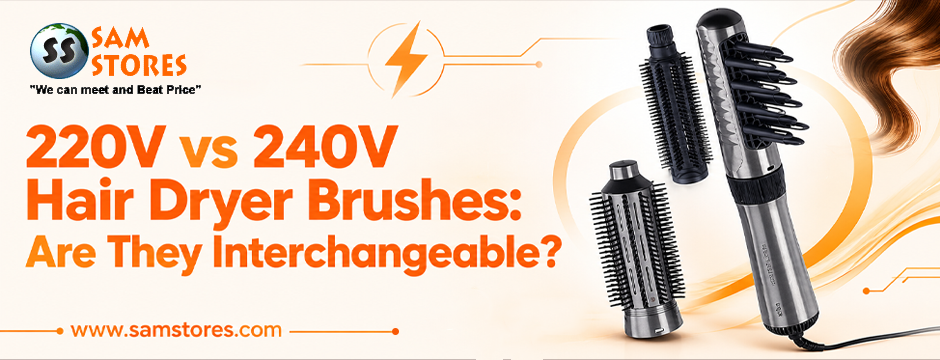
220V vs 240V Hair Dryer Brushes: Are They Interchangeable?

Imagine buying a hair dryer brush online, waiting for it to arrive and finally getting ready to style your hair. Then you notice something on the product label: it says 220V, while your electrical supply is rated at 240V. Is it safe to plug it in? Will it work properly? Could the voltage difference damage the appliance?

These are reasonable questions, especially if you are shopping for hair styling appliances from international retailers. Voltage compatibility is one of those details that is easy to overlook when comparing product features, but getting it wrong can lead to an unpleasant surprise.

A 220 volt hair dryer brush is designed for a particular electrical supply range. However, that does not automatically mean it cannot work with a 240V supply. Many appliances are designed to operate across a voltage range, while others are built for a specific voltage.

The important thing is to check the manufacturer’s specifications rather than assume that 220V and 240V appliances are interchangeable.

If you are considering a new hot air styling tool, this guide explains the differences, what to look for on the product label and how to choose a compatible appliance. It will also help you understand which features matter when buying a hair dryer brush from Sam Stores.

Is a 220V Hair Dryer Brush Compatible with a 240V Power Supply?

In many cases, yes, but compatibility depends on the appliance’s rated input voltage.

A hair dryer brush labelled 220V may be designed to operate within a range such as 220-240V. If that is what the manufacturer specifies, using it on a compatible 240V supply is generally acceptable.

However, a product rated strictly for 220V should not automatically be assumed to support 240V.

The distinction matters because electrical appliances are designed with specific operating limits. Supplying a voltage outside those limits can affect performance, generate excessive heat or damage internal components.

Before plugging in your appliance, check the electrical information printed on its handle, body, plug area or instruction manual.

Look for markings such as:

  • 220V
  • 220-240V
  • 220-230V
  • 230V
  • 240V
  • 100-240V

A marking of 220-240V indicates that the appliance is designed for that operating range. A 100-240V rating indicates a much wider input range.

If the label only says 220V, contact the manufacturer or seller to confirm whether 240V operation is permitted.

Understanding the Difference Between 220V and 240V

The difference between 220V and 240V is 20 volts. That might not sound like much, but it can matter when an appliance is connected to an electrical supply.

Voltage is the electrical potential that drives current through an appliance. Hair dryer brushes use electricity to power a heating element, a motor and sometimes additional features such as ionic technology.

When the supplied voltage exceeds an appliance’s intended rating, its electrical components may experience additional stress.

For example, a simple resistive heating element operating at a higher voltage can produce more heat. In a real hair dryer brush, however, the outcome also depends on its motor, electronic controls, heating system and protective components.

This is why voltage compatibility should never be judged by appearance or plug shape.

Here is a quick comparison:

Feature220V Hair Dryer Brush240V Hair Dryer Brush
Designed voltage220 volts240 volts
Operating compatibilityDepends on rated rangeDepends on rated range
Heating performanceDepends on wattage and designDepends on wattage and design
Plug compatibilityDepends on plug typeDepends on plug type
International useRequires supply verificationRequires supply verification

The key takeaway is simple: a 220V and 240V hair dryer brush may be interchangeable if their approved operating ranges overlap. The voltage printed on the product should always guide your decision.

What Happens If You Plug a 220V Hair Dryer Brush into a 240V Outlet?

The answer depends on the appliance’s electrical design.

If the manufacturer specifies 220-240V operation, the appliance is designed to handle both voltages. You can generally use it on a compatible supply without needing a voltage converter.

But if the product is rated for 220V only, connecting it to 240V could create problems.

Potential issues include:

Excessive heat: A heating element designed for a lower voltage may produce more heat when supplied with a higher voltage.

Motor stress: The motor may not operate within its intended electrical limits, potentially affecting performance and lifespan.

Component damage: Internal electronic controls, thermal protection systems and other components may be exposed to conditions they were not designed to handle.

Safety concerns: Excessive heat or electrical stress can increase the risk of appliance failure.

Do not rely on a short test to determine whether an appliance is compatible. A hair dryer brush may appear to work initially while still operating outside its approved limits.

If you are unsure, check the manufacturer’s documentation before use.

Does a Hot Air Brush Need a Voltage Converter?

Not always. It depends on the voltage rating of the appliance and the electrical supply where you intend to use it.

A hot air brush 220 voltage model may work without a converter if its input specification includes the local supply voltage.

There are three common situations.

1. The Appliance Is Rated 220-240V

This is generally the easiest situation. If your electrical supply is within the manufacturer’s stated range, you normally do not need a voltage converter.

You may still need a suitable plug adapter if the appliance plug does not match your wall socket.

2. The Appliance Is Rated 100-240V

This is a dual-voltage or universal-voltage appliance. It can operate across the stated voltage range, making it a convenient choice for people who travel internationally.

However, always check the wattage and frequency requirements as well.

3. The Appliance Is Rated 220V Only

Do not assume that it is suitable for a 240V supply.

Contact the manufacturer to confirm its permitted operating range. If a voltage converter is required, it must be specifically rated for the appliance’s wattage and type of load.

A plug adapter and voltage converter perform different jobs. An adapter changes the plug connection, while a converter changes the supplied voltage.

Using the wrong one can create electrical hazards or damage your styling tool.

What About Dyson Hair Dryer Voltage 220V?

Buyers researching premium styling appliances often have questions about international voltage compatibility, particularly when considering products from brands such as Dyson.

The dyson hair dryer voltage 220v search is a good example of why checking the exact model matters.

Different Dyson hair styling products may have different electrical specifications. A hair dryer, multi-styler and other styling appliances should not be assumed to share the same voltage compatibility.

If you are purchasing a Dyson appliance for use in another country, check:

  • The exact model number.
  • Its rated input voltage.
  • Whether it supports dual voltage.
  • The frequency requirements.
  • The manufacturer’s guidance on international use.

Do not assume that a product purchased in one country will work safely in another simply because the plug can be adapted.

This is particularly important for high-wattage styling appliances. Some manufacturers design their products for specific regional electrical systems, and a travel adapter cannot change those electrical requirements.

Does Voltage Affect Hair Dryer Brush Performance?

Voltage is important, but it is not the only specification that determines how well a hair dryer brush performs.

When comparing two appliances, buyers should also consider wattage, temperature control, airflow, barrel design and heating technology.

Here are the features worth examining.

Wattage and Heating Power

Wattage indicates how much electrical power an appliance consumes under specified operating conditions.

A higher wattage does not automatically mean better styling results. The appliance’s design, airflow and heat distribution also matter.

A well-designed hair dryer brush should provide sufficient heat and airflow to dry and style hair without requiring unnecessarily high temperatures.

Temperature Settings

Different hair types respond differently to heat.

Fine or chemically treated hair may require lower heat settings, while thicker hair may need more drying time and a suitable temperature setting.

Look for a brush with adjustable heat options so you can select a setting appropriate for your hair.

Airflow Control

Airflow helps distribute heat while drying and shaping the hair.

A good hot air brush should make it easier to create volume, smooth the lengths and shape the ends without repeatedly passing over the same section.

Barrel Design

The shape and size of the barrel influence the styling result.

An oval barrel can help create volume and a smooth, rounded finish. A smaller round barrel may be more suitable for shaping shorter layers or adding definition.

Choosing the right barrel can make everyday styling considerably easier.

Ionic Technology

Some hair dryer brushes include ionic technology, which is marketed to help reduce static and improve the appearance of frizz.

If you regularly struggle with flyaways, this feature may be worth considering. However, the actual results depend on the appliance and your hair type.

How to Choose the Right 220 Volt Hair Dryer Brush

Buying a styling appliance should involve more than checking its price and appearance. The right product should suit your hair, electrical supply and everyday routine.

Here are six things to check before placing an order.

1. Confirm the voltage range

This should be your first step. Look for a clearly stated input voltage range that matches your electrical supply.

2. Check the wattage

Make sure the appliance’s power requirements are compatible with your electrical circuit. Hair dryer brushes can draw considerable power, so avoid using unsuitable extension cords or overloaded sockets.

3. Choose suitable styling features

Consider whether you need adjustable temperatures, multiple airflow settings, ionic technology or interchangeable attachments.

4. Think about your hair length and texture

Longer hair may benefit from a larger barrel, while shorter hair can be easier to style with a smaller brush.

5. Check the plug configuration

The plug must be compatible with your wall socket. If you need an adapter, make sure it is properly rated for the appliance.

6. Review the warranty

Check the manufacturer’s warranty terms, service availability and whether international use affects coverage.

Taking these steps before purchasing can help you avoid compatibility problems and choose a styling tool that you can use confidently.

Popular Hair Dryer Brush Options Worth Comparing

If you are exploring different styling appliances, it helps to understand what each product offers rather than choosing based on brand recognition alone.

How The Braun 220 Volt Hair Dryer Redefines Everyday Glamour_

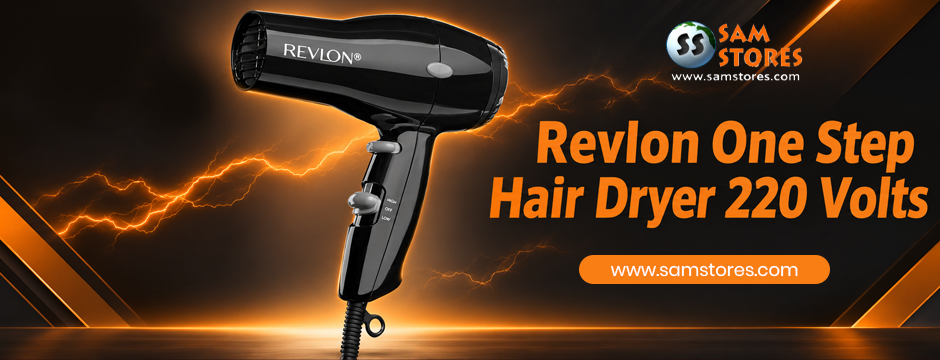
For example, buyers interested in a Revlon One-Step hair dryer 220 volts should verify the exact model’s electrical rating before purchasing. Product versions can differ by market, so do not assume every Revlon One-Step model supports the same voltage.

Similarly, if you are looking for a hair dryer with 220 voltage, compare its voltage range, wattage, heat settings and styling attachments.

A few minutes spent reviewing these specifications can save you the inconvenience of buying an appliance that does not suit your electrical supply.

At Sam Stores, buyers can explore hair styling appliances with different specifications and features. Check the individual product details to find an option that matches your requirements.

Common Mistakes to Avoid When Buying a 220V Hair Dryer Brush

Even experienced shoppers sometimes overlook important electrical details. These are a few mistakes worth avoiding.

Assuming 220V and 240V are always interchangeable: They may be compatible when the manufacturer’s approved voltage range covers both, but this should never be taken for granted.

Confusing plug adapters with voltage converters: An adapter changes the physical connection, not the voltage.

Ignoring wattage: An adapter or converter must be suitable for the appliance’s power requirements.

Buying based only on brand name: Two models from the same manufacturer can have different electrical specifications.

Overlooking the instruction manual: The manufacturer’s operating and safety instructions provide the most reliable information about compatibility.

Using an unsuitable extension cord: High-powered styling appliances need an appropriate electrical connection. Follow the manufacturer’s instructions and avoid overloaded outlets.

Final Verdict: Are 220V and 240V Hair Dryer Brushes Interchangeable?

Yes, they can be, but only when the manufacturer’s specified operating voltage range supports both.

A 220V hair dryer brush rated for 220-240V can generally be used with a compatible 240V supply. A model rated strictly for 220V should not be connected to 240V without confirmation from the manufacturer.

For buyers, the smartest approach is to check voltage, wattage, plug type and product specifications before ordering. These details matter just as much as barrel design, heat settings and styling performance.

Whether you want a simple hot air brush for everyday grooming or a multi-functional styling appliance for creating salon-inspired looks at home, choosing the correct electrical specification is essential.

Explore hair styling appliances at Sam Stores and compare the available features before making your purchase. Finding a suitable styling tool starts with understanding what your hair needs and what your electrical supply can safely support.

Frequently Asked Questions

1. Can I use a 220V hair dryer brush in a 240V outlet?

Only if the manufacturer’s specified voltage range includes 240V. Check the product label or manual before connecting it.

2. Is a 220V hair dryer brush the same as a 240V model?

Not necessarily. They may have similar features, but their electrical ratings can differ. Always compare the specified input voltage.

3. Do I need a voltage converter for a 220V hot air brush?

You do not need one if the appliance supports your electrical supply voltage. A plug adapter alone does not convert voltage.

4. Are all Dyson hair dryers compatible with 220V electricity?

No. Compatibility depends on the exact model and its regional electrical specifications. Check the manufacturer’s documentation before international use.

5. What should I check before buying a 220 volt hair dryer brush?

Check its voltage range, wattage, plug type, temperature settings, barrel design, safety features and warranty conditions.