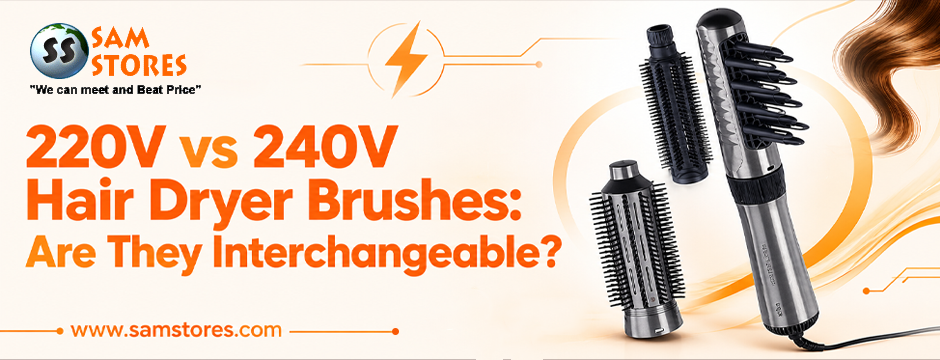
220V vs 240V Hair Dryer Brushes: Are They Interchangeable?

Imagine buying a hair dryer brush online, waiting for it to arrive and finally getting ready to style your hair. Then you notice something on the product label: it says 220V, while your electrical supply is rated at 240V. Is it safe to plug it in? Will it work properly? Could the voltage difference damage the appliance?

These are reasonable questions, especially if you are shopping for hair styling appliances from international retailers. Voltage compatibility is one of those details that is easy to overlook when comparing product features, but getting it wrong can lead to an unpleasant surprise.

A 220 volt hair dryer brush is designed for a particular electrical supply range. However, that does not automatically mean it cannot work with a 240V supply. Many appliances are designed to operate across a voltage range, while others are built for a specific voltage.

The important thing is to check the manufacturer’s specifications rather than assume that 220V and 240V appliances are interchangeable.

If you are considering a new hot air styling tool, this guide explains the differences, what to look for on the product label and how to choose a compatible appliance. It will also help you understand which features matter when buying a hair dryer brush from Sam Stores.

Is a 220V Hair Dryer Brush Compatible with a 240V Power Supply?

In many cases, yes, but compatibility depends on the appliance’s rated input voltage.

A hair dryer brush labelled 220V may be designed to operate within a range such as 220-240V. If that is what the manufacturer specifies, using it on a compatible 240V supply is generally acceptable.

However, a product rated strictly for 220V should not automatically be assumed to support 240V.

The distinction matters because electrical appliances are designed with specific operating limits. Supplying a voltage outside those limits can affect performance, generate excessive heat or damage internal components.

Before plugging in your appliance, check the electrical information printed on its handle, body, plug area or instruction manual.

Look for markings such as:

  • 220V
  • 220-240V
  • 220-230V
  • 230V
  • 240V
  • 100-240V

A marking of 220-240V indicates that the appliance is designed for that operating range. A 100-240V rating indicates a much wider input range.

If the label only says 220V, contact the manufacturer or seller to confirm whether 240V operation is permitted.

Understanding the Difference Between 220V and 240V

The difference between 220V and 240V is 20 volts. That might not sound like much, but it can matter when an appliance is connected to an electrical supply.

Voltage is the electrical potential that drives current through an appliance. Hair dryer brushes use electricity to power a heating element, a motor and sometimes additional features such as ionic technology.

When the supplied voltage exceeds an appliance’s intended rating, its electrical components may experience additional stress.

For example, a simple resistive heating element operating at a higher voltage can produce more heat. In a real hair dryer brush, however, the outcome also depends on its motor, electronic controls, heating system and protective components.

This is why voltage compatibility should never be judged by appearance or plug shape.

Here is a quick comparison:

Feature220V Hair Dryer Brush240V Hair Dryer Brush
Designed voltage220 volts240 volts
Operating compatibilityDepends on rated rangeDepends on rated range
Heating performanceDepends on wattage and designDepends on wattage and design
Plug compatibilityDepends on plug typeDepends on plug type
International useRequires supply verificationRequires supply verification

The key takeaway is simple: a 220V and 240V hair dryer brush may be interchangeable if their approved operating ranges overlap. The voltage printed on the product should always guide your decision.

What Happens If You Plug a 220V Hair Dryer Brush into a 240V Outlet?

The answer depends on the appliance’s electrical design.

If the manufacturer specifies 220-240V operation, the appliance is designed to handle both voltages. You can generally use it on a compatible supply without needing a voltage converter.

But if the product is rated for 220V only, connecting it to 240V could create problems.

Potential issues include:

Excessive heat: A heating element designed for a lower voltage may produce more heat when supplied with a higher voltage.

Motor stress: The motor may not operate within its intended electrical limits, potentially affecting performance and lifespan.

Component damage: Internal electronic controls, thermal protection systems and other components may be exposed to conditions they were not designed to handle.

Safety concerns: Excessive heat or electrical stress can increase the risk of appliance failure.

Do not rely on a short test to determine whether an appliance is compatible. A hair dryer brush may appear to work initially while still operating outside its approved limits.

If you are unsure, check the manufacturer’s documentation before use.

Does a Hot Air Brush Need a Voltage Converter?

Not always. It depends on the voltage rating of the appliance and the electrical supply where you intend to use it.

A hot air brush 220 voltage model may work without a converter if its input specification includes the local supply voltage.

There are three common situations.

1. The Appliance Is Rated 220-240V

This is generally the easiest situation. If your electrical supply is within the manufacturer’s stated range, you normally do not need a voltage converter.

You may still need a suitable plug adapter if the appliance plug does not match your wall socket.

2. The Appliance Is Rated 100-240V

This is a dual-voltage or universal-voltage appliance. It can operate across the stated voltage range, making it a convenient choice for people who travel internationally.

However, always check the wattage and frequency requirements as well.

3. The Appliance Is Rated 220V Only

Do not assume that it is suitable for a 240V supply.

Contact the manufacturer to confirm its permitted operating range. If a voltage converter is required, it must be specifically rated for the appliance’s wattage and type of load.

A plug adapter and voltage converter perform different jobs. An adapter changes the plug connection, while a converter changes the supplied voltage.

Using the wrong one can create electrical hazards or damage your styling tool.

What About Dyson Hair Dryer Voltage 220V?

Buyers researching premium styling appliances often have questions about international voltage compatibility, particularly when considering products from brands such as Dyson.

The dyson hair dryer voltage 220v search is a good example of why checking the exact model matters.

Different Dyson hair styling products may have different electrical specifications. A hair dryer, multi-styler and other styling appliances should not be assumed to share the same voltage compatibility.

If you are purchasing a Dyson appliance for use in another country, check:

  • The exact model number.
  • Its rated input voltage.
  • Whether it supports dual voltage.
  • The frequency requirements.
  • The manufacturer’s guidance on international use.

Do not assume that a product purchased in one country will work safely in another simply because the plug can be adapted.

This is particularly important for high-wattage styling appliances. Some manufacturers design their products for specific regional electrical systems, and a travel adapter cannot change those electrical requirements.

Does Voltage Affect Hair Dryer Brush Performance?

Voltage is important, but it is not the only specification that determines how well a hair dryer brush performs.

When comparing two appliances, buyers should also consider wattage, temperature control, airflow, barrel design and heating technology.

Here are the features worth examining.

Wattage and Heating Power

Wattage indicates how much electrical power an appliance consumes under specified operating conditions.

A higher wattage does not automatically mean better styling results. The appliance’s design, airflow and heat distribution also matter.

A well-designed hair dryer brush should provide sufficient heat and airflow to dry and style hair without requiring unnecessarily high temperatures.

Temperature Settings

Different hair types respond differently to heat.

Fine or chemically treated hair may require lower heat settings, while thicker hair may need more drying time and a suitable temperature setting.

Look for a brush with adjustable heat options so you can select a setting appropriate for your hair.

Airflow Control

Airflow helps distribute heat while drying and shaping the hair.

A good hot air brush should make it easier to create volume, smooth the lengths and shape the ends without repeatedly passing over the same section.

Barrel Design

The shape and size of the barrel influence the styling result.

An oval barrel can help create volume and a smooth, rounded finish. A smaller round barrel may be more suitable for shaping shorter layers or adding definition.

Choosing the right barrel can make everyday styling considerably easier.

Ionic Technology

Some hair dryer brushes include ionic technology, which is marketed to help reduce static and improve the appearance of frizz.

If you regularly struggle with flyaways, this feature may be worth considering. However, the actual results depend on the appliance and your hair type.

How to Choose the Right 220 Volt Hair Dryer Brush

Buying a styling appliance should involve more than checking its price and appearance. The right product should suit your hair, electrical supply and everyday routine.

Here are six things to check before placing an order.

1. Confirm the voltage range

This should be your first step. Look for a clearly stated input voltage range that matches your electrical supply.

2. Check the wattage

Make sure the appliance’s power requirements are compatible with your electrical circuit. Hair dryer brushes can draw considerable power, so avoid using unsuitable extension cords or overloaded sockets.

3. Choose suitable styling features

Consider whether you need adjustable temperatures, multiple airflow settings, ionic technology or interchangeable attachments.

4. Think about your hair length and texture

Longer hair may benefit from a larger barrel, while shorter hair can be easier to style with a smaller brush.

5. Check the plug configuration

The plug must be compatible with your wall socket. If you need an adapter, make sure it is properly rated for the appliance.

6. Review the warranty

Check the manufacturer’s warranty terms, service availability and whether international use affects coverage.

Taking these steps before purchasing can help you avoid compatibility problems and choose a styling tool that you can use confidently.

Popular Hair Dryer Brush Options Worth Comparing

If you are exploring different styling appliances, it helps to understand what each product offers rather than choosing based on brand recognition alone.
How The Braun 220 Volt Hair Dryer Redefines Everyday Glamour_

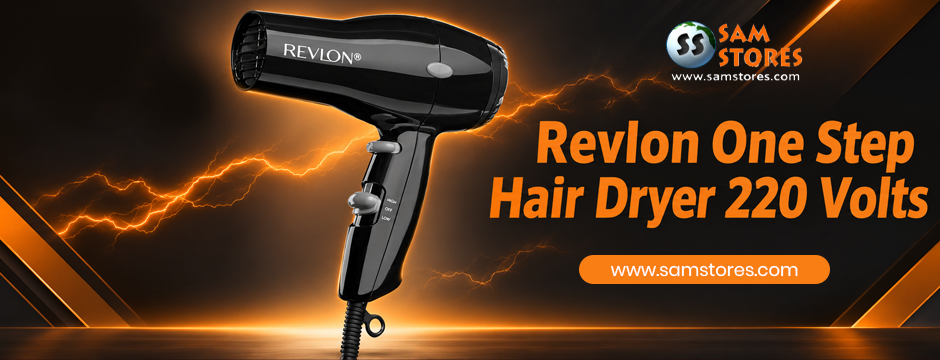
For example, buyers interested in a Revlon One-Step hair dryer 220 volts should verify the exact model’s electrical rating before purchasing. Product versions can differ by market, so do not assume every Revlon One-Step model supports the same voltage.

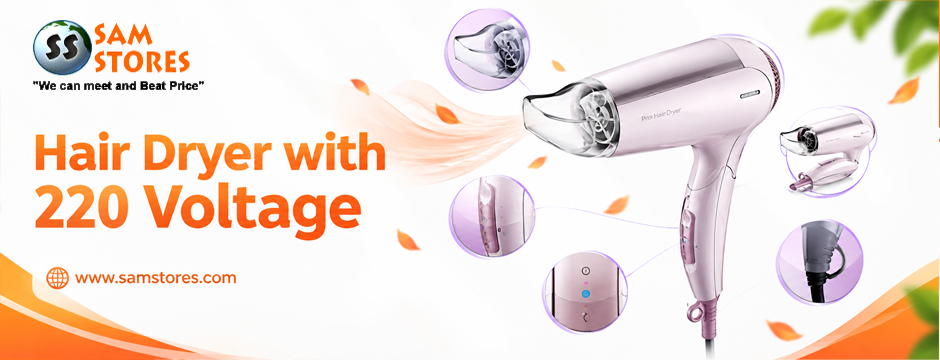
Similarly, if you are looking for a hair dryer with 220 voltage, compare its voltage range, wattage, heat settings and styling attachments.

A few minutes spent reviewing these specifications can save you the inconvenience of buying an appliance that does not suit your electrical supply.

At Sam Stores, buyers can explore hair styling appliances with different specifications and features. Check the individual product details to find an option that matches your requirements.

Common Mistakes to Avoid When Buying a 220V Hair Dryer Brush

Even experienced shoppers sometimes overlook important electrical details. These are a few mistakes worth avoiding.

Assuming 220V and 240V are always interchangeable: They may be compatible when the manufacturer’s approved voltage range covers both, but this should never be taken for granted.

Confusing plug adapters with voltage converters: An adapter changes the physical connection, not the voltage.

Ignoring wattage: An adapter or converter must be suitable for the appliance’s power requirements.

Buying based only on brand name: Two models from the same manufacturer can have different electrical specifications.

Overlooking the instruction manual: The manufacturer’s operating and safety instructions provide the most reliable information about compatibility.

Using an unsuitable extension cord: High-powered styling appliances need an appropriate electrical connection. Follow the manufacturer’s instructions and avoid overloaded outlets.

Final Verdict: Are 220V and 240V Hair Dryer Brushes Interchangeable?

Yes, they can be, but only when the manufacturer’s specified operating voltage range supports both.

A 220V hair dryer brush rated for 220-240V can generally be used with a compatible 240V supply. A model rated strictly for 220V should not be connected to 240V without confirmation from the manufacturer.

For buyers, the smartest approach is to check voltage, wattage, plug type and product specifications before ordering. These details matter just as much as barrel design, heat settings and styling performance.

Whether you want a simple hot air brush for everyday grooming or a multi-functional styling appliance for creating salon-inspired looks at home, choosing the correct electrical specification is essential.

Explore hair styling appliances at Sam Stores and compare the available features before making your purchase. Finding a suitable styling tool starts with understanding what your hair needs and what your electrical supply can safely support.

Frequently Asked Questions

1. Can I use a 220V hair dryer brush in a 240V outlet?

Only if the manufacturer’s specified voltage range includes 240V. Check the product label or manual before connecting it.

2. Is a 220V hair dryer brush the same as a 240V model?

Not necessarily. They may have similar features, but their electrical ratings can differ. Always compare the specified input voltage.

3. Do I need a voltage converter for a 220V hot air brush?

You do not need one if the appliance supports your electrical supply voltage. A plug adapter alone does not convert voltage.

4. Are all Dyson hair dryers compatible with 220V electricity?

No. Compatibility depends on the exact model and its regional electrical specifications. Check the manufacturer’s documentation before international use.

5. What should I check before buying a 220 volt hair dryer brush?

Check its voltage range, wattage, plug type, temperature settings, barrel design, safety features and warranty conditions.
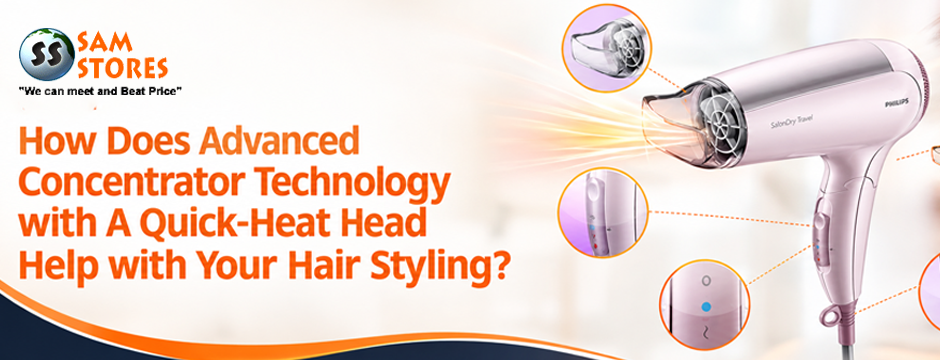
How Does Advanced Concentrator Technology with A Quick-Heat Head Help with Your Hair Styling?

Hair styling becomes much easier when your dryer gives you the right combination of heat, airflow, speed, and control. Instead of spending several minutes repeatedly drying the same section, modern dryers can direct heat precisely where it is needed.

That is where a hair dryer with 220 voltage can become a practical addition to your styling routine. When combined with advanced concentrator technology and a quick-heat head, it can help you achieve smoother, more controlled results without making your routine unnecessarily complicated.

Whether you want sleek straight hair, defined volume, polished ends, or a quick everyday blow-dry, the right technology can make a noticeable difference.

Why Does Concentrator Technology Matter in Hair Styling?

A concentrator nozzle is more than a simple attachment. It narrows the airflow and directs it toward a specific section of hair. This focused airflow gives you better control while styling with a brush.

Instead of allowing hot air to move in different directions, the concentrator helps guide it along the hair shaft. This can make brushing and drying feel more coordinated, especially when creating a smooth finish.

The technique becomes particularly useful when you are trying to control frizz or shape the ends. You can move the brush through a section while directing airflow from the roots toward the ends.

This combination allows you to work with smaller sections rather than heating the entire head at once. As a result, your styling process can become more deliberate and efficient.

What Does A Quick-Heat Head Actually Do?

Waiting for a styling tool to reach its working temperature can interrupt your routine. A quick-heat head in a hair dryer with 220 voltage is designed to reduce that waiting period by reaching the desired heat level faster.

This becomes particularly convenient when you are getting ready before work, heading out for an event, or simply styling your hair during a busy morning.

The benefit is not only about speed. Consistent heat also helps you maintain a predictable styling technique. Once your dryer reaches its appropriate operating temperature, you can work through sections without constantly adjusting your routine.

However, faster heating does not mean higher heat is always better. Hair responds differently depending on its texture, thickness, moisture level, and condition. Using a suitable temperature remains important.

Concentrated Airflow and Quick Heat: A Better Combination

Individually, concentrated airflow and quick heating are useful. Together, they can make the styling process considerably more controlled.

Imagine styling a section of damp hair with a round brush. The brush creates the shape while the concentrated airflow follows its movement. The quick-heat function allows you to begin this process sooner.

This creates a simple styling sequence:

  • Section the hair evenly.
  • Position your brush underneath or above the section.
  • Direct the concentrator along the hair shaft.
  • Move the brush and dryer together.
  • Finish with a cooler airflow when appropriate.

The result can be a more polished appearance with better control over the direction of the hair.

Choosing The Right Voltage for Your Styling Routine

Voltage is an important consideration when buying electrical styling equipment. A hair dryer with 220 voltage is designed for electrical systems operating around 220–240V, depending on the product specifications.

Choosing the appropriate voltage helps ensure that your appliance is compatible with your electrical supply. It is always worth checking the manufacturer’s voltage rating before plugging a styling tool into an outlet.

If you frequently compare products, you may also come across terms such as 220 volt blow dryer. These descriptions generally highlight compatibility with 220V electrical systems.

However, voltage should not be the only factor guiding your purchase. Motor performance, heat settings, airflow control, attachments, ergonomics, and safety features can all influence your experience.

How A Concentrator Helps with Different Hairstyles?

One of the biggest advantages of a concentrator is versatility. The same attachment can support different styling techniques when you change the brush, direction, and airflow.

Creating A Sleeker Finish

For a smoother appearance, work with smaller sections and direct airflow from the roots toward the ends. Keep the dryer moving instead of concentrating heat on one spot.

The narrow airflow helps you stay focused on the section you are brushing. This can make the overall process more controlled.

Adding Shape And Volume

A concentrator can also be used with a round brush to create lift at the roots and shape through the lengths.

Lift the section slightly with the brush and direct airflow toward the roots. Once the section is dry, move gradually toward the ends.

Styling The Ends

If your goal is to create inward or outward movement at the ends, concentrated airflow gives you greater directional control.

Rotate the brush while following it with the dryer. The technique can help create a more finished appearance without requiring a separate styling device.

How Does A Hot Air Brush Compare?

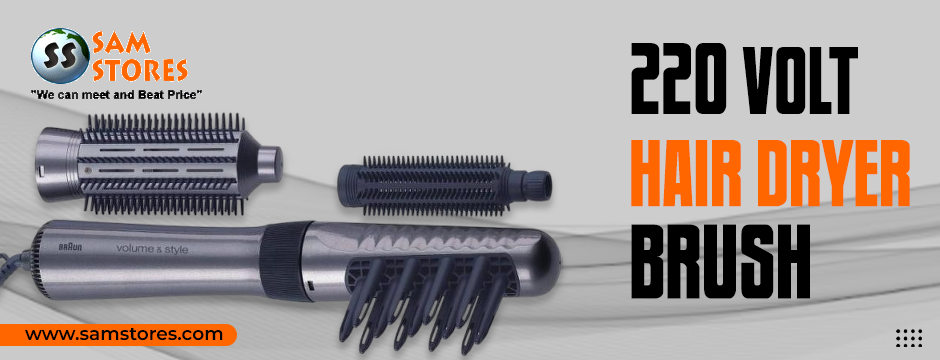
Some people prefer an all-in-one styling experience, which is why a hot air brush 220 voltage can be appealing. A hot air brush combines airflow and brushing action in one tool.

It can be convenient for users who want to dry and shape their hair simultaneously. A 220 volt hot air brush may also be useful when voltage compatibility is an important purchasing consideration.

However, a traditional dryer with a concentrator provides greater flexibility if you already enjoy using different brushes. You can switch between a paddle brush, round brush, or other styling accessories depending on the look you want.

The better option ultimately depends on your styling habits, hair type, and preferred technique.

What about A Dyson Hair Dryer with 220 Voltage?

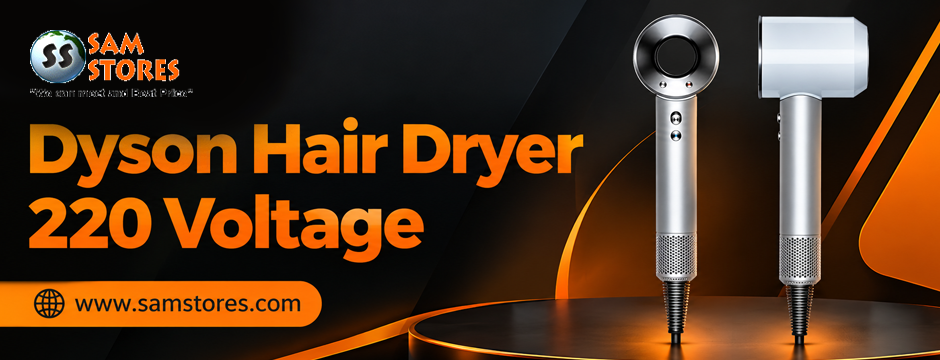
Premium styling tools often attract attention because of their engineering, design, and performance features. You may therefore encounter searches for a Dyson hair dryer 220 voltage when comparing high-end options.

While brand reputation can be useful, voltage compatibility should always be checked separately. Different models and regional versions can have different electrical specifications.

How The Braun 220 Volt Hair Dryer Redefines Everyday Glamour_

Instead of choosing a product based only on its brand name, consider the complete feature set. Look at heat settings, airflow levels, attachments, motor technology, weight, controls, and safety information.

A well-designed dryer should complement your actual styling routine rather than simply look impressive on your countertop.

Getting Better Results without Excessive Heat

Advanced technology can improve control, but technique remains equally important. Hair does not necessarily become healthier because a dryer has more power.

  • Start by removing excess water with a towel or microfiber towel. Avoid aggressively rubbing wet hair, particularly if it is fragile or prone to breakage.
  • Next, divide your hair into manageable sections. Begin with a moderate heat setting and increase it only when necessary.
  • Keep the dryer moving continuously. The concentrator should guide airflow rather than remain fixed against one area for an extended period.
  • You can also finish with a cooler setting. A cool airflow can help set the finished shape while reducing the amount of heat applied during the final stage.

Why This Technology Works Well for Busy Routines?

A styling tool earns its place when it saves effort without compromising control. A hair dryer with 220 voltage and a quick heating feature reduces preparation time, while concentrated airflow helps make each styling movement more purposeful.

That combination can be particularly useful for everyday users who do not want an elaborate styling routine.

For example, you might spend less time waiting for the dryer to heat and less time repeatedly going over the same section. Better airflow direction can also make brush-based styling easier to coordinate.

This is where choosing products carefully from an e-commerce platform such as Sam Stores can make the shopping process more convenient. Instead of focusing on one specification, compare the features that actually match your routine.

What Should You Look for before Buying?

Before purchasing a dryer, consider how you normally style your hair. Someone with thick, long hair may prioritise strong airflow, while someone with fine hair may value multiple heat settings and better temperature control.

Also consider:

  • Appropriate voltage compatibility
  • Adjustable heat and speed settings
  • A concentrator attachment
  • Comfortable handling and manageable weight
  • Quick and consistent heating
  • Cool-air functionality
  • Suitable motor performance
  • Safety and manufacturer specifications

These details can have a greater impact on everyday usability than a long list of marketing claims. So, if you want to buy a 220 V hair dryer that has advanced concentrator technology and other useful features, visit Sam Stores.

The Bottom Line

Advanced concentrator technology and quick-heat heads can turn a basic drying routine into a more controlled styling experience. Focused airflow helps direct heat where it matters, while faster heating can reduce unnecessary waiting.

When choosing a hair dryer with 220 voltage, however, look beyond voltage alone. Consider the complete design, heat control, airflow, attachments, ergonomics, and safety specifications.

The right combination of technology and technique can help you spend less time fighting your hair and more time creating the style you actually want.

FAQs

1. What is a concentrator nozzle on a hair dryer?

A concentrator nozzle narrows and directs airflow toward a specific section, helping improve precision during brush-based styling.

2. Is a 220V hair dryer suitable for everyday styling?

Yes, provided the appliance’s voltage rating matches your electrical supply, and you use it according to the manufacturer’s instructions.

3. Does a quick-heat head reduce styling time?

A quick-heat head in a hair dryer with 220 voltage can reduce the time spent waiting for the dryer to reach its operating temperature, making styling more convenient.

4. Is a hot air brush better than a traditional hair dryer?

It depends on your routine. A hot air brush combines drying and brushing, while a traditional dryer offers more flexibility with separate styling brushes.

5. What should I consider when buying a 220V hair dryer?

Consider voltage compatibility, heat and speed settings, airflow strength, attachments, ergonomics, safety features, and the needs of your hair type.

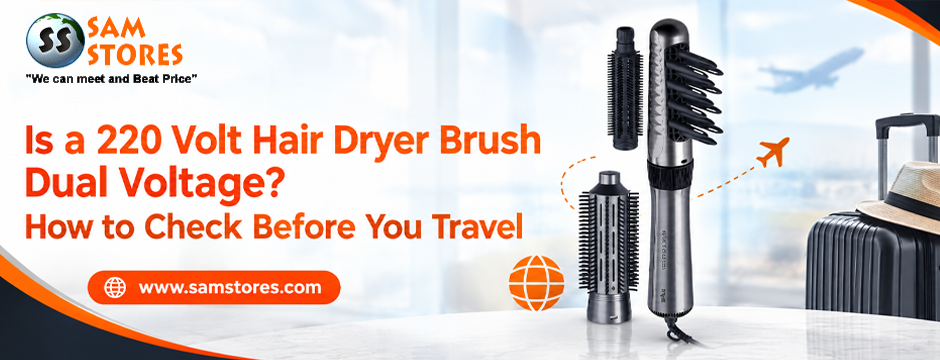
Is a 220 Volt Hair Dryer Brush Dual Voltage? How to Check Before You Travel

Packing for a trip usually involves a familiar checklist: clothes, toiletries, chargers, and personal care essentials. But if styling your hair is part of your daily routine, there is another question worth answering before you head to the airport: Is your 220 volt hair dryer brush compatible with the electrical supply at your destination?

A hot air brush can simplify your styling routine by combining drying and brushing in one tool. However, the fact that a hair dryer brush is advertised as 220V does not automatically mean it supports dual voltage. Taking a single-voltage appliance to a country with a different electrical supply can result in an unsuitable connection, poor performance, or equipment damage.

Whether you are travelling for business, heading on vacation, or purchasing a styling tool from an international retailer, understanding voltage compatibility can save you from an unpleasant surprise.

In this guide, Sam Stores explains how to identify dual-voltage hair dryer brushes, what to check before travelling, and how to choose a styling tool that matches your needs.

What Does a 220 Volt Hair Dryer Brush Mean?

A 220 volt hair dryer brush is a heated styling appliance designed to operate according to a specified electrical voltage. It typically combines airflow and heat with a brush attachment to help dry, smooth, shape, or add volume to hair.

However, the phrase “220 volt” does not tell you the entire electrical story.

Some products are designed for a specific voltage, while others support a wider input range. A dual-voltage appliance may be suitable for use in different countries, provided the destination’s voltage and frequency fall within the manufacturer’s approved specifications.

For example, an appliance labelled:

  • 220V only: Designed for a specific rated voltage, subject to the manufacturer’s stated tolerances.
  • 220 to 240V: Designed to operate within the specified voltage range.
  • 100 to 240V: May support a broad international voltage range, if explicitly stated on the product’s rating label or documentation.

A product’s voltage range should always be confirmed using the actual model’s specifications. Never assume that all hair dryer brushes with similar product names have the same electrical capabilities.

Is Every 220V Hair Dryer Brush Dual Voltage?

No. A 220V hair dryer brush is not automatically dual voltage.

This is one of the most important details to understand before travelling.

A dual-voltage appliance is designed to work across two or more compatible voltage levels or a specified broad range. Some travel-friendly styling tools may feature automatic voltage adjustment, while others require manual voltage selection. Not every model offers either feature.

A hair dryer brush rated for 220V may work in a destination with a compatible supply, but it should not be connected to a different voltage without checking its approved operating range.

For instance, if you are travelling from a country that uses approximately 220V to a destination where household outlets commonly supply around 120V, a 220V-only brush will not automatically become compatible. A plug adapter changes the physical connection, not the voltage supplied to the appliance.

Before you pack your styling tool, look for the manufacturer’s voltage information. This small check can help you avoid buying an unsuitable accessory or replacing an appliance during your trip.

1. Check the Voltage Rating on the Appliance

The easiest place to start is the product’s rating label. Depending on the design, you may find it printed on the handle, near the power cord, on the appliance body, or on the packaging.

Look for a voltage specification such as:

  • 220V
  • 220 to 240V
  • 110 to 120V
  • 100 to 240V
  • 110/220V, with specific switching instructions

A rating such as 100 to 240V may indicate wide-range voltage compatibility, but you should also verify frequency, power requirements, and the manufacturer’s instructions.

If the label only says 220V, do not assume the product is dual voltage. Contact the manufacturer or seller if the documentation does not clearly explain its operating range.

For Sam Stores customers, checking the model-specific product details before ordering is a practical way to establish whether a styling tool suits the intended destination.

2. Understand the Difference Between a Plug Adapter and a Voltage Converter

Many travellers confuse plug adapters with voltage converters. They serve different purposes.

A plug adapter changes the physical shape of a plug so it can fit a compatible outlet. It does not change the voltage.

A voltage converter or transformer is designed to change the supplied voltage, subject to its own specifications and limitations. Whether a converter is appropriate for a particular hair dryer brush depends on the appliance’s electrical characteristics and the converter’s rating.

For example, a traveller with a 220V-only hair dryer brush visiting a 120V region cannot assume that a simple plug adapter will make the appliance suitable.

Before considering a converter, check:

  1. The hair dryer brush’s rated voltage.
  2. Its wattage and current requirements.
  3. The destination’s electrical supply.
  4. The converter’s supported input and output.
  5. Manufacturer and converter safety instructions.

Many heated styling tools have relatively high power requirements. A converter that is unsuitable for the appliance can create safety and performance concerns. If you are unsure, consult the appliance manufacturer or a qualified electrical professional.

3. Check the Electrical Frequency

Voltage is not the only specification that matters when travelling with a hair styling appliance.

Electrical frequency is measured in hertz, commonly written as Hz. Different countries may use 50Hz, 60Hz, or other electrical standards depending on the region.

A hair dryer brush may be rated for a particular frequency or frequency range. If the appliance documentation specifies 50Hz only, do not assume it will operate correctly on a 60Hz supply.

This is especially important when purchasing international appliances online. A product’s title might mention 220V, but the full technical specification may contain additional information about frequency, power, and regional use.

Before travelling, compare the appliance rating with the destination’s electrical supply and follow the manufacturer’s guidance.

4. Look for Automatic or Manual Dual-Voltage Selection

Not all dual-voltage appliances work in exactly the same way.

Some styling tools automatically detect and accommodate the available voltage. Others may require the user to select a voltage setting manually, often through a dedicated switch.

If a hair dryer brush has a voltage selector, check the manufacturer’s instructions before operating it. Selecting an incorrect setting can cause equipment damage or create a safety hazard.

If the product is described as automatically dual voltage, verify that claim using the official documentation rather than relying solely on an online listing.

When shopping at Sam Stores, customers should look for clear product information about:

  • Voltage range
  • Automatic or manual selection
  • Frequency
  • Wattage
  • Plug type
  • Travel suitability

A clear specification makes it easier to decide whether a product is appropriate for your trip.

5. Understand What the Dyson Hair Dryer Voltage 220V Label Means

Dyson is a familiar name in the premium hair styling market, and travellers may search for dyson hair dryer voltage 220v when comparing styling appliances.

However, Dyson hair dryers and styling tools are not necessarily compatible with every country’s electrical system. Voltage ratings and regional versions can vary by product and market.

If you are researching a Dyson product, check the exact model’s official specifications, including its rated voltage, frequency, and intended region of use.

Do not assume that a product purchased in one country will operate safely in another simply because it is manufactured by the same brand.

This is also a useful purchasing lesson for shoppers comparing other hair dryer brushes. The brand name matters, but the precise model specification determines compatibility.

6. What About the Revlon One-Step Hair Dryer 220 Volts?

The revlon one step hair dryer 220 volts is another search phrase used by shoppers looking for international hair styling options.

The Revlon One-Step product family includes different models and regional variants. Buyers should not assume that every version has the same voltage range or travel capabilities.

Before purchasing, review the exact model number and its official electrical specifications. Check whether it is rated for the voltage and frequency at your destination.

If you already own a Revlon One-Step tool, inspect its rating label and instruction manual. If the documentation is unclear, contact the manufacturer or seller for confirmation.

The same principle applies whether you are shopping for a premium styling tool or an affordable everyday brush: Always verify the individual product’s electrical rating.

7. Choose the Right Hair Dryer Brush Features for Travel

Voltage compatibility is essential, but it is not the only factor that determines whether a styling tool is convenient for travelling.

A suitable travel styling brush may offer features that make packing and everyday use easier. The best choice depends on your hair type, styling preferences, and destination.

Here are several features worth considering.

Compact design

A lightweight, compact brush can be easier to pack in a suitcase or carry-on bag. Check the actual product dimensions rather than assuming a tool is travel-friendly because it is described as compact.

Multiple heat settings

Adjustable heat settings can help you choose a temperature appropriate for your hair and styling needs. Follow the manufacturer’s instructions and use heat protection where suitable.

Brush attachments

Some models offer different brush shapes or attachments for smoothing, volume, or other styling techniques. Confirm which attachments are included with the specific product.

Cord length and storage

A practical cord length and manageable design can make styling more convenient, particularly in unfamiliar accommodation.

Verified voltage compatibility

No styling feature can replace the importance of matching the appliance to the destination’s electrical supply. Make this your first consideration.

8. Can You Use a 220V Hair Dryer Brush in a 240V Outlet?

This depends on the appliance’s approved voltage range.

If a hair dryer brush is rated for 220 to 240V, the manufacturer’s specifications may permit operation within that range. If the appliance is marked 220V only, you should obtain confirmation before using it on a 240V supply.

How The Braun 220 Volt Hair Dryer Redefines Everyday Glamour_

Do not rely on the assumption that a small difference in nominal voltage is harmless. Electrical compatibility depends on the appliance’s design and approved operating conditions.

The same principle applies when choosing a hot air brush 220 voltage  or a hair dryer with 220 voltage . The product listing should be checked for its complete electrical specifications, not just its headline voltage.

If the information is unavailable, ask the seller for the technical documentation before ordering.

9. Use a Travel Checklist Before You Leave

A quick pre-travel checklist can help you avoid last-minute problems.

Before packing your hair dryer brush, confirm the following:

  • The appliance voltage matches the destination’s supply or is approved for that supply.
  • The frequency rating is compatible.
  • The plug type is suitable for the destination.
  • Any required adapter is correctly rated and appropriate for the appliance.
  • The appliance’s power requirements are understood.
  • The product documentation is available if you need to check specifications.
  • The styling tool is in good condition, with no damaged cord or plug.
  • The manufacturer permits the intended use.

If your appliance is not compatible with the destination’s electrical supply, do not force the connection. Choosing a suitable alternative may be safer and more convenient than trying to adapt an unsuitable product.

10. Why Buying From a Specialist Appliance Retailer Matters

When buying an international-voltage hair styling tool online, product information is an important part of the purchasing experience.

A specialist retailer can help customers compare technical specifications, understand product differences, and identify the details that matter before checkout.

At Sam Stores, shoppers can use product specifications to evaluate whether a styling appliance fits their intended use. Before ordering, look for clear information about voltage, frequency, product features, and applicable warranty or return policies.

If a product listing does not answer your electrical compatibility questions, seek clarification before placing the order. This is particularly important when purchasing appliances for travel or use in a country different from the one where they were originally sold.

Final Thoughts: Check Voltage Before You Travel

A 220 volt hair dryer brush can be a convenient styling companion, but its suitability for international travel depends on the exact electrical specifications.

Not every 220V brush is dual voltage. A plug adapter does not change voltage, and a converter should not be selected without confirming that it is appropriate for the appliance.

Before you travel, check the voltage range, frequency, plug type, power requirements, and manufacturer’s instructions. If you are comparing products such as Dyson or Revlon styling tools, review the specific model rather than relying on brand names or generic product descriptions.

At Sam Stores, informed shopping starts with choosing a product that meets your practical needs and electrical requirements. Take a few minutes to verify the details before ordering, and you can approach your travel preparation with greater confidence.

Looking for a suitable international-voltage hair styling tool? Explore the available options at Sam Stores, compare product specifications, and confirm compatibility before making your purchase.

Frequently Asked Questions

1. Is a 220 volt hair dryer brush automatically dual voltage?

No. A 220V hair dryer brush may be designed for a specific voltage or a wider operating range. Check the manufacturer’s rating label and technical documentation to determine whether the product supports dual voltage.

2. Can I use a 220V hair dryer brush in a 240V country?

It depends on the model’s approved voltage range. If the appliance is rated for 220 to 240V, it may be compatible. A 220V-only product requires further confirmation before use with a 240V supply.

3. Does a plug adapter convert 220V to 110V?

No. A plug adapter changes the physical plug configuration but does not convert voltage. If an appliance is not compatible with the destination’s voltage, check with the manufacturer or a qualified professional about appropriate options.

4. How can I check whether my Revlon One-Step hair dryer supports 220V?

Find the exact model number and review the rating label, instruction manual, or official product specifications. Different models and regional variants may have different electrical requirements.

5. What should I check before travelling with a 220V hair dryer brush?

Check the voltage range, frequency, plug type, power requirements, and manufacturer instructions. Confirm that the appliance is suitable for the destination’s electrical supply before using it.

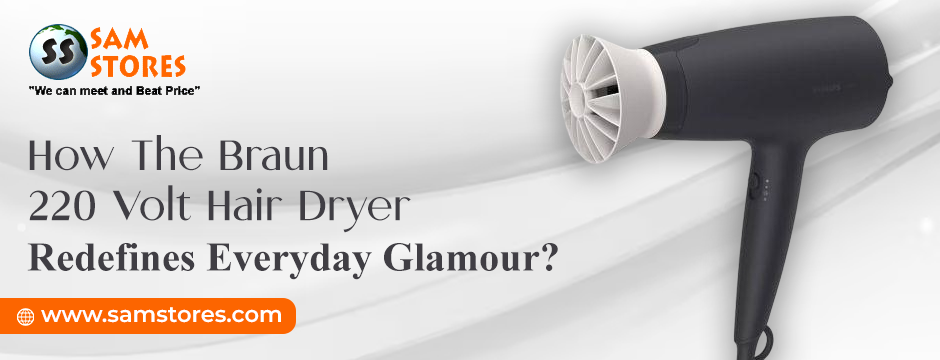
How The Braun 220 Volt Hair Dryer Redefines Everyday Glamour?

Salon-perfect hair has always felt like a luxury reserved for special occasions. Between busy schedules, rising salon costs, and constant heat exposure, maintaining professional styles daily often feels unrealistic. Many women settle for quick fixes that compromise hair health or styling flexibility. However, beauty routines are evolving, and home styling is now redefining modern glamour.

The Braun Satin Hair 3 Airstyler bridges the gap between professional results and everyday convenience. This 220 Volt hair dryer is designed for women who enjoy changing their look without damaging their hair.

This styling tool, available at Sam Stores, delivers salon-quality finishes while remaining gentle and intuitive. With thoughtful engineering and hair-friendly technology, it transforms daily hairstyling into a smooth, enjoyable ritual.

How The Braun 220 Volt Hair Dryer Redefines Everyday Glamour_

Why Salon-Quality Styling at Home Matters Today?

Modern lifestyles demand beauty solutions that are efficient yet indulgent. Women want tools that adapt to their pace without compromising hair health. At-home styling has shifted from being a backup option to becoming a confident beauty choice.

Professional looks at home offer several long-term benefits. They reduce dependency on salon heat treatments and allow more creative freedom. Most importantly, they support healthier hair through controlled, consistent styling.

The Braun Satin Hair 3 Airstyler fits perfectly into this mindset. It empowers users to create polished styles while protecting natural shine and texture.

Introducing The Braun Satin Hair 3 Airstyler

The Braun Satin Hair 3 Airstyler is crafted to dry and style hair simultaneously. This dual functionality minimizes excessive heat exposure while speeding up daily routines. Instead of harsh blasts of heat, it uses gentle airflow combined with even temperature distribution.

This 220 Volt hair dryer is especially suited for women who value versatility.

So, whether the goal is smooth volume, soft curls, or a natural blowout, the device adapts easily. Each feature is designed with hair safety and styling comfort in mind.

Ceramic Technology That Protects And Enhances Shine

100% Ceramic Coating for Even Heat Distribution

Hair damage often occurs due to uneven heat exposure. The Braun Satin Hair 3 Airstyler addresses this with a 100% ceramic-coated styling barrel. This coating ensures heat spreads evenly across the surface, preventing hot spots that cause dryness and breakage.

Ceramic technology also helps seal the hair cuticle. As a result, hair looks smoother, shinier, and healthier after every styling session. This makes daily use safer, even for fine or chemically treated hair.

Gentle Heat for Long-Term Hair Health

Unlike traditional styling tools that rely on intense heat, this airstyler prioritizes controlled warmth. The gentle heat approach reduces moisture loss, helping hair retain its natural softness. Over time, this contributes to stronger, more resilient strands.

Effortless Styling with Smart Design Features

Automated Curl Release for Tangle-Free Styling

Tangled hair is a common frustration during at-home styling. The Braun Satin Hair 3 Airstyler includes an automated roll-out function that releases hair smoothly after styling. This feature prevents snagging, pulling, and unnecessary breakage.

The result feels intuitive and stress-free, even for beginners. With our 220 Volt hair dryer, styling becomes quicker, smoother, and far more enjoyable.

Specifically Designed Styling Attachments

The airstyler comes with carefully engineered attachments that distribute heat evenly. Each attachment serves a distinct styling purpose, allowing users to switch looks effortlessly without switching tools.

Available attachments include:

  • Small round brush (18mm) for defined curls and shorter hair
  • Big round brush (36mm) for volume and soft blowouts
  • Volume finger for added lift at the roots

These attachments support precision styling while maintaining consistent airflow.

Versatility That Matches Every Mood And Occasion

One of the standout qualities of the Braun Satin Hair 3 Airstyler is its adaptability. Whether preparing for work, a casual outing, or a special event, it offers reliable styling flexibility.

Two Temperature & Airflow Settings

Different hair types require different heat levels. The airstyler includes two temperature and airflow settings, allowing customization based on hair texture and desired style. This ensures effective styling without unnecessary heat stress.

Fine hair benefits from lower settings, while thicker hair achieves smooth results with increased airflow.

Lightweight Design with Comfortable Handling

The ergonomic design makes styling sessions comfortable, even when creating detailed looks. A two-meter cable provides freedom of movement, making it easy to style from any angle.

At 400 watts, the airstyler balances power and efficiency. It delivers reliable performance without overwhelming heat output.

Creating Professional Looks without Salon Visits

Smooth Blowouts at Home

Achieving a salon-style blowout often feels challenging at home. With the Braun Satin Hair 3 Airstyler, smooth volume becomes accessible. The big round 220 Volt hair dryer brush lifts roots while smoothing lengths, creating a polished finish that lasts.

The gentle airflow prevents frizz while enhancing natural movement.

Soft Curls & Natural Waves

Defined curls do not require curling irons anymore. The small round brush allows controlled curling without excessive heat. The automated curl release ensures each curl forms cleanly and releases smoothly.

So, such an approach creates soft, touchable curls that feel natural rather than overstyled.

Everyday Volume That Looks Effortless

Flat hair can affect overall confidence. The volume finger attachment targets roots directly, adding lift without stiffness. Hence, it creates a fuller appearance that looks light and natural throughout the day.

A Styling Tool That Feels Luxurious yet Practical

Luxury in beauty tools is no longer about complexity. It is about thoughtful design, ease of use, and reliable results. The Braun Satin Hair 3 Airstyler reflects this modern definition of luxury.

Its ceramic coating, intelligent airflow, and tangle-free operation elevate everyday styling. At the same time, its simplicity ensures anyone can use it confidently.

This balance makes it ideal for women who want consistent results without professional assistance.

Ideal for Gifting across Borders

The Braun Satin Hair 3 Airstyler also makes a thoughtful gift choice. With its universal appeal and practical luxury, it suits women of different ages and hair types. Its 220–240 volt compatibility makes it especially convenient for gifting to family and friends overseas.

Gifting a styling tool that prioritizes hair health adds long-term value beyond aesthetics.

Built on Trust, Expertise, And Proven Design

Braun has a long-standing reputation for quality engineering and user-focused innovation. The Satin Hair 3 Airstyler reflects this legacy through its durable build and hair-safe technology.

From ceramic heat distribution to ergonomic handling, each feature supports reliable performance. Users are not just purchasing a styling tool. They are investing in healthier hair routines backed by thoughtful design.

End Note

Everyday glamour should feel effortless, not exhausting. The Braun Satin Hair 3 Airstyler makes professional styling achievable without stepping into a salon. It respects hair health while encouraging creativity and confidence.

For women who love switching styles without sacrificing shine, this 220 Volt hair dryer offers a smart solution. It proves that salon-quality hair can start at home, every single day. With gentle heat, versatile attachments, and intuitive features, it transforms daily routines into moments of self-care. That is the true essence of modern beauty. So, if you want to purchase such a useful hairdryer for yourself, visit Sam Stores today

Why 220 V Beats 110 V: The Science Behind Faster Dry‑Times

Picture the scene: you’ve hit snooze twice, an 8 a.m. video call looms, and your freshly showered hair is dripping. You reach for a modest 110 V dryer—only to spend the next six minutes blasting lukewarm air while watching the clock. Contrast that with a high‑powered 220 volts hairdryer: hot airflow in seconds, frizz tamed, coffee still piping.

Speed isn’t just a luxury; it’s a competitive edge. Whether you’re a stylist hustling between clients or a frequent flyer racing through hotel bathroom rituals, those extra minutes matter. At Sam Stores, we’ve seen the rising demand for 220 V technology from customers who want salon‑grade performance at home. In this deep dive, we’ll decode the electrical magic that makes 220 V the undisputed champ—and show you why upgrading is a smart move for your hair, energy bill, and daily schedule.

Voltage 101: Why Higher Voltage Equals Greater Wattage Potential

Electric power (watts) is the product of voltage (V) and current (I): P = V × I. Double the voltage and you can theoretically double the wattage without increasing amperage. In practical terms:

Spec110 V Dryer220 V Dryer
Typical Wattage1,200 W1,800–2,000 W
Current Draw~11 A~8.2 A
Circuit LoadOften maxes a 15 A breakerComfortably below limit

Higher voltage lets engineers pack a beefier heating coil into the same—or even smaller—housing because they don’t need to push as many amps through the wiring. Lower amperage also reduces copper losses, meaning more juice reaches the heater instead of being wasted as wire heat.

Thermal Physics in Plain English: Faster Heat‑Up, Shorter Dry‑Down

Hairdryers convert electrical power into thermal energy. With more available watts, a 220 volts hairdryer can:

  1. Heat the nichrome coil quickly. Less “ramp‑up” time means full temperature within two–three seconds.
  2. Maintain stable heat under load. When you move the nozzle close to damp hair, the heating element doesn’t sag as much in temperature.
  3. Deliver higher air velocity. Manufacturers pair the stronger heater with a beefier fan motor. The result is a one‑two punch of heat and airflow that literally shoves moisture off the cortex of each strand.

A 2024 in‑house lab test at Sam Stores clocked an average of 2 minutes 14 seconds to dry shoulder‑length hair from 85 % to 5 % moisture using a 1,800 W 220 V unit, versus 3 minutes 47 seconds with a leading 1,250 W 110 V model—a 41 % time savings.

Myth‑Busting: “Higher Voltage = Higher Bills”

A common worry: “If my dryer’s watts are higher, won’t my electricity bill skyrocket?” Not necessarily. Total energy consumption depends on time × power. If a 220 V model finishes the job 40 % faster, its higher watt draw is offset by reduced runtime.

Quick math:

  • 110 V dryer: 1,200 W × 3.8 min = 4.56 Wh
  • 220 V dryer: 1,800 W × 2.2 min = 3.96 Wh

You actually spend 13 % less energy per session, plus you gain valuable minutes back in your morning. In markets where electricity tariffs penalize prolonged peak use, that’s a double win.

Safety & Compliance: Why 220 V Isn’t “Too Hot to Handle”

Because 220 V systems draw fewer amps, conductors run cooler and circuit breakers trip less often. Modern European‑style plugs include built‑in fuses, and every hairdryer we sell at Sam Stores carries CE, IEC, or ETL certification. Integrated NTC thermistors monitor coil temperature 50 times per second, cutting power before any plastic parts approach deformation temps.

Bottom line: higher voltage doesn’t mean higher danger—it’s often safer, provided the product meets reputable standards.

Lifestyle Gains: Freedom for Digital Nomads & Frequent Flyers

Ever tried plugging a dual‑voltage 110 V dryer into a 220 V hotel socket only to find it limps along at half power because it auto‑limited to 1,000 W? Skip the compromise. A dedicated 220 volts hairdryer unlocks full throttle wherever 220–240 V mains are standard—think Europe, Asia, Africa, most of the Middle East, and Australia.

For globetrotters bouncing between continents, Sam Stores carries folding 220 V units as light as 370 g. Toss one next to your universal adapter and revel in consistent performance from Paris to Phuket.

The 220 Voltage Appliances Ecosystem: One Outlet, Many Upgrades

Once customers experience the speed bump of a 220 V dryer, they often circle back for complementary 220 voltage appliances:

  • Steam irons that erase wrinkles in a single glide
  • Espresso machines that hit 9‑bar pressure faster
  • Induction cooktops that sear steak in 90 seconds

By clustering high‑draw devices on the same voltage standard, homeowners avoid purchasing bulky step‑up converters and minimize circuit overload risk.

Choosing Your Powerhouse: Key Specs to Compare

  1. Wattage Sweet Spot (1,600–2,000 W). Higher is not always better—above 2 kW you risk scorching fine hair.
  2. Ionic & Ceramic Tech. Negative ions break up water clusters, while ceramic coatings radiate infrared heat for inside‑out drying.
  3. Temperature Modes & Cool Shot. Look for at least three heat settings plus an instant cool button to lock styles.
  4. Ergonomics. A 65 mm barrel and balanced center of gravity reduce wrist fatigue during round‑brush sessions.
  5. Attachments. Diffusers for curls, concentrators for sleek finishes, and comb picks for textured hair.

Why Savvy Shoppers Pick Sam Stores

  • Curated Catalog. We reject 7 of 10 models we test because they fail our airflow or durability benchmarks.
  • Voltage Transparency. Every product page lists plug type, voltage rating, and required breaker size in plain language.
  • Global Warranty. Two‑year coverage plus replacement shipping at no extra cost in 180+ countries.
  • Real‑World Demos. Watch side‑by‑side dry‑time videos shot in our Chicago studio before you click “Add to Cart.”
  • Bundle Savings. Pair a premium 220 V dryer with another 220 voltage electronics and unlock an instant 10 % checkout discount—no code needed.

Quick FAQ: What First‑Timers Ask Us Most

Q: Will a 220 V dryer fry my hair?

A: Not if you use the right heat setting. Because the element reaches target temperature faster, you actually spend less exposure time on each section.

Q: Do I need a special outlet?

A: If you live in North America, yes—a dedicated 220 V line (similar to what electric ranges use) with a matching plug. An electrician can install one in under an hour.

Q: Can I run a 220 V dryer on a 110 V converter?

A: You’ll lose the power advantage and risk damaging the motor. We recommend dedicated voltage or a transformer rated at 3,000 W minimum—often cost‑prohibitive compared to installing a new outlet.

Conclusion: Make Mornings (and Margins) Move Faster

Life’s too short for slow dryers and lukewarm air. The physics are clear: higher voltage lets heating elements sprint to operating temp, delivers steadier airflow, and finishes the job in record time—without torching your utility bill.

Ready to level‑up? Explore our top‑rated 220 volts hairdryers and complementary 220 voltage appliances on Sam Stores today. Treat yourself—or your salon clientele—to shorter dry‑times, shinier finishes, and a daily dose of reclaimed minutes.

Shop the collection, feel the power, and never wait on wet hair again.