Buying a power tool for a workshop is not just about choosing the right brand or finding the best price. Voltage matters too. If you are considering Milwaukee 220 Volts Power Tools, one question is likely to come up before you place an order: can a tool rated for 220 volts be safely used with a 240 volt outlet?
The short answer is that it depends on the specific tool and its electrical specifications.
A small difference between 220 volts and 240 volts does not automatically mean that a tool is unsafe. Many electrical products are designed to operate across a voltage range rather than at one exact voltage. However, you should never assume compatibility simply because the numbers are close.
Before plugging in a Milwaukee tool, check the voltage rating on the tool, product label, owner’s manual or manufacturer’s specifications. If the tool is specifically rated for 220 to 240 volts, a compatible 240 volt supply is generally within its intended operating range. If it is marked only for 220 volts, further verification is worthwhile.
For buyers at Sam Stores, understanding this distinction can help prevent an expensive mistake and make it easier to choose the right tool for your workshop.
What Is the Difference Between 220 Volts and 240 Volts?
The terms 220V and 240V are often used interchangeably in everyday conversations, but they are not exactly the same voltage.
Electrical systems can also have normal operating variations, which means the voltage supplied to an appliance or tool may not remain at one perfectly fixed number. This is one reason manufacturers often provide an operating voltage range instead of specifying a single number.
For example, a tool may carry a rating such as 220 to 240V. In that case, the manufacturer has designed the equipment to operate within that range.
The important point is this: do not judge compatibility from the number alone.
Look at the actual voltage specification for the particular Milwaukee model you are buying.
This becomes especially important when purchasing tools intended for international markets. Plug configurations, electrical standards and product versions can vary by country.
Can Milwaukee 220 Volts Power Tools Work on 240V?
If a Milwaukee tool is rated for 220 to 240 volts, using it with an appropriate 240V outlet is generally consistent with its specified operating range.
But if the tool is labeled strictly as 220V, you should verify its specifications before connecting it to 240V.
This is particularly important with high-powered equipment. A tool such as an angle grinder, hammer drill or circular saw can draw substantial current while working under load. You do not want to discover a voltage compatibility issue after the tool is already connected.
A good buying process is simple:
- Find the voltage rating of the exact model.
- Check the permitted voltage range.
- Confirm the plug and outlet configuration.
- Check the electrical requirements for your location.
- Follow the manufacturer’s instructions.
- If the rating is unclear, ask the seller or manufacturer before use.
That few minutes of checking can save you from unnecessary repairs, downtime or an unsuitable purchase.
Why the Exact Milwaukee Model Matters
It is tempting to think that every Milwaukee tool carrying a 220V label will behave in exactly the same way. That is not a safe assumption.
Different tools have different motors, electronics, power requirements and intended markets. A compact tool and a heavy-duty workshop machine may have very different electrical specifications.
Consider the difference between a Milwaukee 220 Volts Angle Grinder and a Milwaukee 220 Volts Hammer Drill.
An angle grinder may be used for cutting, grinding and surface preparation. During demanding jobs, its motor can experience considerable load. A hammer drill may have electronic controls and different power requirements depending on its design and application.
The name “Milwaukee” does not by itself tell you the voltage compatibility. The model’s electrical specification does.
That is why product-specific information should always take priority over general assumptions.
What About a Milwaukee 220 Volts Angle Grinder?
Angle grinders are popular with fabricators, contractors, mechanics and serious DIY users because they can handle a wide range of jobs.
A Milwaukee 220 Volts Angle Grinder can be an attractive option for buyers who need a powerful tool for metalwork, cutting or grinding. However, voltage compatibility should be checked before connecting it to a 240V supply.
Look for the voltage information printed on the tool or provided in its technical documentation. If the listed operating range includes 240V, that is the clearest indication that the tool is designed for that supply.
Also pay attention to the outlet itself. Voltage compatibility is only one part of electrical safety. The outlet, circuit, plug and wiring should all be suitable for the tool’s requirements.
If you are setting up a workshop, having the right electrical installation is just as important as buying a quality power tool.
Can a Milwaukee 220 Volts Hammer Drill Be Used on 240V?
The same principle applies to a Milwaukee 220 Volts Hammer Drill.
A hammer drill may be used for demanding drilling work in concrete, masonry, wood or other materials, depending on the model. Because these tools can operate under significant load, it is important to use the correct electrical supply.
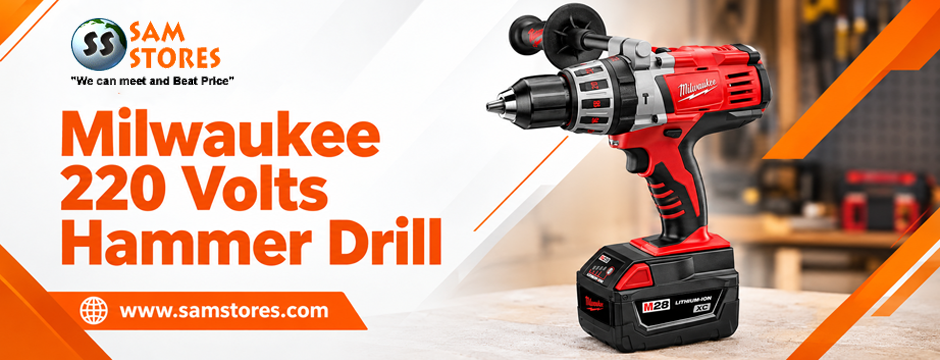
Check whether the model is rated for a range that includes 240V. If it is, the manufacturer has indicated that the tool can operate within that range.
If the product label says only 220V and does not provide a broader range, do not assume that a 240V outlet is suitable.
This is also where buying from a knowledgeable supplier can make the process easier. When you know exactly what voltage your workshop provides, you can select a tool designed for that environment instead of trying to make an uncertain combination work.
Do You Need a Voltage Converter?
Not necessarily.
If your tool is already designed for the voltage supplied by your outlet, a converter should not be necessary. Adding an unnecessary converter can create another point of failure and may complicate an otherwise straightforward setup.
On the other hand, if a tool is designed for a different voltage, you may need a suitable transformer or another manufacturer-approved solution. Whether that is appropriate depends on the tool’s specifications and the electrical system involved.
Do not buy a converter based solely on wattage and assume the problem is solved. You also need to consider continuous power requirements, startup current, grounding, plug configuration and the tool manufacturer’s instructions.
For expensive power equipment, choosing the correct voltage version from the beginning is usually the cleaner approach.
What Happens If the Voltage Is Too High?
Using equipment outside its specified voltage range can cause problems.
Depending on the design of the tool, excessive voltage can increase stress on electrical components. It may contribute to overheating, premature component failure or damage to the motor or electronics.
There is also the possibility of creating a safety hazard.
That does not mean every 240V supply will damage every tool labeled 220V. The key question is whether the manufacturer’s approved operating range includes the voltage you intend to use.
This distinction is important because the terms 220V and 240V are sometimes used loosely in product descriptions. Always look for the actual specification rather than relying on a product title.
Check the Plug Before You Buy
Voltage is not the only consideration.
A tool can have the correct voltage rating and still have a plug that does not match your outlet. International versions of power tools may use different plug designs.
Before ordering, check:
- Rated voltage
- Operating voltage range
- Frequency
- Plug type
- Amperage
- Power consumption
- Grounding requirements
- Manufacturer’s installation instructions
Frequency deserves attention too. Some electrical equipment is designed for a specific frequency, such as 50Hz or 60Hz. In some cases, frequency differences can affect motor performance or equipment compatibility.
If you are buying an imported Milwaukee tool, do not skip this step.
Choosing the Right Tool for Your Workshop
The best power tool is not necessarily the one with the biggest motor or longest list of features. It is the one that fits the work you actually do.
A contractor may prioritize durability and sustained performance. A metalworker may care more about grinder power and disc compatibility. A carpenter may need a dependable saw with the right cutting capacity.
For example, someone building a professional workshop may need several tools rather than one universal machine. A circular saw can cover cutting applications, while a hammer drill can handle drilling and fastening tasks. An angle grinder can take care of grinding and metal cutting.
If you are comparing options, you can also explore a Milwaukee 220 Volts Circular Saw to find a tool suited to your cutting requirements.
The electrical setup should form part of that purchasing decision.
Is 240V Better Than 220V?
Not necessarily.
A higher number does not automatically mean better tool performance. What matters is whether the tool is designed to operate at that voltage and whether the electrical supply matches the manufacturer’s requirements.
Think of voltage as a compatibility specification rather than a performance ranking.
If a tool is designed for 220 to 240V, both voltages may fall within its intended range. If it is designed only for a particular voltage, you should follow the manufacturer’s instructions rather than trying to determine suitability based on a small numerical difference.
A Simple Checklist Before Plugging In
Before using any Milwaukee 220 Volts Power Tools with a 240V outlet, run through this checklist:
Check the label: Find the rated voltage printed on the tool.
Check the range: Look for wording such as 220 to 240V.
Check the frequency: Make sure the frequency is appropriate for your electrical supply.
Check the plug: Confirm that the plug and outlet configuration are compatible.
Check the circuit: Make sure the circuit can safely support the tool’s electrical demand.
Read the manual: Manufacturer instructions should take priority over general advice.
Ask before connecting: If the specifications are unclear, contact the seller or manufacturer.
These checks are particularly valuable when purchasing imported equipment or tools intended for another market.
Why Buy Your 220V Tools From a Specialist?
Buying power tools online should not be limited to comparing prices.
You also want accurate product information, clear specifications and confidence that you are ordering the correct version for your electrical system.
At Sam Stores, shoppers looking for 220V equipment can compare products based on their actual requirements rather than simply choosing the first tool that looks suitable.
That matters when buying specialized equipment. A small mistake in voltage selection can turn a good deal into an expensive inconvenience.
The right approach is to identify your workshop’s electrical supply first, determine the voltage and frequency you need, and then select a tool that is specifically compatible.
Final Thoughts
So, can you run Milwaukee 220 Volts Power Tools on a 240 volt outlet?
Possibly, but only when the specific tool is rated for that voltage or for a range that includes 240V.
The difference between 220V and 240V should not be treated as an automatic green light. Check the exact model’s electrical specifications, including voltage range, frequency and plug requirements.
Whether you are shopping for a Milwaukee 220 Volts Angle Grinder, Milwaukee 220 Volts Hammer Drill or another professional power tool, the safest buying decision starts with compatibility.
If you know your electrical requirements before ordering, you can choose the right tool with greater confidence and avoid the frustration of buying equipment that is unsuitable for your workshop.
For shoppers comparing 220V power equipment, Sam Stores provides an opportunity to explore options with the voltage requirements in mind. The goal is simple: buy the tool that fits both your work and your electrical setup.
FAQs
1. Can I use Milwaukee 220V power tools on a 240V outlet?
It depends on the specific model. If the tool is rated for 220 to 240V, a 240V supply is generally within its specified range. Always check the manufacturer’s specifications.
2. Do Milwaukee 220V tools need a voltage converter?
Not if the tool is designed to operate on the voltage supplied by your outlet. A converter may be necessary when the tool’s rated voltage does not match the electrical supply.
3. Can I use a Milwaukee 220 Volts Angle Grinder with 240V?
Check the exact model’s voltage range first. If its approved operating range includes 240V, it can generally be used with a suitable 240V supply.
4. What should I check before buying a 220V Milwaukee power tool?
Check the rated voltage, operating range, frequency, plug type, amperage, power requirements and manufacturer’s instructions.
5. Is 240V more powerful than 220V for power tools?
Not necessarily. Tool performance depends on the motor, design and specifications. The most important consideration is using the tool within its approved electrical range.