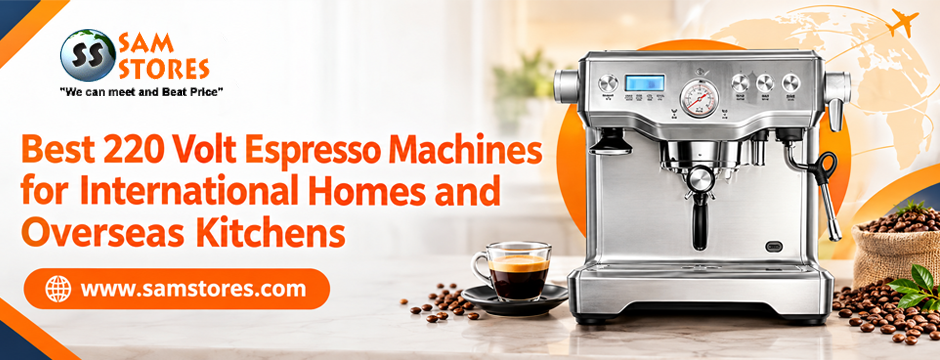
A good cup of espresso can make an ordinary morning feel a little better. For people living overseas, travelling between countries, or setting up a kitchen outside the United States, finding the right coffee machine involves more than choosing a stylish design or a familiar brand. Voltage compatibility, plug type, kitchen space, brewing features, and long-term reliability all deserve attention.
A 220 volt espresso machine is a practical option for homes where the electrical supply operates at 220V or 230V. It allows coffee lovers to explore home espresso preparation without relying on appliances designed exclusively for a different electrical standard. However, the right choice depends on the machine’s specifications, the destination country’s power supply, and the type of coffee you enjoy.
At Sam Stores, shoppers looking for international appliances can explore the features that matter before deciding which coffee machine belongs in their kitchen. Whether you prefer a strong morning espresso, a creamy cappuccino, or an occasional latte after dinner, understanding your options makes the buying process much easier.
Why Choose a 220 Volt Espresso Machine for an International Home?
Electrical compatibility is one of the first things to consider when purchasing appliances for an overseas kitchen. Many countries use a nominal supply of 220V to 240V, while others operate primarily at 110V to 120V. A machine designed for one voltage range may not work safely or correctly on another.
A 220 volt espresso machine is worth considering if your home’s electrical supply matches the appliance’s rated input. It can be particularly useful for expatriates, international students, families relocating abroad, and homeowners furnishing a second property in another country.
There are several reasons buyers prefer this type of appliance.
- Better electrical compatibility: A machine rated for the local supply can operate without a voltage converter, provided the frequency and other electrical requirements also match.
- Convenient daily coffee preparation: You can prepare espresso at home instead of visiting a coffee shop every morning.
- More control over your coffee: Depending on the model, you may be able to adjust brewing strength, water volume, temperature, or grind size.
- A practical addition to a modern kitchen: Compact machines can fit comfortably into apartments, holiday homes, and smaller overseas kitchens.
Before ordering, check the manufacturer’s voltage rating rather than relying on the product title alone. A machine marked 220V may not automatically support every 230V or 240V electrical system.
What to Look for in the Best 220 Volt Espresso Machine
Not every coffee drinker needs a professional-style machine with multiple controls. Some people want a quick espresso before leaving for work. Others enjoy experimenting with coffee beans, milk texture, and brewing techniques on weekends.
The best choice depends on how you actually prepare coffee.
1. Check Voltage and Frequency First
Start with the electrical specifications. Look for the rated voltage, frequency, wattage, and plug configuration on the product listing or manufacturer’s documentation.
A machine rated for 220V to 240V may be suitable for many international kitchens, but buyers should verify the exact permitted range. Frequency matters too, particularly when choosing appliances with pumps, motors, or electronic controls.
If you are moving from a country with 110V outlets to one with a 220V supply, do not assume your existing coffee machine will work simply because the plug fits. Likewise, a plug adapter does not convert voltage.
For the most straightforward setup, choose an appliance whose electrical specifications match your destination.
2. Decide Between Manual, Semi-Automatic, and Automatic Models
The machine’s operating style has a direct impact on your everyday experience.
Manual espresso machines give experienced users more control over preparation. They can be rewarding for people who enjoy learning brewing techniques, although they may require more practice.
Semi-automatic machines offer a balance between control and convenience. Users generally manage the coffee preparation while the machine handles essential brewing functions.
Automatic espresso machines reduce some of the work involved in making coffee. Depending on the model, they may offer preset drink options, automated brewing, or integrated grinders.
If several people in your household drink coffee, an automatic or semi-automatic model may be a sensible starting point. Buyers who enjoy experimenting with different beans may prefer a machine with adjustable settings.
3. Consider an Integrated Grinder
Freshly ground coffee can make a noticeable difference to the flavour and aroma of espresso. Some machines include a built-in grinder, while others require a separate appliance.
An integrated grinder keeps the setup compact and reduces the number of items on the kitchen counter. It may also simplify preparation because grinding and brewing happen in one place.
A separate grinder offers greater flexibility if you want to upgrade individual components over time. However, it takes up additional space and adds another purchase to your budget.
Think about your morning routine before deciding. If you value convenience, an all-in-one machine may be worth considering. If coffee preparation is a hobby, separate equipment could offer more flexibility.
4. Look at the Milk-Frothing Options
Espresso is only the starting point for many coffee drinks. Cappuccinos, flat whites, and lattes require milk that has been heated and textured appropriately.
A machine with a steam wand gives you more control over milk texture, although it takes some practice to use well. Automatic milk systems can be easier for beginners, but they often require additional cleaning.
Check how the milk system works, how frequently it needs maintenance, and whether replacement parts are available in your country.
5. Match the Machine to Your Kitchen
A large espresso machine may look impressive, but it is not always the best choice for an apartment or compact overseas kitchen.
Measure the available counter space before purchasing. Remember to allow room for opening water reservoirs, filling the bean hopper, removing drip trays, and cleaning the machine.
Also consider the location of the power outlet and whether the cord can reach safely without an extension arrangement that exceeds the appliance’s requirements.
Coffee Machine 220 Volts: Features That Make Everyday Use Easier
Searching for a coffee machine 220 volts brings up appliances with different brewing systems, sizes, and levels of automation. Comparing them by appearance alone can lead to an expensive mistake.
Instead, pay attention to the features you will use regularly.
A removable water reservoir makes refilling and cleaning easier. A detachable drip tray helps with routine maintenance. Adjustable coffee settings can be useful if you switch between different beans or prefer different drink strengths.
For households where more than one person drinks coffee, consider the water tank capacity and the time needed to prepare consecutive cups. A compact machine may suit one or two coffee drinkers, while a busy household may benefit from a larger reservoir or a model designed for repeated use.
Build quality is another consideration. Look at the manufacturer’s warranty, availability of service, and access to consumables such as water filters or cleaning products.
These details may not be as exciting as a new brewing feature, but they can make a meaningful difference after months of daily use.
Can Other 220V Kitchen Appliances Complete Your Coffee Setup?
An international kitchen often needs more than a coffee machine. Buyers relocating overseas may also need to replace or upgrade blenders, multicookers, and other small appliances.
Understanding each appliance’s electrical requirements helps you build a compatible kitchen without purchasing equipment that cannot be used safely.
Instant Pot 220 Voltage: What Buyers Should Know
An instant pot 220 voltage search usually reflects interest in multicookers designed for higher-voltage electrical systems. These appliances serve a different purpose from espresso machines, but both require careful compatibility checks.
A multicooker can be useful for preparing rice, soups, beans, and one-pot meals. Before purchasing one for an overseas kitchen, confirm its rated voltage, frequency, plug type, capacity, and available cooking programmes.
Do not assume that every Instant Pot model supports 220V simply because another model in the same product family does. Check the exact model specifications and intended market.
If you are equipping a kitchen from scratch, choosing compatible appliances from the beginning can simplify daily use and reduce the need for additional electrical equipment.
240 Volt Blender Options for Everyday Preparation
A 240 volt blender can be useful for smoothies, sauces, milkshakes, and other kitchen tasks. Some coffee lovers also use blenders to prepare iced coffee drinks or blend ingredients for flavoured beverages.
When comparing blender models, consider motor power, jug capacity, blade design, cleaning requirements, and the types of ingredients you plan to process.
Voltage compatibility remains essential. A blender rated for 240V should not be treated as automatically interchangeable with every 220V appliance. Check the manufacturer’s permitted input range before plugging it in.
For smaller kitchens, a compact personal blender may be more practical than a full-size model. If you prepare drinks for several people, a larger jug could be a better fit.
Sam Stores shoppers can compare appliance requirements across product categories to make more informed decisions about their kitchen setup.
Accessories and Product Research Before You Buy
Buying the machine is only one part of preparing for a good home coffee experience. Depending on the model, you may also need an appropriate grinder, espresso cups, a milk pitcher, cleaning supplies, or a water filter.
Check whether the machine includes the accessories you need. Some models come with basic brewing tools, while others require separate purchases.
If you are researching older or less common appliances, documentation can also be useful. For example, someone searching for the Frigidaire espresso maker FD7189 manual should verify the exact model and consult the manufacturer’s documentation for operating instructions, cleaning procedures, and electrical specifications. Confirm that any manual applies to the appliance in question before following its guidance.
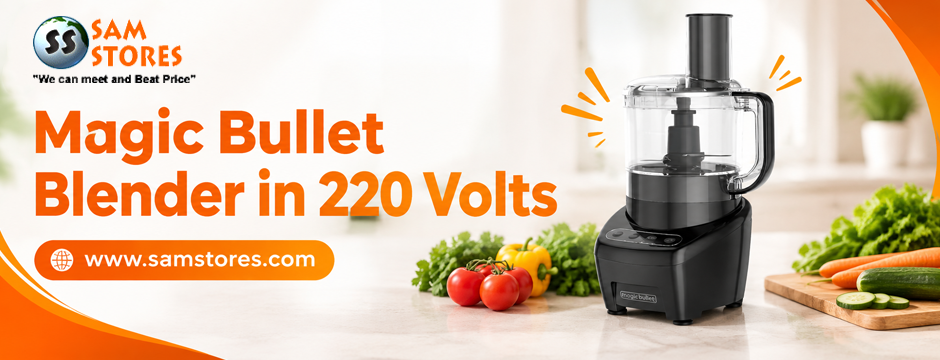
For compact blending needs, shoppers comparing small kitchen appliances may also want to explore a Magic Bullet blender in 220 volts. Make sure the exact product is rated for the destination’s electrical supply, as voltage specifications can vary by model and market.
These checks are particularly important when purchasing appliances for overseas homes, where replacement parts and local servicing may differ from those available in the original market.
Common Mistakes to Avoid When Buying a 220 Volt Espresso Machine
A little research before checkout can prevent unnecessary expenses later.
Assuming every 220V appliance works worldwide: Countries may use different voltage ranges, frequencies, and plug configurations. Confirm the machine’s complete electrical rating.
Choosing a machine based only on price: A lower upfront cost may not be worthwhile if the appliance lacks suitable features, a reliable warranty, or accessible replacement parts.
Ignoring maintenance requirements: Espresso machines need regular cleaning and, depending on the model and water conditions, descaling. Consider how easy the process will be.
Forgetting the available counter space: Check the machine’s dimensions and allow enough room for maintenance and daily use.
Overlooking local service support: An appliance that is difficult to repair in your destination country may become inconvenient if a component fails.
Using an unsuitable voltage converter: Converters must be appropriate for the appliance’s wattage and electrical characteristics. Some electronic controls and motors may not work correctly with unsuitable conversion equipment. Matching the appliance to the local supply is generally the simpler approach.
Avoiding these mistakes helps you focus on the features that matter rather than discovering compatibility problems after delivery.
How to Choose the Right Espresso Machine for Your Lifestyle
Before selecting a model, ask yourself three simple questions.
First, how often will you make coffee? If you prepare one or two cups each morning, a compact machine may be sufficient. If several household members drink espresso throughout the day, look for a model designed for more frequent use.
Second, how much control do you want? Beginners may appreciate automatic features, while experienced coffee enthusiasts may prefer manual adjustments and a separate grinder.
Third, where will you use the appliance? A permanent overseas home, a rented apartment, and a second residence may have different space and maintenance requirements.
Once you know the answers, compare models based on voltage compatibility, brewing functions, dimensions, warranty coverage, and ease of cleaning. This approach makes it easier to find a machine that suits your budget and your daily routine.
Find the Right 220 Volt Espresso Machine at Sam Stores
Setting up an overseas kitchen should be an opportunity to create a space that works for you. A well-chosen espresso machine can make breakfast more enjoyable, provide a convenient alternative to daily coffee-shop visits, and give you greater control over how your coffee is prepared.
The key is to look beyond the product photograph. Check the voltage rating, understand the brewing options, measure your counter space, and review maintenance and warranty details before making a purchase.
At Sam Stores, shoppers can use these considerations to narrow their search for international kitchen appliances and compare options that suit their needs. Whether you want a straightforward machine for everyday espresso or a more feature-rich setup for cappuccinos and lattes, careful research can help you make a confident choice.
Take the time to match the appliance to your electrical supply and coffee preferences. The right machine should fit naturally into your kitchen, work with your routine, and make that first cup of the day something to look forward to.
FAQs –
1. What is the best 220 volt espresso machine for an international home?
The best machine depends on your coffee preferences, kitchen space, budget, and local electrical supply. Compare brewing features, voltage and frequency ratings, cleaning requirements, warranty coverage, and available replacement parts before choosing.
2. Can I use a 220 volt espresso machine in a 240V country?
Only if the manufacturer’s specified input voltage range includes the local supply. Check the appliance label and manual rather than assuming a machine rated at 220V can automatically operate at 240V.
3. What should I check before buying a coffee machine 220 volts online?
Check the rated voltage, frequency, wattage, plug type, dimensions, brewing functions, warranty, and return policy. Also confirm whether the machine includes a grinder or milk frother if those features are important to you.
4. Is a 220 volt espresso machine different from a 240 volt blender?
Yes. An espresso machine brews coffee, while a blender mixes or processes ingredients. They have different functions and electrical requirements, so each appliance must be checked against the destination’s power supply.
5. Can I use a plug adapter with a 220 volt espresso machine?
A plug adapter changes the physical plug connection but does not convert voltage or frequency. Use one only when the appliance is electrically compatible with the supply and the adapter is suitable for the plug and required current. If voltage conversion is necessary, consult the manufacturer or a qualified electrician about an appropriate solution.