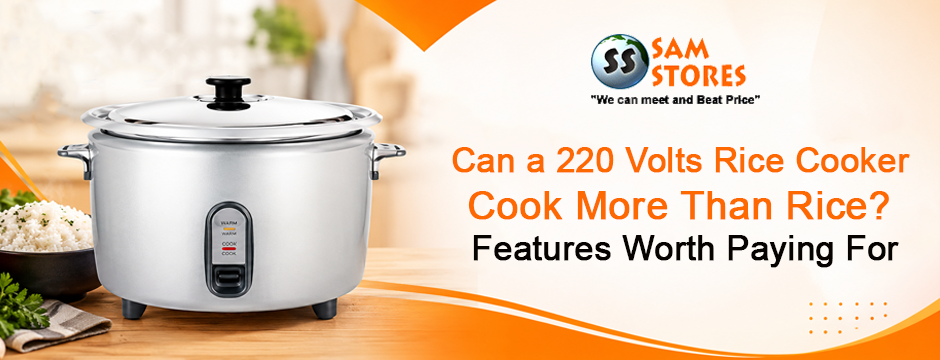
A rice cooker sounds like a simple appliance. Add rice, add water, press a button, and wait. But modern rice cookers have moved well beyond that basic job. Depending on the model, the same appliance can steam vegetables, prepare grains, cook porridge, warm meals, and even handle dishes that would otherwise need a separate pot.
That makes a 220 volts rice cooker worth a closer look if you want more from your kitchen appliances. The right model can save counter space and make everyday cooking easier without turning your kitchen into a collection of single-purpose gadgets.
For shoppers comparing models, the challenge is knowing which features genuinely add value and which ones are little more than extras on a specification sheet.
What Can a 220 Volts Rice Cooker Actually Cook?
Rice remains the main attraction, but it is far from the only food you can prepare.
Many modern rice cookers can handle different types of rice, including white rice, brown rice, jasmine rice, basmati rice and other grains. Some models also include steaming baskets or separate steaming functions, allowing you to prepare vegetables, fish or dumplings while the rice cooks below.
Depending on the manufacturer’s instructions and the specific model, you may also be able to prepare:
- Oatmeal and breakfast cereals
- Quinoa and other grains
- Steamed vegetables
- Eggs
- Soup
- Porridge
- Beans
- Simple one-pot meals
- Pasta and similar dishes
The important point is that not every rice cooker is designed for all of these foods. A basic model may be excellent at cooking rice but offer few additional functions. A programmable model with multiple cooking settings can give you considerably more flexibility.
If you regularly prepare simple meals at home, choosing a cooker based on its overall functionality rather than its rice capacity alone can be a smart buying decision.
The Features That Actually Make a Difference
When shopping for a 220 volts rice cooker, it is easy to get distracted by long lists of features. Instead of paying for every available function, think about how you cook.
Some features are genuinely useful for everyday meals.
1. Multiple Cooking Settings
Different types of rice need different cooking conditions. Brown rice, for example, generally requires more water and a longer cooking time than white rice.
A cooker with dedicated settings can take some of the guesswork out of preparation. Depending on the model, you might find settings for white rice, brown rice, quick cooking, porridge or steaming.
If you cook different foods throughout the week, multiple settings can be more valuable than a higher wattage number alone.
2. Keep-Warm Function
This is one of those features that may seem minor until you actually use it.
Dinner rarely finishes exactly when you expect it to. A keep-warm function can help maintain the temperature of cooked rice after the cooking cycle ends, which is useful when family members eat at different times.
It also means you do not necessarily need to transfer freshly cooked rice into another container immediately.
However, keeping food warm for too long can affect its texture and quality. Always follow the manufacturer’s recommendations for safe food handling.
3. Steaming Capability
A steaming basket can turn a rice cooker into a surprisingly practical meal-preparation appliance.
Imagine cooking rice in the main pot while vegetables steam above it. You could have two parts of a meal cooking at the same time without using another saucepan.
For smaller households, students, apartment residents and anyone trying to simplify meal preparation, this can be a particularly useful feature.
4. Programmable Controls
Digital controls are worth considering if you want more control over cooking times and settings.
A programmable rice cooker may allow you to select a cooking mode, set a timer or delay the start of cooking, depending on the model.
This is particularly handy for people who plan meals around work schedules. You can prepare the ingredients in advance and use the appropriate programmed setting when available.
Just make sure you understand what the timer actually controls. A delayed start feature is not suitable for every ingredient, especially foods that should not remain unrefrigerated for extended periods.
5. Removable, Easy-to-Clean Parts
A rice cooker that cooks well but takes forever to clean is unlikely to become a favourite appliance.
Look for a removable inner pot, accessible lid components and parts that can be cleaned without much effort. Nonstick cooking pots can also make serving and cleaning easier, although the coating needs to be treated carefully.
The simpler the cleanup, the more likely you are to use the appliance regularly.
What About an Aroma Rice Cooker 220 Volts?
If you have been comparing international rice cookers, you may come across searches for an aroma rice cooker 220 volts.
Aroma is known for rice cookers and multicookers with different capacities and functions. But when buying any appliance, the voltage specification should be checked carefully rather than assuming that a product will work simply because the brand is familiar.
A cooker designed specifically for 220 to 240 volts is intended for electrical systems within that range. A model designed for another voltage may require additional equipment, and using unsuitable electrical equipment can create safety and performance concerns.
That is why voltage should be one of the first specifications you check when shopping for a rice cooker for a particular country or electrical system.
Is a 220 Volt Slow Cooker the Same Thing?
Not quite.
A 220 volt slow cooker and a rice cooker may both be used for convenient meal preparation, but they are designed around different cooking methods.
A slow cooker is generally intended for longer cooking at lower temperatures. It is useful for dishes such as stews, soups, pulled meats and other meals that benefit from extended cooking.
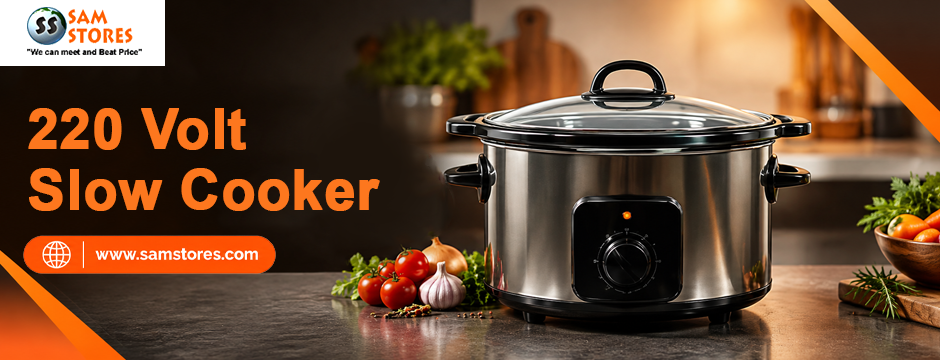
A rice cooker is primarily designed to cook rice and similar grains efficiently. More advanced models may offer steaming, porridge and other functions.
There can be some overlap, but the two appliances should not automatically be treated as interchangeable.
If rice is a regular part of your meals and you want a compact appliance that can handle more than one task, a multifunction rice cooker may be the better fit. If slow-cooked stews and long-simmered meals are your priority, a dedicated slow cooker may make more sense.
Capacity Matters More Than You Might Expect
Buying the largest cooker available is not always the best choice.
A person living alone has very different requirements from a household of six. A large cooker may take up unnecessary counter space if you usually prepare small quantities.
On the other hand, choosing a cooker that is too small can become frustrating if you regularly cook for a family.
Think about how much rice you normally prepare at one time, how often you entertain guests and whether you want to use the appliance for other foods.
Also pay attention to how manufacturers describe capacity. Some specifications refer to uncooked rice, while others may highlight the cooked capacity. Checking the manufacturer’s measurements can prevent confusion.
One Appliance, Several Meals
The biggest advantage of a multifunction rice cooker is not that it can replace every appliance in your kitchen. It is that it can handle several everyday tasks reasonably well.
For example, you could use it for:
Breakfast: Oatmeal or porridge.
Lunch: Rice with steamed vegetables.
Dinner: Rice alongside steamed fish or another protein suitable for the appliance.
Meal preparation: Cook a batch of grains for several meals.
Quick meals: Prepare simple one-pot recipes where supported by the manufacturer’s instructions.
This versatility can be particularly useful in smaller kitchens where counter and storage space are limited.
Which Features Are Worth Paying More For?
Not every premium feature deserves a higher price.
If you are trying to stay within a budget, prioritise features that you are actually going to use.
A practical shopping checklist might include:
High priority: Correct voltage, suitable capacity, reliable cooking performance, durable inner pot and easy cleaning.
Worth considering: Multiple cooking settings, steaming function, keep-warm mode and programmable controls.
Only if you need them: Highly specialised cooking programs, extensive digital menus or advanced features that duplicate appliances you already own.
The best purchase is not necessarily the rice cooker with the longest feature list. It is the one that matches your cooking habits.
Why Voltage Should Be Checked Before Anything Else
Voltage is particularly important when purchasing electrical appliances online.
A 220 volts rice cooker should have a voltage specification that is compatible with your electrical supply. You should also check the plug configuration and the product’s stated frequency requirements where applicable.
Do not rely only on a product title. Check the manufacturer’s specifications and product documentation before ordering.
For shoppers looking for a suitable model, the Powerpac Digital Rice Cooker 220-240 Volt can be worth considering when its capacity and functions match your needs.
The 220 to 240 volt range is also an important detail for buyers who specifically need an appliance designed for higher-voltage electrical systems.
Should You Buy a Multifunction Rice Cooker?
The answer depends on how you cook.
If you only make plain white rice occasionally, a basic rice cooker may be enough. Spending considerably more for a dozen cooking programs may not offer much practical value.
But if rice appears on your menu several times a week, or you want to steam vegetables, prepare grains and make simple meals using one appliance, a multifunction model can make sense.
It can reduce the number of pans you use, simplify meal preparation and save valuable kitchen space.
That is where a good rice cooker becomes more than a rice cooker. It becomes a convenient part of your everyday cooking routine.
Final Thoughts
A 220 volts rice cooker can do considerably more than cook a pot of rice, but its usefulness depends on the model you choose.
Look beyond the number of buttons and focus on the features that fit your routine. A suitable capacity, reliable cooking settings, steaming capability, keep-warm function and easy cleanup can make a noticeable difference.
If you are comparing models, also verify the voltage before making a purchase. A product that looks perfect on paper is not the right choice if its electrical specifications do not match your requirements.
For shoppers at Sam Stores, the goal should be simple: choose a rice cooker that earns its place on your kitchen counter. When the right features come together, one compact appliance can handle rice, grains, steaming and several other everyday cooking jobs without making meal preparation complicated.
FAQs
1. Can a 220 volts rice cooker cook foods other than rice?
Yes. Depending on the model, a 220 volts rice cooker may prepare grains, oatmeal, porridge, steamed vegetables, eggs, soup and other simple meals. Always check the manufacturer’s recommended uses.
2. What features should I look for in a 220 volts rice cooker?
Useful features include multiple cooking settings, a keep-warm function, steaming capability, programmable controls, an easy-to-clean inner pot and a capacity suitable for your household.
3. Is a 220 volt slow cooker the same as a rice cooker?
No. A slow cooker is designed primarily for longer, low-temperature cooking, while a rice cooker is designed mainly for rice and grains. Some multifunction models can perform several additional cooking tasks.
4. What is an aroma rice cooker 220 volts model?
It refers to an Aroma rice cooker designed or rated for a 220-volt electrical supply. Buyers should always verify the exact voltage and plug specifications of the model before purchasing.
5. How do I choose the right rice cooker capacity?
Consider how many people you normally cook for and how much rice you prepare at once. Avoid choosing a very large model if you usually cook small portions, as it can take up unnecessary counter and storage space.