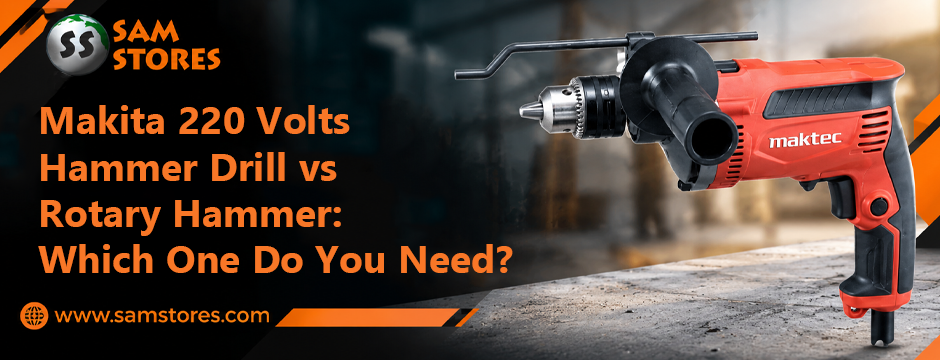
Makita 220 Volts Hammer Drill vs Rotary Hammer: Which One Do You Need?

Buying a power tool for concrete or masonry work sounds straightforward until you start comparing hammer drills with rotary hammers.

Both can drill into hard materials. Both use impact action. Both are available in corded configurations. Yet they are not designed for exactly the same jobs.

For a homeowner putting up shelves, a contractor installing anchors, or a tradesperson drilling through masonry regularly, choosing the wrong tool can mean slower work, unnecessary fatigue and a tool that does not match the job.

A Makita 220 Volts Hammer Drill can be an excellent choice when you need a versatile drill capable of handling wood, metal, masonry and routine fastening work. A rotary hammer is generally the better option when the work involves frequent drilling into hard concrete, larger holes or heavier demolition.

So which one belongs in your toolbox?

The answer depends on what you actually plan to do with it.

Hammer Drill vs Rotary Hammer: The Basic Difference

The easiest way to understand the difference is to look at how the two tools create impact.

A hammer drill uses a rapid hammering action while the bit rotates. The impact mechanism helps the bit work through brick, block and lighter masonry.

A rotary hammer uses a more substantial hammering mechanism. It is designed for demanding masonry and concrete applications and can deliver considerably more impact force.

That distinction matters.

If you occasionally need to drill small holes for wall plugs or masonry anchors, a hammer drill can provide the flexibility you need. If your daily work involves drilling deep holes into reinforced or hard concrete, a rotary hammer is usually the more appropriate tool.

Where a Makita 220 Volts Hammer Drill Makes Sense

A hammer drill earns its place in a toolbox because it is not limited to masonry.

Switch off the hammer function and it can often be used for conventional drilling applications, depending on the model. That makes it useful for tradespeople and serious DIY users who work with different materials.

Typical applications include:

  • Drilling into brick
  • Drilling into block
  • Installing masonry anchors
  • Drilling wood
  • Drilling metal
  • General construction work
  • Home renovation
  • Workshop projects
  • Light to moderate masonry jobs

For someone who wants one corded tool capable of tackling a range of everyday drilling tasks, a Makita hammer drill can be a practical investment.

The 220V configuration is particularly relevant for buyers shopping for tools intended for compatible electrical systems outside standard 110V markets.

Before purchasing, always verify the tool’s voltage and frequency requirements against your local electrical supply.

When a Rotary Hammer Is the Better Choice

Now imagine a different type of job.

You need to drill dozens of holes into a concrete slab. The holes are relatively large, the material is hard, and the work continues for several hours.

That is where a rotary hammer starts to make much more sense.

Rotary hammers are designed around higher-impact applications. Depending on the model and bit system, they can handle jobs such as:

  • Heavy concrete drilling
  • Large masonry holes
  • Anchoring work
  • Chiselling
  • Tile removal
  • Concrete demolition
  • Construction and renovation work

Some rotary hammers offer different operating modes, allowing the user to drill with rotation and impact, drill without impact, or use hammer-only action for chiselling.

That additional capability is one reason professional contractors often keep both types of tools available.

Which Tool Is More Powerful?

In most cases, a rotary hammer delivers substantially greater impact force than a standard hammer drill.

However, “more powerful” does not automatically mean “better.”

If you are drilling a few small holes in brick, the extra size and weight of a rotary hammer may not provide much practical benefit.

You may actually prefer a hammer drill because it is easier to handle and more versatile for everyday jobs.

On the other hand, if you regularly work with concrete, the stronger impact mechanism of a rotary hammer can save time and reduce the amount of effort required.

Think about it this way:

Hammer drill: versatility first.

Rotary hammer: heavy-duty masonry performance first.

What About Speed and Control?

Speed is another area where buyers sometimes focus on the wrong specification.

A high RPM figure can look impressive on a product page, but drilling performance depends on more than rotational speed.

Material, bit type, impact force, torque and operator technique all affect the result.

For general drilling, variable speed can be useful because it allows you to adapt the tool to different materials and applications.

For masonry, impact performance becomes increasingly important as the material gets harder.

That is why comparing tools solely by RPM can lead to a poor purchasing decision.

Look at the complete specification rather than one headline number.

The Importance of the Right Drill Bit

Even an excellent power tool will struggle with the wrong accessory.

Masonry and concrete require appropriate bits designed for the material and the tool’s chuck or bit system.

Using an unsuitable bit can result in slow drilling, excessive heat, poor hole quality and unnecessary wear.

Before buying a hammer drill or rotary hammer, check which bit system it accepts and whether the accessories you need are readily available.

This becomes particularly important for professionals who cannot afford frequent interruptions to replace or locate specialised accessories.

Hammer Drill or Rotary Hammer for Home Renovation?

For many homeowners, the answer depends on the renovation project.

Installing curtain brackets, shelves, cabinets or wall-mounted equipment into brick or block does not necessarily justify buying a heavy rotary hammer.

A hammer drill may be more convenient because it can handle several other drilling tasks around the home.

However, renovations involving concrete floors, extensive masonry work or tile removal can quickly move into rotary-hammer territory.

If you are renovating an older property and expect to encounter substantial masonry work, having access to a rotary hammer can make difficult jobs considerably easier.

What About Professional Contractors?

Professionals should consider workload rather than occasional capability.

A contractor who drills a handful of masonry holes each week may get excellent value from a versatile hammer drill.

A concrete installer, electrician, plumber or construction worker drilling anchors throughout the day may benefit much more from a rotary hammer designed for continuous heavy-duty work.

Ergonomics matter here, too.

If a tool is going to be used for hours rather than minutes, weight, grip, vibration control and overall handling can affect productivity and comfort.

The best tool is the one that matches the work you repeatedly perform.

How Does Voltage Fit Into the Decision?

The 220V specification deserves attention when shopping for international power tools.

A 220V tool is designed to operate with a compatible electrical supply. It should not be treated as a universal replacement for a 110V tool simply because the voltage is higher.

Buyers should check:

  • Rated voltage
  • Frequency
  • Plug configuration
  • Amperage
  • Electrical circuit requirements
  • Compatibility with the intended location

This is especially important when purchasing imported Makita 220 Volts Power Tools.

Do not assume that a plug adapter changes the operating voltage. An adapter changes the physical connection, not the electrical characteristics supplied to the tool.

If you are uncertain about compatibility, check the manufacturer’s specifications or speak with a qualified electrician.

Is a Hammer Drill Enough for Concrete?

This is one of the most common questions buyers ask.

The answer is: sometimes.

A hammer drill can handle many smaller concrete and masonry drilling tasks when paired with the correct bit. But there is a point where the job becomes better suited to a rotary hammer.

Hole diameter, drilling depth, concrete hardness and the number of holes you need to make all matter.

If you only need to drill a few small holes, a hammer drill may be perfectly adequate.

If you are drilling large, deep holes repeatedly, a rotary hammer is likely to be the smarter investment.

Trying to force a general-purpose tool through work that requires a specialised machine rarely saves money in the long run.

Can You Use a Rotary Hammer for Everyday Drilling?

Technically, a rotary hammer can handle many drilling applications, particularly when it has the appropriate modes and accessories.

But that does not mean you should automatically choose one for every job.

Rotary hammers tend to be larger and heavier than conventional hammer drills. Carrying a heavy tool around for simple drilling tasks can become inconvenient.

For a toolbox that needs to cover a broad range of everyday work, a hammer drill can be the more balanced option.

For a dedicated concrete or masonry toolkit, a rotary hammer becomes much more attractive.

Don’t Forget the Rest of Your Toolkit

A good workshop is rarely built around one tool.

Once you start taking on construction, renovation or maintenance projects, different tools serve different purposes.

For example, a hammer drill may cover drilling applications while an angle grinder handles cutting, grinding and surface preparation. A circular saw can take care of many wood-cutting jobs.

If you are building a compatible collection of corded tools, you can explore options such as a Makita 220 Volts Angle Grinder alongside other Makita 220 Volts Power Tools.

A well-matched toolkit can be more useful than spending the entire budget on one exceptionally powerful machine.

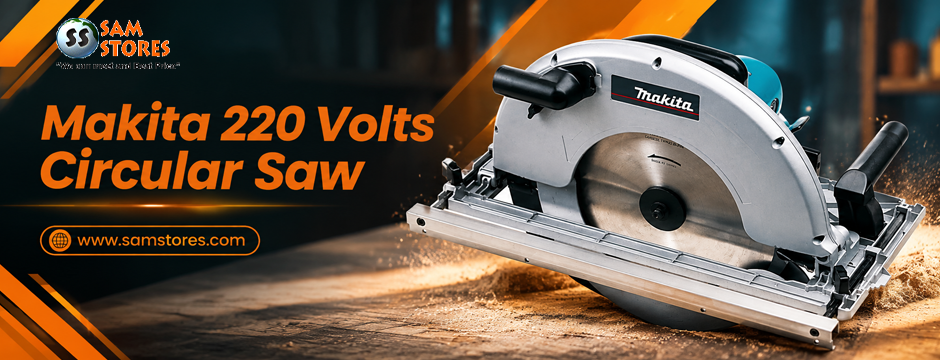
For cutting applications, you may also want to consider a Makita 220 Volts Circular Saw when the project calls for a dedicated saw rather than trying to make a drill do a job it was never designed to perform.
How The Braun 220 Volt Hair Dryer Redefines Everyday Glamour_

Makita Hammer Drill vs Rotary Hammer: Quick Comparison

FeatureHammer DrillRotary Hammer
Small masonry holesExcellentMore than capable
Wood drillingExcellentModel dependent
Metal drillingExcellentModel dependent
Hard concreteModerate to goodExcellent
Large holesLimitedExcellent
ChisellingGenerally unavailableAvailable on suitable models
PortabilityUsually easierGenerally heavier
VersatilityHighMore specialised
Heavy masonry workLimitedExcellent
Occasional DIY useVery suitableMay be excessive

Which One Should You Buy?

If your projects change from one material to another and you want a versatile corded drilling tool, a Makita 220 Volts Hammer Drill is worth considering.

It can be a sensible choice for homeowners, maintenance workers, installers and contractors who need one tool for a mixture of drilling tasks.

If your work is dominated by hard concrete, deep holes, larger masonry applications or chiselling, step up to a rotary hammer.

There is no prize for buying the biggest tool in the shop. The better purchase is the one that fits your actual workload.

At Sam Stores, the goal should be to choose based on application, electrical compatibility, tool specifications and long-term usefulness. A carefully selected power tool can serve you for years, while an unsuitable one can become an expensive item sitting on a shelf.

Final Verdict

So, Makita 220 Volts Hammer Drill or rotary hammer?

Choose the hammer drill when you value versatility and regularly work across wood, metal and lighter masonry.

Choose the rotary hammer when concrete and heavy masonry are the main part of your workload.

And if you are still undecided, look at the jobs you perform most often. The answer usually becomes obvious once you stop thinking about the tool itself and start thinking about the work it needs to accomplish.

The right drill is not necessarily the most powerful one. It is the one that gives you the right combination of power, control, versatility and practicality for the projects ahead.

FAQs

1. Is a Makita 220 Volts Hammer Drill good for concrete? 

Yes. A hammer drill can handle many smaller concrete drilling jobs with the correct masonry bit. For frequent heavy-duty concrete drilling, a rotary hammer is generally more suitable.

2. What is the main difference between a hammer drill and a rotary hammer? 

A rotary hammer typically produces a stronger impact force and is designed for heavier concrete and masonry applications. A hammer drill is generally lighter and more versatile for everyday drilling.

3. Should I buy a hammer drill or rotary hammer for home renovation? 

For occasional drilling into brick or block, a hammer drill is often sufficient. If the renovation involves extensive concrete drilling or chiselling, a rotary hammer may be the better choice.

4. Are Makita 220V power tools compatible with every 220V outlet? 

Not necessarily. You should verify the tool’s voltage, frequency, amperage and plug configuration before connecting it to an electrical supply.

5. Is a rotary hammer better than a hammer drill? 

Neither is universally better. A rotary hammer is better for demanding concrete and masonry work, while a hammer drill offers greater versatility for users working across different materials.
220 Volts Assistant Mixer vs 220V KitchenAid: Which Is Better?

Buying a stand mixer sounds simple until you start comparing the options.

Then the questions begin. Should you choose an 220 Volts Assistant Mixer or spend more on a 220V KitchenAid? Is one better for bread? Which one offers more useful attachments? Does the higher price of a KitchenAid automatically mean better performance?

The honest answer is that neither machine is the perfect choice for everyone.

The better option depends on what you actually do in your kitchen.

For someone who bakes regularly, makes bread, experiments with homemade pasta and wants one machine that can take on several jobs, an Assistant mixer can be a very interesting choice. Someone who values the familiar KitchenAid design, brand reputation and extensive attachment ecosystem may lean towards a 220 volt kitchenaid mixer.

Sam Stores carries a wide selection of 220-volt kitchen appliances, including Assistant mixer accessories and 220-volt KitchenAid options. The goal is not to tell every buyer to choose one brand. It is to help you understand what you are paying for and which machine makes sense for your kitchen.

What Is an Assistant Mixer?

The Assistant mixer concept is different from the conventional tilt-head or bowl-lift stand mixer many people picture when they hear the words “stand mixer.”

The Electrolux and Verona Assistent products available through Sam Stores are particularly interesting because the system can be expanded with different accessories. The current Sam Stores range includes items such as an Assistent grain mill, flake mill, fruit and berry strainer, grater and nut grinder, food processor drum set, sausage stuffer, pasta maker, citrus juicer and blender.

That tells you something important about the product philosophy.

It is not simply about mixing cake batter.

The idea is to build a broader food preparation system around the mixer.

For a home cook who likes making food from scratch, that versatility can be a major advantage.

Why Is KitchenAid Still Such a Popular Choice?

KitchenAid has built an enormous following around its stand mixers, and there is a reason for that.

The brand has become closely associated with home baking. Its mixers are instantly recognisable, available in different configurations and supported by a large range of compatible accessories.

For buyers searching specifically for a 220 volt KitchenAid mixer, electrical compatibility is an important part of the purchasing decision. A 220V model is designed for the appropriate electrical supply, which can be far more convenient than buying an appliance that requires an unsuitable voltage arrangement.

KitchenAid also appeals to buyers who want a mixer that looks good enough to remain on the countertop.

For many people, that matters.

A kitchen appliance does not have to be purely functional. If you are going to use it several times a week, you want something you enjoy having in your kitchen.

220 Volts Assistant Mixer vs KitchenAid: The Real Difference

The biggest difference is not simply brand name or appearance.

It comes down to how you intend to use the machine.

Think of the Assistant as a flexible food preparation platform. Think of KitchenAid as a highly established stand mixer system with a strong baking identity and a broad accessory ecosystem.

Both can be excellent choices.

But the right one depends on your priorities.

1. Baking Performance

If your main goal is baking cakes, cookies, whipped cream and similar recipes, both options can make sense.

A quality stand mixer saves considerable effort compared with mixing everything by hand. More importantly, it gives you consistency.

That matters when you are making the same bread recipe every weekend or preparing several batches of cookie dough before a family gathering.

If bread is a major part of your routine, pay close attention to the specific model rather than judging an entire brand. Motor specifications, bowl capacity and dough-handling capability vary between machines.

This is one area where buyers sometimes make a mistake.

They buy based on the logo instead of the actual specifications.

2. Versatility and Attachments

This is where the Assistant system becomes especially interesting.

Sam Stores currently lists a range of Assistent accessories, including a grain mill, flake mill, fruit and berry press, grater and nut grinder, food processor drum set, sausage stuffer, pasta maker, citrus juicer and blender.

Imagine buying one machine and gradually expanding what it can do as your cooking interests change.

One month, you may be interested in homemade pasta.

A few months later, you may start grinding grains.

Later, you may want to make sausage or process fresh fruit.

You do not necessarily need to buy a completely separate appliance for every task.

That is a strong selling point for the Assistant approach.

KitchenAid also has a large attachment ecosystem, so it is not fair to describe it as a basic mixer with limited functionality. However, shoppers should compare the actual attachments they plan to use instead of simply counting how many accessories exist.

The useful question is:

Which system gives you the tools you will actually use?

That answer is more valuable than a generic “more attachments equals better.”

3. Ease of Use

A mixer should make cooking easier, not introduce another complicated routine.

KitchenAid’s familiar design makes it approachable for many home bakers. Controls and attachments are generally easy to understand once you have spent some time with the machine.

The Assistant system takes a slightly different approach. Buyers who plan to use several attachments may need a little more time to understand how the system works.

That is not necessarily a disadvantage.

In fact, people who enjoy cooking from scratch may appreciate having a machine that can grow with them.

If you only want to mix cake batter twice a month, however, paying for a highly versatile system may not make sense.

4. Bread and Dough Preparation

Bread bakers should pay special attention to mixer design.

Dough is much more demanding than a light cake batter. It places greater strain on the machine and requires a mixer that can handle the workload appropriate to the recipe.

This is where you should look at:

  • Motor specifications
  • Bowl capacity
  • Dough hook design
  • Recommended quantities
  • Operating instructions
  • Construction quality
  • Manufacturer limitations

Do not assume that a higher wattage number automatically means a better mixer.

Electrical power ratings are only one part of the picture.

For serious bread making, the complete machine design matters.

5. Space on the Countertop

This is an overlooked buying factor.

A stand mixer is not something you buy and forget about. If you use it regularly, it will probably live on your countertop.

Before buying, measure your available space.

Think about the machine’s footprint, height and how much room you need to attach accessories or remove the bowl.

KitchenAid models come in different sizes and configurations, so the countertop requirements can vary.

The same is true when comparing different Assistant systems.

A machine that technically fits your kitchen but makes every other appliance difficult to access is not really a convenient purchase.

6. Price and Long-Term Value

Price is where comparisons can become misleading.

A buyer may see a cheaper mixer and immediately assume it offers better value.

Another buyer may see the KitchenAid name and decide that the premium is automatically justified.

Neither approach is particularly helpful.

Instead, calculate the value based on how you will use the machine.

Suppose you bake every weekend and regularly make dough, pasta and other foods from scratch. A versatile mixer with useful attachments may save you from purchasing several separate appliances later.

On the other hand, if you mainly make occasional cakes, cookies and whipped cream, you may not need a large accessory ecosystem.

When searching for a kitchenaid mixer 220 volts best price, do not look only at the sticker price. Consider the model, included accessories, voltage specification, shipping, warranty considerations and what you will actually receive in the package.

A cheaper listing is not always the cheaper purchase.

How The Braun 220 Volt Hair Dryer Redefines Everyday Glamour_

7. Which One Offers Better Kitchen Versatility?

This is probably the strongest argument in favour of an Assistant system.

The Sam Stores category demonstrates just how broad the accessory selection can be. Current listings include a grain mill, flake mill, fruit and berry strainer, food processor drum set, sausage stuffer, pasta maker and blender, among other accessories.

For someone who enjoys making ingredients from scratch, that is attractive.

You can start with the mixer and add accessories when you actually need them.

That approach can also make more financial sense than buying a cupboard full of specialist appliances that only get used occasionally.

Who Should Buy a 220 Volts Assistant Mixer?

An Assistant mixer may be the better fit if you:

  • Enjoy bread making and homemade cooking
  • Want to explore different attachments
  • Make pasta, grains or other foods from scratch
  • Want one system for several kitchen jobs
  • Prefer buying accessories gradually
  • Value versatility over brand familiarity
  • Expect to use your mixer regularly

It is especially appealing to enthusiastic home cooks who see their kitchen as more than a place to prepare quick meals.

Who Should Buy a 220V KitchenAid?

A KitchenAid may be the better choice if you:

  • Primarily want a dedicated stand mixer
  • Bake frequently
  • Prefer KitchenAid’s design and operating style
  • Want access to its established accessory ecosystem
  • Already own compatible KitchenAid accessories
  • Care strongly about the brand
  • Want a mixer that fits naturally into a familiar baking routine

For these buyers, a 220 volt KitchenAid mixer can be a sensible long-term purchase.

Don’t Ignore Voltage

There is one issue that should come before colour, design or even brand.

Voltage.

Sam Stores specifically organises its kitchen appliance range around 220-volt products, including a dedicated 220 Volt KitchenAid Mixer category and a separate Assistant Mixer section.

If you need a 220V appliance, confirm the voltage and frequency requirements of the exact model before placing your order.

This is particularly important when purchasing imported appliances.

A beautiful mixer that is not electrically compatible with your setup is not a bargain.

What About Attachments You Will Not Use?

This is worth considering before spending more.

A huge accessory collection sounds impressive, but there is no reason to pay for capabilities you will never use.

Make a simple list.

Do you make bread?

Do you want fresh pasta?

Would you actually grind grains?

Do you make sausage?

Do you process fruit?

Do you need a food processor?

Once you answer those questions, the decision becomes much easier.

For some buyers, an Assistant system will suddenly make perfect sense.

For others, a straightforward KitchenAid setup will be the smarter choice.

So, Which Is Better?

There is no universal winner.

The 220 Volts Assistant Mixer is particularly compelling for buyers who want a flexible food preparation system and intend to take advantage of different accessories.

A 220V KitchenAid makes a lot of sense for buyers who want the familiar KitchenAid experience, strong baking credentials and a wide range of compatible accessories.

If your kitchen revolves around baking, KitchenAid deserves serious consideration.

If your kitchen revolves around experimentation and making more foods from scratch, the Assistant system deserves an equally serious look.

And if you are still undecided, start with your recipes rather than the brand name.

That is the simplest way to make the right choice.

Why Shop 220V Kitchen Appliances From Sam Stores?

Finding the right appliance is only half the job. Finding the right voltage version is just as important.

Sam Stores has built its catalogue around 220-volt appliances across multiple categories. Its current kitchen appliance selection includes 220 Volts Stand Mixers, 220 Volt KitchenAid Mixers and 220 Volts Assistant Mixers, making it easier for shoppers to explore compatible options in one place.

The Assistant Mixer section also gives buyers access to a range of accessories, so you can think beyond the initial mixer purchase and build a setup around the way you actually cook.

That is ultimately what a good appliance purchase should do.

It should fit your kitchen, your recipes and your habits.

Final Verdict

So, 220 Volts Assistant Mixer vs 220V KitchenAid: which is better?

For maximum flexibility and a broader food preparation approach, the Assistant deserves a close look.

For buyers who prioritise the established KitchenAid experience and a mixer-led baking setup, a 220 volt KitchenAid may be the more natural choice.

Neither should be purchased simply because somebody says it is “the best.”

Look at your cooking habits. Check voltage compatibility. Compare bowl capacity and specifications. Think about the attachments you will genuinely use. Then compare the total value of the package.

That is how you avoid an expensive kitchen appliance sitting untouched in the corner.

And if you are looking for a 220V mixer that can become a bigger part of your kitchen over time, explore the 220 Volts Assistant Mixer and KitchenAid options available from Sam Stores before making your final decision.

Frequently Asked Questions

1. Is a 220 Volts Assistant Mixer better than a KitchenAid?

It depends on your needs. An Assistant mixer can be particularly attractive for buyers who want extensive food preparation capabilities through different attachments. KitchenAid can be a better fit for buyers focused primarily on baking and the established KitchenAid ecosystem.

2. Is a 220 volt KitchenAid mixer suitable for international kitchens?

A 220V KitchenAid can be suitable where the electrical supply matches the appliance’s voltage and frequency requirements. Always verify the exact specifications of the model before purchase.

3. Which mixer is better for making bread?

Both can be suitable, but buyers should compare the specifications of the exact models, including dough capacity, motor design and manufacturer recommendations. Heavy bread dough places considerably more demand on a mixer than light cake batter.

4. Are Assistant mixer attachments worth buying?

They can be, especially if you will actually use them. Sam Stores currently lists Assistant accessories for tasks including grain milling, flaking, fruit pressing, grating, food processing, sausage making, pasta preparation and blending.

5. How can I find a KitchenAid mixer 220 volts at the best price?

Compare the exact model rather than looking only at the brand or headline price. Check voltage, included accessories, capacity, specifications and the overall package. Sam Stores offers a dedicated 220-volt KitchenAid category alongside its other 220-volt kitchen appliances.

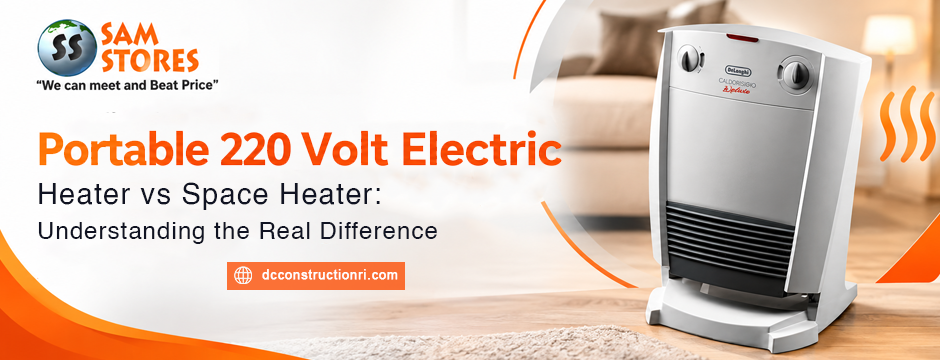
Portable 220 Volt Electric Heater vs Space Heater: Understanding the Real Difference

When the temperature drops, choosing a heater can seem straightforward until you start comparing voltage, wattage, room size, installation and operating costs. A quick search for a space heater can bring up hundreds of options, but not every heater is built for the same electrical system or heating requirement.

One comparison that often causes confusion is a Portable 220 volt Electric Heater versus a conventional space heater. They may look similar at first, but their electrical requirements, power capacity and ideal applications can be quite different.

For homeowners, office managers, workshop owners and anyone trying to heat a specific area efficiently, understanding that difference can make the buying decision much easier.

Sam Stores specialises in 220 volt appliances and heating solutions, giving customers access to products designed for specific voltage requirements. The right choice is not necessarily the smallest or cheapest heater. It is the one that matches your room, electrical setup and heating needs.

What Is a Portable 220 Volt Electric Heater?

A portable 220 volt electric heater is a movable heating appliance designed to operate on a 220V electrical supply. Unlike permanently installed heating equipment, a portable unit can generally be moved to different areas when required, provided the electrical connection and installation requirements are appropriate for the particular model.

This flexibility is one of its biggest advantages.

Imagine a home where the living room needs additional heat in the evening, but the home office becomes the coldest room during the day. A portable heater can be moved between these areas rather than installing a separate heating system in every room.

The 220V configuration can also be suitable for appliances designed for higher electrical power. However, voltage alone does not determine how much heat a heater produces. Wattage, heating technology, room size and insulation all matter.

That is why checking the manufacturer’s specifications before buying is essential.

What Do People Mean by a Space Heater?

“Space heater” is a broad term rather than a specific electrical configuration.

It generally refers to a heater designed to warm a relatively small or defined area instead of an entire building. Space heaters can operate at different voltages and can include several technologies, such as fan-forced heating, infrared heating, ceramic heating and oil-filled radiators.

In other words, a 220V portable heater can also be considered a type of space heater.

The real distinction comes down to the specifications.

A typical low-voltage portable space heater may be designed for smaller areas and a particular household outlet. A 220V model may be designed for a different electrical system or a higher-power application.

So, when comparing the two, don’t focus only on the name. Look at voltage, wattage, heating capacity, controls and installation requirements.

Portable 220V Heater vs Space Heater: The Key Differences

The easiest way to understand the difference is to compare the factors that actually affect everyday use.

1. Voltage Requirements

The most obvious difference is electrical compatibility.

A portable 220V heater is designed for a 220V supply. A conventional space heater may be designed for a different voltage depending on its intended market and model.

This is not something to overlook.

Using an appliance with an incompatible electrical supply can create performance problems and potentially serious safety risks. Before purchasing an electric heater with 220v plug, check the voltage, frequency, plug configuration and circuit requirements specified by the manufacturer.

For international buyers and customers purchasing imported appliances, this check is particularly important.

2. Heating Power

Wattage provides a better indication of electrical power consumption and potential heating output than voltage alone.

Two heaters can both operate at 220V while having very different wattage ratings.

A higher-wattage heater may be suitable for a larger or harder-to-heat space, while a lower-wattage model may be perfectly adequate for a bedroom, office or other compact room.

The mistake is assuming that higher wattage automatically means better performance.

It does not.

The heater should be appropriately sized for the space. Oversizing can increase unnecessary energy consumption, while undersizing may leave the room uncomfortable and force the heater to work continuously.

3. Portability

Portability is where portable electric heaters have an obvious advantage over permanently installed systems.

If your heating needs change throughout the day, being able to move a heater can be useful. A home office, workshop, bedroom or enclosed recreation area may each need heat at different times.

However, portability should never mean repeatedly moving an appliance without considering electrical safety.

The heater should be positioned on a stable surface, kept away from curtains and other combustible materials, and connected according to the manufacturer’s instructions.

4. Installation

A portable heater generally requires less installation than a fixed heating system, but that does not mean every 220V heater can simply be plugged into any outlet.

Some high-powered 220V appliances may require a dedicated circuit or specific outlet configuration. Always follow the manufacturer’s installation requirements and consult a qualified electrician where necessary.

For customers looking for permanent heating, a fixed installation may make more sense.

A 220 volt wall mount heater, for example, can free up floor space and provide a dedicated heating solution in a room where the furniture layout rarely changes.

When Is a Portable 220 Volt Electric Heater the Better Choice?

Portability becomes particularly valuable when heating requirements change from one area to another.

It can make sense for:

  • Home offices
  • Bedrooms
  • Workshops
  • Garages
  • Utility rooms
  • Enclosed work areas
  • Studios
  • Commercial spaces requiring supplementary heating

The biggest selling point is control. Instead of heating every part of a property, you can concentrate warmth where it is actually needed.

That can be particularly useful when only one room is occupied.

For example, heating an entire house simply because one person is working in a home office may not be the most practical approach. A properly selected portable heater can provide targeted warmth without requiring a permanent heating installation.

When Should You Consider a Fixed Heater?

Portability is not always the priority.

If you know exactly where heating is required and want a cleaner, more permanent setup, a wall-mounted or ceiling-mounted heater may be worth considering.

A wall-mounted model keeps the floor clear, which can be especially helpful in smaller rooms, workshops or busy commercial areas.

You can explore options such as a 220 volt wall mount heater when permanent positioning and space efficiency are more important than mobility.

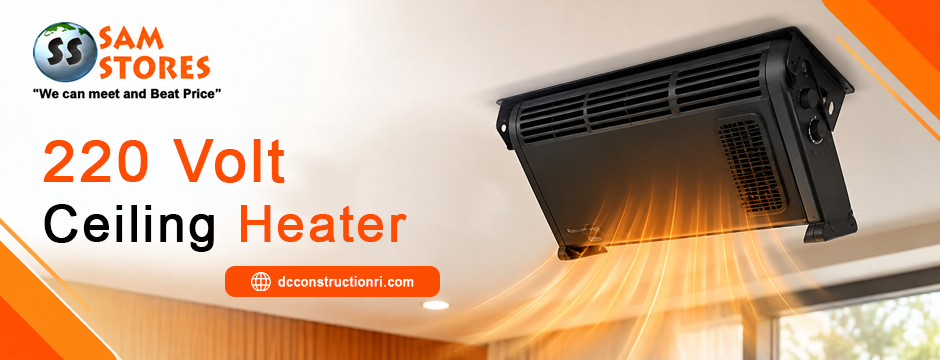
Similarly, ceiling-mounted heating can work well in areas where floor and wall space are limited. A 220 volt ceiling heater can be particularly useful in larger rooms, workshops and commercial environments where distributing heat from above makes practical sense.

The best configuration depends on the room layout, ceiling height, insulation and intended use.

How The Braun 220 Volt Hair Dryer Redefines Everyday Glamour_

This is one of the biggest misconceptions surrounding 220V heaters.

Voltage itself does not automatically make a heater more energy efficient.

Electric resistance heaters convert electrical energy into heat, and the amount of electricity consumed depends heavily on the appliance’s wattage and how long it operates.

The advantage of a particular 220V heater may instead come from its design, power capacity, thermostat, controls and suitability for the electrical system in which it is being used.

A heater that is correctly sized for the room can be a better purchase than simply choosing the model with the highest voltage or wattage.

Look for practical features such as:

  • Adjustable thermostat
  • Multiple heat settings
  • Automatic shut-off
  • Overheat protection
  • Timer controls
  • Appropriate heating capacity
  • Suitable plug and circuit requirements

These features can make everyday operation easier and more controlled.

What About Energy Costs?

A heater’s running cost depends primarily on its power consumption and operating time.

For example, a heater rated at 2,000 watts uses approximately 2 kWh when operating continuously for one hour at full output. Your actual cost depends on your electricity tariff and whether the heater cycles on and off through thermostat control.

This is why buying based purely on the lowest upfront price can be misleading.

A heater with useful temperature controls may offer better day-to-day usability because it does not necessarily need to operate at maximum output continuously.

Before buying, consider both the purchase price and how frequently the appliance will be used.

Which Heater Is Better for Your Home?

There is no universal winner.

A portable 220V heater is likely to appeal to someone who wants flexibility and targeted heating. You can move it between suitable spaces as your needs change.

A conventional space heater may be perfectly adequate when the room is small and the electrical configuration matches the appliance.

A wall-mounted heater makes more sense when floor space is limited and the heating location is permanent.

For larger workshops or rooms with high ceilings, a ceiling-mounted solution may provide a more appropriate installation.

The important point is to buy according to the application rather than the product label.

Safety Should Come Before Convenience

Heating appliances require sensible handling regardless of voltage.

Keep the heater away from curtains, bedding, paper, clothing and other materials that can catch fire. Never cover an operating heater. Keep children and pets away from hot surfaces, and do not use an appliance if its cord, plug or housing appears damaged.

Avoid using unsuitable extension cords or power strips with high-powered heating equipment unless the manufacturer specifically permits it and the electrical setup is rated accordingly.

For 220V appliances, electrical compatibility deserves extra attention. If you are uncertain about the outlet, circuit or installation requirements, ask a qualified electrician before connecting the appliance.

A few minutes of checking can prevent a costly mistake.

Why Buy Your 220V Heating Appliance From Sam Stores?

Choosing the right heater is easier when you have access to appliances designed around specific voltage requirements.

Sam Stores has built its product range around 220V appliances and international electrical requirements, giving shoppers a convenient place to explore heating and other household appliances.

Whether you need a portable heating solution or are considering a more permanent installation, the important thing is to compare specifications rather than choosing purely on appearance or price.

Look at voltage compatibility, wattage, room size, heating method, controls, safety features and installation requirements before making the final decision.

That approach helps you buy a heater that fits your actual needs instead of replacing an unsuitable appliance later.

Final Verdict: Portable 220V Heater or Space Heater?

The answer depends on what you mean by “space heater” and what your room requires.

A Portable 220 volt Electric Heater is a strong choice when flexibility, targeted heating and 220V compatibility are priorities. A conventional space heater can work well for smaller applications when its voltage and power specifications match the electrical setup.

If floor space is limited, consider a wall-mounted design. If you need to heat a larger open area, a ceiling-mounted solution may be worth investigating.

Most importantly, don’t buy based on voltage alone. Match the heater’s wattage and heating capacity to the room, verify electrical compatibility and prioritise safety features.

At Sam Stores, shoppers can explore 220V heating appliances with different configurations and choose according to the space they actually need to heat. When the right appliance meets the right application, staying comfortable becomes considerably simpler.

Frequently Asked Questions

1. Is a Portable 220 volt Electric Heater the same as a space heater?

Not exactly. “Space heater” is a broad category covering heaters designed to warm a particular area. A portable 220V heater is one type of space-heating appliance designed for a 220V electrical supply.

2. Can I use an electric heater with 220V plug in any outlet?

No. Always check the heater’s voltage, frequency, plug configuration and circuit requirements. If you are unsure whether your electrical system is suitable, consult a qualified electrician.

3. Is a 220 volt heater better than a standard space heater?

Neither is automatically better. The right choice depends on the room size, required heating capacity, electrical supply, installation and intended use.

4. When should I choose a 220 volt wall mount heater?

A wall-mounted heater can be useful when you want a permanent heating position while keeping floor space available. It can be particularly practical in compact rooms and busy work areas.

5. What should I check before buying a portable 220V heater?

Check voltage compatibility, wattage, room size, heating capacity, thermostat controls, safety features, plug configuration and any dedicated circuit or installation requirements.

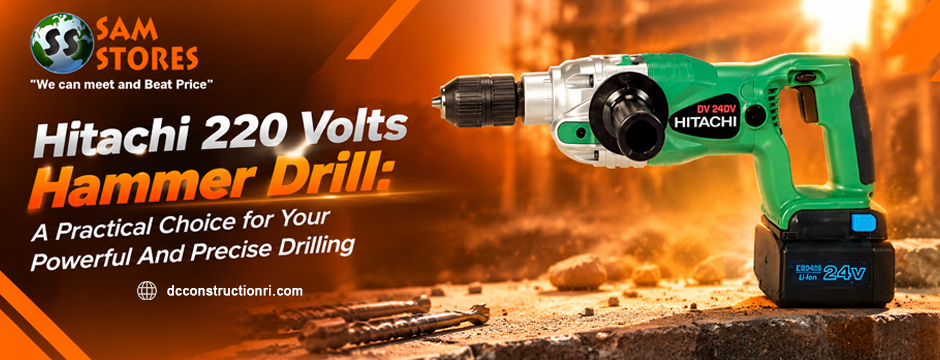
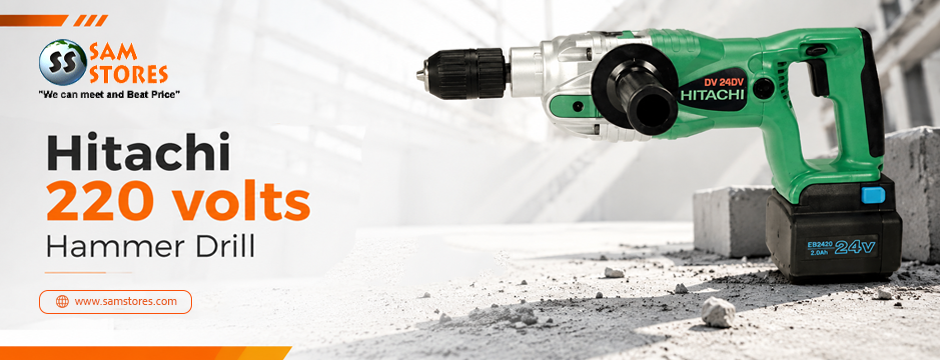
Hitachi 220 Volts Hammer Drill: A Practical Choice for Your Powerful And Precise Drilling

A good drill earns its place in a toolbox when the work gets demanding.

You notice the difference when you’re drilling into tough materials, working through a long project, or handling jobs that require consistent torque. A struggling tool can slow everything down, while the right one simply gets on with the work.

That is where the Hitachi 220 Volts hammer drill becomes an interesting choice for professionals and serious DIY users.

The Hitachi DV24DV 220-240 Volt Cordless Impact Drill combines strong torque, useful operating modes, a precision chuck, and practical design features. It is built for users who expect power without sacrificing control.

For Sam Stores customers looking for dependable drilling equipment, understanding what this drill offers can make the buying decision considerably easier.

Let’s take a closer look at what makes it worth considering.

The Right Hammer Drill Matters: Why?

Not every drilling job demands the same approach. Sometimes you need a straightforward drill for everyday work. Other times, you’re dealing with harder surfaces where additional impact action can make the task much easier.

A hammer or impact drill gives you that additional capability. The key, however, is having enough power and control to use it effectively.

The Hitachi DV24DV is designed around this balance. Its two operating modes allow users to switch between standard drilling and impact drilling according to the task. That means one tool can handle different requirements instead of forcing you to constantly change equipment. For busy workshops and job sites, that versatility can be valuable.

Understanding The Hitachi 220 Volts Hammer Drill

The Hitachi 220 Volts hammer drill is designed for users who want a combination of power and practical handling. One of its standout specifications is its effortless 65 Nm torque. Torque matters because it determines how effectively a drill can apply rotational force during demanding work.

Higher torque can be particularly useful when working with applications that place greater resistance on the drill. The DV24DV also features a powerful impact rate designed to deliver strong performance in its class. This makes it suitable for users who regularly encounter challenging drilling tasks.

Two Modes Give You More Control

One feature worth noting is the two-mode operation. The DV24DV can be used as a standard drill or an impact drill. Drilling requirements change from one job to another. Therefore, having both options available means you can choose the mode based on the job. It also saves space in your toolbox.

65 Nm Torque for Demanding Applications

A drill may perform perfectly well on lighter tasks but start feeling strained when the application becomes more demanding. The DV24DV addresses this with up to 65 Nm of torque.

For tradespeople, contractors, workshop users, and experienced DIY enthusiasts, that additional force can make difficult drilling jobs more manageable. Of course, the appropriate drill bit and operating technique still matter.

A Linear D-Handle Design for Practical Handling

Ergonomics can easily be overlooked when comparing power tools. Yet, anyone who has spent hours using a drill knows that handling makes a considerable difference.

The DV24DV incorporates a linear D-handle design. This configuration gives users a practical grip and can help provide better control during demanding applications. That is particularly useful when additional pressure is required.

Electric Brake Adds An Extra Safety Feature

Power tools should always be handled responsibly. Even experienced users need equipment designed with practical safety features. The DV24DV includes an electric brake, which is designed to stop the rotation of the tool quickly after the trigger is released. This can provide an additional level of control during operation.

However, an electric brake doesn’t replace proper safety practices. Users should still wear appropriate protective equipment, select the correct drill bit, secure their workpiece, and follow the manufacturer’s operating instructions. Good equipment and good working habits should always go together.

Externally Accessible Brushes Make Maintenance Easier

Professional users understand that maintaining power tools is part of getting long-term value from them. The DV24DV features externally accessible brushes. This design makes brush access more convenient when maintenance or replacement is required. That may seem like a minor feature when you’re comparing specifications.

In practice, easier maintenance can save time. You don’t want a straightforward maintenance task to become unnecessarily complicated. For workshops and users who depend heavily on their equipment, serviceability deserves attention alongside power and performance.

Why 220-240 Volt Compatibility Matters

Electrical compatibility is an important consideration when selecting power equipment. The DV24DV is designed for a 220-240 Volt supply, making it suitable for relevant electrical environments.

Before purchasing any electrical power tool, always confirm that its voltage requirements match your intended power source. This is especially important when purchasing equipment for different countries, workshops, or commercial environments.

Choosing the correct voltage specification isn’t simply about convenience. It’s part of using the equipment safely and appropriately.

More Than Just A Drill

When people hear “hammer drill,” they often think about one specific job. But versatile equipment can offer considerably more value.

The Hitachi 220 Volts hammer drill combines standard drilling and impact drilling within the same tool. That flexibility can make it useful across workshops, construction applications, maintenance tasks, renovation work, and serious home projects.

Its optional angle attachment also adds another interesting possibility. An angle attachment can help users reach applications where a conventional straight drill configuration may be awkward.

That kind of adaptability is particularly useful when working in confined or difficult-to-access spaces.

Building A More Capable Hitachi 220 Volts Power Tools Collection

A drill doesn’t have to be the only Hitachi tool in your workshop. Users building a broader collection of Hitachi 220 volt power tools may also consider equipment designed for cutting, grinding, sanding, and other applications.

For example, an angle grinder can be useful for grinding, cutting, and surface preparation. A circular saw can provide a dedicated solution for making controlled cuts through suitable materials.

Choosing between A Drill, Angle Grinder, And Circular Saw

It’s tempting to compare power tools simply by looking at their specifications. However, the better question is what you actually need to accomplish. A Hitachi 220 volt angle grinder is designed around applications such as grinding, cutting, and surface preparation.

A Hitachi 220 volt circular saw, meanwhile, is intended for suitable cutting applications where a dedicated saw provides greater practicality. The DV24DV serves a different role.

Its strength lies in drilling versatility, particularly where standard and impact drilling capabilities are both useful. So, choosing between these tools isn’t about finding one universal winner. It’s about matching the machine to the work.

How The Braun 220 Volt Hair Dryer Redefines Everyday Glamour_

The DV24DV can appeal to several types of users.

  • Professional tradespeople
  • Workshop users
  • Serious DIY enthusiasts

The key is understanding the tool’s capabilities and using it within the manufacturer’s recommended applications.

Getting Better Results from Your Drill

Even a powerful drill performs better when used correctly.

  • Start by selecting the right bit for the material.
  • Check that the bit is properly secured in the chuck before starting.
  • Use the appropriate operating mode for your application.
  • Avoid forcing the drill unnecessarily.
  • Allow the tool to do the work while maintaining controlled pressure.
  • Most importantly, wear appropriate protective equipment and follow the manufacturer’s safety guidance.

These habits may sound basic. They are also the habits that help users work more confidently and consistently.

Why Do Specifications Matter When Buying Power Tools?

Product specifications aren’t just numbers printed on a product page. They help you understand whether a tool matches your working requirements. With the DV24DV, several specifications stand out.

The 220-240 Volt compatibility defines the relevant power supply. The 65 Nm torque indicates its available rotational force. The 13mm keyless chuck tells you about its chuck capacity. So, when viewed together, these specifications tell a much more useful story than any single number.

A Practical Addition to The Toolbox

A good power tool should make work feel more manageable. It should provide enough power for its intended applications while remaining practical to operate and maintain.

The DV24DV brings several useful characteristics together. It offers strong torque, impact capability, standard drilling, a precision keyless chuck, a linear D-handle, electric braking, accessible brushes, and optional angle attachment compatibility.

For users comparing the Hitachi 220 Volts hammer drill, those features provide plenty to consider beyond the basic “drill versus hammer drill” question.

At Sam Stores, choosing the right drilling equipment should begin with understanding what the tool can actually do. That helps you buy for the job rather than simply buying for the specification sheet.

Final Thoughts

The right drill can become one of the most frequently used tools in a workshop. That’s why choosing one based on real working requirements matters.

The Hitachi 220 Volts hammer drill offers a useful combination of 65 Nm torque, two drilling modes, a 13mm precision keyless chuck, electric braking, practical handling, and accessible brushes.

Whether you’re a professional tradesperson, workshop user, or serious DIY enthusiast, the important question is simple: does the tool match the work you expect it to handle?

With the DV24DV, users get a capable drilling solution designed around power, flexibility, and practical usability.

FAQs

1. What is the Hitachi DV24DV hammer drill designed for?

The DV24DV is designed for drilling applications requiring standard drilling or impact drilling. It suits professional and demanding DIY work.

2. How much torque does the Hitachi DV24DV provide?

The DV24DV provides up to 65 Nm of torque, giving users substantial rotational force for suitable demanding applications.

3. Does the DV24DV have different drilling modes?

Yes. The Hitachi 220 Volts hammer drill features two modes: standard drilling and impact drilling. Users can select the appropriate mode based on their application.

4. What type of chuck does the DV24DV use?

The DV24DV features a 13mm precision keyless chuck. This allows convenient drill-bit changes without requiring a traditional chuck key.

5. Does the Hitachi DV24DV include any safety features?

Yes. The drill includes an electric brake designed to stop rotation quickly after releasing the trigger. Users should still follow all recommended safety procedures.

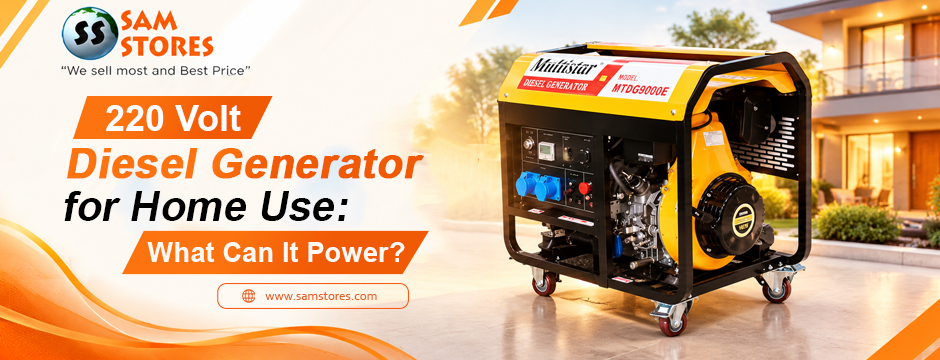
220 Volt Diesel Generator for Home Use: What Can It Power?

A power outage is inconvenient when it lasts for a few minutes. When it stretches into several hours, it can become a serious problem.

The refrigerator stops running. Lights go out. Fans and air conditioners become unusable. Wi-Fi equipment shuts down. If you work from home, operate essential equipment or simply want reliable backup power for your family, a generator can make a big difference.

This is where a 220 volt diesel generator can be a practical choice for home backup power.

But there is an important question to answer before buying one: What can a 220 volt diesel generator actually power?

The answer depends on the generator’s rated output, the appliances you want to operate and how much power those appliances need when starting. Choosing a generator simply because it says 220V on the label is not enough. You need to look at voltage, wattage, frequency, phase and the combined electrical load.

For homeowners looking for dependable backup power, Sam Stores offers generator options designed to provide practical performance without making the buying process unnecessarily complicated.

What Is a 220 Volt Diesel Generator?

A 220 volt diesel generator uses a diesel engine to produce electrical power at around 220 volts. Depending on the model, the output may be specified within the 220 to 240 volt range.

For many household applications, this voltage range makes the generator suitable for powering common electrical equipment, provided the appliance specifications and generator output are compatible.

A typical household generator may be used for:

  • Refrigerators and freezers
  • Ceiling and portable fans
  • Lighting systems
  • Televisions
  • Wi-Fi routers and networking equipment
  • Computers and workstations
  • Washing machines
  • Water pumps
  • Kitchen appliances
  • Air conditioners, depending on capacity
  • Selected power tools and workshop equipment

The key point is that voltage compatibility and generator capacity are two different things.

A generator can provide the correct voltage but still be too small to run several high-powered appliances at the same time.

How Much Can a 220 Volt Diesel Generator Power?

Generator capacity is normally expressed in watts or kilowatts.

For example, a 6 kW generator has a rated output of approximately 6,000 watts. That does not mean you should continuously operate equipment right at the maximum rating. Leaving some capacity available provides a useful safety margin and helps accommodate appliances with higher starting requirements.

Consider a basic household load:

ApplianceApproximate Running Power
Refrigerator150 to 400W
LED lights50 to 200W
Ceiling fans60 to 100W each
Television80 to 200W
Wi-Fi router10 to 30W
Computer100 to 300W
Washing machine400 to 1,000W
Water pump500 to 1,500W+
Microwave1,000 to 1,500W
Air conditioner1,000 to 2,500W+

These figures are only general estimates. Actual consumption varies considerably between appliances and models.

A refrigerator, for instance, may consume relatively little electricity once it is running, but its compressor can require considerably more power during startup. The same principle applies to pumps, air conditioners and other equipment containing motors or compressors.

That is why calculating the total load before buying is so important.

Running Watts vs Starting Watts: The Detail Many Buyers Miss

One of the most common generator-buying mistakes is looking only at running wattage.

Some appliances need additional power for a short period when they start. This is known as starting, surge or startup wattage.

Imagine that your refrigerator normally consumes 300 watts while running. Its starting requirement could be substantially higher. If your generator is already operating several other appliances, that temporary increase could overload the system.

The same issue can arise with:

  • Air conditioners
  • Refrigerators
  • Freezers
  • Water pumps
  • Compressors
  • Power tools

When selecting a 220 volt diesel generator, make a list of the appliances you expect to run together. Note both their running and starting requirements where available.

This simple step can help you choose a generator that is genuinely suited to your home rather than one that only looks suitable on paper.

What Can a 220 Volt Diesel Generator Run During an Outage?

For many homeowners, the goal is not to operate every appliance in the house simultaneously. Instead, it is to keep essential systems running.

A properly sized generator can potentially support a combination such as:

Essential load

  • Refrigerator
  • Several lights
  • Fans
  • Television
  • Wi-Fi router
  • Computer

Medium load

  • Washing machine
  • Water pump
  • Additional lighting
  • Kitchen appliances

Higher load

  • Air conditioner
  • Electric water heater
  • Large pump
  • Heavy workshop equipment

The actual combination depends on the generator’s capacity and the electrical requirements of each appliance.

If you need air conditioning, pumping equipment and multiple large appliances at the same time, you will generally need more generator capacity than someone who only wants lighting, refrigeration and basic electronics.

Is a 240 Volts Generator Single Phase Suitable for a Home?

A 240 volts generator single phase can be appropriate for residential applications where the home’s electrical system and appliances are designed for compatible voltage and single-phase power.

Single-phase generators are commonly considered for houses, small offices, workshops and other applications where three-phase electrical power is not required.

However, don’t assume that every 220V, 230V or 240V appliance can automatically be connected to every generator. Electrical standards differ between countries and properties.

Before purchasing, check:

  1. The voltage requirements of your appliances.
  2. Whether your electrical system is single-phase or three-phase.
  3. The generator’s rated output.
  4. The generator’s frequency.
  5. Plug and outlet compatibility.
  6. Whether professional installation or a transfer switch is required.

If you are uncertain, speak with a qualified electrician before connecting a generator to your home’s electrical system.

Why Consider Diesel for Home Backup Power?

Diesel generators have earned a strong reputation for backup and demanding applications because diesel engines are built for sustained operation.

For homeowners who experience frequent or lengthy power interruptions, diesel can be an attractive option.

A diesel generator can offer several advantages:

Built for Extended Operation

Diesel engines are commonly used in applications where generators may need to operate for extended periods. That makes them particularly useful during prolonged outages.

Strong Performance

Diesel engines are well suited to handling demanding electrical loads, especially when the generator is correctly sized for the application.

Practical for Frequent Backup Use

If your generator is going to be used regularly rather than sitting untouched for years, a diesel model can be worth considering.

Suitable for More Than Just Emergencies

A sufficiently powerful unit can potentially support a home workshop, agricultural equipment, water pumping and other applications beyond basic emergency lighting.

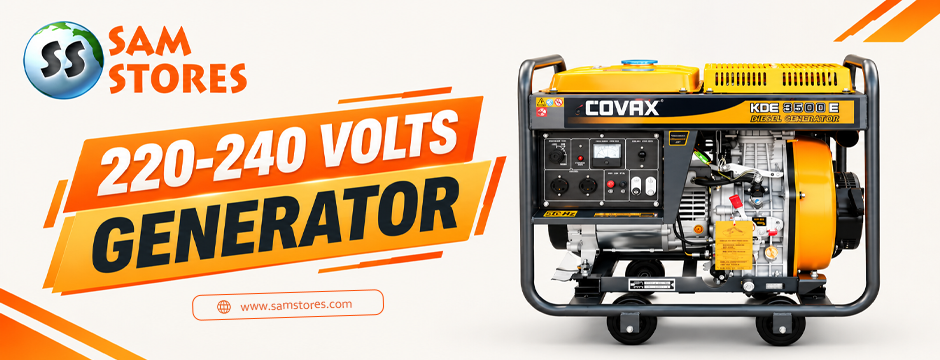
What Is a 220-240 Volts Generator?

You may come across the term 220-240 volts generator while shopping for backup power equipment.

How The Braun 220 Volt Hair Dryer Redefines Everyday Glamour_

This generally indicates that the generator’s electrical output falls within the 220 to 240 volt range, depending on the model and its operating specifications.

For buyers, the important thing is to look beyond the voltage figure.

Check the complete specification, including:

  • Rated power
  • Maximum power
  • Frequency
  • Phase
  • Engine type
  • Fuel tank capacity
  • Starting system
  • Outlet configuration
  • Safety features

A generator with the right voltage but insufficient wattage will not solve your backup power requirements.

Don’t Forget About Fuel Capacity

Generator runtime depends on several factors, including engine efficiency, fuel tank capacity and the electrical load being placed on the generator.

A generator running at a light load may consume fuel differently from one operating close to its rated capacity.

For example, a model with a larger fuel tank can be particularly convenient when you expect extended outages because you may not need to refuel as frequently.

Still, fuel capacity should not be your only purchasing consideration. A larger tank does not automatically mean a better generator. The generator needs to match your home’s actual power requirements.

Features Worth Looking For in a Home Generator

A good home backup generator should be more than an engine attached to an alternator.

Depending on your requirements, useful features can include an electric start, voltage monitoring, low-oil protection, robust outlets and wheels for easier movement.

The Multistar MTDG9000E available from Sam Stores is a good example of a generator designed around practical usability. It provides 220 to 240 volt output at 50 Hz and has a rated power of around 6.0 kW. Its design also includes features such as an LCD volt meter, oil alert, splash-proof outlets and wheels.

For homeowners, these details matter because a generator needs to be straightforward to monitor and operate, particularly during an unexpected outage.

How to Choose the Right Generator for Your Home

Before choosing a 220 volt diesel generator, take five minutes to work out what you actually need.

Step 1: List Your Essential Appliances

Write down everything you want to keep running during an outage.

Step 2: Check Their Wattage

Look at the rating plate or manufacturer’s specifications for each appliance.

Step 3: Identify High-Starting-Load Appliances

Refrigerators, pumps and air conditioners may require additional startup power.

Step 4: Add Your Loads

Calculate the approximate running wattage of the appliances you expect to use simultaneously.

Step 5: Allow Some Headroom

Avoid choosing a generator that operates at its absolute limit all the time. Some spare capacity can make the system more practical and flexible.

Step 6: Check Voltage and Phase

Make sure the generator’s output matches your electrical requirements. This is especially important when comparing 220V, 230V and 240V equipment.

Why Buy Your Generator From Sam Stores?

Buying a generator is not simply about finding the lowest price. You are investing in backup power that you may depend on when the electricity goes out.

Sam Stores gives buyers access to generator equipment for different power requirements, making it easier to compare specifications and find an appropriate solution.

Whether your priority is keeping essential home appliances running, supporting a workshop or maintaining critical equipment during an outage, choosing based on actual electrical demand is the smarter approach.

A 220 volt diesel generator can be an excellent home backup solution when the capacity, voltage, phase and appliance requirements are properly matched.

Final Thoughts

A home generator should make life easier during a power failure, not create another problem.

The right 220 volt diesel generator can keep essential appliances operating, maintain refrigeration, support lighting and electronics, and potentially handle larger equipment when its capacity is sufficient.

The secret is choosing based on your actual power requirements rather than simply buying the biggest or cheapest generator available.

Start with your appliances. Calculate their running and starting loads. Check voltage and phase requirements. Then compare generator specifications carefully.

If your home needs dependable backup power in the 220 to 240 volt range, explore the generator options available from Sam Stores and choose a model that gives you the capacity and features you genuinely need.

FAQs

1. What can a 220 volt diesel generator power at home?
A 220 volt diesel generator can potentially power refrigerators, lights, fans, televisions, computers, Wi-Fi equipment, washing machines, pumps and other appliances, depending on its wattage capacity and the combined electrical load.

2. Is a 220 volt diesel generator suitable for home use?
Yes. A properly sized 220 volt diesel generator can provide reliable residential backup power. Before connecting one, make sure its voltage, frequency, phase and output are compatible with your home’s electrical system.

3. Can a 220 volt diesel generator run an air conditioner?
It can, provided the generator has sufficient capacity to handle both the air conditioner’s running and startup power requirements. Larger air conditioners may require considerably more generator capacity.

4. What is the difference between a 220-240 volts generator and a 240 volts generator single phase?
A 220-240 volts generator describes its voltage output range, while a 240 volts generator single phase also specifies the phase configuration. Always check the complete generator and appliance specifications before connecting equipment.

5. How do I choose the right 220 volt diesel generator?
List the appliances you need during an outage, check their running and starting wattage, calculate the combined load and select a generator with sufficient rated capacity and appropriate voltage and phase specifications.

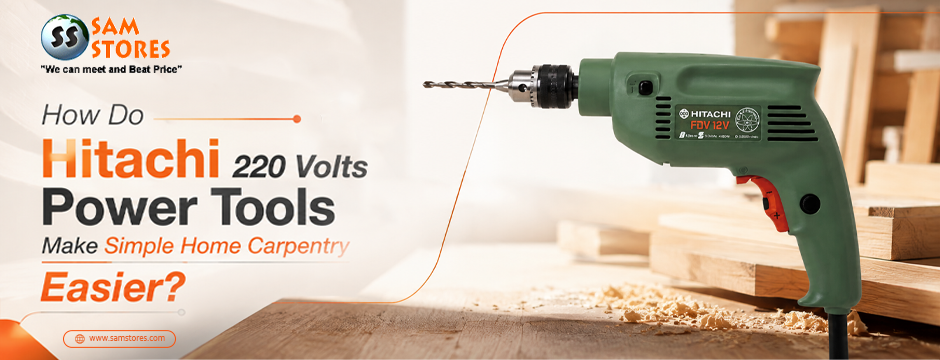
How Do Hitachi 220 Volts Power Tools Make Simple Home Carpentry Easier?

There is something satisfying about fixing or building something with your own hands. Maybe it is a small wooden shelf for the living room, a storage bench for the balcony, or a simple worktable for your garage.

These projects may look intimidating at first. However, the right power tool can make many basic carpentry jobs faster, cleaner, and more manageable.

For homeowners who enjoy practical DIY projects, Hitachi 220 Volts power tools can be useful additions to a home workshop. They can help with cutting, drilling, fastening, and other routine woodworking tasks when used correctly.

At Sam Stores, we understand that residential DIY projects do not always require a professional workshop. Sometimes, you simply need the right tool, a little patience, and a clear idea of what you want to build.

So, how can a power tool transform a simple carpentry project? Let’s explore.

Why Power Tools Make Home Carpentry More Approachable?

Traditional hand tools still have their place. A handsaw, screwdriver, measuring tape, chisel, and hammer can handle many basic jobs. However, cutting several pieces of timber manually can take considerable time and effort.

Power tools introduce speed and consistency.

A suitable saw can make repeated cuts more efficiently. A drill can create clean holes without the physical effort required by a manual brace. A driver can help secure screws quickly across a larger project.

So, it does not mean power tools should replace traditional tools completely. Instead, they complement them. You still need accurate measurements, careful marking, appropriate materials, and good finishing techniques. The power tool simply makes some of the physical work easier.

Start with A Simple Carpentry Project

If you are new to DIY carpentry, don’t begin with an ambitious furniture project.

Start small.

A basic wall shelf is a good example. You might need two or three wooden boards, brackets, screws, and suitable wall fixings.

The process is straightforward:

  1. Measure the available space.
  2. Mark the required board lengths.
  3. Cut the boards accurately.
  4. Smooth rough edges.
  5. Drill necessary holes.
  6. Assemble the components.
  7. Install the finished shelf securely.

A project like this teaches several useful skills without overwhelming you. Once you’re comfortable, you can gradually move toward more complicated projects.

What Can A Power Tool Actually Do?

The term “power tool” covers a surprisingly broad range of equipment. Different tools are designed for different jobs.

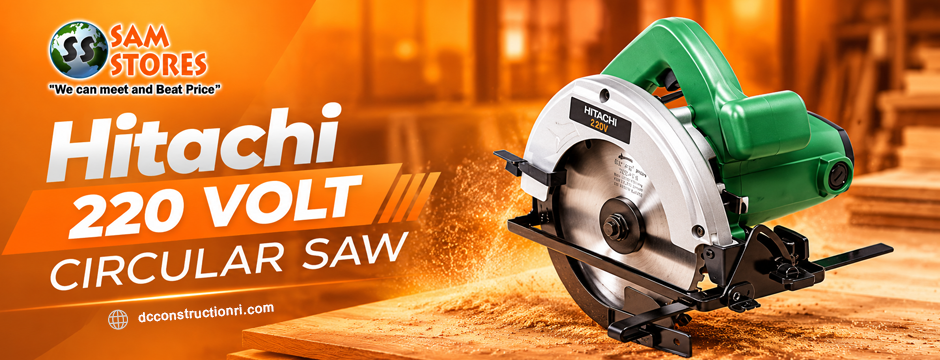
A Hitachi 220 Volts circular saw is primarily used for cutting. A drill creates holes, while certain hammer drills can handle tougher drilling applications. Sanders help smooth wooden surfaces, and drivers make fastening tasks considerably quicker.

Therefore, choosing the right tool matters more than simply buying the most powerful model available. For occasional home carpentry, think about the projects you are likely to undertake. Will you mostly cut timber? Will you drill holes? Do you expect to work with masonry as well as wood?

Your answers can help determine which tools deserve a place in your home workshop.

Choosing Hitachi 220 Volts Power Tools for DIY Projects

For homeowners building a small collection of reliable equipment, Hitachi 220 volts power tools can offer options for different workshop requirements. The important thing is matching the tool to the task.

For example, cutting a long timber board requires a different approach from drilling a hole for a shelf bracket.

Before buying anything, check the tool’s specifications and intended applications. Also consider its power requirements, accessories, ergonomics, and safety features. A tool should feel manageable in your hands.

If it is difficult to control, excessive power can become a disadvantage rather than an advantage.

Cutting Timber with A Circular Saw

Let’s return to our imaginary shelf project. Suppose you have purchased a longer timber board than necessary. You need to cut it into several shorter sections. This is where a circular saw can save considerable time. A Hitachi 220 volts circular saw can be useful for suitable wood-cutting applications when operated according to the manufacturer’s instructions.

The keyword here is “suitable.”

Before making a cut, check the material, blade compatibility, cutting depth, and tool specifications. Secure the workpiece properly and ensure the cutting path is completely clear. Never hold a small piece of timber in your hand while attempting to cut it. Instead, use appropriate supports and keep your hands away from the blade path.

Good preparation makes power-tool work much safer.

Drilling Holes without Struggling

Drilling is another common part of home carpentry. You might need holes for screws, dowels, brackets, handles, hinges, or other fittings. A suitable drill can make these tasks significantly easier.

If your DIY plans also involve occasional masonry work, a Hitachi 220 volts hammer drill may offer useful versatility, depending on its specifications and the materials involved. However, always choose the correct drill bit for the material.

Wood, masonry, and metal require different bits and techniques. Using the wrong accessory can produce poor results and may damage the workpiece or tool. The right combination of tool, bit, speed, and pressure is what produces a clean result.

How The Braun 220 Volt Hair Dryer Redefines Everyday Glamour_

Power Tools Can Save More Than Time

The biggest benefit of power tools is often described as speed. That’s true, but there is more to it. They can also reduce physical effort.

Cutting thick timber repeatedly with a handsaw can become tiring. Drilling multiple holes manually can strain your hands and wrists. Repetitive fastening can become equally uncomfortable.

A suitable power tool can take much of that repetitive effort out of the process. That can make DIY projects more enjoyable. And when a project is enjoyable, you’re more likely to finish it rather than leaving half-built furniture in the garage.

DIY can be rewarding, but knowing your limits is equally important.

Simple shelves, basic wooden storage, small tables, and minor repairs may be suitable for confident homeowners. However, structural modifications, complex electrical work, major installations, or projects involving significant safety risks may require professional expertise.

Don’t let enthusiasm override judgment; use Hitachi 220 volts power tools smartly with all safety.

Making Your Tools Work Smarter

Owning good equipment doesn’t automatically make someone a good carpenter. The real improvement comes from learning how to use tools correctly.

  • Start by understanding the basics.
  • Learn how different blades affect cuts.
  • Understand drill-bit selection. Practise controlling the tool before working on expensive timber.
  • You can also practise on scrap material.

This is particularly useful for beginners. A few practice cuts can help you understand how the saw behaves. A few test holes can show how much pressure a drill requires. Once you become comfortable, your actual project becomes much less intimidating.

A Power Tool Can Change How You See DIY

Something interesting happens after completing your first successful project. You start looking around your home differently.

That unused corner could become a storage area. That empty wall could hold a custom shelf. That awkward space beneath a window might become a small bench. Instead of seeing problems, you begin seeing projects. That’s perhaps the most valuable thing power tools can offer. They don’t simply make cutting and drilling easier. They can make home improvement feel accessible.

At Sam Stores, we believe having suitable tools can help homeowners approach everyday DIY projects with greater confidence. Of course, confidence should always come with careful preparation and responsible tool use.

Final Thoughts

Simple home carpentry does not have to feel like a professional construction project. With accurate measurements, suitable materials, patience, and the right equipment, homeowners can tackle a wide range of practical DIY tasks.

Hitachi 220 volts power tools can help make cutting, drilling, and other repetitive jobs more manageable when the equipment is appropriate for the project. So, whether you are building a shelf, repairing furniture, creating storage, or making something entirely your own, start with a realistic project. Learn your tools, work safely, and focus on accuracy rather than speed.

At our e-commerce platform, Sam Stores, the right equipment can help turn an idea into something you can actually build. It’s because sometimes, the most satisfying thing in your home isn’t something you bought. It’s something you made yourself.

FAQs

1. Are power tools suitable for beginners in home carpentry?

Yes. Beginners can use suitable power tools like Hitachi 220 volts power tools for simple projects after reading the instructions and learning basic safety practices.

2. What power tool is useful for cutting wooden boards?

A suitable circular saw can make straight cuts through compatible wooden boards. Always check the tool and blade specifications before use.

3. Can a hammer drill be used for home carpentry?

A hammer drill can be useful for drilling applications involving wood and masonry, depending on its specifications. Use the appropriate drill bit for each material.

4. What should beginners consider before buying power tools?

Consider the projects you plan to complete, tool specifications, power requirements, ergonomics, accessories, safety features, and manufacturer guidance.

5. How can I use power tools more safely?

Read the instructions, secure your workpiece, use appropriate protective equipment, maintain good lighting, and keep your hands away from moving components.

Choosing The Right 240-Volt AC Unit for Comfortable, Efficient Home Cooling

It usually starts with a simple problem. Summer arrives, the temperature climbs, and your existing air conditioner struggles to keep the room comfortable. You turn the thermostat down, wait, and hope for the best. Sometimes, though, the problem isn’t the temperature setting. Your air conditioner simply isn’t suited to the space.

That’s when choosing the right 240-volt AC unit can make a noticeable difference.

A higher-voltage air conditioning system can be a practical option for larger rooms, homes with demanding cooling requirements, and those that need dependable performance. However, buying one isn’t simply about choosing the biggest model available. Capacity, installation, electrical requirements, room size, energy use, and heating options all deserve consideration.

At Sam Stores, we understand that shopping for home appliances should feel straightforward. You want to know what you’re buying, why it suits your space, and what to expect once it’s installed.

So, before you make your decision, let’s look at what actually matters.

Why Voltage Matters When Choosing An Air Conditioner?

Voltage is one of those specifications most people notice but don’t always understand.

An air conditioner designed for a higher electrical voltage isn’t automatically more powerful than every lower-voltage model. Instead, voltage is part of the electrical system the appliance is designed to operate with.

A 240-volt system can be suitable for larger-capacity appliances that require substantial electrical power. Many homes already have 240-volt circuits for appliances such as electric ranges, dryers, and other high-demand equipment.

However, this doesn’t mean you should simply purchase a unit and plug it into an existing outlet.

Air conditioning installation can involve dedicated circuits, appropriate wiring, breakers, and professional installation. Always check the manufacturer’s electrical requirements and consult a qualified electrician when necessary.

Start With the Room, Not The Air Conditioner

Here’s where many shoppers make their first mistake.

They see a powerful air conditioner and assume bigger must be better.

It isn’t that simple.

The right cooling capacity depends on the room’s size and several other factors. Ceiling height, insulation, windows, sunlight exposure, occupancy, and local climate can all influence cooling requirements.

A unit that is too small may run continuously without adequately cooling the room. A unit that is too large may cool the space quickly but cycle on and off frequently, which can affect comfort and efficiency.

The goal is to find the right match. Before shopping, measure the room and consider how it is used. A bedroom, living room, garage, workshop, and open-plan area may all have very different cooling requirements.

When A 240 Volt AC Unit Makes Sense

A 240-volt AC unit can be an excellent option when you’re looking for substantial cooling performance and your home’s electrical setup supports the required installation. These systems can be particularly useful for larger spaces where compact room air conditioners may not provide enough capacity.

Think about a spacious living room that receives strong afternoon sunlight. Perhaps the room connects to another area, or it has high ceilings that allow warm air to accumulate.

In such situations, having an appropriately sized air conditioner can make the difference between constantly chasing the temperature and actually enjoying the room. However, capacity should always be matched to the space rather than selected purely because the voltage specification sounds more powerful.

Through-the-Wall Air Conditioners: A Practical Alternative

Not every home has the layout or budget for a central air conditioning system. That’s one reason wall-installed air conditioners remain popular.

A 220 volt through-the-wall air conditioner can provide dedicated cooling without requiring a traditional window installation. These systems are installed into a wall opening, creating a more permanent appearance than many window units.

They can work particularly well in rooms where window-mounted installation isn’t practical.

There is also an aesthetic advantage. Because the unit sits within the wall, it can leave the window unobstructed. This can be useful in rooms where natural light and window access are important.

Before installation, however, check wall dimensions, sleeve requirements, electrical specifications, and manufacturer instructions.

How The Braun 220 Volt Hair Dryer Redefines Everyday Glamour_

Air conditioning doesn’t have to be useful only during summer. If you live somewhere with changing seasons, a unit capable of both cooling and heating can provide additional value throughout the year.

A 220 volt wall air conditioner heater combines cooling and heating functions in one appliance. Instead of purchasing separate equipment for different seasons, homeowners can use the same system to manage indoor temperatures throughout the year.

This can be particularly attractive for bedrooms, guest rooms, additions, apartments, workshops, and other spaces that need independent temperature control.

Before purchasing, check the heating method and the temperature range specified by the manufacturer. Not every heating-capable air conditioner is designed for the same outdoor conditions.

Think about Energy Efficiency Too

Running an air conditioner for hours every day can have a noticeable effect on household energy consumption. That’s why efficiency deserves attention before you buy.

Look at the manufacturer’s energy ratings and operating specifications rather than choosing solely by purchase price. A slightly more efficient appliance may cost more initially but potentially deliver better long-term value depending on usage and local electricity rates.

Also consider how you use the room.

Closing blinds during peak sunlight, improving insulation, sealing air leaks, and keeping doors closed while cooling can reduce the workload placed on the air conditioner. The most efficient appliance still has to work harder when the room constantly gains heat from outside.

Features Worth Considering

Modern air conditioners can include a wide range of convenience features. Depending on your priorities, useful options may include:

  • Adjustable temperature controls
  • Multiple fan speeds
  • Programmable timers
  • Remote controls
  • Digital displays
  • Washable filters
  • Energy-saving modes
  • Cooling and heating modes
  • Automatic temperature control

You don’t necessarily need every feature. Instead, focus on the functions you’ll actually use.

For example, a programmable timer can be valuable if you want the room cooled before bedtime. A remote control can make everyday adjustments easier. Washable filters of a 240-volt AC unit can simplify routine maintenance.

The best feature list is the one that makes your daily routine easier.

Maintenance Keeps Performance on Track

Even the best air conditioner needs regular care. Filters can collect dust over time, reducing airflow and making the system work harder. Exterior components can also accumulate dirt and debris depending on the installation environment.

Follow the manufacturer’s maintenance recommendations.

Clean or replace filters as instructed. Keep airflow paths clear and inspect the unit periodically for unusual noises, leaks, or changes in performance. If an air conditioner suddenly takes much longer to cool the room, don’t automatically turn the thermostat lower.

The problem could be a dirty filter, blocked airflow, installation issue, or another technical problem. Early attention can prevent small problems from becoming expensive repairs.

A little preparation makes online appliance shopping much less stressful.

A Simple Checklist Before You Buy

Before ordering your next air conditioner, take a moment to check these points:

  • Measure The room: Know the approximate space you need to cool.
  • Check Voltage: Confirm that the appliance matches your home’s electrical requirements.
  • Review Capacity: Choose cooling performance based on the room rather than appearance.
  • Check Installation: Understand whether professional electrical or wall installation is required.
  • Consider Heating: A heating function may provide additional year-round value.
  • Compare Efficiency: Look at energy ratings and expected usage.
  • Think about Noise: This matters particularly for bedrooms and workspaces.
  • Review Maintenance: Understand filter cleaning and routine care requirements.

This simple checklist can prevent many common purchasing mistakes.

Final Thoughts

Finding the right 240-volt AC unit isn’t about buying the biggest or most expensive appliance you can find. It’s about finding a system that matches your room, electrical setup, comfort expectations, and everyday routine.

Whether you’re considering a through-the-wall installation, a cooling-only model, or a unit that provides heating as well, take time to compare specifications before making your decision.

At Sam Stores, we believe better appliance shopping starts with better information. Once you understand your room, electrical requirements, installation needs, and desired features, choosing the right system becomes much easier.

The best air conditioner isn’t simply the one that makes a room cold. It’s the one that makes your home feel comfortable when you need it most.

FAQs

1. What is a 240-volt AC unit?

A 240-volt AC unit is an air conditioner designed to operate on a 240-volt electrical supply. The appropriate model depends on the home’s electrical system and the manufacturer’s requirements.

2. Is a 240-volt air conditioner suitable for a large room?

It can be suitable for larger spaces, depending on the unit’s cooling capacity. Room size, insulation, windows, ceiling height, and climate should also be considered.

3. What is a 220-volt through-the-wall air conditioner?

A 220-volt through-the-wall air conditioner is designed for permanent wall installation rather than conventional window mounting. It can provide an efficient solution where window installation isn’t suitable.

4. Can a wall air conditioner also provide heating?

Yes, some models combine cooling and heating functionality. A 220-volt wall air conditioner heater can provide temperature control across multiple seasons.

5. Do I need professional installation for a 240-volt AC unit?

Professional installation may be required, particularly when dedicated electrical circuits or wall modifications are involved. Always follow the manufacturer’s installation requirements and local electrical codes.

Why A 220-Volt Electric Dryer Is The Smart Laundry Upgrade Every Family Should Consider

Laundry is a never-ending part of family life. Whether you have young children, teenagers, or a busy household, drying clothes quickly and efficiently can make a noticeable difference in your daily routine. That’s where a 220-volt electric dryer becomes a practical investment. Built to deliver powerful drying performance, these appliances help families save time, improve energy efficiency, and keep clothing in excellent condition.

Today’s dryers offer much more than basic functionality. They feature intelligent drying programs, fabric care technologies, and energy-efficient operation that simplify laundry day. If you’re considering upgrading your laundry room, understanding the benefits of a 220-volt electric dryer will help you make a confident purchasing decision.

Why Families Need An Efficient Laundry Solution?

Laundry demands increase as families grow. School uniforms, work clothes, towels, bedding, sportswear, and seasonal garments quickly pile up throughout the week.

While air drying works in some situations, it often depends on weather conditions, available outdoor space, and drying time. During rainy seasons or colder months, drying clothes naturally can become frustrating.

An efficient electric dryer eliminates these challenges by providing consistent drying performance regardless of outdoor conditions. As a result, families enjoy greater convenience while maintaining a smoother household routine.

Benefits of Choosing A 220 Volt Electric Dryer

A 220-volt electric dryer offers several advantages that make it ideal for modern homes.

Faster Drying Performance

One of the biggest advantages is its ability to generate higher heat more efficiently than lower-voltage alternatives.

This allows clothes to dry faster, helping busy families complete multiple laundry loads in less time. Whether you’re washing school uniforms or weekend bedding, quicker drying means less waiting and greater convenience.

Better Energy Efficiency

Although 220-volt electric dryers use higher voltage, they are engineered to operate efficiently.

Many modern models optimize heat distribution and airflow, reducing drying time while minimizing unnecessary energy consumption. This balance between performance and efficiency makes them an excellent long-term investment.

Consistent Drying Results

Uneven drying can be frustrating, especially when heavy fabrics remain damp after a complete cycle.

A quality 220-volt dryer provides consistent heat throughout the drum, ensuring towels, jeans, blankets, and everyday clothing dry evenly. This reduces the need for additional drying cycles while improving overall efficiency.

Gentle Care for Your Clothes

Families invest significantly in clothing throughout the year. Modern electric dryers include advanced moisture sensors that automatically stop the cycle once clothes reach the ideal dryness level.

This helps prevent:

  • Over-drying
  • Fabric shrinkage
  • Excessive wrinkling
  • Color fading
  • Premature fabric wear

As a result, clothing maintains its appearance and lasts longer, reducing replacement costs over time.

Save Valuable Time Every Week

Laundry often becomes one of the most time-consuming household responsibilities. Instead of waiting hours for clothes to air dry, families can complete washing and drying within a much shorter timeframe.

This becomes especially valuable for:

  • Working parents
  • Large households
  • Families with young children
  • Individuals managing busy schedules

The ability to quickly finish laundry provides greater flexibility throughout the week.

Perfect for Every Season

Weather can be unpredictable.

Rain, humidity, snow, or cold temperatures often delay natural drying. Even sunny climates occasionally experience high humidity that slows drying considerably.

An electric dryer removes weather dependency entirely. So, whether it’s summer or winter, clothes dry consistently, allowing families to maintain their routines without interruption.

Excellent Companion for Modern Laundry Rooms

Many homeowners look for appliances that maximize available space. A 220 Volt stackable washer dryer setup is an excellent option for apartments, condominiums, and compact laundry rooms.

Therefore, by placing the dryer above the washer, homeowners free up valuable floor space while maintaining full laundry functionality. This configuration combines convenience with efficient space utilization, making it particularly appealing for growing families.

Smart Features That Simplify Laundry

Today’s electric dryers include numerous intelligent features designed to improve user experience.

Common features include:

  • Moisture sensors
  • Multiple drying programs
  • Delicate fabric settings
  • Wrinkle prevention cycles
  • Timed drying options
  • Child safety locks
  • Interior drum lighting

These technologies help customize each drying cycle based on fabric type while improving energy efficiency.

Improved Hygiene for Household Fabrics

Dryers do more than remove moisture. The heated drying process helps reduce lingering moisture that may contribute to unpleasant odors.

Many advanced models also include sanitizing cycles designed for:

  • Baby clothing
  • Bedding
  • Towels
  • Athletic wear
  • Household linens

For families focused on cleanliness, these features provide additional peace of mind.

Safety Matters When Operating High-Voltage Appliances

Like any major appliance, proper installation is essential. Using a dedicated electrical circuit ensures reliable performance and safe operation.

Additionally, many homeowners choose to install a 220-volt dryer surge protector to safeguard the appliance against unexpected electrical surges.

This extra layer of protection may help extend the dryer’s lifespan while reducing the risk of electrical damage. Regular maintenance, proper ventilation, and professional installation further contribute to safe and dependable operation.

How The Braun 220 Volt Hair Dryer Redefines Everyday Glamour_

Built to Handle Larger Laundry Loads

Family households often wash bulky items that challenge smaller drying systems.

Items such as:

  • Comforters
  • Blankets
  • Curtains
  • Heavy towels
  • Winter jackets

require sufficient drum capacity and powerful airflow.

Many 220-volt dryers are specifically designed to handle these larger loads efficiently, reducing the need to divide laundry into multiple batches. This not only saves time but also simplifies household chores.

Long-Term Value for Homeowners

Purchasing an electric dryer represents a long-term investment. High-quality models are engineered for years of dependable operation when properly maintained.

Because drying cycles are optimized, clothing experiences less unnecessary heat exposure while homeowners benefit from dependable performance.

Additionally, the convenience provided by faster laundry completion adds everyday value that many families appreciate.

Understanding Voltage Compatibility Before Buying

Before purchasing a dryer, it’s important to verify your home’s electrical system. Many international homes operate on 220-240 volt electrical standards, making these dryers an ideal choice.

Some buyers also specifically search for a 240-volt electric dryer because it matches regional electrical infrastructure and provides reliable performance. Hence, ensuring proper voltage compatibility helps maximize efficiency while supporting safe installation.

Tips for Choosing The Right Electric Dryer

Before making your purchase, evaluate several important factors.

  • Capacity: Choose a drum size that accommodates your family’s weekly laundry volume.
  • Energy Efficiency: Look for models featuring moisture sensors and optimized drying technology.
  • Drying Programs: Select appliances with multiple fabric-specific settings.
  • Installation Requirements: Confirm your home’s electrical outlet and ventilation meet installation specifications.
  • Build Quality: Choose reputable products designed for long-term reliability and consistent performance.

Making an informed decision ensures years of dependable laundry care.

End Note

A modern 220-volt electric dryer offers far more than quick drying. It delivers convenience, energy-efficient performance, reliable fabric care, and year-round usability that busy families truly appreciate.

So, whether you are upgrading your laundry room or purchasing your first dryer, investing in the right model can simplify everyday chores while protecting your clothing. For households seeking dependable performance and long-term value, an electric dryer is an excellent addition to any home.

Now, if you want to buy such an electric dryer online, you can explore different brands at Sam Stores.

FAQs

1. Why should I choose a 220-volt electric dryer over a standard dryer?

A 220-volt electric dryer generally dries clothes faster, handles larger loads more efficiently, and offers consistent performance for busy households.

2. Is a 220-volt electric dryer suitable for large families?

Yes. Its larger capacity and faster drying cycles make it ideal for families with frequent laundry needs.

3. Can I install a 220-volt electric dryer in any home?

You can install one if your home has a compatible 220-240 volt electrical outlet and meets the manufacturer’s installation requirements. Professional installation is recommended.

4. Do I need a surge protector for my electric dryer?

Using a dedicated 220-volt dryer surge protector can help protect your dryer from unexpected power surges and may contribute to its long-term reliability.

5. Can a stackable washer and dryer save space?

Absolutely. A stackable washer dryer configuration is an excellent solution for apartments, condos, and homes with compact laundry rooms, thus maximizing floor space without sacrificing functionality.

Hybrid Cooling System And Triple Clean Features in A Modern 240-Volt Refrigerator

A family purchases a new refrigerator, expecting it to keep food cold simply. A few months later, they begin noticing inconsistent cooling, vegetables losing freshness too quickly, and unpleasant odours lingering despite regular cleaning. Sound familiar?

Modern consumers expect much more from refrigeration technology today. A refrigerator is no longer just a cooling appliance sitting quietly in the kitchen. It has become a critical part of food preservation, hygiene management, and energy efficiency.

This shift explains the growing interest in premium refrigeration technologies found in a 240 volt refrigerator, particularly advanced innovations like Hybrid Cooling Systems and Triple Clean Systems. These technologies are designed not only to keep food fresh longer but also to create a cleaner and healthier storage environment.

At Sam Stores, customers increasingly look beyond storage capacity and exterior design. They want smarter refrigeration technology that actively improves everyday living rather than simply preserving food.

Let us explore why these features are becoming important considerations for modern buyers.

The Evolution of Refrigerators: From Cooling Boxes to Intelligent Food Preservation

Traditional refrigerators focused on a simple objective: maintaining a low temperature.

However, temperature alone does not guarantee freshness.

Food quality is affected by several factors, including humidity control, airflow consistency, bacterial growth, odour contamination, and temperature fluctuations. Older refrigeration systems often struggled to balance these variables effectively.

As a result, fruits dried out faster, leafy vegetables wilted quickly, and certain foods absorbed odours from neighbouring compartments.

Modern refrigeration technologies have been developed specifically to address these long-standing problems.

Among these innovations, Hybrid Cooling Systems and Triple Clean Systems stand out as some of the most practical improvements for everyday households.

What Is A Hybrid Cooling System?

Imagine storing fresh berries, leafy greens, dairy products, cooked meals, and beverages inside the same refrigerator. Each item requires slightly different storage conditions to maintain freshness.

Traditional cooling systems use a single airflow mechanism that distributes cold air throughout the appliance. While effective for cooling, this method often creates uneven humidity levels and temperature inconsistencies.

Hybrid Cooling Systems solve this issue by combining multiple cooling technologies to regulate both temperature and moisture more precisely.

Instead of simply blowing cold air throughout the refrigerator, these systems intelligently balance cooling performance according to food requirements.

The result is a storage environment that helps food maintain its texture, flavour, and nutritional value for longer periods.

How Does Hybrid Cooling Improve Everyday Food Storage?

The benefits become noticeable surprisingly quickly. Vegetables remain crisp for additional days rather than becoming soft and dehydrated. Dairy products maintain consistency. Fresh produce retains moisture without becoming soggy.

The system also reduces temperature fluctuations that commonly occur when refrigerator doors are opened repeatedly throughout the day.

For busy families, this means fewer spoiled groceries and less food waste. For many buyers considering a premium 240 volt refrigerator, extended food preservation has become one of the strongest selling points.

In many households, reducing food waste alone can justify investing in advanced refrigeration technology.

Better Humidity Management Means Better Freshness

Humidity control is often overlooked during appliance shopping. However, moisture balance directly impacts food quality. Too much moisture encourages bacterial growth and condensation. Too little moisture dries out vegetables and fruits quickly.

Hybrid Cooling Systems create a more stable environment by maintaining ideal humidity levels across different storage zones.

This controlled environment helps preserve:

  • Leafy vegetables
  • Fruits and berries
  • Cheese and dairy products
  • Fresh meat and seafood
  • Prepared meals

The difference becomes particularly noticeable in households that shop weekly rather than daily.

What Is The Triple Clean System?

While cooling technology protects food freshness, hygiene remains equally important. Many homeowners have experienced mysterious refrigerator odours that seem impossible to remove completely.

These smells often result from airborne bacteria, moisture accumulation, and food particle contamination. The Triple Clean System addresses this issue through a multi-layered purification approach designed to maintain cleaner air inside the refrigerator.

Instead of simply masking odours, the technology actively works to reduce contaminants that affect food quality and freshness.

The Three Layers of Protection

Although manufacturers implement the technology differently, Triple Clean Systems generally focus on three primary areas.

  • First, advanced air filtration helps reduce airborne particles and odours circulating through the refrigerator.
  • Second, antibacterial technologies help limit microbial growth inside storage compartments.
  • Third, deodorization systems work continuously to maintain a fresher environment and prevent flavour transfer between foods.

Imagine storing fish, desserts, fresh herbs, and leftovers together without worrying about cross-contamination of aromas. That is the practical advantage these systems provide.

Why Families Appreciate Triple Clean Technology?

A refrigerator is opened dozens of times each day. Every opening introduces warm air, moisture, and external contaminants into the appliance. Over time, these conditions create an ideal environment for bacteria and unpleasant odours.

Triple Clean Systems actively help maintain internal hygiene between manual cleanings. This becomes particularly valuable for families storing baby food, dairy products, fresh produce, and ready-to-eat meals. Consumers shopping for a premium 240 volt refrigerator increasingly prioritize hygiene technologies alongside cooling performance and energy efficiency.

International Voltage Compatibility Matters Too

Many customers shopping through Sam Stores are international buyers, expatriates, or homeowners importing appliances for specific voltage requirements.

This makes voltage compatibility a critical consideration. A 220 volt refrigerator may appear similar to other models but offers compatibility advantages depending on regional electrical standards.

Likewise, customers operating in international environments often search specifically for a refrigerator 220 volts 50 Hz to ensure seamless integration with local electrical infrastructure.

Selecting the correct voltage specification protects appliance performance and prevents unnecessary electrical complications after installation.

How The Braun 220 Volt Hair Dryer Redefines Everyday Glamour_

Who Benefits Most from Hybrid Cooling And Triple Clean Systems?

Although nearly every household benefits from these technologies, some users experience greater advantages.

  • Large families storing diverse food items appreciate improved freshness management.
  • Health-conscious households benefit from enhanced hygiene and food preservation.
  • Frequent entertainers enjoy better odour management when storing a variety of dishes simultaneously.
  • Professionals with busy schedules appreciate reduced food spoilage and fewer grocery trips.

Simply put, these technologies support modern lifestyles where convenience and efficiency matter more than ever.

How to Evaluate Refrigerators beyond Capacity & Price?

Many buyers compare refrigerators using only storage capacity, dimensions, and pricing. While these factors remain important, technology features often deliver greater long-term value.

So, when evaluating premium models, consider:

  • Cooling consistency
  • Humidity management
  • Internal air purification
  • Odour control
  • Food preservation performance
  • Energy efficiency
  • Voltage compatibility

A refrigerator that protects food quality for longer often provides greater value than one offering slightly more storage space.

Why Are Sam Stores Customers Paying More Attention to Advanced Refrigeration Features?

Consumer expectations continue to evolve. People no longer view refrigerators as simple appliances. They see them as investments that influence convenience, health, and food management.

At Sam Stores, shoppers increasingly ask detailed questions about freshness technology rather than focusing solely on aesthetics or pricing. This trend reflects a broader shift toward smarter home appliances designed to improve everyday experiences.

Hybrid Cooling Systems and Triple Clean Systems represent exactly this kind of innovation.

End Note

Modern refrigeration has evolved far beyond basic cooling. Technologies such as Hybrid Cooling Systems and Triple Clean Systems are transforming how households preserve food, manage hygiene, and reduce waste.

For consumers investing in a premium 240 volt refrigerator, these features provide meaningful advantages that become noticeable in daily life rather than only on specification sheets. So, whether the priority is freshness, cleanliness, convenience, or long-term value, advanced refrigeration technology continues to redefine expectations for modern kitchens.

As buyers become more informed, features that once seemed luxurious are quickly becoming essential components of smarter refrigeration decisions.

FAQs

1. What is a Hybrid Cooling System in a refrigerator?

A Hybrid Cooling System uses multiple cooling technologies to maintain stable temperatures and humidity levels, helping food stay fresh longer.

2. What does the Triple Clean System do in a refrigerator?

The Triple Clean System helps reduce odours, airborne contaminants, and bacterial growth to create a cleaner storage environment.

3. Is a Hybrid Cooling System better than traditional cooling?

Yes. Such a 240-volt refrigerator provides more consistent cooling performance and improved moisture control, reducing food spoilage and dehydration.

4. Who should consider buying a 240-volt refrigerator?

International buyers, expatriates, and homeowners requiring specific electrical compatibility often prefer 240-volt refrigerator models.

5. Why is voltage compatibility important when purchasing a refrigerator?

Choosing the correct voltage ensures proper operation, protects appliance longevity, and prevents electrical performance issues after installation.

Installing A GE 220 Volt Window Air Conditioner during Monsoon? Here’s Why It Might Be Smarter Than You Think

The first heavy rain of the season arrives. Temperatures drop slightly, windows open again, and many homeowners quietly postpone their air conditioner purchase until next summer.

It sounds logical at first.

After all, why install an air conditioner when the weather feels cooler?

Interestingly, many experienced homeowners and HVAC professionals would argue the opposite. The monsoon season can actually be one of the smartest times to install a new air conditioning system, especially if you are planning to upgrade before the next summer rush arrives.

At Sam Stores, customers often discover that planning saves money, reduces installation hassles, and offers a wider choice of models and specifications. For homeowners considering a GE 220 volt window air conditioner, the rainy season may offer opportunities that simply do not exist during peak summer demand.

So, is monsoon really a good time to install an AC?

Let’s explore why the answer is often yes.

Why Do Most People Delay Their AC Purchase Until Summer?

Human behavior follows patterns. Most homeowners begin searching for air conditioners only when temperatures become unbearable.

By then, several problems start appearing simultaneously.

Installation companies become fully booked for weeks. Popular models disappear from inventory. Prices sometimes rise due to demand, and rushed decisions often lead to purchasing units that are not perfectly suited to the room or electrical setup.

Summer buying is reactive.

Monsoon buying is strategic.

The difference may seem small initially, but it can significantly affect long-term satisfaction with the purchase.

What Makes Monsoon Installation A Smart Decision?

Installing an air conditioner during the rainy season offers several practical advantages that buyers rarely consider. The first advantage is availability. During summer, retailers experience an enormous surge in demand. Popular products sell out quickly, especially premium models and specialized voltage configurations.

During monsoon months, inventory levels are often healthier, giving buyers more freedom to compare features, capacities, and energy ratings without pressure.

Installation scheduling also becomes easier. Technicians have more flexibility, allowing homeowners to select installation dates that fit their schedules rather than accepting the first available appointment weeks later.

Most importantly, monsoon installation gives homeowners enough time to test the system thoroughly before extreme summer temperatures arrive.

Why Window Air Conditioners Continue to Remain Popular?

Despite the growth of split systems, window air conditioners continue to attract homeowners for practical reasons.

They are compact, efficient, and easier to install compared to many alternatives. Maintenance is generally straightforward, and they often deliver excellent cooling performance for individual rooms.

For apartments, rental properties, home offices, and older homes, window units frequently remain the most practical solution.

Many consumers searching for the best 220 volt window air conditioner appreciate the balance between cooling capacity, energy efficiency, and installation simplicity. So, when paired with the correct electrical setup, these systems can provide reliable performance for years.

Why Voltage Requirements Matter More Than Many Buyers Realize

One of the most overlooked aspects of air conditioner purchasing involves voltage compatibility. Not every home is configured identically, and not every air conditioner operates on standard household circuits.

Larger window units often require dedicated 220-volt power connections to operate efficiently and safely. Attempting to install an incompatible unit can lead to performance issues or additional electrical work.

This is why many homeowners specifically search for a GE 220-volt window air conditioner that matches both room size and electrical infrastructure.

Making the right choice early prevents unnecessary complications later.

Can Humidity Make Air Conditioners Work Harder?

Many people associate air conditioners only with temperature reduction. In reality, humidity control plays an equally important role.

Monsoon weather often introduces excessive moisture into indoor spaces. Even when temperatures feel moderate, high humidity levels can make rooms uncomfortable, sticky, and difficult to sleep in.

A properly sized air conditioner removes excess moisture while maintaining comfortable temperatures. This improves indoor comfort considerably while reducing the likelihood of mold growth and damp odors.

For homeowners living in humid regions, installing an AC before humidity peaks can improve indoor living conditions almost immediately.

Is Monsoon Installation More Affordable?

Although promotions vary by retailer and manufacturer, off-season purchasing often creates better opportunities for buyers.

Lower demand can sometimes translate into:

  • Better inventory availability
  • More installation flexibility
  • Easier model comparisons
  • Potential promotional pricing
  • Reduced decision-making pressure

Buying during peak demand periods often forces consumers to compromise on features or settle for limited stock availability.

Planning purchases during quieter seasons allows for more informed decisions.

Choosing The Right Window Air Conditioner for Your Space

Selecting the right unit involves more than choosing a trusted brand. Several important factors should influence the decision.

  • Room size determines cooling requirements.
  • Energy efficiency ratings affect long-term operating costs.
  • Noise levels matter for bedrooms and offices. Electrical compatibility ensures safe installation.

Many homeowners evaluating a 220 volt window air conditioner focus exclusively on cooling capacity while overlooking these equally important considerations. A balanced evaluation almost always leads to better long-term satisfaction.

Should You Consider Heating Functions Too?

Modern air conditioning technology has evolved significantly. Some window units now provide both cooling and heating capabilities, making them useful throughout the year rather than only during summer.

This feature becomes particularly valuable in regions experiencing colder winters or fluctuating temperatures.

For buyers seeking versatility, a 220 volt heat and air window unit can offer year-round climate control while reducing the need for additional appliances. The convenience and efficiency benefits often justify the investment.

How The Braun 220 Volt Hair Dryer Redefines Everyday Glamour_

Why GE Window Air Conditioners Continue to Attract Buyers?

Certain brands build trust through decades of consistent performance.

GE remains one of those names.

Their window air conditioners are widely recognized for reliability, energy efficiency, and user-friendly features. Many models also offer advanced controls, programmable settings, and improved airflow management.

These characteristics make the GE 220 volt window air conditioner a popular consideration among homeowners looking for dependable long-term performance. Rather than chasing short-term trends, many buyers prefer investing in products with established reputations.

A Good Time to Think Beyond Summer

Air conditioners are often viewed as seasonal purchases. However, homeowners who approach them as long-term home investments usually make better decisions.

The goal is not simply surviving summer.

The goal is creating a comfortable indoor environment throughout the year while avoiding rushed purchases and installation delays.

This mindset often changes the timing of the purchase completely. Instead of buying when everyone else is buying, strategic homeowners prepare in advance.

How Sam Stores Helps Buyers Make Better Decisions?

Choosing an air conditioner involves balancing cooling needs, room dimensions, electrical compatibility, and budget considerations.

At Sam Stores, customers gain access to a broad range of products designed for different spaces and requirements. Whether someone needs a compact unit for an apartment or a higher-capacity model for larger rooms, having multiple options simplifies the decision-making process.

More importantly, expert guidance helps customers choose products that fit their homes rather than simply following trends or promotions.

That difference often leads to higher satisfaction after installation.

End Note

Monsoon may not seem like the obvious season for purchasing an air conditioner, but it often proves to be one of the smartest times to do so. Reduced demand, greater product availability, easier scheduling, and better planning opportunities all work in the buyer’s favor.

For homeowners considering a GE 220-volt window air conditioner, waiting until temperatures soar may actually reduce options and increase stress. Therefore, planning ahead allows buyers to make informed decisions, prepare their homes properly, and enjoy reliable comfort when summer inevitably returns.

Sometimes the best time to install an AC is not when you desperately need it. It is when you have the freedom to choose wisely.

FAQs

1. Is monsoon a good time to install a window air conditioner?

Yes. Monsoon is often one of the best times to install an AC because demand is lower, installation appointments are easier to schedule, and buyers usually have access to a wider range of models and configurations.

2. Why should I choose a GE 220 volt window air conditioner instead of waiting until summer?

Purchasing during monsoon helps avoid seasonal shortages and installation delays. GE 220-volt window air conditioner also gives homeowners enough time to test and optimize their cooling setup before peak summer temperatures arrive.

3. What are the advantages of a 220-volt heat and air window unit?

A unit with both heating and cooling functions offers year-round comfort. It eliminates the need for separate heating appliances during colder months while maintaining efficient cooling during summer.

4. How do I know if my home supports a 220-volt window air conditioner?

You should check your home’s electrical setup or consult an electrician. Larger window AC units often require dedicated 220-volt circuits for safe and efficient operation.

5. What should I consider before buying the best 220-voltwindow air conditioner?

Room size, energy efficiency, noise levels, cooling capacity, and electrical compatibility are the most important factors to evaluate before making a purchase decision.