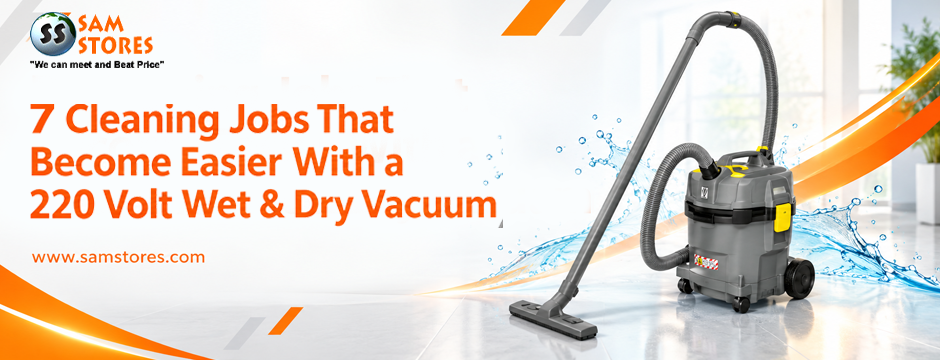
Cleaning gets frustrating when one machine can handle only one type of mess. Dry dust needs one tool, spilled water needs another, and larger debris often calls for something with more suction. If you are cleaning a garage, workshop, commercial space, utility room, or other demanding area, constantly switching equipment can turn a simple job into a long one.
That is where a 220 volts wet & dry vacuum can make a noticeable difference.
A wet and dry vacuum is designed to deal with both dry debris and liquid messes, making it useful for cleaning situations that go beyond what a standard household vacuum can comfortably handle. The 220-volt configuration can also be a practical choice for locations where compatible higher-voltage electrical equipment is already part of the setup.
For homeowners, workshop owners, contractors, facility managers, and commercial cleaners, the real value is not simply having another vacuum. It is having one machine that can take on several different cleaning jobs.
Here are seven situations where a 220-volt wet and dry vacuum can make cleanup considerably easier.
1. Cleaning Garage Floors After Repairs and Maintenance
Garages can collect a strange combination of dirt. One day you may be dealing with dust and leaves. The next, there may be sawdust, small pieces of debris, or a puddle that needs attention.
A conventional vacuum may be fine for loose household dust, but garage cleanup often calls for something more versatile.
A 220 volts wet & dry vacuum can help collect dry debris while also handling suitable liquid messes, depending on the model’s specifications. That makes it particularly useful after vehicle maintenance, DIY projects, or general garage work.
Consider what happens after a weekend project. There may be dirt tracked in from outside, particles from sanding, bits of packaging, and a small amount of water from washing the floor. Instead of reaching for several cleaning tools, you can use one appropriately equipped wet and dry vacuum for much of the cleanup.
Tank capacity matters here. If you regularly clean a large garage or workshop, a larger-capacity model can reduce the number of times you need to stop and empty the collection container.
2. Picking Up Sawdust and Workshop Debris
Workshops are another environment where a versatile vacuum earns its place.
Woodworking, home improvement, and repair projects can leave behind sawdust, shavings, dirt, and other small debris. Sweeping everything into a pile may seem straightforward, but fine particles can spread around the workspace and settle into corners, shelves, and equipment.
A powerful wet and dry vacuum can make the final cleanup much faster.
The key is choosing a model appropriate for the material and application. Always check the manufacturer’s instructions regarding the type and size of debris the vacuum is designed to collect.
For people who regularly work with wood, metal, vehicles, or construction materials, suction performance and filtration deserve particular attention. A good filtration system can help manage fine dust, while suitable attachments can make it easier to clean workbenches, floors, corners, and hard-to-reach areas.
At Sam Stores, shoppers looking for a vacuum should compare specifications rather than choosing solely by appearance or advertised motor power. Airflow, suction, tank capacity, filtration, hose design, and accessories can all influence how useful a vacuum is in a real workshop.
3. Dealing With Accidental Water Spills
Not every cleaning job involves dust.
A leaking appliance, spilled bucket, clogged drain, or unexpected water leak can leave a floor covered in liquid. Trying to mop up a substantial amount of water with household cleaning equipment can be slow and inconvenient.
This is one area where a wet and dry vacuum has an obvious advantage.
Instead of treating liquid as something the vacuum cannot handle, a properly designed wet and dry model can be used for compatible liquid pickup according to its instructions. That can be especially useful in garages, basements, utility areas, workshops, and commercial facilities.
However, this is also where users should pay attention to the manufacturer’s guidelines. Not every vacuum is designed for every liquid. Electrical safety, filter configuration, collection tank limits, and the type of liquid being collected all matter.
The convenience comes from having the right machine ready when a spill happens.
4. Cleaning After Home Improvement Projects
Renovation projects rarely finish with a perfectly clean room.
Even a relatively small project can leave behind dust, wood particles, packaging scraps, and other debris. When the work is finally done, cleaning everything manually can take almost as much patience as the project itself.
A wet and dry vacuum can become a useful part of the post-project cleanup routine.
Use the appropriate attachments to reach floor edges, corners, around fixtures, and other areas where debris tends to accumulate. A suitable model can also make it easier to collect larger particles that would be awkward to handle with a standard vacuum.
If your renovation involves particularly fine dust, check the vacuum’s filtration capabilities before buying. Some projects require specialized dust-management equipment rather than a general-purpose wet and dry vacuum.
This is an important buying lesson: more power does not automatically mean better performance for every application. Match the vacuum to the cleaning environment.
5. Cleaning Vehicles and Larger Interior Spaces
Car cleaning is another job where versatility matters.
Vehicle interiors collect dirt from shoes, food crumbs, sand, pet hair, and other debris. Cleaning the seats and floor can become difficult when your vacuum has limited suction or a short hose.
A wet and dry vacuum with appropriate attachments can make vehicle cleaning more convenient, particularly when you are working in a garage or professional detailing environment.
Crevice tools can help reach narrow areas around seats and consoles, while broader attachments can cover floor mats and larger surfaces. Depending on the model, a wet pickup function may also be useful for dealing with certain types of moisture.
For mobile cleaning operations, however, size and portability become more important. A large shop-style vacuum may offer excellent capacity but may not be the easiest equipment to move around repeatedly.
That is why it can be useful to compare different vacuum formats before buying. Sam Stores offers shoppers a range of voltage-specific cleaning equipment, making it easier to consider the right format for the job rather than settling for a one-size-fits-all solution.
6. Tackling Hard-to-Reach Dust and Debris
Some cleaning jobs are difficult simply because of where the dirt is located.
Dust can gather underneath equipment, behind furniture, around machinery, along edges, and inside awkward corners. The vacuum itself may have plenty of power, but if the hose and attachments cannot reach the area, that power does not help much.
This is where accessories and design become important.
Some users may prefer compact 220 volts hand held vacuums for quick, targeted cleanup jobs. Others may need a larger wet and dry model with a long hose and multiple attachments.
There are also situations where a different vacuum format makes more sense. For example, 220 volts upright vacuums can be convenient for cleaning large floor areas where maneuverability and repeated passes are more important than liquid pickup.
The right equipment depends on the task.
Before buying, think about the places you clean most often. Are you working mainly on open floors? Do you need to reach machinery? Are you cleaning vehicles? Do you regularly deal with liquids? These questions can help narrow down the type of vacuum that will actually earn its place in your cleaning setup.
7. Handling Routine Commercial and Facility Cleanup
Commercial cleaning can involve several different types of mess in the same day.
A small retail space may need daily dust removal. A workshop may have debris on the floor. A maintenance area could have a liquid spill. A warehouse may require frequent removal of dirt and loose particles.
Using separate machines for every situation can increase equipment costs and make storage more complicated.
A commercial-grade 220 volts wet & dry vacuum can provide a more flexible option when the model’s specifications match the environment.
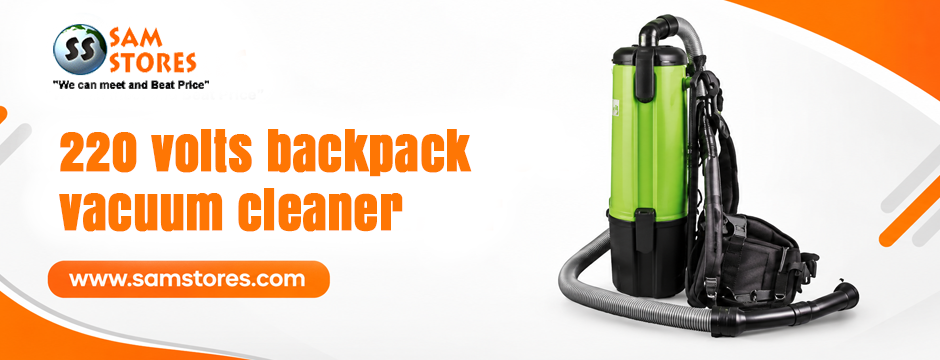
The same principle applies to other vacuum types. 220 volts steam vacuums may be useful when steam-based cleaning is appropriate, while a 220 volts backpack vacuum cleaner can make sense for applications where a worker needs to move frequently through a large area.
The goal is not to find one machine that does absolutely everything. Instead, it is to choose equipment that handles the jobs you perform most often without adding unnecessary complexity.
What Should You Check Before Buying a 220 Volt Wet & Dry Vacuum?
Voltage is only one part of the decision.
Before purchasing, look at the machine’s specifications and consider how you actually intend to use it.
Motor and suction performance
A stronger motor can be useful for demanding applications, but motor wattage alone does not tell you everything about cleaning performance. Look at the manufacturer’s stated airflow and suction information where available.
Tank capacity
A small tank may be suitable for quick household jobs. Larger tanks can be more convenient when cleaning workshops, garages, commercial areas, or other spaces where frequent emptying would interrupt your work.
Filtration
If fine dust is part of your cleaning routine, filtration deserves serious attention. Make sure the filtration system is appropriate for the materials you intend to collect.
Hose and attachments
A vacuum is only as useful as your ability to position it. Look for accessories that correspond with your cleaning tasks, such as crevice tools, floor heads, brushes, and extension tubes.
Wet pickup capabilities
If liquid pickup is one of your reasons for buying the machine, verify exactly what the manufacturer permits. Never assume that a vacuum can safely collect every type of liquid.
Electrical compatibility
A 220-volt appliance should be used with an electrical setup that is compatible with its requirements. Check voltage, plug configuration, amperage, and any other manufacturer specifications before use.
Is a 220 Volt Wet & Dry Vacuum Worth Buying?
For the right user, it can be.
If your cleaning routine involves a combination of dry debris, dust, larger particles, and compatible liquid messes, having a wet and dry vacuum can reduce the need to switch between several tools.
The biggest benefit is versatility. Instead of buying equipment based only on one cleaning situation, you can choose a vacuum that fits several recurring jobs.
Still, buying the most powerful model available is not necessarily the best approach. Consider your workspace, cleaning frequency, debris type, storage requirements, tank capacity, filtration needs, and available electrical setup.
That approach will help you spend money on useful performance rather than specifications you may never need.
Find the Right 220 Volt Vacuum for Your Cleaning Needs at Sam Stores
A good cleaning machine should make your routine easier, not create another problem to manage.
From garage floors and workshop debris to vehicle interiors and accidental spills, a 220 volts wet & dry vacuum can be a practical choice when you need more versatility than a standard vacuum provides.
Sam Stores makes it easier to compare voltage-specific cleaning equipment and explore different vacuum formats based on your requirements. Whether you need a powerful wet and dry machine or are considering alternatives such as upright, handheld, steam, or backpack models, start with the job you need the equipment to perform.
When you choose based on your actual cleaning needs, the right vacuum becomes more than another appliance in the storage room. It becomes a tool you can rely on whenever the next mess appears.
FAQs
1. What is a 220 volts wet & dry vacuum used for?
A 220 volts wet & dry vacuum is designed for compatible dry debris and liquid pickup. It can be useful in garages, workshops, commercial spaces, utility areas, and other demanding cleaning environments.
2. Can a 220 volt wet and dry vacuum pick up water?
Yes, models designed for wet pickup can collect compatible liquids. Always follow the manufacturer’s instructions regarding liquid types, filter configuration, tank capacity, and safe operation.
3. Is a 220 volt wet & dry vacuum good for workshop cleaning?
It can be an excellent option for workshops because it can handle many types of dry debris and, with suitable models, liquid messes. Filtration and debris-handling specifications should be checked before purchase.
4. What is the difference between a wet & dry vacuum and a 220 volts upright vacuum?
A wet and dry vacuum is designed for greater versatility, including compatible liquid pickup, while an upright vacuum is generally focused on efficient floor cleaning. The better choice depends on the cleaning tasks involved.
5. How do I choose the right 220 volt vacuum?
Consider suction performance, airflow, tank capacity, filtration, hose length, attachments, wet pickup capability, portability, and electrical compatibility. Most importantly, match the machine to the type and frequency of cleaning you perform.