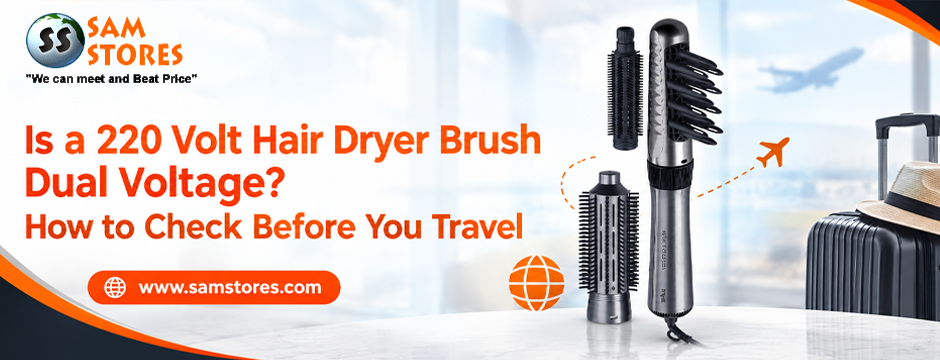
Is a 220 Volt Hair Dryer Brush Dual Voltage? How to Check Before You Travel

Packing for a trip usually involves a familiar checklist: clothes, toiletries, chargers, and personal care essentials. But if styling your hair is part of your daily routine, there is another question worth answering before you head to the airport: Is your 220 volt hair dryer brush compatible with the electrical supply at your destination?

A hot air brush can simplify your styling routine by combining drying and brushing in one tool. However, the fact that a hair dryer brush is advertised as 220V does not automatically mean it supports dual voltage. Taking a single-voltage appliance to a country with a different electrical supply can result in an unsuitable connection, poor performance, or equipment damage.

Whether you are travelling for business, heading on vacation, or purchasing a styling tool from an international retailer, understanding voltage compatibility can save you from an unpleasant surprise.

In this guide, Sam Stores explains how to identify dual-voltage hair dryer brushes, what to check before travelling, and how to choose a styling tool that matches your needs.

What Does a 220 Volt Hair Dryer Brush Mean?

A 220 volt hair dryer brush is a heated styling appliance designed to operate according to a specified electrical voltage. It typically combines airflow and heat with a brush attachment to help dry, smooth, shape, or add volume to hair.

However, the phrase “220 volt” does not tell you the entire electrical story.

Some products are designed for a specific voltage, while others support a wider input range. A dual-voltage appliance may be suitable for use in different countries, provided the destination’s voltage and frequency fall within the manufacturer’s approved specifications.

For example, an appliance labelled:

  • 220V only: Designed for a specific rated voltage, subject to the manufacturer’s stated tolerances.
  • 220 to 240V: Designed to operate within the specified voltage range.
  • 100 to 240V: May support a broad international voltage range, if explicitly stated on the product’s rating label or documentation.

A product’s voltage range should always be confirmed using the actual model’s specifications. Never assume that all hair dryer brushes with similar product names have the same electrical capabilities.

Is Every 220V Hair Dryer Brush Dual Voltage?

No. A 220V hair dryer brush is not automatically dual voltage.

This is one of the most important details to understand before travelling.

A dual-voltage appliance is designed to work across two or more compatible voltage levels or a specified broad range. Some travel-friendly styling tools may feature automatic voltage adjustment, while others require manual voltage selection. Not every model offers either feature.

A hair dryer brush rated for 220V may work in a destination with a compatible supply, but it should not be connected to a different voltage without checking its approved operating range.

For instance, if you are travelling from a country that uses approximately 220V to a destination where household outlets commonly supply around 120V, a 220V-only brush will not automatically become compatible. A plug adapter changes the physical connection, not the voltage supplied to the appliance.

Before you pack your styling tool, look for the manufacturer’s voltage information. This small check can help you avoid buying an unsuitable accessory or replacing an appliance during your trip.

1. Check the Voltage Rating on the Appliance

The easiest place to start is the product’s rating label. Depending on the design, you may find it printed on the handle, near the power cord, on the appliance body, or on the packaging.

Look for a voltage specification such as:

  • 220V
  • 220 to 240V
  • 110 to 120V
  • 100 to 240V
  • 110/220V, with specific switching instructions

A rating such as 100 to 240V may indicate wide-range voltage compatibility, but you should also verify frequency, power requirements, and the manufacturer’s instructions.

If the label only says 220V, do not assume the product is dual voltage. Contact the manufacturer or seller if the documentation does not clearly explain its operating range.

For Sam Stores customers, checking the model-specific product details before ordering is a practical way to establish whether a styling tool suits the intended destination.

2. Understand the Difference Between a Plug Adapter and a Voltage Converter

Many travellers confuse plug adapters with voltage converters. They serve different purposes.

A plug adapter changes the physical shape of a plug so it can fit a compatible outlet. It does not change the voltage.

A voltage converter or transformer is designed to change the supplied voltage, subject to its own specifications and limitations. Whether a converter is appropriate for a particular hair dryer brush depends on the appliance’s electrical characteristics and the converter’s rating.

For example, a traveller with a 220V-only hair dryer brush visiting a 120V region cannot assume that a simple plug adapter will make the appliance suitable.

Before considering a converter, check:

  1. The hair dryer brush’s rated voltage.
  2. Its wattage and current requirements.
  3. The destination’s electrical supply.
  4. The converter’s supported input and output.
  5. Manufacturer and converter safety instructions.

Many heated styling tools have relatively high power requirements. A converter that is unsuitable for the appliance can create safety and performance concerns. If you are unsure, consult the appliance manufacturer or a qualified electrical professional.

3. Check the Electrical Frequency

Voltage is not the only specification that matters when travelling with a hair styling appliance.

Electrical frequency is measured in hertz, commonly written as Hz. Different countries may use 50Hz, 60Hz, or other electrical standards depending on the region.

A hair dryer brush may be rated for a particular frequency or frequency range. If the appliance documentation specifies 50Hz only, do not assume it will operate correctly on a 60Hz supply.

This is especially important when purchasing international appliances online. A product’s title might mention 220V, but the full technical specification may contain additional information about frequency, power, and regional use.

Before travelling, compare the appliance rating with the destination’s electrical supply and follow the manufacturer’s guidance.

4. Look for Automatic or Manual Dual-Voltage Selection

Not all dual-voltage appliances work in exactly the same way.

Some styling tools automatically detect and accommodate the available voltage. Others may require the user to select a voltage setting manually, often through a dedicated switch.

If a hair dryer brush has a voltage selector, check the manufacturer’s instructions before operating it. Selecting an incorrect setting can cause equipment damage or create a safety hazard.

If the product is described as automatically dual voltage, verify that claim using the official documentation rather than relying solely on an online listing.

When shopping at Sam Stores, customers should look for clear product information about:

  • Voltage range
  • Automatic or manual selection
  • Frequency
  • Wattage
  • Plug type
  • Travel suitability

A clear specification makes it easier to decide whether a product is appropriate for your trip.

5. Understand What the Dyson Hair Dryer Voltage 220V Label Means

Dyson is a familiar name in the premium hair styling market, and travellers may search for dyson hair dryer voltage 220v when comparing styling appliances.

However, Dyson hair dryers and styling tools are not necessarily compatible with every country’s electrical system. Voltage ratings and regional versions can vary by product and market.

If you are researching a Dyson product, check the exact model’s official specifications, including its rated voltage, frequency, and intended region of use.

Do not assume that a product purchased in one country will operate safely in another simply because it is manufactured by the same brand.

This is also a useful purchasing lesson for shoppers comparing other hair dryer brushes. The brand name matters, but the precise model specification determines compatibility.

6. What About the Revlon One-Step Hair Dryer 220 Volts?

The revlon one step hair dryer 220 volts is another search phrase used by shoppers looking for international hair styling options.

The Revlon One-Step product family includes different models and regional variants. Buyers should not assume that every version has the same voltage range or travel capabilities.

Before purchasing, review the exact model number and its official electrical specifications. Check whether it is rated for the voltage and frequency at your destination.

If you already own a Revlon One-Step tool, inspect its rating label and instruction manual. If the documentation is unclear, contact the manufacturer or seller for confirmation.

The same principle applies whether you are shopping for a premium styling tool or an affordable everyday brush: Always verify the individual product’s electrical rating.

7. Choose the Right Hair Dryer Brush Features for Travel

Voltage compatibility is essential, but it is not the only factor that determines whether a styling tool is convenient for travelling.

A suitable travel styling brush may offer features that make packing and everyday use easier. The best choice depends on your hair type, styling preferences, and destination.

Here are several features worth considering.

Compact design

A lightweight, compact brush can be easier to pack in a suitcase or carry-on bag. Check the actual product dimensions rather than assuming a tool is travel-friendly because it is described as compact.

Multiple heat settings

Adjustable heat settings can help you choose a temperature appropriate for your hair and styling needs. Follow the manufacturer’s instructions and use heat protection where suitable.

Brush attachments

Some models offer different brush shapes or attachments for smoothing, volume, or other styling techniques. Confirm which attachments are included with the specific product.

Cord length and storage

A practical cord length and manageable design can make styling more convenient, particularly in unfamiliar accommodation.

Verified voltage compatibility

No styling feature can replace the importance of matching the appliance to the destination’s electrical supply. Make this your first consideration.

8. Can You Use a 220V Hair Dryer Brush in a 240V Outlet?

This depends on the appliance’s approved voltage range.

If a hair dryer brush is rated for 220 to 240V, the manufacturer’s specifications may permit operation within that range. If the appliance is marked 220V only, you should obtain confirmation before using it on a 240V supply.
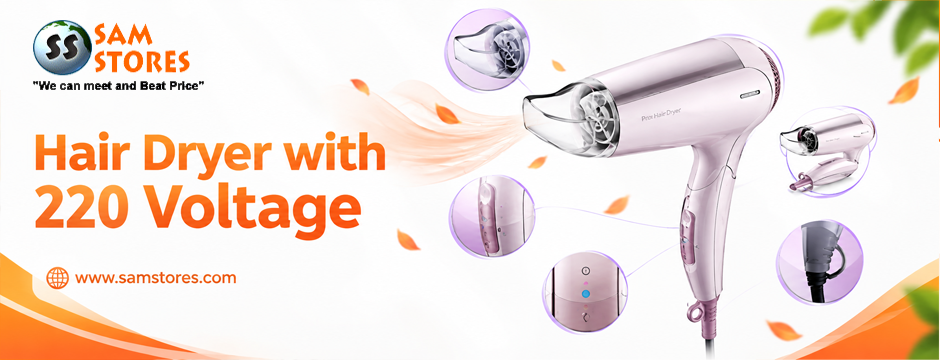
How The Braun 220 Volt Hair Dryer Redefines Everyday Glamour_

Do not rely on the assumption that a small difference in nominal voltage is harmless. Electrical compatibility depends on the appliance’s design and approved operating conditions.

The same principle applies when choosing a hot air brush 220 voltage  or a hair dryer with 220 voltage . The product listing should be checked for its complete electrical specifications, not just its headline voltage.

If the information is unavailable, ask the seller for the technical documentation before ordering.

9. Use a Travel Checklist Before You Leave

A quick pre-travel checklist can help you avoid last-minute problems.

Before packing your hair dryer brush, confirm the following:

  • The appliance voltage matches the destination’s supply or is approved for that supply.
  • The frequency rating is compatible.
  • The plug type is suitable for the destination.
  • Any required adapter is correctly rated and appropriate for the appliance.
  • The appliance’s power requirements are understood.
  • The product documentation is available if you need to check specifications.
  • The styling tool is in good condition, with no damaged cord or plug.
  • The manufacturer permits the intended use.

If your appliance is not compatible with the destination’s electrical supply, do not force the connection. Choosing a suitable alternative may be safer and more convenient than trying to adapt an unsuitable product.

10. Why Buying From a Specialist Appliance Retailer Matters

When buying an international-voltage hair styling tool online, product information is an important part of the purchasing experience.

A specialist retailer can help customers compare technical specifications, understand product differences, and identify the details that matter before checkout.

At Sam Stores, shoppers can use product specifications to evaluate whether a styling appliance fits their intended use. Before ordering, look for clear information about voltage, frequency, product features, and applicable warranty or return policies.

If a product listing does not answer your electrical compatibility questions, seek clarification before placing the order. This is particularly important when purchasing appliances for travel or use in a country different from the one where they were originally sold.

Final Thoughts: Check Voltage Before You Travel

A 220 volt hair dryer brush can be a convenient styling companion, but its suitability for international travel depends on the exact electrical specifications.

Not every 220V brush is dual voltage. A plug adapter does not change voltage, and a converter should not be selected without confirming that it is appropriate for the appliance.

Before you travel, check the voltage range, frequency, plug type, power requirements, and manufacturer’s instructions. If you are comparing products such as Dyson or Revlon styling tools, review the specific model rather than relying on brand names or generic product descriptions.

At Sam Stores, informed shopping starts with choosing a product that meets your practical needs and electrical requirements. Take a few minutes to verify the details before ordering, and you can approach your travel preparation with greater confidence.

Looking for a suitable international-voltage hair styling tool? Explore the available options at Sam Stores, compare product specifications, and confirm compatibility before making your purchase.

Frequently Asked Questions

1. Is a 220 volt hair dryer brush automatically dual voltage?

No. A 220V hair dryer brush may be designed for a specific voltage or a wider operating range. Check the manufacturer’s rating label and technical documentation to determine whether the product supports dual voltage.

2. Can I use a 220V hair dryer brush in a 240V country?

It depends on the model’s approved voltage range. If the appliance is rated for 220 to 240V, it may be compatible. A 220V-only product requires further confirmation before use with a 240V supply.

3. Does a plug adapter convert 220V to 110V?

No. A plug adapter changes the physical plug configuration but does not convert voltage. If an appliance is not compatible with the destination’s voltage, check with the manufacturer or a qualified professional about appropriate options.

4. How can I check whether my Revlon One-Step hair dryer supports 220V?

Find the exact model number and review the rating label, instruction manual, or official product specifications. Different models and regional variants may have different electrical requirements.

5. What should I check before travelling with a 220V hair dryer brush?

Check the voltage range, frequency, plug type, power requirements, and manufacturer instructions. Confirm that the appliance is suitable for the destination’s electrical supply before using it.
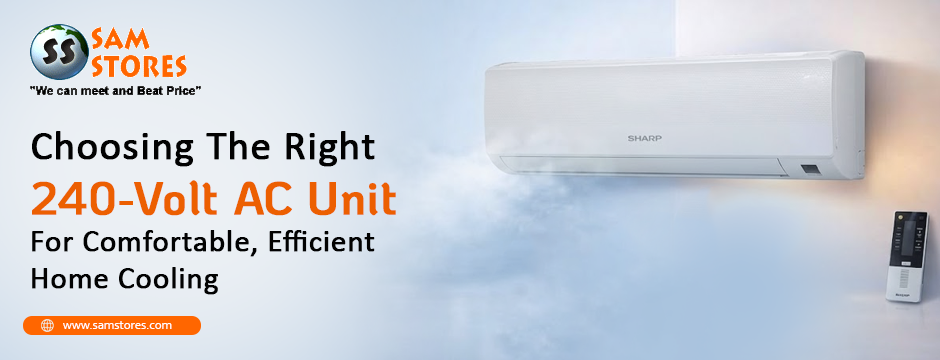
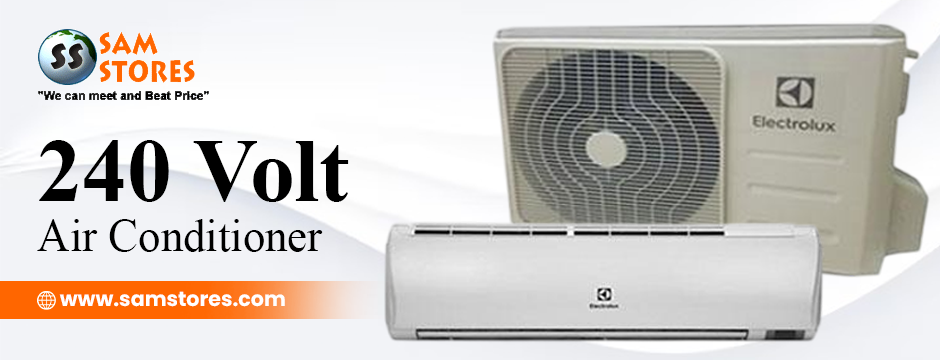
Choosing The Right 240-Volt AC Unit for Comfortable, Efficient Home Cooling

It usually starts with a simple problem. Summer arrives, the temperature climbs, and your existing air conditioner struggles to keep the room comfortable. You turn the thermostat down, wait, and hope for the best. Sometimes, though, the problem isn’t the temperature setting. Your air conditioner simply isn’t suited to the space.

That’s when choosing the right 240-volt AC unit can make a noticeable difference.

A higher-voltage air conditioning system can be a practical option for larger rooms, homes with demanding cooling requirements, and those that need dependable performance. However, buying one isn’t simply about choosing the biggest model available. Capacity, installation, electrical requirements, room size, energy use, and heating options all deserve consideration.

At Sam Stores, we understand that shopping for home appliances should feel straightforward. You want to know what you’re buying, why it suits your space, and what to expect once it’s installed.

So, before you make your decision, let’s look at what actually matters.

Why Voltage Matters When Choosing An Air Conditioner?

Voltage is one of those specifications most people notice but don’t always understand.

An air conditioner designed for a higher electrical voltage isn’t automatically more powerful than every lower-voltage model. Instead, voltage is part of the electrical system the appliance is designed to operate with.

A 240-volt system can be suitable for larger-capacity appliances that require substantial electrical power. Many homes already have 240-volt circuits for appliances such as electric ranges, dryers, and other high-demand equipment.

However, this doesn’t mean you should simply purchase a unit and plug it into an existing outlet.

Air conditioning installation can involve dedicated circuits, appropriate wiring, breakers, and professional installation. Always check the manufacturer’s electrical requirements and consult a qualified electrician when necessary.

Start With the Room, Not The Air Conditioner

Here’s where many shoppers make their first mistake.

They see a powerful air conditioner and assume bigger must be better.

It isn’t that simple.

The right cooling capacity depends on the room’s size and several other factors. Ceiling height, insulation, windows, sunlight exposure, occupancy, and local climate can all influence cooling requirements.

A unit that is too small may run continuously without adequately cooling the room. A unit that is too large may cool the space quickly but cycle on and off frequently, which can affect comfort and efficiency.

The goal is to find the right match. Before shopping, measure the room and consider how it is used. A bedroom, living room, garage, workshop, and open-plan area may all have very different cooling requirements.

When A 240 Volt AC Unit Makes Sense

A 240-volt AC unit can be an excellent option when you’re looking for substantial cooling performance and your home’s electrical setup supports the required installation. These systems can be particularly useful for larger spaces where compact room air conditioners may not provide enough capacity.

Think about a spacious living room that receives strong afternoon sunlight. Perhaps the room connects to another area, or it has high ceilings that allow warm air to accumulate.

In such situations, having an appropriately sized air conditioner can make the difference between constantly chasing the temperature and actually enjoying the room. However, capacity should always be matched to the space rather than selected purely because the voltage specification sounds more powerful.

Through-the-Wall Air Conditioners: A Practical Alternative

Not every home has the layout or budget for a central air conditioning system. That’s one reason wall-installed air conditioners remain popular.

A 220 volt through-the-wall air conditioner can provide dedicated cooling without requiring a traditional window installation. These systems are installed into a wall opening, creating a more permanent appearance than many window units.

They can work particularly well in rooms where window-mounted installation isn’t practical.

There is also an aesthetic advantage. Because the unit sits within the wall, it can leave the window unobstructed. This can be useful in rooms where natural light and window access are important.

Before installation, however, check wall dimensions, sleeve requirements, electrical specifications, and manufacturer instructions.

How The Braun 220 Volt Hair Dryer Redefines Everyday Glamour_

Air conditioning doesn’t have to be useful only during summer. If you live somewhere with changing seasons, a unit capable of both cooling and heating can provide additional value throughout the year.

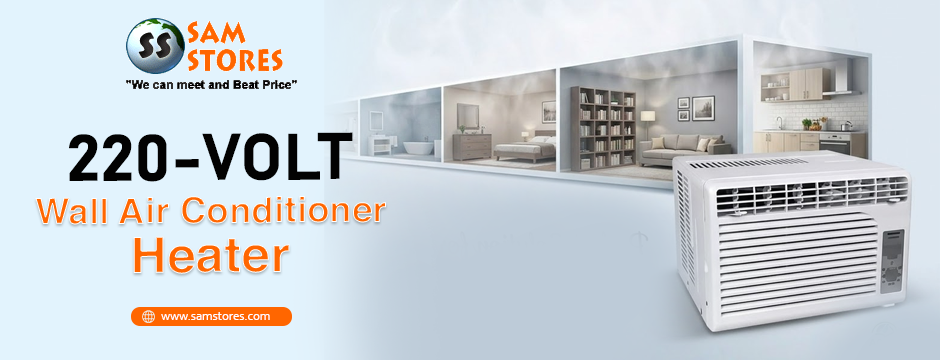
A 220 volt wall air conditioner heater combines cooling and heating functions in one appliance. Instead of purchasing separate equipment for different seasons, homeowners can use the same system to manage indoor temperatures throughout the year.

This can be particularly attractive for bedrooms, guest rooms, additions, apartments, workshops, and other spaces that need independent temperature control.

Before purchasing, check the heating method and the temperature range specified by the manufacturer. Not every heating-capable air conditioner is designed for the same outdoor conditions.

Think about Energy Efficiency Too

Running an air conditioner for hours every day can have a noticeable effect on household energy consumption. That’s why efficiency deserves attention before you buy.

Look at the manufacturer’s energy ratings and operating specifications rather than choosing solely by purchase price. A slightly more efficient appliance may cost more initially but potentially deliver better long-term value depending on usage and local electricity rates.

Also consider how you use the room.

Closing blinds during peak sunlight, improving insulation, sealing air leaks, and keeping doors closed while cooling can reduce the workload placed on the air conditioner. The most efficient appliance still has to work harder when the room constantly gains heat from outside.

Features Worth Considering

Modern air conditioners can include a wide range of convenience features. Depending on your priorities, useful options may include:

  • Adjustable temperature controls
  • Multiple fan speeds
  • Programmable timers
  • Remote controls
  • Digital displays
  • Washable filters
  • Energy-saving modes
  • Cooling and heating modes
  • Automatic temperature control

You don’t necessarily need every feature. Instead, focus on the functions you’ll actually use.

For example, a programmable timer can be valuable if you want the room cooled before bedtime. A remote control can make everyday adjustments easier. Washable filters of a 240-volt AC unit can simplify routine maintenance.

The best feature list is the one that makes your daily routine easier.

Maintenance Keeps Performance on Track

Even the best air conditioner needs regular care. Filters can collect dust over time, reducing airflow and making the system work harder. Exterior components can also accumulate dirt and debris depending on the installation environment.

Follow the manufacturer’s maintenance recommendations.

Clean or replace filters as instructed. Keep airflow paths clear and inspect the unit periodically for unusual noises, leaks, or changes in performance. If an air conditioner suddenly takes much longer to cool the room, don’t automatically turn the thermostat lower.

The problem could be a dirty filter, blocked airflow, installation issue, or another technical problem. Early attention can prevent small problems from becoming expensive repairs.

A little preparation makes online appliance shopping much less stressful.

A Simple Checklist Before You Buy

Before ordering your next air conditioner, take a moment to check these points:

  • Measure The room: Know the approximate space you need to cool.
  • Check Voltage: Confirm that the appliance matches your home’s electrical requirements.
  • Review Capacity: Choose cooling performance based on the room rather than appearance.
  • Check Installation: Understand whether professional electrical or wall installation is required.
  • Consider Heating: A heating function may provide additional year-round value.
  • Compare Efficiency: Look at energy ratings and expected usage.
  • Think about Noise: This matters particularly for bedrooms and workspaces.
  • Review Maintenance: Understand filter cleaning and routine care requirements.

This simple checklist can prevent many common purchasing mistakes.

Final Thoughts

Finding the right 240-volt AC unit isn’t about buying the biggest or most expensive appliance you can find. It’s about finding a system that matches your room, electrical setup, comfort expectations, and everyday routine.

Whether you’re considering a through-the-wall installation, a cooling-only model, or a unit that provides heating as well, take time to compare specifications before making your decision.

At Sam Stores, we believe better appliance shopping starts with better information. Once you understand your room, electrical requirements, installation needs, and desired features, choosing the right system becomes much easier.

The best air conditioner isn’t simply the one that makes a room cold. It’s the one that makes your home feel comfortable when you need it most.

FAQs

1. What is a 240-volt AC unit?

A 240-volt AC unit is an air conditioner designed to operate on a 240-volt electrical supply. The appropriate model depends on the home’s electrical system and the manufacturer’s requirements.

2. Is a 240-volt air conditioner suitable for a large room?

It can be suitable for larger spaces, depending on the unit’s cooling capacity. Room size, insulation, windows, ceiling height, and climate should also be considered.

3. What is a 220-volt through-the-wall air conditioner?

A 220-volt through-the-wall air conditioner is designed for permanent wall installation rather than conventional window mounting. It can provide an efficient solution where window installation isn’t suitable.

4. Can a wall air conditioner also provide heating?

Yes, some models combine cooling and heating functionality. A 220-volt wall air conditioner heater can provide temperature control across multiple seasons.

5. Do I need professional installation for a 240-volt AC unit?

Professional installation may be required, particularly when dedicated electrical circuits or wall modifications are involved. Always follow the manufacturer’s installation requirements and local electrical codes.

Hybrid Cooling System And Triple Clean Features in A Modern 240-Volt Refrigerator

A family purchases a new refrigerator, expecting it to keep food cold simply. A few months later, they begin noticing inconsistent cooling, vegetables losing freshness too quickly, and unpleasant odours lingering despite regular cleaning. Sound familiar?

Modern consumers expect much more from refrigeration technology today. A refrigerator is no longer just a cooling appliance sitting quietly in the kitchen. It has become a critical part of food preservation, hygiene management, and energy efficiency.

This shift explains the growing interest in premium refrigeration technologies found in a 240 volt refrigerator, particularly advanced innovations like Hybrid Cooling Systems and Triple Clean Systems. These technologies are designed not only to keep food fresh longer but also to create a cleaner and healthier storage environment.

At Sam Stores, customers increasingly look beyond storage capacity and exterior design. They want smarter refrigeration technology that actively improves everyday living rather than simply preserving food.

Let us explore why these features are becoming important considerations for modern buyers.

The Evolution of Refrigerators: From Cooling Boxes to Intelligent Food Preservation

Traditional refrigerators focused on a simple objective: maintaining a low temperature.

However, temperature alone does not guarantee freshness.

Food quality is affected by several factors, including humidity control, airflow consistency, bacterial growth, odour contamination, and temperature fluctuations. Older refrigeration systems often struggled to balance these variables effectively.

As a result, fruits dried out faster, leafy vegetables wilted quickly, and certain foods absorbed odours from neighbouring compartments.

Modern refrigeration technologies have been developed specifically to address these long-standing problems.

Among these innovations, Hybrid Cooling Systems and Triple Clean Systems stand out as some of the most practical improvements for everyday households.

What Is A Hybrid Cooling System?

Imagine storing fresh berries, leafy greens, dairy products, cooked meals, and beverages inside the same refrigerator. Each item requires slightly different storage conditions to maintain freshness.

Traditional cooling systems use a single airflow mechanism that distributes cold air throughout the appliance. While effective for cooling, this method often creates uneven humidity levels and temperature inconsistencies.

Hybrid Cooling Systems solve this issue by combining multiple cooling technologies to regulate both temperature and moisture more precisely.

Instead of simply blowing cold air throughout the refrigerator, these systems intelligently balance cooling performance according to food requirements.

The result is a storage environment that helps food maintain its texture, flavour, and nutritional value for longer periods.

How Does Hybrid Cooling Improve Everyday Food Storage?

The benefits become noticeable surprisingly quickly. Vegetables remain crisp for additional days rather than becoming soft and dehydrated. Dairy products maintain consistency. Fresh produce retains moisture without becoming soggy.

The system also reduces temperature fluctuations that commonly occur when refrigerator doors are opened repeatedly throughout the day.

For busy families, this means fewer spoiled groceries and less food waste. For many buyers considering a premium 240 volt refrigerator, extended food preservation has become one of the strongest selling points.

In many households, reducing food waste alone can justify investing in advanced refrigeration technology.

Better Humidity Management Means Better Freshness

Humidity control is often overlooked during appliance shopping. However, moisture balance directly impacts food quality. Too much moisture encourages bacterial growth and condensation. Too little moisture dries out vegetables and fruits quickly.

Hybrid Cooling Systems create a more stable environment by maintaining ideal humidity levels across different storage zones.

This controlled environment helps preserve:

  • Leafy vegetables
  • Fruits and berries
  • Cheese and dairy products
  • Fresh meat and seafood
  • Prepared meals

The difference becomes particularly noticeable in households that shop weekly rather than daily.

What Is The Triple Clean System?

While cooling technology protects food freshness, hygiene remains equally important. Many homeowners have experienced mysterious refrigerator odours that seem impossible to remove completely.

These smells often result from airborne bacteria, moisture accumulation, and food particle contamination. The Triple Clean System addresses this issue through a multi-layered purification approach designed to maintain cleaner air inside the refrigerator.

Instead of simply masking odours, the technology actively works to reduce contaminants that affect food quality and freshness.

The Three Layers of Protection

Although manufacturers implement the technology differently, Triple Clean Systems generally focus on three primary areas.

  • First, advanced air filtration helps reduce airborne particles and odours circulating through the refrigerator.
  • Second, antibacterial technologies help limit microbial growth inside storage compartments.
  • Third, deodorization systems work continuously to maintain a fresher environment and prevent flavour transfer between foods.

Imagine storing fish, desserts, fresh herbs, and leftovers together without worrying about cross-contamination of aromas. That is the practical advantage these systems provide.

Why Families Appreciate Triple Clean Technology?

A refrigerator is opened dozens of times each day. Every opening introduces warm air, moisture, and external contaminants into the appliance. Over time, these conditions create an ideal environment for bacteria and unpleasant odours.

Triple Clean Systems actively help maintain internal hygiene between manual cleanings. This becomes particularly valuable for families storing baby food, dairy products, fresh produce, and ready-to-eat meals. Consumers shopping for a premium 240 volt refrigerator increasingly prioritize hygiene technologies alongside cooling performance and energy efficiency.

International Voltage Compatibility Matters Too

Many customers shopping through Sam Stores are international buyers, expatriates, or homeowners importing appliances for specific voltage requirements.

This makes voltage compatibility a critical consideration. A 220 volt refrigerator may appear similar to other models but offers compatibility advantages depending on regional electrical standards.

Likewise, customers operating in international environments often search specifically for a refrigerator 220 volts 50 Hz to ensure seamless integration with local electrical infrastructure.

Selecting the correct voltage specification protects appliance performance and prevents unnecessary electrical complications after installation.

How The Braun 220 Volt Hair Dryer Redefines Everyday Glamour_

Who Benefits Most from Hybrid Cooling And Triple Clean Systems?

Although nearly every household benefits from these technologies, some users experience greater advantages.

  • Large families storing diverse food items appreciate improved freshness management.
  • Health-conscious households benefit from enhanced hygiene and food preservation.
  • Frequent entertainers enjoy better odour management when storing a variety of dishes simultaneously.
  • Professionals with busy schedules appreciate reduced food spoilage and fewer grocery trips.

Simply put, these technologies support modern lifestyles where convenience and efficiency matter more than ever.

How to Evaluate Refrigerators beyond Capacity & Price?

Many buyers compare refrigerators using only storage capacity, dimensions, and pricing. While these factors remain important, technology features often deliver greater long-term value.

So, when evaluating premium models, consider:

  • Cooling consistency
  • Humidity management
  • Internal air purification
  • Odour control
  • Food preservation performance
  • Energy efficiency
  • Voltage compatibility

A refrigerator that protects food quality for longer often provides greater value than one offering slightly more storage space.

Why Are Sam Stores Customers Paying More Attention to Advanced Refrigeration Features?

Consumer expectations continue to evolve. People no longer view refrigerators as simple appliances. They see them as investments that influence convenience, health, and food management.

At Sam Stores, shoppers increasingly ask detailed questions about freshness technology rather than focusing solely on aesthetics or pricing. This trend reflects a broader shift toward smarter home appliances designed to improve everyday experiences.

Hybrid Cooling Systems and Triple Clean Systems represent exactly this kind of innovation.

End Note

Modern refrigeration has evolved far beyond basic cooling. Technologies such as Hybrid Cooling Systems and Triple Clean Systems are transforming how households preserve food, manage hygiene, and reduce waste.

For consumers investing in a premium 240 volt refrigerator, these features provide meaningful advantages that become noticeable in daily life rather than only on specification sheets. So, whether the priority is freshness, cleanliness, convenience, or long-term value, advanced refrigeration technology continues to redefine expectations for modern kitchens.

As buyers become more informed, features that once seemed luxurious are quickly becoming essential components of smarter refrigeration decisions.

FAQs

1. What is a Hybrid Cooling System in a refrigerator?

A Hybrid Cooling System uses multiple cooling technologies to maintain stable temperatures and humidity levels, helping food stay fresh longer.

2. What does the Triple Clean System do in a refrigerator?

The Triple Clean System helps reduce odours, airborne contaminants, and bacterial growth to create a cleaner storage environment.

3. Is a Hybrid Cooling System better than traditional cooling?

Yes. Such a 240-volt refrigerator provides more consistent cooling performance and improved moisture control, reducing food spoilage and dehydration.

4. Who should consider buying a 240-volt refrigerator?

International buyers, expatriates, and homeowners requiring specific electrical compatibility often prefer 240-volt refrigerator models.

5. Why is voltage compatibility important when purchasing a refrigerator?

Choosing the correct voltage ensures proper operation, protects appliance longevity, and prevents electrical performance issues after installation.

Everything You Should Know Before Choosing a 240-Volt Portable Air Conditioner for Reliable Cooling

If you are exploring a practical way to manage heat in larger rooms or international setups, a 240 volt portable air conditioner can be a dependable solution. It is designed for higher voltage systems, which means it delivers stable cooling performance in environments where standard units often struggle.

Furthermore, these units are widely used in regions with 220–240V electricity standards. As a result, they are especially relevant for homes, offices, and workspaces outside typical North American voltage systems.

In this blog, you will understand how they work, where they fit best, and what makes them a smart cooling choice.

Why a 240 volt portable air conditioner Works Better in High-Voltage Environments?

A 240-volt portable air conditioner is built to operate on a stronger electrical input. Consequently, it maintains consistent cooling even during long usage hours.

Unlike smaller systems, it does not easily lose efficiency under load. This makes it suitable for hotter climates where cooling demand stays high throughout the day.

Additionally, portability adds convenience. You are not tied to fixed installations, which means you can move the unit based on changing room needs. This flexibility is especially useful in rented spaces or temporary setups.

However, it is important to ensure your electrical system matches the requirements. Using an incompatible voltage can damage the unit or reduce its lifespan.

Key Performance Benefits You Should Expect

One major advantage of a 240 volt air conditioner is its ability to cool larger areas more effectively. Because of the higher voltage input, the system can support stronger airflow output.

Furthermore, cooling happens faster compared to lower voltage alternatives. This is useful when you need immediate comfort during peak heat conditions.

Another benefit is operational stability. These systems are designed to run for extended periods without overheating. Consequently, they are often preferred in work environments and busy households.

You will also find that many models include additional functions like humidity balance and air circulation control. These features improve indoor comfort beyond basic cooling.

How The Braun 220 Volt Hair Dryer Redefines Everyday Glamour_

Practical Spaces Where These Units Make Sense

A 240-volt AC unit is not limited to home use. In fact, it performs well in multiple real-world environments.

For example, offices that do not have centralized air conditioning often rely on portable systems during summer months. Similarly, workshops and studios use them to maintain workable temperatures.

They are also helpful in temporary setups such as events, exhibitions, or seasonal shops. Since they do not require permanent installation, setup is quick and efficient.

In residential spaces, they are often used in bedrooms, living rooms, or study areas where targeted cooling is needed.

Moreover, in regions with fluctuating temperatures, having a portable option ensures you stay comfortable without relying on fixed infrastructure.

Features That Improve Daily Comfort and Efficiency

When evaluating a 240 volt portable air conditioner, it is important to focus on features that actually improve usability.

Multiple fan speeds allow you to control airflow based on comfort levels. This means you can reduce energy use when full power is not required.

Additionally, many units come with timer settings. This helps you schedule operations and avoid unnecessary electricity consumption.

Some models also include air purification elements. These help reduce dust and airborne particles, which improves indoor air quality.

Furthermore, portability is a key advantage. You can shift the unit between rooms without technical installation work.

Noise control is another factor worth considering. Quieter operation improves usability in bedrooms or office environments where concentration matters.

Ensuring Proper Voltage Fit Before Buying

Before selecting a 240 volt air conditioner, always confirm your local voltage supply. This is one of the most important steps in the decision-making process.

If your region supports 220–240V systems, the unit will operate efficiently and safely. However, if not, you may require a transformer, which adds complexity.

Additionally, using the correct voltage ensures longer product life and better energy performance. Many buyers overlook this step, but it directly impacts both safety and efficiency.

How to Choose the Right Model for Your Needs?

Selecting the right 240-volt AC unit depends on several practical factors, such as your room size, daily usage pattern, and the specific features you actually need.

For larger spaces, it is better to prioritize a model with higher airflow capacity. This helps ensure consistent and even cooling across the entire room, even during peak heat conditions. On the other hand, for smaller rooms, compact units are usually more suitable since they consume less energy and are easier to handle and operate.

Furthermore, you should consider whether you need additional features like dehumidification or air purification. These functions can significantly improve indoor comfort, especially in humid or dusty environments where basic cooling alone may not be enough.

Finally, think about portability and ease of movement. If you plan to shift the unit between rooms frequently, choose a lightweight design with sturdy wheels and ergonomic handles for smooth mobility and convenience.

Maintenance Tips for Long-Term Performance

Proper maintenance ensures your 240-volt portable air conditioner performs well over time. Clean or replace filters regularly to maintain airflow quality. This also helps the system cool more efficiently.

Additionally, check water tanks and drainage systems if your model uses evaporative cooling. Keeping these clean prevents buildup and odors. Inspect power connections occasionally to ensure safe operation, especially during long usage cycles.

Furthermore, avoid placing the unit near obstacles that block airflow. Proper ventilation significantly improves performance.

In addition, schedule periodic deep cleaning and ensure the exterior vents are free from dust accumulation. This helps maintain consistent cooling efficiency and extends the overall lifespan of the unit.

Reliable Cooling Solutions with Sam Stores

If you are looking for a dependable way to beat the heat, a 240-volt portable air conditioner can be a smart and efficient choice, especially when you need stable performance in international voltage environments. 

At Sam Stores, we offer carefully selected cooling solutions designed to match real-world usage needs, whether it’s for your home, office, or temporary workspace. You can explore options that combine portability, airflow efficiency, and multi-functional cooling features to keep your environment comfortable.

We understand that you want performance without complications. That’s why the products available are built for practicality, offering features like adjustable fan speeds, humidity control, and easy mobility so you can move cooling exactly where you need it. With us, you don’t just buy an appliance; you choose a solution designed to fit your daily comfort needs.

Final Thoughts

A 240 volt portable air conditioner is a practical solution for users who need reliable cooling in compatible high-voltage environments. It combines portability, efficiency, and stable performance, making it suitable for both personal and professional spaces.

With proper selection and maintenance, it can significantly improve indoor comfort during hot weather conditions. A 240-volt AC unit offers strong airflow and long-term usability, while a 240 volt air conditioner ensures consistent performance in demanding environments.

If you are looking for international-grade cooling solutions with dependable build quality and multi-region compatibility, exploring options through Sam Stores can help you find suitable appliances for your needs.

FAQs 

1. What is a 240-volt portable air conditioner used for?

A 240-volt portable air conditioner is used for cooling medium to large spaces in regions that support 220–240V electricity. It is commonly used in homes, offices, workshops, and temporary setups where stable and efficient cooling is required.

2. How is a 240-volt air conditioner different from standard units?

A 240-volt air conditioner operates on higher voltage, which allows it to deliver stronger and more consistent cooling performance. It is generally more suitable for heavy-duty usage and larger spaces compared to standard low-voltage units.

3. Can I use a 240-volt AC unit in any country?

Not always. A 240-volt AC unit is designed for regions with compatible electrical systems. If your location does not support 220–240V, you may need a voltage converter, but it is always best to confirm compatibility before use.

4. What features should I look for in a 240-volt portable air conditioner?

You should look for features like multiple fan speeds, energy efficiency, portability, timer settings, and air purification. These features improve comfort, reduce energy usage, and enhance overall performance in daily use.

5. How do I maintain a 240-volt portable air conditioner for long life?

Regular maintenance includes cleaning or replacing filters, checking drainage systems, ensuring proper airflow, and inspecting electrical connections. Routine care helps maintain cooling efficiency and extends the unit’s lifespan.

Features of Small 240-Volt Generators You Should Know

Power outages are more common than you may think. These situations are often caused by extreme weather events such as hurricanes and earthquakes, which are out of your control. In 2021, more than 1 million people lost electricity across eight states due to Hurricane Ida. So if you want to avoid losing much-needed power in the middle of a storm, consider investing in a small 240-volt generator.

Continue reading “Features of Small 240-Volt Generators You Should Know”

Is it a Good Decision to Purchase a 240 Volt Motion Sensor Light?

There are different types of lighting options in the market today. There are indoor lights such as wall and ceiling lights and lights used outdoors like solar lighting for the garden. Another light that is becoming popular is the 240-volt motion sensor light. This type of light is mainly for outdoor security.

Continue reading “Is it a Good Decision to Purchase a 240 Volt Motion Sensor Light?”