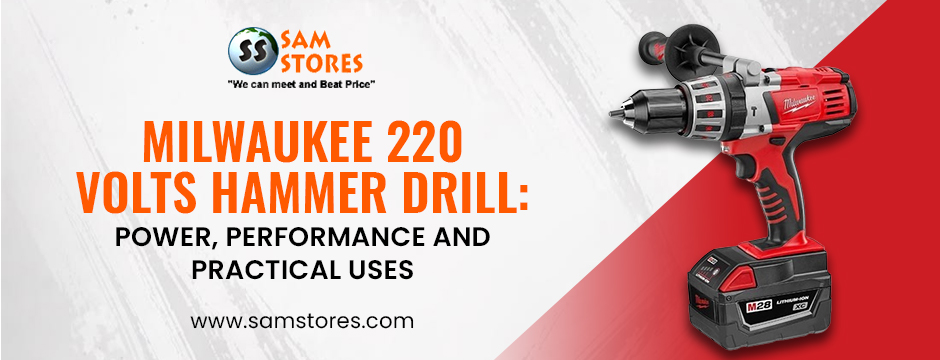
Choosing a power tool is not simply about picking the highest torque or fastest speed. Voltage, motor performance, battery technology, handling, and intended application all influence how well a drill performs in real working conditions. The Milwaukee 220 Volts Hammer Drill is designed around these practical requirements, combining high torque with cordless convenience for demanding drilling and fastening work.
For professionals and serious DIY users working with 220–240V electrical systems, understanding the drill’s specifications can make purchasing decisions easier. Its M28 platform, 750 in-lbs of peak torque, variable speed, metal chuck, and ergonomic design make it particularly interesting for heavy-duty applications.
Why Voltage Matters in Power Tools
Electrical voltage is an important consideration when purchasing Milwaukee 220 Volts Power Tools for international use. A tool designed for one electrical system may not be suitable for another without the correct power arrangement.
This becomes especially relevant for buyers who regularly use 220–240V equipment. Chargers, rather than the cordless tool itself, need particular attention because they connect directly to the electrical supply.
The product specifications list a 220V charger for the M28 battery system. Consequently, buyers should always confirm their local outlet voltage and plug configuration before connecting the charger.
SamStores also categorises electrical products according to voltage requirements, including 110V, 220V, and dual-voltage equipment. This makes voltage compatibility an important part of comparing products across international markets.
Milwaukee 220 Volts Hammer Drill: Understanding Its Core Performance
The drill is built around a Milwaukee motor capable of producing up to 750 in-lbs of peak torque. That figure matters when working with larger fasteners or drilling applications that require substantial rotational force.
Its variable speed range extends from 0–450 RPM to 0–1,800 RPM. Lower speeds provide greater control for demanding applications, while higher speeds are useful when faster drilling is appropriate.
Furthermore, the M28 REDLITHIUM battery system uses digital power management. This technology is designed to manage power delivery while helping protect both the battery and tool during demanding use.
The combination of torque and variable speed gives the drill flexibility. Instead of being limited to one type of task, it can handle different drilling and fastening requirements.
A Chuck Built for High-Torque Applications
The chuck is another important component. This model uses a 1/2-inch all-metal, single-sleeve ratcheting chuck with carbide jaws.
A metal chuck offers the durability expected from a heavy-duty drill. More importantly, the carbide jaws are designed to provide a strong grip on bits.
Bit slippage can become particularly frustrating when working at high torque. A secure chuck helps maintain control and allows the drill to transfer its power more effectively to the bit.
Battery Runtime and Cordless Convenience
Cordless operation changes how a drill can be used on a job. There is no power cable running between the tool and a wall outlet, which can make movement around a workspace considerably easier.
The M28 battery platform is rated at 28 volts and is designed to provide extended runtime compared with older 18-volt cordless battery systems. The product information states that it can provide up to twice the runtime of 18-volt batteries under applicable conditions.
However, actual runtime depends on factors such as material, drilling pressure, bit size, battery condition, and workload. Therefore, published runtime comparisons should be treated as performance indicators rather than guarantees for every application.
The package includes two M28 lithium-ion battery packs. Having a second battery can be useful for longer work sessions because one pack can be used while the other is available for charging.
Ergonomics Matter During Extended Work
Power is only valuable when the operator can control the tool comfortably. Heavy drilling can place considerable strain on the hands and wrists, particularly when the tool is used repeatedly.
The drill features a non-slip soft-grip handle designed to reduce vibration and improve comfort. It also includes a side handle that provides additional leverage and control.
This becomes particularly useful when drilling larger holes. The side handle gives the operator another point of contact, helping maintain stability when the motor generates substantial torque.
Consequently, the design is not focused solely on output. Control and handling are equally important when a drill is being used for demanding work.
How It Compares With Other 220V Power Equipment
A hammer drill occupies a specific role within a broader power-tool collection. It is primarily intended for drilling and fastening, while other tools are designed around different applications.
For example, Milwaukee 220-volt power tools may include equipment intended for cutting, grinding, fastening, or other specialised tasks. Comparing tools by their intended function is therefore more useful than comparing them only by voltage.
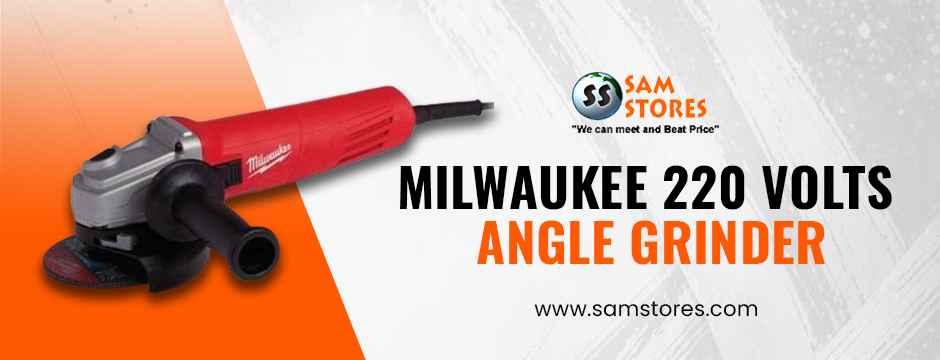
An angle grinder, for instance, serves a different purpose. A Milwaukee 220 volt angle grinder is better suited to applications such as grinding, cutting, surface preparation, and material finishing.
This distinction matters when building a practical workshop. A drill should not be selected as a substitute for every other power tool. Instead, each tool should perform the task for which it was engineered.
Important Specifications at a Glance
The key specifications provide a clearer picture of the drill’s capabilities:
- Battery: M28 REDLITHIUM, 28V
- Charger: 220V
- Peak torque: 750 in-lbs
- Speed: 0–450 / 0–1,800 RPM
- Chuck: 1/2-inch metal, single-sleeve ratcheting
- Tool warranty: 5 years
- Battery warranty: 3 years
- Length: 9.25 inches
- Power source: Cordless
The package also includes two M28 battery packs, a 220V charger, a No. 2 Phillips bit, and a side handle.
These details are useful when comparing the drill with other professional-grade models. Buyers should consider the complete package rather than judging the tool by motor output alone.
What Buyers Should Consider Before Purchase
A drill’s suitability depends on the work it will perform. Start with the required drilling capacity and torque. Next, consider how frequently the tool will be used and whether cordless operation provides a practical advantage.
Voltage compatibility should receive particular attention. The product carries a specific warning that it is not designed for use in America and is intended for countries using 220–240V electrical outlets.
Therefore, buyers in different regions should verify local electrical standards before purchasing. They should also check the charger and plug requirements rather than assuming that a cordless tool is automatically compatible with every electrical system.
Warranty coverage is another useful consideration. The listed five-year tool warranty and three-year battery warranty provide additional context when evaluating long-term ownership.
Conclusion
The Milwaukee 220 Volts Hammer Drill combines high torque, variable-speed operation, cordless mobility, and a durable chuck in a package aimed at demanding drilling and fastening applications. Its M28 battery system adds useful runtime, while the side handle and soft-grip design support better control during heavier work.
For users operating within compatible 220–240V electrical environments, the Milwaukee 220 Volts Hammer Drill offers a strong balance of power and practical usability. However, selecting the right drill still requires attention to voltage, application, accessories, battery requirements, and expected workload.
If you are comparing 220V equipment for professional or household use, Sam Stores offers a broad selection of voltage-specific electronic products and power equipment to help you find an option suited to your requirements.
FAQs
1. What is the Milwaukee 220 Volts Hammer Drill used for?
It is designed for heavy-duty drilling and fastening tasks in professional and DIY applications.
2. What battery does this hammer drill use?
It uses a 28V M28 REDLITHIUM battery system and comes with two battery packs.
3. What is its maximum torque?
The drill delivers up to 750 in-lbs of peak torque for demanding applications.
4. What speed does the drill offer?
It offers variable speeds ranging from 0–450 RPM to 0–1,800 RPM.
5. Is the charger compatible with 220V outlets?
Yes, the included charger is designed for 220V electrical systems and compatible 220–240V regions.