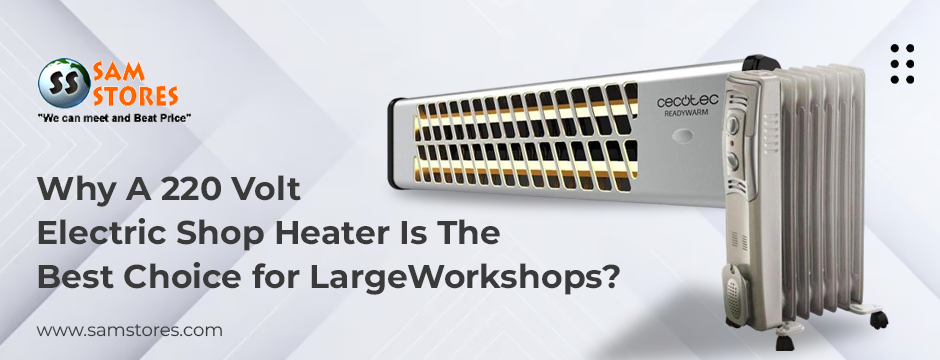
Heating a large workshop is never as simple as plugging in a small portable heater and hoping for the best. Workshops are typically expansive, open areas with high ceilings, concrete floors, rolling doors, and minimal insulation. These structural features make heat retention difficult, especially during colder months. As a result, standard residential heaters often fail to maintain a comfortable and consistent temperature.
In such a situation, a 220 Volt electric shop heater would be a great choice. How?
When temperatures drop, productivity follows. Cold environments affect worker efficiency, reduce concentration, and even impact machinery performance. Tools can become brittle, lubricants may thicken, and certain materials may become harder to handle. Therefore, selecting the right heating solution is not just about comfort; it is about operational efficiency.
A 220V electric heater for shops stands out as one of the most reliable and practical solutions for large workshop environments. Its higher power capacity, efficiency, durability, and safety features make it a superior choice compared to lower-voltage or fuel-based alternatives.
The Power Advantage of 220 Volts
The primary difference between standard heaters and a 220V electric heater for shops lies in electrical capacity. Most household heaters operate on 110 to 120 volts, which limits their heat output. While suitable for small rooms or offices, they struggle in larger industrial spaces.
A 220 Volt system, on the other hand, allows for significantly higher wattage. Higher wattage translates into stronger heat output and better coverage across wide areas. This added capacity enables the heater to warm large workshops quickly and maintain consistent temperatures without overworking the unit.
Instead of running continuously at maximum output, a properly sized 220V heater reaches the desired temperature efficiently and then cycles on and off as needed. This balanced operation improves both performance and longevity.
Designed for Large, Open Workspaces
Workshops present unique heating challenges. Large garage doors open frequently, allowing cold air to enter. High ceilings cause warm air to rise, leaving working areas colder. Concrete floors absorb and retain cold temperatures. All of these factors demand a heating system with substantial power.
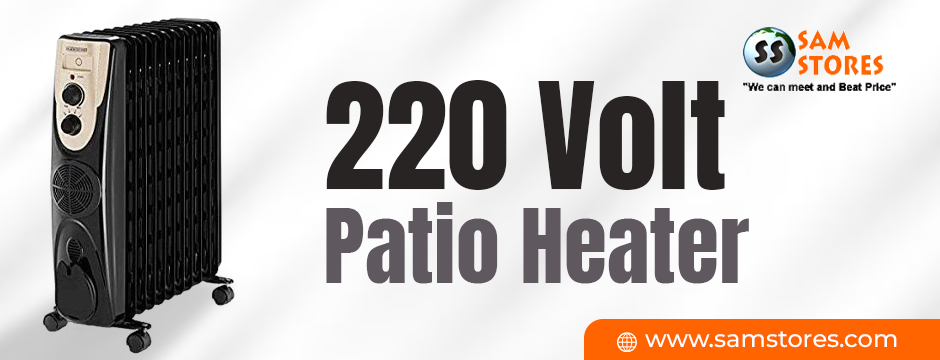
A 220 Volt patio heater is specifically designed to address these conditions. Many models include fan-forced systems that push warm air evenly throughout the space. This reduces cold spots and ensures consistent heating at ground level where work takes place.
In contrast, smaller heaters often create uneven temperature zones. Workers may feel warm near the unit but cold elsewhere. Over time, this inconsistency becomes uncomfortable and inefficient.
Faster Heat-Up Time for Immediate Productivity
Time is valuable in any workshop setting. Employees should not spend the first hour of the day waiting for the space to warm up.
A high-powered 220V electric shop heater delivers rapid heating performance. Thus, it allows the workshop to reach comfortable temperatures quickly. This fast heat-up capability is particularly important during early mornings or sudden temperature drops.
Instead of prolonged discomfort, workers can begin tasks promptly in a warm and stable environment. Maintaining productivity from the start of the day directly benefits operational output and employee morale.
Long-Term Energy Efficiency
Some assume that higher voltage automatically means higher energy bills. However, efficiency depends on how effectively a system performs its job. A lower-powered heater may run continuously without ever fully warming a large space. Continuous operation consumes more electricity over time.
A 220 Volt electric shop heater operates differently. Because it produces more heat in less time, it reaches target temperatures faster. Once achieved, the thermostat regulates operation efficiently. This cycling system reduces unnecessary runtime and minimizes wasted energy.
When properly sized for the space, a 220V heater can actually lower overall energy consumption compared to multiple smaller units running simultaneously.
Built for Durability in Demanding Environments
Workshops are rarely gentle environments. Dust, debris, vibration, and heavy equipment are common. Heating systems must withstand these conditions without frequent breakdowns.
Most 220V electric shop heater models are constructed with heavy-duty materials such as steel housings and reinforced heating elements. Many units are wall-mounted or ceiling-mounted, keeping them out of harm’s way and preserving valuable floor space.
Additionally, built-in safety features such as thermal cut-off protection and overheat sensors provide extra reliability. These safeguards ensure safe operation during long work hours and demanding seasonal use.
A Cleaner And Safer Heating Option
Safety is a top priority in workshops, especially those handling flammable materials, chemicals, or wood dust. Fuel-based heaters, including propane or gas systems, involve open flames and combustion gases. These systems require ventilation and careful monitoring.
A 220 Volt patio heater eliminates these concerns. Because it operates without combustion, it produces no fumes, smoke, or carbon monoxide. This makes it ideal for enclosed spaces where ventilation may be limited.
Electric heating also removes the need to store fuel tanks, reducing clutter and lowering fire risks. For businesses seeking a safer and more compliant heating solution, electric systems offer significant advantages.
Precise Temperature Control
Maintaining stable temperatures in a workshop protects both people and materials. Sudden temperature fluctuations can affect paints, adhesives, finishes, and sensitive equipment.
Most 220V electric heater units for shops come equipped with advanced thermostat controls. Some feature digital displays and programmable settings, allowing precise adjustments based on working hours and seasonal needs.
Consistent temperature control enhances comfort while protecting tools and materials from temperature-related damage. This stability contributes to smoother operations and higher-quality output.
Reduced Noise for Better Work Conditions
Industrial spaces often generate considerable noise from machinery and tools. Adding a loud heating system can further disrupt communication and concentration.
Many modern 220V electric heater models for shops are engineered for quieter performance. While fan-forced units naturally produce some sound, they typically operate at manageable noise levels that do not interfere with daily operations.
Lower noise levels improve teamwork, reduce stress, and create a more professional working environment.
Simplified Installation & Integration
Large workshops frequently have access to 220V circuits for heavy machinery such as welders, air compressors, and industrial tools. This makes integrating a 220 Volt electric shop heater relatively straightforward.
A licensed electrician can install the heater safely on a dedicated breaker, ensuring stable performance without overloading the system. Once installed, operation becomes simple and reliable.
Ceiling-mounted options also maximize space efficiency, keeping pathways clear and preserving usable floor area.
Cost-Effective over Time
While the initial investment in 220V electric heaters for shops or garages may be higher than smaller units, long-term savings often justify the expense. Electric heaters require less maintenance than gas or propane systems. There are no burners to clean, no pilot lights to maintain, and no fuel filters to replace.
Fewer moving parts reduce the likelihood of breakdowns. Maintenance is generally minimal and straightforward. Over time, these advantages lower total ownership costs.
When evaluating heating solutions for a large workshop, it is important to consider not only the purchase price but also operating efficiency, maintenance requirements, and lifespan.
Ideal for Various Industrial Applications
A 220V electric heater for large shopping areas is suitable for a wide range of large spaces, including automotive garages, woodworking shops, metal fabrication facilities, warehouses, agricultural buildings, and maintenance workshops. Each of these environments requires consistent and reliable heating to maintain productivity.
By delivering strong performance and even heat distribution, these heaters meet the demands of diverse industrial settings.
End Note
Heating a large workshop requires careful planning and the right equipment. Small residential heaters simply cannot provide the power and coverage necessary for expansive industrial spaces. A 220 Volt electric shop heater offers the capacity, efficiency, durability, and safety features needed to maintain a comfortable and productive environment.
With faster heat-up times, consistent temperature control, lower maintenance demands, and improved long-term efficiency, it represents a practical and reliable solution.
For workshop owners and facility managers seeking dependable performance during colder months, investing in a 220V system is a decision that supports both operational success and workplace comfort. So, if you are looking for electric heaters for your indoor or outdoor areas, visit Sam Stores. Here, you’ll get various types of heaters, so the options are many.