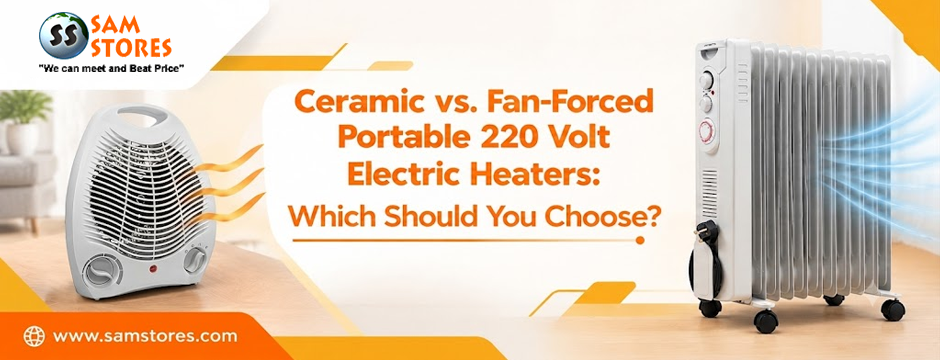
Choosing an electric heater sounds simple until you start comparing the options. One model promises quick warmth, another focuses on steady heat, and several look almost identical on a product page. Then there is the question of voltage, wattage, room size and running costs. Which features actually matter when you want a heater that suits your space?
If you are shopping for a Portable 220 volt electric heater, ceramic and fan-forced models are two options worth understanding. Both can provide convenient supplemental heat, but they work differently and may suit different rooms, routines and preferences.
At Sam Stores, comparing appliance specifications before buying can help you choose a product that fits your electrical supply and heating needs. Whether you need extra warmth for a home office, a chilly bedroom or a small living area, knowing the differences between these heater types can make your decision easier.
What Is a Portable 220 Volt Electric Heater?
A portable 220 volt electric heater is a heating appliance designed to operate from a compatible 220V electrical supply. Depending on the model, it may use a ceramic heating element, a fan-assisted heating system or another heating technology.
The word portable means the unit can be moved when needed, provided it is designed for that purpose and disconnected safely before relocation. This makes portable heaters useful for people who want supplemental warmth in a particular room without installing a permanent heating system.
However, voltage alone does not tell you how much heat a heater produces. Wattage, design and operating settings are important too. A 220V heater rated at 1,500 watts does not necessarily produce more heat than a comparable 240V model with the same wattage. Both electrical compatibility and the manufacturer’s specifications matter.
Before buying, check the rated voltage, power consumption, plug configuration and circuit requirements. A heater intended for a 220V supply should not automatically be assumed compatible with every 220V, 230V or 240V electrical system.
How Do Ceramic and Fan-Forced Electric Heaters Work?
Although the terms are sometimes used interchangeably, ceramic and fan-forced heaters describe different aspects of a heater’s design.
Ceramic Heaters: Heat from a Ceramic Element
A ceramic heater uses an electrically heated ceramic element to generate warmth. Many portable ceramic models also include a fan that moves the warmed air into the room.
Ceramic elements are popular because they can heat up quickly and work well in compact appliances. Depending on the model, you may find adjustable thermostats, multiple heat settings, timers and overheat protection.
For someone working in a home office or spending time in a small room, a ceramic heater can be a convenient way to add supplemental heat without changing the entire home’s heating arrangement.
One important detail: ceramic does not automatically mean fan-free or silent. Many ceramic space heaters rely on fans, so noise levels depend on the product’s design.
Fan-Forced Heaters: Moving Warm Air Around the Room
A fan-forced heater uses a fan to push air across a heating element and distribute the warmed air into the surrounding space. The heating element may be ceramic or another suitable material.
This airflow can make the warmth noticeable soon after the heater starts operating. It can be particularly useful when you want heat directed towards a specific area rather than waiting for a larger space to warm gradually.
The trade-off is sound. The fan produces some noise, although the level varies between models. People who work in a quiet room or are sensitive to background noise should check product specifications and reviews before purchasing.
Because ceramic heaters can also be fan-forced, the most useful comparison is often between a ceramic heater and a fan-assisted heater with a different heating element, or between specific products with different airflow designs.
Ceramic vs. Fan-Forced Portable Heaters: Key Differences
The right choice depends on how you intend to use the heater. Here is how the main features compare.
| Feature | Ceramic heater | Fan-forced heater |
| Heating method | Uses a ceramic heating element | Uses a fan to move air across a heating element |
| Heat distribution | Many models use a fan to distribute heat | Designed around forced airflow |
| Warm-up experience | Often provides quick, localised warmth | Can make warm air noticeable quickly |
| Noise | Depends on whether it uses a fan and its design | Fan noise is generally part of operation |
| Portability | Many compact models are easy to move | Available in compact and larger designs |
| Energy use | Depends mainly on wattage and operating time | Depends mainly on wattage and operating time |
| Best use | Supplemental warmth in a suitable small area | Directing warm air towards an occupied area |
There is no universal winner. A well-designed fan-forced heater may suit your needs better than a ceramic model, and the reverse can also be true. Compare actual specifications instead of relying on the heater category alone.
Which Heater Is Better for Your Room?
Room size and how you use the space should guide your decision.
For a Home Office
If you spend several hours at a desk, a compact portable heater can provide supplemental warmth while you work. A model with adjustable heat settings and a thermostat may help you maintain a comfortable temperature without running the heater at full power continuously.
A fan-forced unit can be useful when you want warm air directed towards your seating area. If fan noise distracts you during meetings or calls, compare noise specifications and consider whether a different heating design would be more suitable.
For a Bedroom
Comfort and noise may matter more than rapid airflow in a bedroom. Look for suitable temperature controls, stable construction and relevant safety features.
Do not assume that a portable heater is safe to leave running while you sleep. Follow the manufacturer’s instructions, including any restrictions on unattended operation, and keep the heater away from bedding, curtains and other combustible materials.
If you need regular overnight heating, a properly installed heating solution designed for that use may be more appropriate.
For a Living Room
A small portable heater can help address a cold spot near a sofa or reading chair, but it may not provide enough heat for a large or poorly insulated living room.
Check the heater’s rated wattage and intended coverage. Room dimensions, ceiling height, draughts and insulation all influence how effective supplemental heating will be.
For larger spaces, you may need a different heating arrangement rather than expecting a compact portable appliance to warm the entire room.
Does a 220V Heater Cost More to Run?
Not necessarily. A heater’s electricity consumption depends largely on its wattage, how long it operates and how often its thermostat switches the heating element on and off.
You can estimate the cost using this formula:
Energy consumed (kWh) = Power (kW) × Operating time (hours)
For example, a 1,500-watt heater uses 1.5 kWh for every hour it runs continuously at full power.
If your electricity rate is $0.20 per kWh, one hour at full power would cost approximately $0.30. Actual costs depend on your local electricity tariff and operating conditions.
A ceramic heater is not automatically cheaper to run than a fan-forced heater. If both use the same electrical power for the same amount of time, their energy consumption will be broadly comparable. A thermostat, lower heat setting or shorter operating period can reduce consumption when less heat is needed.
When comparing models, look at wattage, available settings and controls. A heater that matches your room and routine may offer better practical value than a more powerful unit you rarely need to use at full capacity.
Understanding 220V and 240V Portable Heaters
When shopping online, you may come across listings for 240 volt portable heaters and a 240 volt fan heater alongside 220V models. These labels refer to the electrical supply the products are designed to use.
The difference is important because electrical compatibility should never be guessed. Check the manufacturer’s rated voltage and frequency, the electrical supply at your location and the product’s plug and connection requirements.
A plug adapter changes the physical plug connection but does not convert voltage. Likewise, a voltage converter should not be assumed suitable for a high-power heating appliance unless its ratings and the heater manufacturer’s instructions explicitly support the combination.
If your supply is rated at 240V, do not automatically assume that a heater labelled 220V is suitable. Consult the product documentation or a qualified electrician if compatibility is unclear.
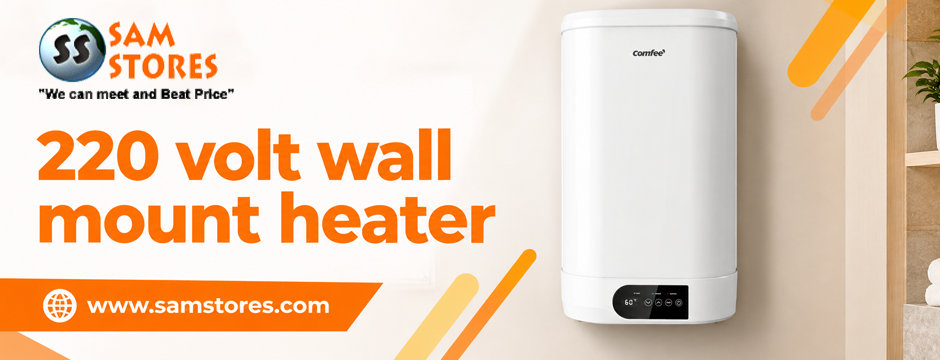
For buyers comparing fixed and portable options, a 220 volt wall mount heater may be worth investigating when floor space is limited. Wall-mounted models require suitable installation and must be compatible with the property’s electrical system. They are not interchangeable with portable appliances.
Other alternatives include baseboard heaters 220 volts, which may suit certain rooms when correctly sized and installed, and a 220 volt ceiling heater, which is designed for a different installation arrangement. Each option has its own placement, electrical and installation requirements.
Safety Features Worth Checking Before You Buy
Heating performance matters, but safety should be part of the buying decision from the beginning.
Before choosing a portable heater, check for:
- Overheat protection: Helps protect the appliance if it becomes excessively hot.
- Tip-over protection: On applicable models, this can switch the heater off if it is knocked over.
- Thermostat controls: Allow you to regulate the temperature rather than running the heater continuously at full output.
- Stable construction: Reduces the likelihood of the unit tipping during normal use.
- Recognised safety certification: Look for certification appropriate to the market where you will use the product.
- Clear operating instructions: Confirm that the heater is suitable for the intended room and use.
Keep portable heaters on a stable, level surface and maintain the clearance specified by the manufacturer. Never cover a heater, use it to dry clothing or place it close to curtains, bedding or furniture. Avoid extension cords and power strips unless the manufacturer explicitly permits the arrangement; high-power heaters should generally be connected directly to a suitable wall outlet.
Do not use a heater in a bathroom or other damp location unless it is specifically rated for that environment.
If the plug, cord or outlet becomes unusually hot, or you notice a burning smell or signs of damage, stop using the heater and have the issue checked.
How to Choose the Right Heater at Sam Stores
Once you understand the differences between heater types, narrow your options by matching the product to your actual needs.
Start with electrical compatibility. Confirm the voltage and frequency supported by the heater, along with the plug type and circuit requirements.
Next, consider the room. A small office used for a few hours each day has different requirements from a large living room that needs regular supplemental heating. Check the product’s rated wattage and any manufacturer-provided room coverage guidance.
Then compare controls, noise levels, portability and safety features. A handle or compact design may be useful if you need to move the heater between suitable rooms. A thermostat and multiple heat settings may be more important if you plan to use it regularly.
At Sam Stores, reviewing product specifications before purchasing can help you avoid choosing a heater based on appearance alone. Check the available product details and confirm any questions about voltage compatibility before placing your order.
Final Verdict: Ceramic or Fan-Forced?
A ceramic heater can be a sensible option when you want a compact source of supplemental warmth, particularly if the model offers useful controls and a suitable safety design. A fan-forced heater may be preferable when you want warmed air directed towards a particular area and do not mind the sound of a fan.
Since many ceramic heaters are fan-forced too, the best approach is to compare the specific products rather than treating the two categories as completely separate technologies.
Before buying a Portable 220 volt electric heater, consider your room size, preferred noise level, wattage, operating costs and electrical supply. A carefully chosen heater can make a cold room more comfortable without adding unnecessary complexity to your home heating setup.
Explore the available heating options at Sam Stores, compare their specifications and choose a model that fits your space and intended use.
Frequently Asked Questions
1. Is a ceramic heater better than a fan-forced heater?
Neither is automatically better. Ceramic heaters use a ceramic heating element, while fan-forced describes how air is moved across a heating element. Many ceramic heaters use fans too. Compare individual models for noise, heat settings, wattage and safety features.
2. Does a Portable 220 volt electric heater use more electricity than a 240V heater?
Not simply because of its voltage rating. Electricity consumption depends on power draw and operating time. Compare wattage and confirm that the heater is compatible with your electrical supply before use.
3. Are 240 volt portable heaters suitable for small rooms?
They may be suitable for supplemental heating if their power output and intended coverage match the room. Consider insulation, room size, controls and safety clearances before choosing a model.
4. Can I use a 220V heater with a 240V power supply?
Do not assume compatibility based on the labels alone. Check the manufacturer’s specified operating voltage and frequency. If the documentation does not clearly confirm compatibility, consult the manufacturer or a qualified electrician.
5. What should I look for when buying a portable electric heater?
Check voltage compatibility, wattage, intended room coverage, thermostat controls, noise level, portability and safety features. Follow the manufacturer’s instructions for installation, electrical connection, clearance and operation.