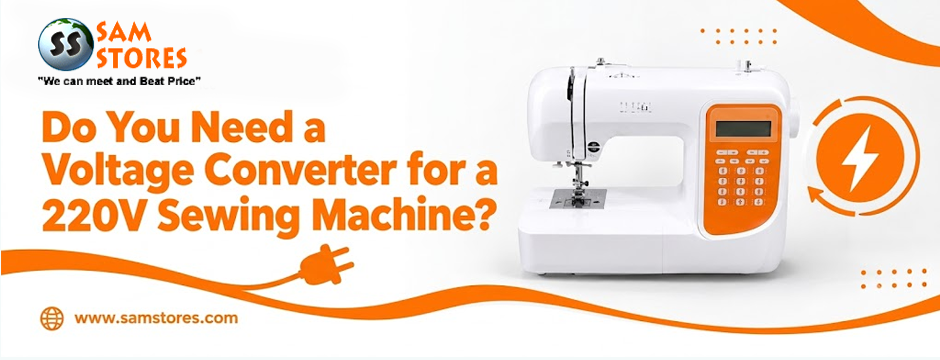
Buying a sewing machine for use in another country can raise a few questions, especially when the voltage at home differs from the machine’s electrical requirements. You might find a sewing machine that suits your projects perfectly, only to discover that its power rating is 220V while your wall outlet supplies 110V or 120V. Should you buy a voltage converter, use a plug adapter, or look for another model?
The answer depends on the machine’s specifications and the electrical supply where you plan to use it. Getting this right matters because an incompatible power supply can prevent your sewing machine from working properly and may even damage its motor or electronic components.
At Sam Stores, choosing the right electrical appliance starts with understanding how it fits your needs. If you are shopping for a sewing machine 220v voltage model, this guide explains when a voltage converter is necessary, how to check compatibility, and what to consider before making a purchase.
Do You Need a Voltage Converter for a 220V Sewing Machine?
Yes, you may need a voltage converter if your sewing machine requires 220V but your electrical outlet supplies only 110V or 120V. However, a converter is not always necessary.
The first step is to check the electrical rating printed on the machine, its power adapter, or the manufacturer’s instruction manual.
Here is a simple guide to help you understand your options:
- 220V sewing machine with a 110V or 120V outlet: A suitable step-up voltage converter is generally required unless the machine is rated for both voltage ranges.
- 220V sewing machine with a 220V to 240V outlet: A voltage converter is usually unnecessary if the machine’s rated input supports the local supply.
- Dual-voltage sewing machine: If the rating specifies an input such as 100V to 240V, a voltage converter is generally unnecessary. You may only need a compatible plug adapter.
- Unclear voltage rating: Check the manufacturer’s documentation before connecting the machine to the outlet.
Do not assume that every sewing machine sold internationally supports multiple voltages. Even machines from the same brand can have different electrical specifications depending on the model and intended market.
Understanding Sewing Machine 220V Voltage Requirements
Voltage is the electrical pressure that drives current through a device. Sewing machines use electrical power to operate their motors, control systems, lights and other components.
A machine designed for 220V expects a supply within its specified operating range. If you connect it to an incompatible source, it may fail to start, perform poorly or suffer electrical damage.
Understanding the difference between voltage, frequency and plug type can help you avoid an unnecessary purchase or an expensive repair.
Voltage and frequency are not the same
Voltage refers to the electrical supply level, while frequency, measured in hertz (Hz), describes how often the alternating current changes direction.
A sewing machine rated for 220V and 50Hz may have different compatibility requirements from one rated for 120V and 60Hz. Some machines support multiple frequencies, while others have restrictions.
Before buying a converter, check both the voltage and frequency ratings. A converter that changes voltage does not necessarily change frequency.
Plug adapters do not convert voltage
This is one of the most common mistakes buyers make when purchasing appliances for international use.
A plug adapter changes the physical shape of a plug so it can fit a different outlet. It does not change the electrical voltage.
For example, if you bring a 220V sewing machine to a home with 120V outlets, a simple plug adapter will not turn the 120V supply into 220V. You would generally need a properly rated step-up converter, unless the sewing machine supports both voltages.
Knowing this distinction before ordering can save you time and help protect your investment.
When Should You Buy a Voltage Converter?
A voltage converter is worth considering when your sewing machine and household electricity operate at different voltage levels.
Imagine a customer in the United States buying a sewing machine designed for 220V operation. The machine may offer the desired stitching functions, but a standard household outlet in the United States typically supplies around 120V. Connecting the machine directly could leave it unable to operate correctly.
In this situation, a step-up converter may be appropriate.
Before choosing one, consider these factors.
1. Check the machine’s wattage
Voltage is only one part of the calculation. You also need to know how much electrical power the sewing machine consumes.
Look for the wattage or current rating on the product label or in the user manual. The converter must be capable of handling the machine’s power demand, including any startup requirements.
A converter rated too close to the machine’s normal consumption may not provide enough capacity for reliable operation. Follow the converter manufacturer’s sizing guidance and allow for any additional starting load specified for the machine.
2. Consider the motor and electronic controls
A basic mechanical sewing machine may have different power requirements from a computerised model with a display, automatic threading features or electronic speed controls.
If your machine uses sophisticated electronics, choose a converter that is explicitly suitable for that type of equipment. Check the manufacturer’s guidance before using a converter with sensitive electronic components.
3. Confirm frequency compatibility
A voltage converter may adjust the voltage without changing the frequency. If your machine specifies a particular frequency, confirm that it is compatible with your local supply.
If the documentation does not make this clear, contact the manufacturer or an authorised service provider before using the machine.
Can You Use a Singer Sewing Machine 220 Volt Model in the USA?
A singer sewing machine 220 volt model can potentially be used in the United States, but the exact model determines what equipment you need.
Singer offers sewing machines for different markets, and their voltage requirements can vary. You should never assume that all Singer machines have the same electrical rating.
Start by locating the rating label on the machine or checking the model’s official manual.
If the label specifies 220V only, you will generally need a suitable step-up converter to use the machine with a standard 120V supply. The converter must also meet the machine’s power requirements and any other electrical specifications.
If the machine is marked for a dual-voltage input, such as 100V to 240V, it may operate directly from a compatible US supply. In that case, a plug adapter may be sufficient, provided the frequency requirements are also met.
A practical buying tip: Check the model number, voltage rating, wattage and frequency before ordering a Singer machine from an international retailer. This is particularly important when purchasing online, where product photographs may show a plug or specification intended for a different country.
How to Choose the Right Converter for a 220 Volts Sewing Machine
Once you establish that a converter is necessary, focus on compatibility rather than choosing the cheapest option.
A suitable converter should meet the following requirements:
- Correct voltage conversion: It should provide the output voltage required by your sewing machine.
- Adequate power capacity: Its rating should accommodate the machine’s consumption and startup requirements.
- Suitable electrical design: It should be appropriate for the machine’s motor and electronic controls.
- Correct frequency compatibility: It should not be assumed to change 50Hz power to 60Hz, or the reverse.
- Reliable safety features: Look for appropriate overload protection and recognised safety certifications for your market.
A converter with insufficient capacity can overheat or shut down during operation. A poorly matched device can also cause inconsistent performance.
If you are unsure which converter to buy, consult the sewing machine manufacturer or a qualified electrician. This is preferable to relying on a generic converter listing that does not clearly explain its specifications.
Should You Buy a 220V Sewing Machine or a Dual-Voltage Model?
The right choice depends on where you will use the machine and whether you expect to move between countries.
A dedicated 220V sewing machine can be a practical option for households with compatible electrical outlets. If you are buying the machine for a permanent workspace in a region with a suitable 220V to 240V supply, a separate converter may not be needed.
A dual-voltage model offers more flexibility. If its specifications support both 110V to 120V and 220V to 240V supplies, it may be easier to use when relocating or travelling between regions. You will still need to check frequency compatibility and the appropriate plug arrangement.
Consider your sewing habits before deciding. Someone who sews regularly in a dedicated home studio may prioritise stitch options, durability and ease of maintenance. A person who moves frequently may place greater importance on portability and voltage flexibility.
If you are exploring international appliance options, Sam Stores can be a useful starting point for researching products intended for different electrical standards. Always verify the specifications of the particular model before purchasing.
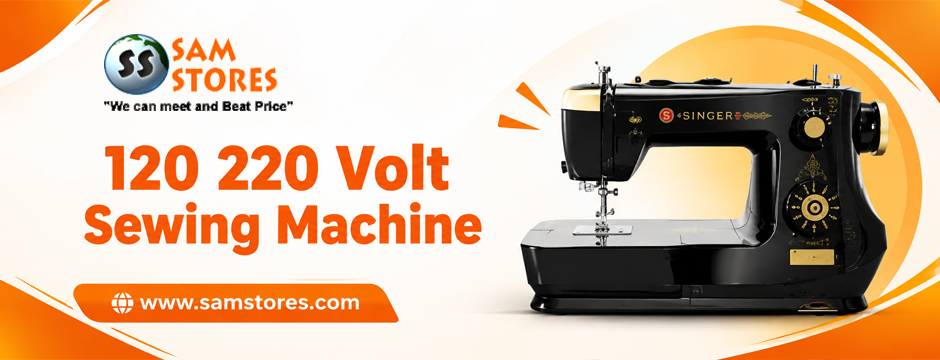
You can also explore related household appliance options, including 120 220 volt sewing machine, when comparing voltage requirements and available configurations. For other international kitchen appliance needs, browse 220 Volts Bread Machines.
Common Mistakes to Avoid When Using a 220V Sewing Machine
Even experienced sewing enthusiasts can overlook electrical compatibility when purchasing a machine online. A few simple checks can help prevent problems.
Mistake 1: Assuming a plug adapter is enough. A plug adapter changes the plug shape, not the voltage. Check whether the machine supports the local supply.
Mistake 2: Ignoring the power rating. A converter must support the machine’s electrical demand. Check the wattage and startup requirements before selecting one.
Mistake 3: Overlooking frequency. A voltage converter may not change the frequency. Confirm that the machine supports the available electrical supply.
Mistake 4: Buying without checking the model number. Product names alone do not guarantee identical electrical specifications. Read the manufacturer’s documentation for the exact model.
Mistake 5: Using an unsuitable converter for electronic equipment. Some computerised machines have specific power requirements. Confirm that the converter is appropriate before connecting the machine.
Taking a few minutes to check these details can help you avoid unnecessary costs and make a more confident purchase.
Find the Right Sewing Machine for Your Needs at Sam Stores
Choosing a sewing machine involves more than comparing stitch patterns, speed settings and prices. Voltage compatibility is just as important, particularly if you are buying an appliance designed for use in another country.
Before placing an order, check the machine’s rated voltage, frequency, wattage and plug type. If it requires 220V but your home supplies 120V, investigate a suitable step-up converter. If it supports a broad dual-voltage range, you may be able to use it with a plug adapter instead.
At Sam Stores, taking the time to understand product specifications helps you make a more informed decision and choose equipment suited to your home or sewing workspace.
Whether you are a beginner learning basic alterations or an experienced sewing enthusiast working on detailed garments, the right machine should fit your projects and your electrical setup. Compare the specifications carefully, confirm compatibility before connecting the machine, and invest in the equipment that makes sense for your needs.
Frequently asked questions
1. Do I need a voltage converter for a 220V sewing machine?
Yes, if the machine requires 220V and your outlet supplies only 110V or 120V, you will generally need a suitable step-up voltage converter. Dual-voltage machines may not require one.
2. Can I use a 220V sewing machine with a 120V outlet?
You should not connect a 220V-only machine directly to a 120V outlet. Check whether the manufacturer permits this setup with a suitable converter or whether the model supports both voltages.
3. Will a plug adapter work for a 220V sewing machine?
A plug adapter only changes the plug configuration. It does not convert voltage, so it is insufficient when the machine requires 220V and the outlet supplies 120V.
4. Can a Singer sewing machine rated at 220V work in the USA?
It may work with an appropriately rated step-up converter if the machine is designed for 220V only. Check the model’s voltage, wattage and frequency requirements before use.
5. Can I use a 220V sewing machine on a 230V or 240V supply?
It depends on the machine’s rated input range. Check the manufacturer’s specifications to confirm whether 230V or 240V operation is supported rather than assuming every 220V machine is compatible.