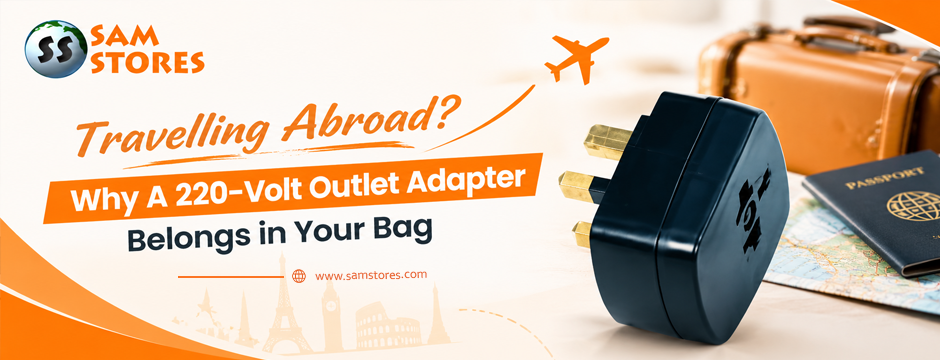
You have packed your clothes, passport, charger, toiletries, and perhaps a small camera for the trip. Everything seems ready until you arrive at your hotel and discover something frustrating: your favourite appliance cannot connect to the local outlet.
It is a surprisingly common travel problem.
Electrical outlets and voltage standards can vary between countries. That means the plug that works perfectly at home may not fit your destination’s socket. In some cases, the voltage can also be different.
This is where a 220 volt outlet adapter can become a useful addition to your travel kit.
At Sam Stores, we understand that small electrical accessories can make a surprisingly big difference when you’re away from home. The right adapter can help you connect compatible devices without searching for an electrical shop after landing.
However, there’s an important distinction between changing a plug shape and changing voltage. Understanding that difference can help you choose the right accessory and use it safely.
Let’s explore why an outlet adapter deserves space in your suitcase.
What Exactly Does A 220-Volt Outlet Adapter Do?
The name can sometimes be confusing. A 220 volt outlet adapter generally refers to an accessory designed to provide a compatible physical connection for equipment using a particular plug configuration. An adapter itself typically does not transform electrical voltage.
For example, if your appliance is designed for 220–240V and your destination provides compatible voltage, you may only need the appropriate plug adapter.
However, if your appliance is designed exclusively for 110–120V and you’re connecting it to a 220–240V supply, you may need a properly rated voltage converter or transformer.
These are different products. That distinction should always be checked before plugging anything in.
Adapter Or Converter? Don’t Mix Them Up
This is probably the most important thing to understand before buying travel electrical accessories.
- A plug adapter changes the shape of the connection.
- A voltage converter or transformer changes the electrical voltage.
They solve different problems.
Suppose you take a device designed for 110V to a country using 220–240V. A simple plug adapter will allow the plug to physically enter the socket, but it will not reduce the voltage. That could damage equipment that isn’t rated for the higher voltage.
On the other hand, many modern chargers are designed for a wide input range. Look at the label on your device for something like “Input: 100–240V.”
If you see that rating, the device may only require a suitable plug adapter. Always check the manufacturer’s specifications rather than assuming.
Why Do Frequent Travellers Keep Electrical Adapters Handy?
Frequent travellers learn quickly that preparation saves time. A universal adapter takes up little luggage space compared with the inconvenience of being unable to use essential electronics.
Think about everything you might use during a trip.
Your phone charger needs power. Your laptop may need charging. A camera battery might need to be topped up. You may want to use a hair dryer, electric shaver, electric toothbrush, or other personal appliance.
Not every item necessarily needs the same connection. Having the appropriate adapter available means you have one less thing to figure out after arrival. For business travellers, the convenience can be even more important.
Imagine arriving at a conference and discovering that your laptop charger cannot connect to the hotel’s socket. A small accessory suddenly becomes extremely valuable.
Different Appliances Have Different Requirements
Don’t assume every electrical device behaves the same way. A phone charger generally consumes relatively little power. A hair dryer or heater can require significantly more. This means the power rating of an adapter or converter matters.
High-wattage appliances require equipment rated for their electrical load. This is particularly relevant when dealing with products such as dryers, curling irons, kettles, or other heating appliances.
For instance, someone searching for a 220 dryer plug adapter to 110 may actually need to determine whether they need a plug adapter, voltage converter, or both.
The wording used in online searches can be confusing. The solution is to identify the appliance’s input voltage and wattage first. Then choose equipment that is specifically rated for those requirements.
What About A 230 Volt Plug Adapter?
You may also come across products described as a 230 volt plug adapter. Again, the number refers to voltage compatibility rather than necessarily describing a voltage conversion function.
Many regions use nominal voltages around 220–240V, while others use around 100–127V. Actual standards can vary by country and electrical system.
That’s why travellers should check their destination’s requirements before choosing an adapter.
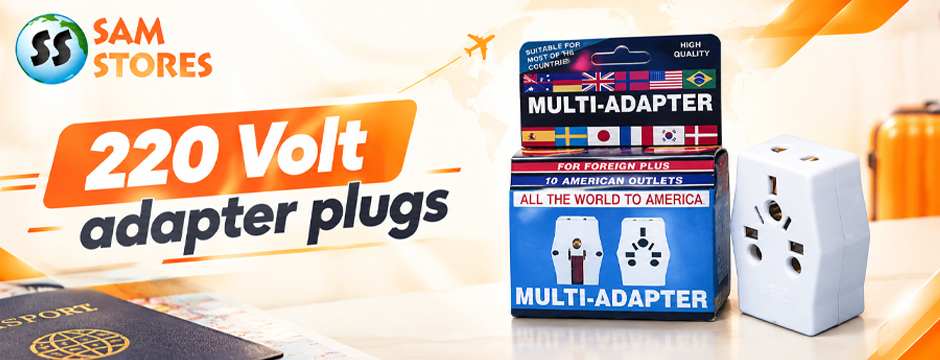
220 Adapter Plugs Can Be Useful Beyond International Travel
Travel isn’t the only situation where plug adapters can become useful. People sometimes purchase equipment designed for a particular electrical connection and later discover that their existing outlet configuration differs.
That’s where 220 adapter plugs can provide a practical connection solution when the voltage and electrical requirements are already compatible. However, compatibility should always come first. The fact that two plugs can physically connect does not automatically mean the electrical setup is safe.
Before using any adapter, confirm the voltage, current, frequency, grounding requirements, and appliance rating where relevant. If you’re unsure, consult a qualified electrician.
A Quick Pre-Travel Electrical Checklist
Before leaving for an international trip, take a few minutes to check your electronics. Start with your destination. Then check each device.
- Step 1: Identify the destination’s socket type.
Different countries use different plug configurations.
- Step 2: Check your device’s voltage rating.
Look at the manufacturer’s label or specifications.
- Step 3: Check whether the device accepts multiple voltages.
A 100–240V rating usually indicates broad input compatibility.
- Step 4: Check wattage for high-power appliances.
Hair dryers and heating devices need particular attention.
- Step 5: Determine whether you need an adapter or converter.
Don’t assume they are interchangeable.
- Step 6: Pack the right accessory.
Ideally, test it with your equipment before travelling.
A five-minute check at home can prevent a frustrating situation abroad.
What About Searching for A 220V to 110V Adapter at Home Depot?
You may encounter searches such as 220V to 110V adapter home depot when looking for a solution. But remember that “adapter” is often used casually online to describe different types of electrical equipment. A true voltage conversion device is different from a simple plug adapter.
If your appliance requires 110–120V and your wall supply provides approximately 220–240V, look specifically for a correctly rated step-down transformer or voltage converter. The converter’s wattage capacity should be appropriate for the appliance. Never select one based solely on the plug shape.
Don’t Let Your Electronics Dictate Your Trip
Your travel itinerary should be about the places you’re visiting, not electrical outlets. You shouldn’t have to spend your first evening searching for a shop because your charger doesn’t fit. You shouldn’t risk damaging an expensive appliance because you confused an adapter with a converter. And you certainly shouldn’t assume that every international plug problem can be solved with one universal accessory.
A little preparation makes a big difference.
- Pack the appropriate adapter.
- Check your device ratings.
- Understand the difference between connection and voltage conversion.
- Then get on with your journey.
Final Thoughts
A 220 volt outlet adapter can be a small but valuable addition to your travel essentials. It can help you connect compatible electronics to different socket configurations and avoid unnecessary inconvenience.
However, the most important lesson is understanding what an adapter actually does. It changes the plug connection. It does not automatically change voltage.
Before travelling, check your destination’s electrical system and every device you plan to take. For equipment that isn’t compatible with the available voltage, use an appropriately rated converter or transformer instead. When you’re travelling, the last thing you want is a tiny plug to become a big problem.
Practical electrical accessories should make everyday life easier, whether you’re preparing for a trip or solving a connection problem at home. You can find such useful items at Sam Stores.
FAQs
1. What is a 220 volt outlet adapter used for?
A plug adapter changes the physical connection between an appliance plug and a wall socket. A 220 volt outlet adapter does not normally convert electrical voltage.
2. Is a plug adapter the same as a voltage converter?
No. A plug adapter changes the plug configuration, while a voltage converter changes the supplied voltage. They perform different functions.
3. Can I use a 110V appliance with a 220V outlet?
Not with a basic plug adapter. A compatible step-down transformer or voltage converter may be required, depending on the appliance.
4. How can I tell whether my device needs a voltage converter?
Check the input rating on the device. Equipment marked “100–240V” generally supports both common voltage ranges with the appropriate plug adapter.
5. Can I use one adapter for every appliance?
Not necessarily. Check each appliance’s voltage, wattage, plug configuration, and grounding requirements before use. High-power appliances require particular care.