A power outage is inconvenient when it lasts for a few minutes. When it stretches into several hours, it can become a serious problem.
The refrigerator stops running. Lights go out. Fans and air conditioners become unusable. Wi-Fi equipment shuts down. If you work from home, operate essential equipment or simply want reliable backup power for your family, a generator can make a big difference.
This is where a 220 volt diesel generator can be a practical choice for home backup power.
But there is an important question to answer before buying one: What can a 220 volt diesel generator actually power?
The answer depends on the generator’s rated output, the appliances you want to operate and how much power those appliances need when starting. Choosing a generator simply because it says 220V on the label is not enough. You need to look at voltage, wattage, frequency, phase and the combined electrical load.
For homeowners looking for dependable backup power, Sam Stores offers generator options designed to provide practical performance without making the buying process unnecessarily complicated.
What Is a 220 Volt Diesel Generator?
A 220 volt diesel generator uses a diesel engine to produce electrical power at around 220 volts. Depending on the model, the output may be specified within the 220 to 240 volt range.
For many household applications, this voltage range makes the generator suitable for powering common electrical equipment, provided the appliance specifications and generator output are compatible.
A typical household generator may be used for:
- Refrigerators and freezers
- Ceiling and portable fans
- Lighting systems
- Televisions
- Wi-Fi routers and networking equipment
- Computers and workstations
- Washing machines
- Water pumps
- Kitchen appliances
- Air conditioners, depending on capacity
- Selected power tools and workshop equipment
The key point is that voltage compatibility and generator capacity are two different things.
A generator can provide the correct voltage but still be too small to run several high-powered appliances at the same time.
How Much Can a 220 Volt Diesel Generator Power?
Generator capacity is normally expressed in watts or kilowatts.
For example, a 6 kW generator has a rated output of approximately 6,000 watts. That does not mean you should continuously operate equipment right at the maximum rating. Leaving some capacity available provides a useful safety margin and helps accommodate appliances with higher starting requirements.
Consider a basic household load:
| Appliance | Approximate Running Power |
| Refrigerator | 150 to 400W |
| LED lights | 50 to 200W |
| Ceiling fans | 60 to 100W each |
| Television | 80 to 200W |
| Wi-Fi router | 10 to 30W |
| Computer | 100 to 300W |
| Washing machine | 400 to 1,000W |
| Water pump | 500 to 1,500W+ |
| Microwave | 1,000 to 1,500W |
| Air conditioner | 1,000 to 2,500W+ |
These figures are only general estimates. Actual consumption varies considerably between appliances and models.
A refrigerator, for instance, may consume relatively little electricity once it is running, but its compressor can require considerably more power during startup. The same principle applies to pumps, air conditioners and other equipment containing motors or compressors.
That is why calculating the total load before buying is so important.
Running Watts vs Starting Watts: The Detail Many Buyers Miss
One of the most common generator-buying mistakes is looking only at running wattage.
Some appliances need additional power for a short period when they start. This is known as starting, surge or startup wattage.
Imagine that your refrigerator normally consumes 300 watts while running. Its starting requirement could be substantially higher. If your generator is already operating several other appliances, that temporary increase could overload the system.
The same issue can arise with:
- Air conditioners
- Refrigerators
- Freezers
- Water pumps
- Compressors
- Power tools
When selecting a 220 volt diesel generator, make a list of the appliances you expect to run together. Note both their running and starting requirements where available.
This simple step can help you choose a generator that is genuinely suited to your home rather than one that only looks suitable on paper.
What Can a 220 Volt Diesel Generator Run During an Outage?
For many homeowners, the goal is not to operate every appliance in the house simultaneously. Instead, it is to keep essential systems running.
A properly sized generator can potentially support a combination such as:
Essential load
- Refrigerator
- Several lights
- Fans
- Television
- Wi-Fi router
- Computer
Medium load
- Washing machine
- Water pump
- Additional lighting
- Kitchen appliances
Higher load
- Air conditioner
- Electric water heater
- Large pump
- Heavy workshop equipment
The actual combination depends on the generator’s capacity and the electrical requirements of each appliance.
If you need air conditioning, pumping equipment and multiple large appliances at the same time, you will generally need more generator capacity than someone who only wants lighting, refrigeration and basic electronics.
Is a 240 Volts Generator Single Phase Suitable for a Home?
A 240 volts generator single phase can be appropriate for residential applications where the home’s electrical system and appliances are designed for compatible voltage and single-phase power.
Single-phase generators are commonly considered for houses, small offices, workshops and other applications where three-phase electrical power is not required.
However, don’t assume that every 220V, 230V or 240V appliance can automatically be connected to every generator. Electrical standards differ between countries and properties.
Before purchasing, check:
- The voltage requirements of your appliances.
- Whether your electrical system is single-phase or three-phase.
- The generator’s rated output.
- The generator’s frequency.
- Plug and outlet compatibility.
- Whether professional installation or a transfer switch is required.
If you are uncertain, speak with a qualified electrician before connecting a generator to your home’s electrical system.
Why Consider Diesel for Home Backup Power?
Diesel generators have earned a strong reputation for backup and demanding applications because diesel engines are built for sustained operation.
For homeowners who experience frequent or lengthy power interruptions, diesel can be an attractive option.
A diesel generator can offer several advantages:
Built for Extended Operation
Diesel engines are commonly used in applications where generators may need to operate for extended periods. That makes them particularly useful during prolonged outages.
Strong Performance
Diesel engines are well suited to handling demanding electrical loads, especially when the generator is correctly sized for the application.
Practical for Frequent Backup Use
If your generator is going to be used regularly rather than sitting untouched for years, a diesel model can be worth considering.
Suitable for More Than Just Emergencies
A sufficiently powerful unit can potentially support a home workshop, agricultural equipment, water pumping and other applications beyond basic emergency lighting.
What Is a 220-240 Volts Generator?
You may come across the term 220-240 volts generator while shopping for backup power equipment.
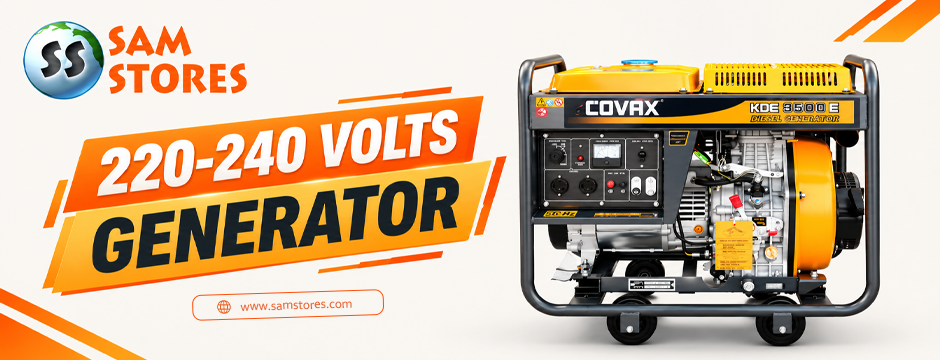
This generally indicates that the generator’s electrical output falls within the 220 to 240 volt range, depending on the model and its operating specifications.
For buyers, the important thing is to look beyond the voltage figure.
Check the complete specification, including:
- Rated power
- Maximum power
- Frequency
- Phase
- Engine type
- Fuel tank capacity
- Starting system
- Outlet configuration
- Safety features
A generator with the right voltage but insufficient wattage will not solve your backup power requirements.
Don’t Forget About Fuel Capacity
Generator runtime depends on several factors, including engine efficiency, fuel tank capacity and the electrical load being placed on the generator.
A generator running at a light load may consume fuel differently from one operating close to its rated capacity.
For example, a model with a larger fuel tank can be particularly convenient when you expect extended outages because you may not need to refuel as frequently.
Still, fuel capacity should not be your only purchasing consideration. A larger tank does not automatically mean a better generator. The generator needs to match your home’s actual power requirements.
Features Worth Looking For in a Home Generator
A good home backup generator should be more than an engine attached to an alternator.
Depending on your requirements, useful features can include an electric start, voltage monitoring, low-oil protection, robust outlets and wheels for easier movement.
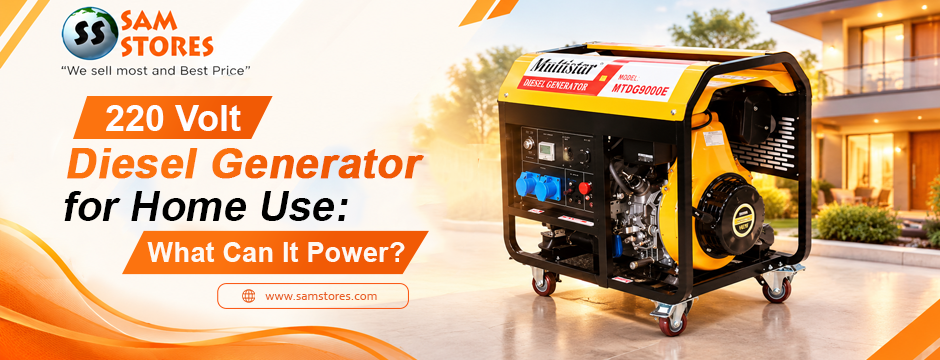
The Multistar MTDG9000E available from Sam Stores is a good example of a generator designed around practical usability. It provides 220 to 240 volt output at 50 Hz and has a rated power of around 6.0 kW. Its design also includes features such as an LCD volt meter, oil alert, splash-proof outlets and wheels.
For homeowners, these details matter because a generator needs to be straightforward to monitor and operate, particularly during an unexpected outage.
How to Choose the Right Generator for Your Home
Before choosing a 220 volt diesel generator, take five minutes to work out what you actually need.
Step 1: List Your Essential Appliances
Write down everything you want to keep running during an outage.
Step 2: Check Their Wattage
Look at the rating plate or manufacturer’s specifications for each appliance.
Step 3: Identify High-Starting-Load Appliances
Refrigerators, pumps and air conditioners may require additional startup power.
Step 4: Add Your Loads
Calculate the approximate running wattage of the appliances you expect to use simultaneously.
Step 5: Allow Some Headroom
Avoid choosing a generator that operates at its absolute limit all the time. Some spare capacity can make the system more practical and flexible.
Step 6: Check Voltage and Phase
Make sure the generator’s output matches your electrical requirements. This is especially important when comparing 220V, 230V and 240V equipment.
Why Buy Your Generator From Sam Stores?
Buying a generator is not simply about finding the lowest price. You are investing in backup power that you may depend on when the electricity goes out.
Sam Stores gives buyers access to generator equipment for different power requirements, making it easier to compare specifications and find an appropriate solution.
Whether your priority is keeping essential home appliances running, supporting a workshop or maintaining critical equipment during an outage, choosing based on actual electrical demand is the smarter approach.
A 220 volt diesel generator can be an excellent home backup solution when the capacity, voltage, phase and appliance requirements are properly matched.
Final Thoughts
A home generator should make life easier during a power failure, not create another problem.
The right 220 volt diesel generator can keep essential appliances operating, maintain refrigeration, support lighting and electronics, and potentially handle larger equipment when its capacity is sufficient.
The secret is choosing based on your actual power requirements rather than simply buying the biggest or cheapest generator available.
Start with your appliances. Calculate their running and starting loads. Check voltage and phase requirements. Then compare generator specifications carefully.
If your home needs dependable backup power in the 220 to 240 volt range, explore the generator options available from Sam Stores and choose a model that gives you the capacity and features you genuinely need.
FAQs
1. What can a 220 volt diesel generator power at home?
A 220 volt diesel generator can potentially power refrigerators, lights, fans, televisions, computers, Wi-Fi equipment, washing machines, pumps and other appliances, depending on its wattage capacity and the combined electrical load.
2. Is a 220 volt diesel generator suitable for home use?
Yes. A properly sized 220 volt diesel generator can provide reliable residential backup power. Before connecting one, make sure its voltage, frequency, phase and output are compatible with your home’s electrical system.
3. Can a 220 volt diesel generator run an air conditioner?
It can, provided the generator has sufficient capacity to handle both the air conditioner’s running and startup power requirements. Larger air conditioners may require considerably more generator capacity.
4. What is the difference between a 220-240 volts generator and a 240 volts generator single phase?
A 220-240 volts generator describes its voltage output range, while a 240 volts generator single phase also specifies the phase configuration. Always check the complete generator and appliance specifications before connecting equipment.
5. How do I choose the right 220 volt diesel generator?
List the appliances you need during an outage, check their running and starting wattage, calculate the combined load and select a generator with sufficient rated capacity and appropriate voltage and phase specifications.