Air conditioners are not universal appliances. One of the most common and costly mistakes buyers make is assuming that all air conditioners work the same way regardless of where they are installed. Voltage requirements matter, and they matter a lot. A 220 outlet air conditioner is designed specifically for regions and buildings that operate on higher electrical voltage standards. Understanding what this means and whether you actually need one can save you from electrical damage, safety risks, and wasted money.
This guide explains what a 220 outlet air conditioner is, how it differs from standard models, and who should be buying one.
Understanding Electrical Voltage in Simple Terms
Every country follows a standard electrical system. In the United States and a few other regions, most household outlets supply 110 to 120 volts. In contrast, much of Europe, Asia, Africa, the Middle East, Australia, and parts of South America operate on 220 to 240 volts.
A 220 outlet air conditioner is built to run directly on this higher voltage supply. It is not a modified version of a lower voltage unit. The internal components including the compressor, motor, control board, and wiring are designed to operate safely and efficiently at this voltage level.
Plugging the wrong appliance into the wrong voltage source can result in immediate failure or long term damage.
What Exactly Is a 220 Outlet Air Conditioner
A 220 outlet air conditioner is an air conditioning unit that requires a 220 to 240 volt power supply to operate. These units are commonly found in international homes, overseas apartments, commercial spaces, and export markets.
They are available in multiple formats including split systems, window units, portable air conditioners, cassette systems, and standing models. The voltage requirement is not optional. These units will not function correctly on a standard US household outlet without proper electrical infrastructure.
Many models also operate on 50Hz or 60Hz frequency depending on regional standards. This detail is just as important as voltage and should always be checked before purchase.
How a 220 Outlet Air Conditioner Differs from a 110V Model
The difference between a 220 outlet air conditioner and a 110V unit is not limited to the plug shape.
A 220V system draws lower current for the same cooling capacity. This allows manufacturers to design more powerful units without overloading circuits. As a result, higher BTU ratings are more commonly available in 220V models.
These systems are also common in buildings with dedicated electrical lines for heavy appliances. This makes them suitable for large rooms, offices, hotels, and commercial properties.
Using a voltage converter is not a reliable solution for air conditioners. These appliances draw high starting current and sustained power. Most converters are not built to handle this load safely.
What Is a 220 Outlet for Window Air Conditioner
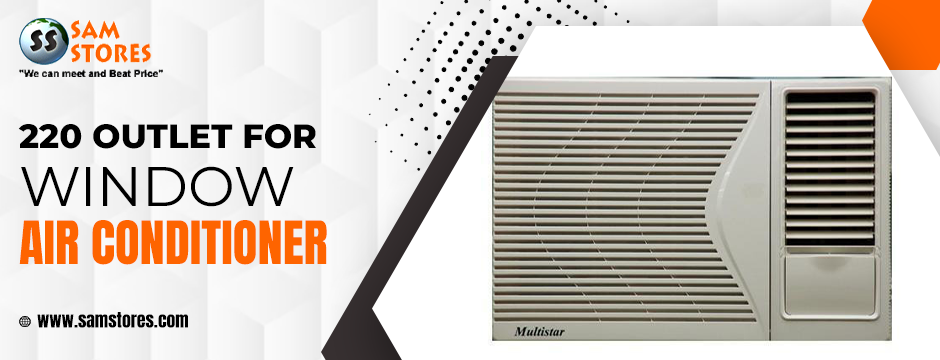
A 220 outlet for window air conditioner is a dedicated electrical outlet designed to supply the correct voltage and current required by a window AC unit.
Window air conditioners often require a stable power supply due to their compressor load. In many countries, homes are already wired with suitable outlets. In other cases, especially in commercial buildings or older properties, a dedicated outlet may need to be installed by a licensed electrician.
It is important to understand that not all 220 outlets are identical. Plug types and grounding standards vary by country. Always match the outlet type to the appliance specification.
Who Actually Needs a 220 Outlet Air Conditioner
Not everyone needs a 220V unit. However, for certain users, it is not optional.
International Homeowners and Residents
If you live in a country where household power supply is 220 to 240 volts, a 220 outlet air conditioner is the correct and safest choice. Using a lower voltage unit in these regions typically requires bulky transformers and introduces unnecessary risk.
Expats and Overseas Property Owners
Many expats purchase appliances from abroad without fully understanding voltage compatibility. A 220 outlet air conditioner ensures that the unit operates as intended without modification.
Commercial and Hospitality Businesses
Hotels, offices, clinics, and retail spaces outside the US almost always rely on 220V electrical systems. These environments require air conditioners that can handle longer operating hours and higher cooling demand.
Large Room and High Capacity Cooling Needs
Higher capacity air conditioners are more efficient on 220V systems. If you need to cool large spaces, conference rooms, or open layouts, 220V units offer better performance stability.
Buyers Shipping Appliances Internationally
If you are purchasing an air conditioner for export or overseas delivery, choosing the correct voltage at the point of purchase avoids installation delays and return issues.
Who Does Not Need One
If you live in the US and your home only has standard 110 to 120V outlets, a 220 outlet air conditioner is not suitable unless your property has a dedicated 220V line installed.
Using extension cords, converters, or adapters is unsafe for air conditioners and should never be considered a workaround.
Types of 220 Outlet Air Conditioners Available
Window Air Conditioners
These units are designed to fit into window frames and connect directly to a 220 outlet for window air conditioner. They are commonly used in apartments, dormitories, and offices.
Split Air Conditioners
Split systems consist of an indoor and outdoor unit. They are quieter and more efficient and are widely used in residential and commercial buildings worldwide.
Portable Air Conditioners
Portable models offer flexibility and mobility. They still require a proper 220V outlet and are best for smaller spaces or temporary cooling needs.
Cassette and Standing Units
These are typically used in commercial or high traffic areas where airflow distribution and capacity are critical.
Common Mistakes Buyers Make
One of the biggest mistakes is assuming that voltage adapters solve compatibility issues. They do not. Air conditioners require stable power delivery that most adapters cannot provide.
Another mistake is ignoring frequency requirements. A unit designed for 50Hz may not perform correctly on a 60Hz system and vice versa.
Buyers also underestimate installation requirements. Some units require professional installation and proper electrical grounding.
Safety and Compliance Considerations
Electrical safety should never be compromised. A 220 outlet air conditioner must be installed according to local electrical codes. This includes correct wiring, grounding, and circuit protection.
Always verify voltage, frequency, plug type, and load capacity before installation. If unsure, consult a licensed electrician.
Why Product Specifications Matter More Than Price
Cooling capacity, energy efficiency, and voltage compatibility determine long term performance. Choosing a cheaper unit that does not match your electrical system often leads to higher costs due to repairs, replacements, or inefficiency.
Reading specifications carefully helps ensure the unit delivers consistent cooling without stressing your electrical infrastructure.
Our Role at Sam Stores
At Sam Stores, we focus exclusively on appliances designed for international voltage standards. We understand that choosing the wrong air conditioner is not just inconvenient but expensive and unsafe. That is why we ensure our listings clearly specify voltage, frequency, and regional compatibility. Our goal is to help customers select equipment that works correctly in their homes and businesses without electrical compromises. We support buyers who need reliable 220 outlet air conditioner solutions for residential, commercial, and overseas use.
Conclusion
A 220 outlet air conditioner is not a niche product. It is the correct choice for millions of homes and businesses worldwide that operate on higher voltage electrical systems. Understanding voltage compatibility, outlet requirements, and installation needs is essential before making a purchase.
If your property uses a 220 to 240 volt power supply, choosing the right air conditioner is not optional. It is a matter of safety, performance, and long term reliability. Making an informed decision ensures efficient cooling, lower risk, and dependable operation for years to come.